Schloss Kunreuth
Oberfranken Bayern Germany
castle, chateau
Schloss Kunreuth
Oberfranken Bayern Germany
castle, chateau
Schloss Kunreuth is situated on the northwestern edge of the eponymous village of Kunreuth which is part of the collective municipality of Gosberg in the county of Forchheim, in the province of Upper Franconia in the south German state of Bavaria
Das Schloss Kunreuth befindet sich am nordwestlichen Rand des gleichnamigen Ortes
Previous names
Schloss Kunreuth, Schloss Kunreuth
Description
Schloss Kunreuth is situated on the northwestern edge of the eponymous village of Kunreuth which is part of the collective municipality of Gosberg in the county of Forchheim, in the province of Upper Franconia in the south German state of Bavaria.
The village of Kunreuth had probably been mentioned in the founding document (Gründungsbuch) of the church of St. James at Bamberg which dates to 1109. Lords of Kunreuth are first recorded in 1308. What is unclear is whether there was already a castle in existence at that time.
The first record of a castle dates to 1409. At that time, the castle was a fief of the Bishopric of Bamberg, owned by the lords of Egloffstein.
In 1420 the castle was conquered and plundered during a feud between Margrave Frederick I of Brandenburg and Duke Louis VII of Bavaria-Ingolstadt.
In 1525, during the Peasants' War the castle was destroyed. It was immediately rebuilt by the lords of Egloffstein. In 1553 the castle was wrecked again: during the Second Margrave War by Margrave Albert Alcibiades. Despite the promise of free passage, the troops of the garrison were hanged on the trees around the castle.
From 1558 the castle, now a Ganerbenburg of the House of Egloffstein, was rebuilt as a schloss, whilst largely retaining its military character.
During the Thirty Years' War the schloss suffered severe damage during its frequent use for billeting soldiers.
This damage was repaired over time. The schloss is still owned by the counts and freiherren "von und zu Egloffstein", who have used it to house their family archives.
The village of Kunreuth had probably been mentioned in the founding document (Gründungsbuch) of the church of St. James at Bamberg which dates to 1109. Lords of Kunreuth are first recorded in 1308. What is unclear is whether there was already a castle in existence at that time.
The first record of a castle dates to 1409. At that time, the castle was a fief of the Bishopric of Bamberg, owned by the lords of Egloffstein.
In 1420 the castle was conquered and plundered during a feud between Margrave Frederick I of Brandenburg and Duke Louis VII of Bavaria-Ingolstadt.
In 1525, during the Peasants' War the castle was destroyed. It was immediately rebuilt by the lords of Egloffstein. In 1553 the castle was wrecked again: during the Second Margrave War by Margrave Albert Alcibiades. Despite the promise of free passage, the troops of the garrison were hanged on the trees around the castle.
From 1558 the castle, now a Ganerbenburg of the House of Egloffstein, was rebuilt as a schloss, whilst largely retaining its military character.
During the Thirty Years' War the schloss suffered severe damage during its frequent use for billeting soldiers.
This damage was repaired over time. The schloss is still owned by the counts and freiherren "von und zu Egloffstein", who have used it to house their family archives.
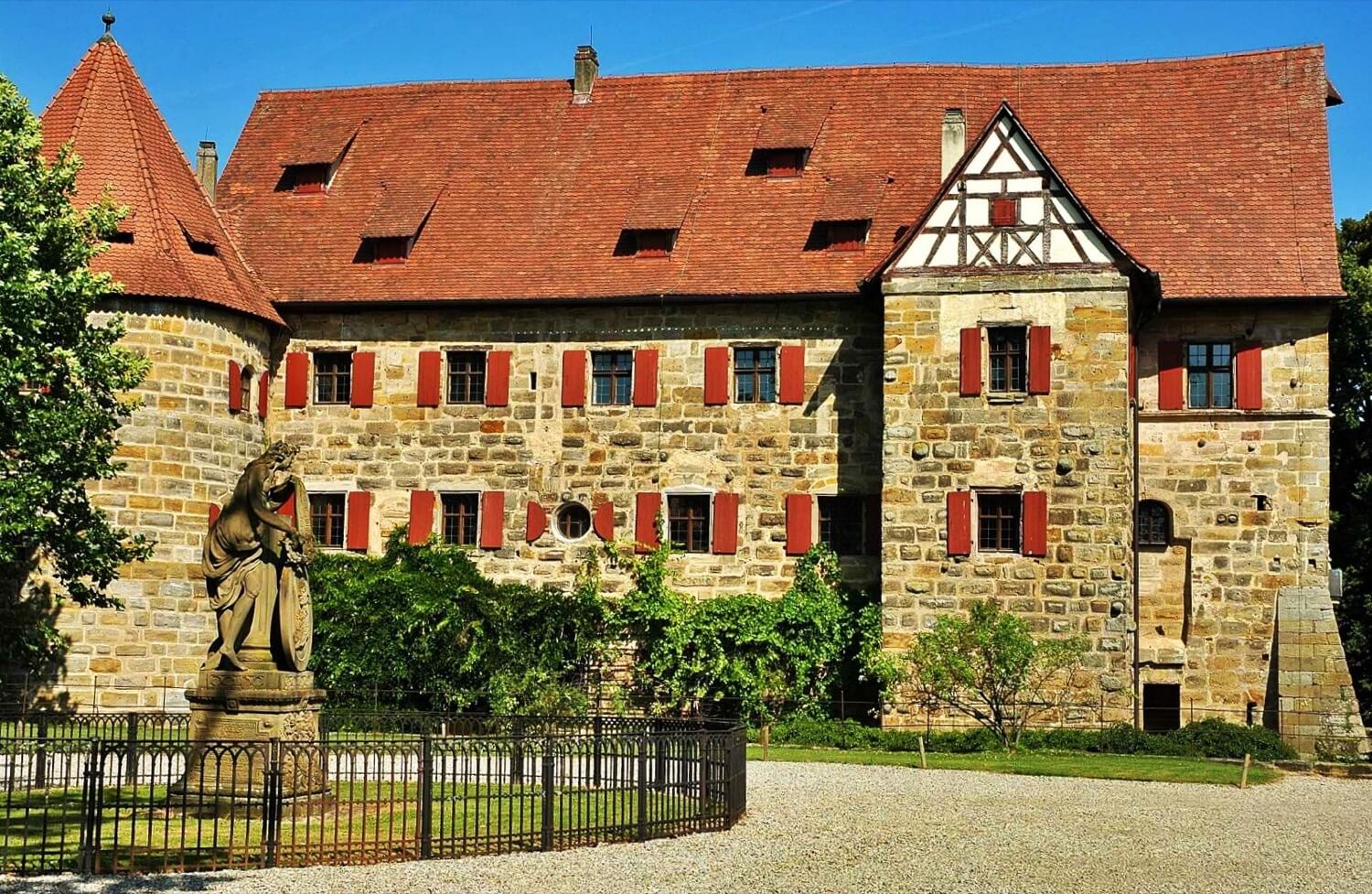
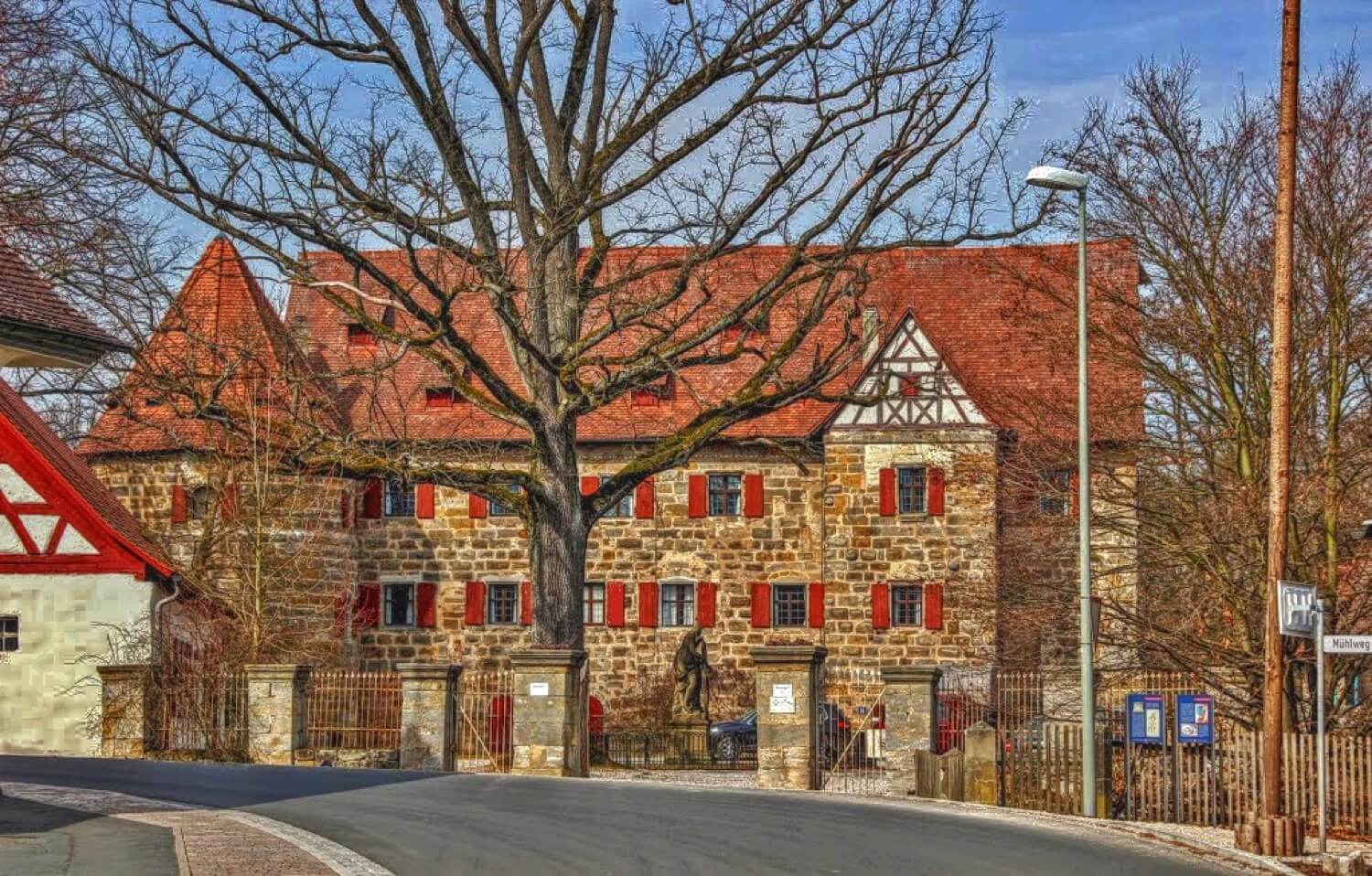
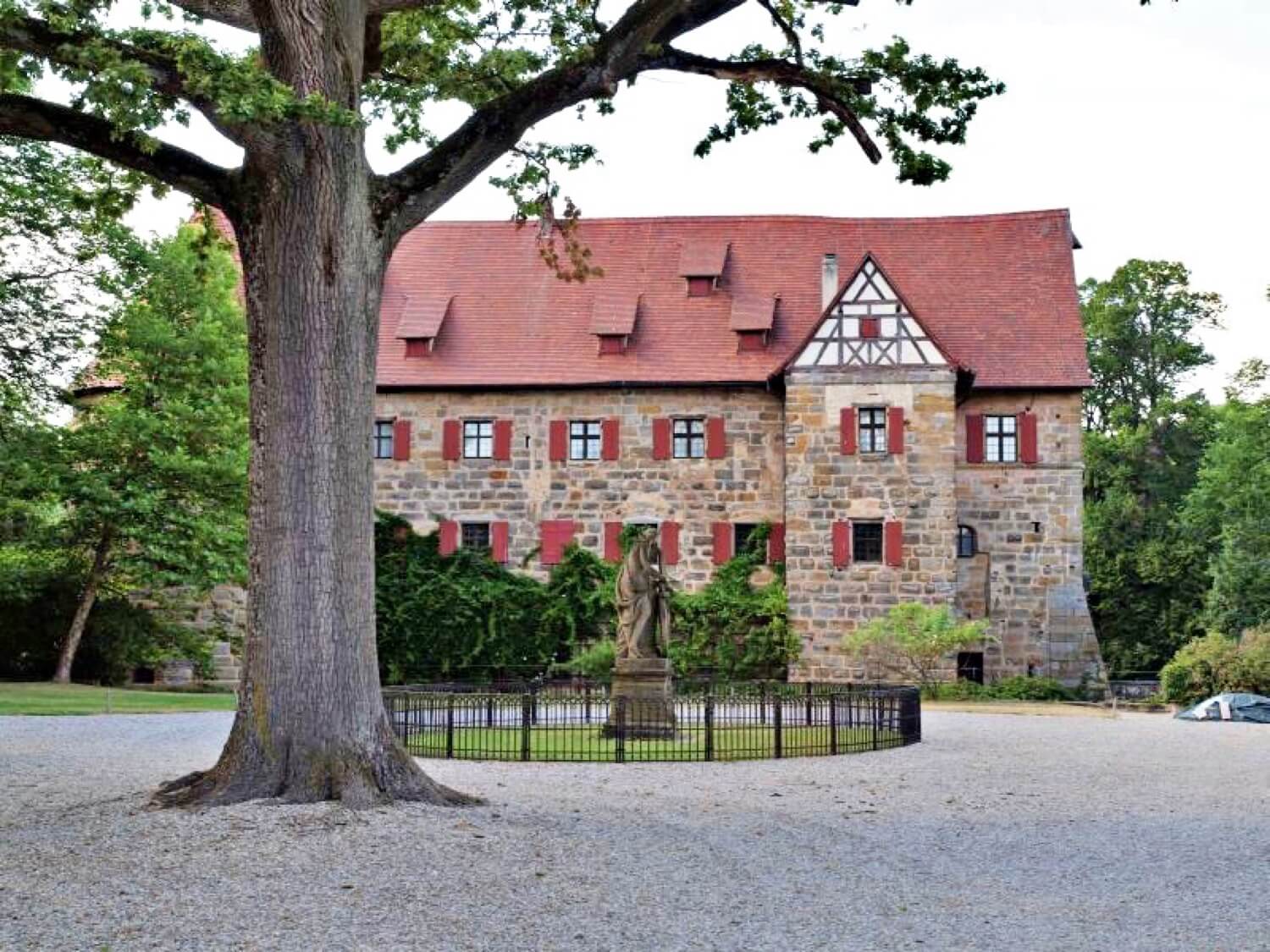
The former water castle – some of the moats were laid dry in 1827 – has a rectangular plan. It consists primarily of a west and a south wing. The south wing probably houses the oldest parts of the castle, which go back to the 14th century. The west wing was given its present appearance mainly in the period from 1611 to 1613. The gateway on the east side of the schloss was built in 1624. In 1746 the drawbridge was replaced by a stone bridge. On the north side is a wall with buttresses. Until its destruction in the Second Margrave War the so-called rear cabinet (Kemenate) was located here.
In the forecourt of the schloss is a monument to the first Count of Egloffstein, Count Albert Dietrich Godfrey of Egloffstein.
Das Schloss Kunreuth befindet sich am nordwestlichen Rand des gleichnamigen Ortes. Die Gemeinde Kunreuth ist Mitglied der Verwaltungsgemeinschaft Gosberg im Landkreis Forchheim, Regierungsbezirk Oberfranken in Bayern.
Der Ort Kunreuth soll bereits im Gründungsbuch des Stiftes St. Jacob zu Bamberg aus dem Jahre 1109 erwähnt worden sein. Herren von Kunreuth wurden urkundlich erstmals 1308 erwähnt. Unklar ist, ob zu dieser Zeit bereits eine Burg existierte.
Die erste urkundliche Erwähnung einer Burg datiert aus dem Jahre 1409. Die Burg befand sich zu dieser Zeit als Bamberger Lehen im Besitz der Herren von Egloffstein.
1420 wurde die Burg in einer Fehde zwischen dem Markgrafen Friedrich I. von Brandenburg und dem Herzog Ludwig VII. von Bayern-Ingolstadt erobert und geplündert.
Im Bauernkrieg wurde die Burg 1525 zerstört. Der Wiederaufbau durch die Herren von Egloffstein erfolgte umgehend. 1553 wurde die Burg im zweiten Markgrafenkrieg durch den Markgrafen Albrecht Alcibiades erneut zerstört. Die Besatzung der Burg wurde trotz der Zusicherung eines freien Abzugs an den Bäumen um das Schloss aufgehängt.
Ab 1558 wurde die Anlage, nun als Ganerbenburg des egloffsteinischen Gesamtgeschlechts, schlossartig wieder aufgebaut. Dabei blieb der wehrhafte Charakter weitgehend erhalten.
Im Dreißigjährigen Krieg erlitt das Schloss durch häufige Einquartierungen schwere Schäden.
Die Schäden wurden im Laufe der Zeit beseitigt. Das Schloss befindet sich noch im Besitz der Grafen und Freiherren von und zu Egloffstein, von denen es zeitweilig als Familienarchiv genutzt wurde.
Das ehemalige Wasserschloss – die Gräben wurden 1827 teilweise trockengelegt – hat einen rechteckigen Grundriss. Es besteht in erster Linie aus einem West- und einem Südflügel. Im Südflügel dürften die ältesten Bauteile auf das 14. Jahrhundert zurückgehen. Der Westflügel erhielt seine heutige Gestalt überwiegend in der Zeit zwischen 1611 und 1613. Die Toranlage an der Ostseite des Schlosses entstand 1624. 1746 wurde die Zugbrücke durch eine steinerne Brücke ersetzt. An der Nordseite befindet sich eine Mauer mit Stützpfeilern. Bis zur Zerstörung im Zweiten Markgrafenkrieg befand sich dort die sogenannte hintere Kemenate.
Im Vorhof des Schlosses erinnert ein Denkmal an den ersten Grafen von Egloffstein, Graf Albrecht Dietrich Gottfried von Egloffstein.
Nearby castles
Schloss Wiesenthau
Oberfranken
3.3km
castle, chateau
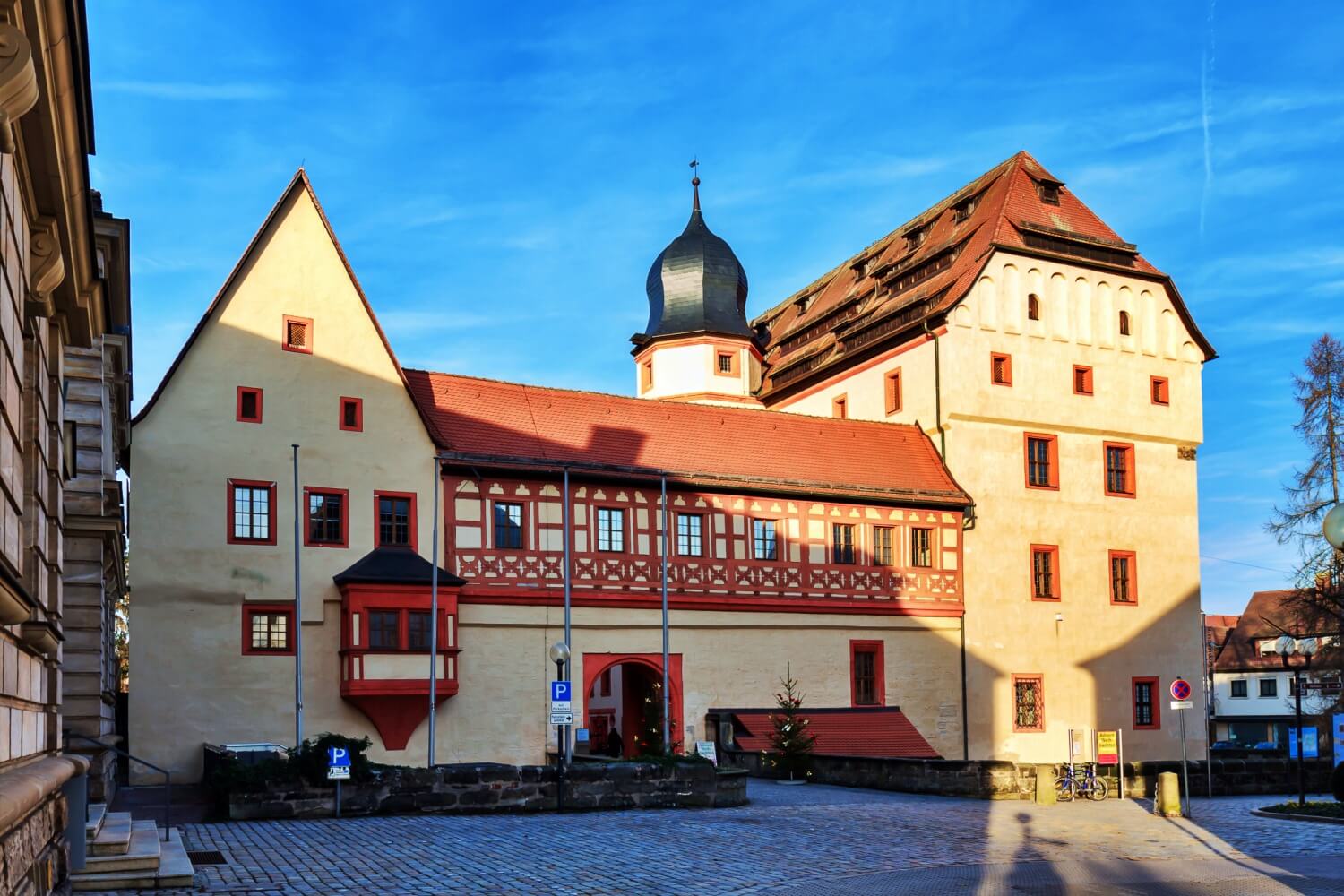
Forchheim Castle
Oberfranken
7.4km
castle, chateau
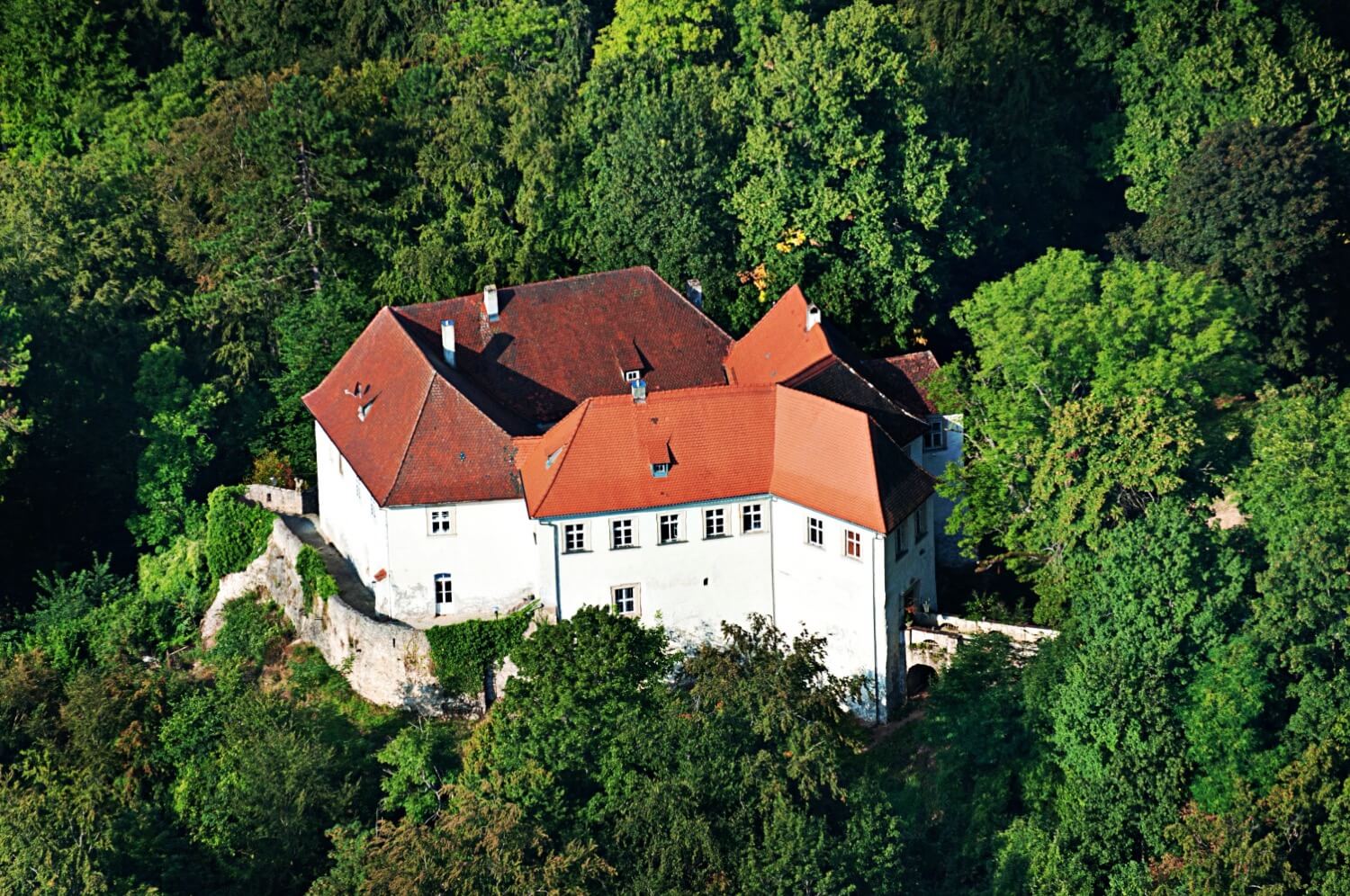
Schloss Hundshaupten
Oberfranken
7.4km
castle, chateau
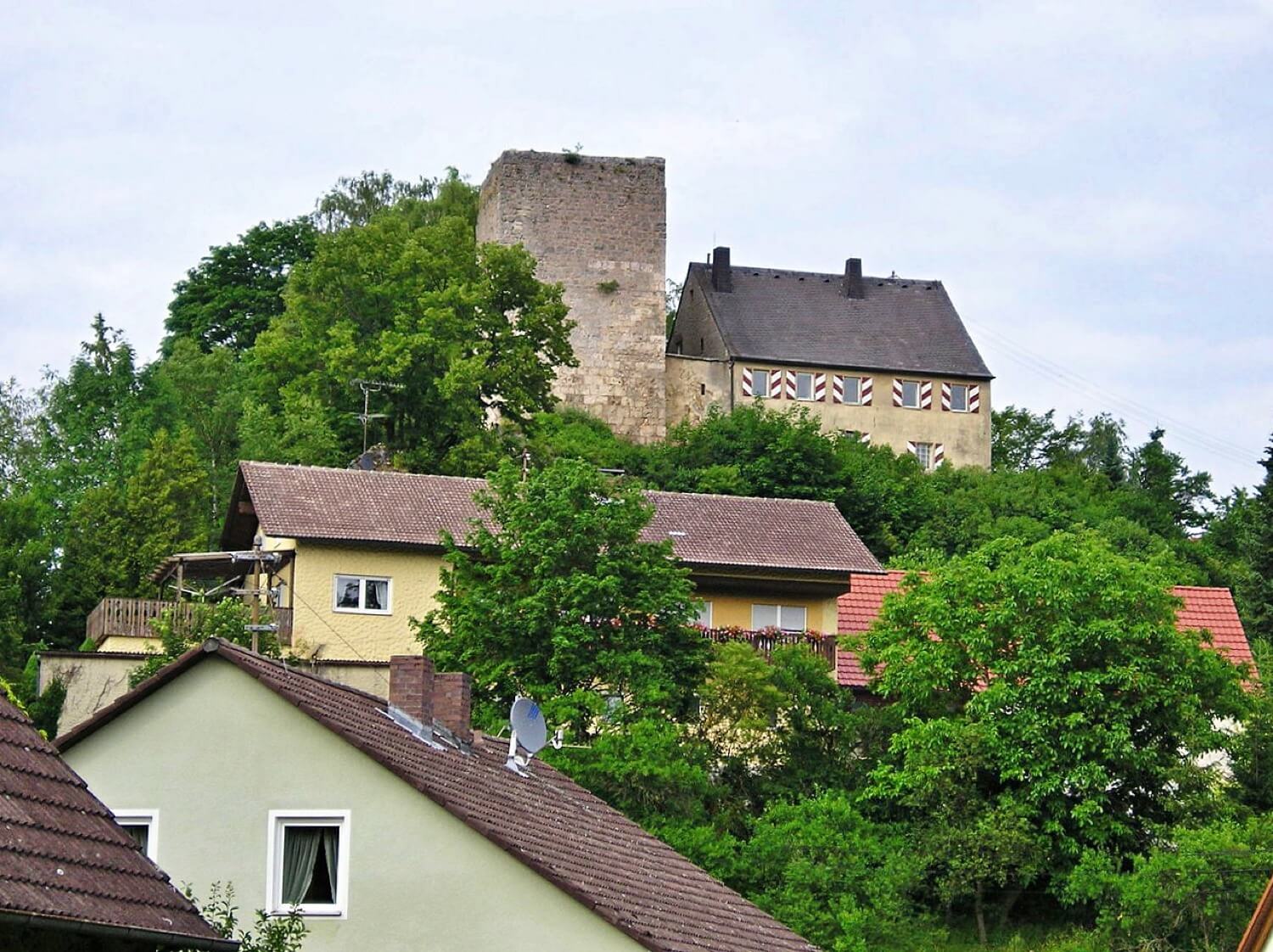
Thuisbrunn Castle
Oberfranken
7.7km
castle, chateau
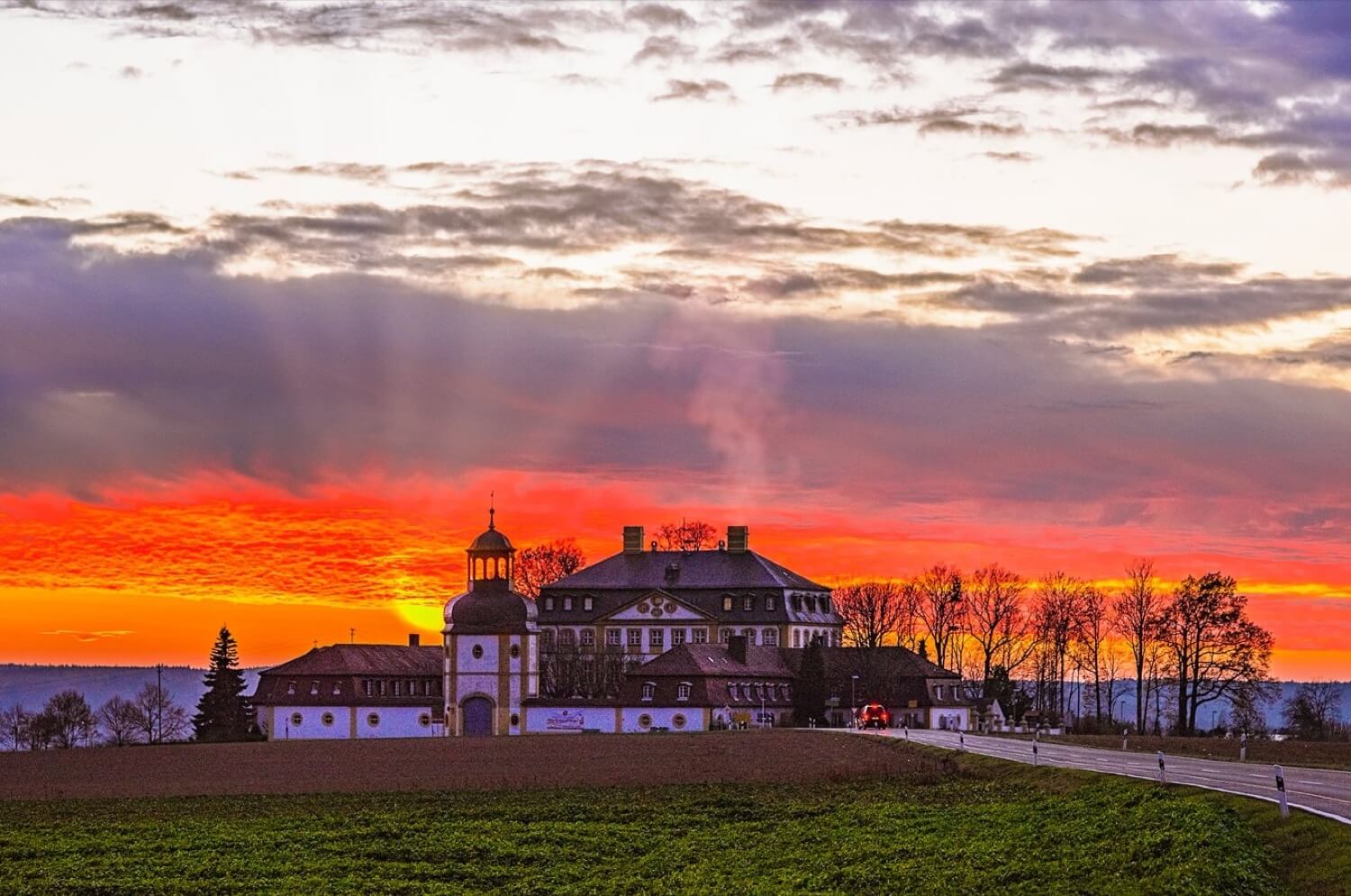
Jagersburg (Eggolsheim)
Oberfranken
8.0km
castle, chateau
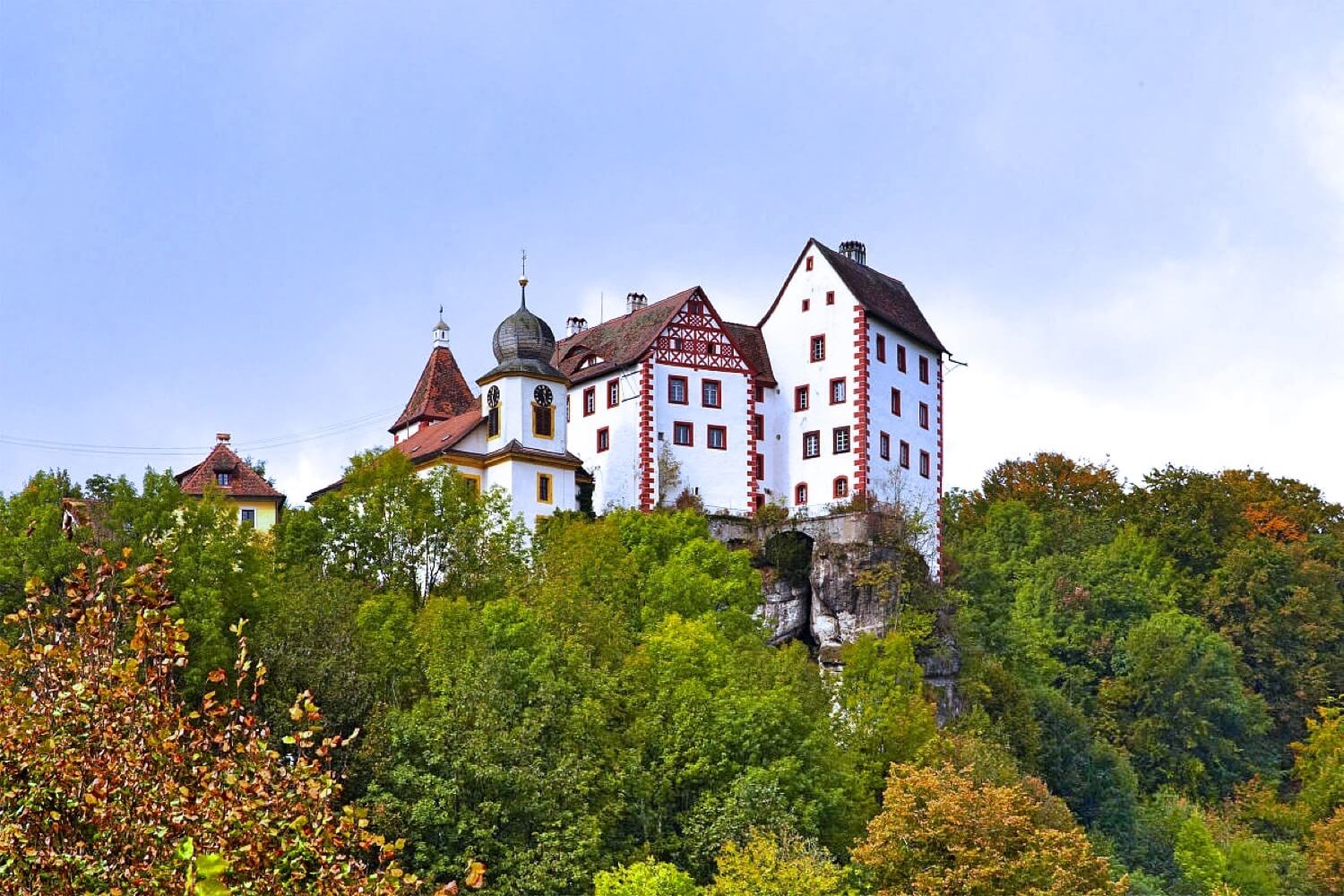
Egloffstein Castle
Oberfranken
8.7km
castle, chateau
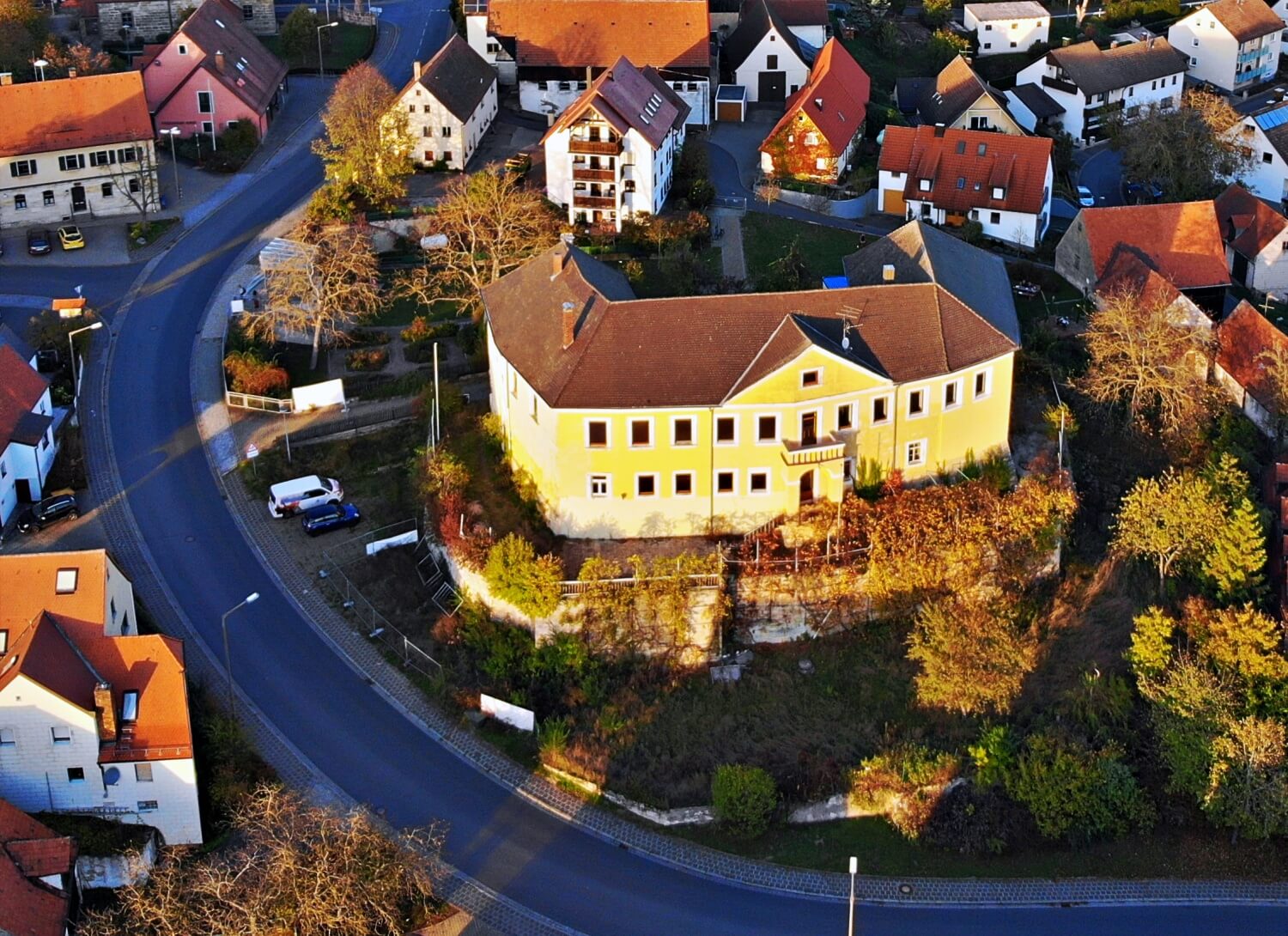
Schloss Marloffstein
Mittelfranken
9.3km
castle, chateau