Idstein Castle
Darmstadt Hessen Germany
castle, chateau
Burg Idstein
Darmstadt Hessen Germany
castle, chateau
Idstein Castle (German: Burg Idstein), later the Renaissance style Schloss Idstein, is located in Idstein in the county of Rheingau-Taunus, Germany
Die Burg Idstein, später ein Renaissance-Schloss, befindet sich in Idstein im Rheingau-Taunus-Kreis
Previous names
Idstein Castle, Burg Idstein
Description
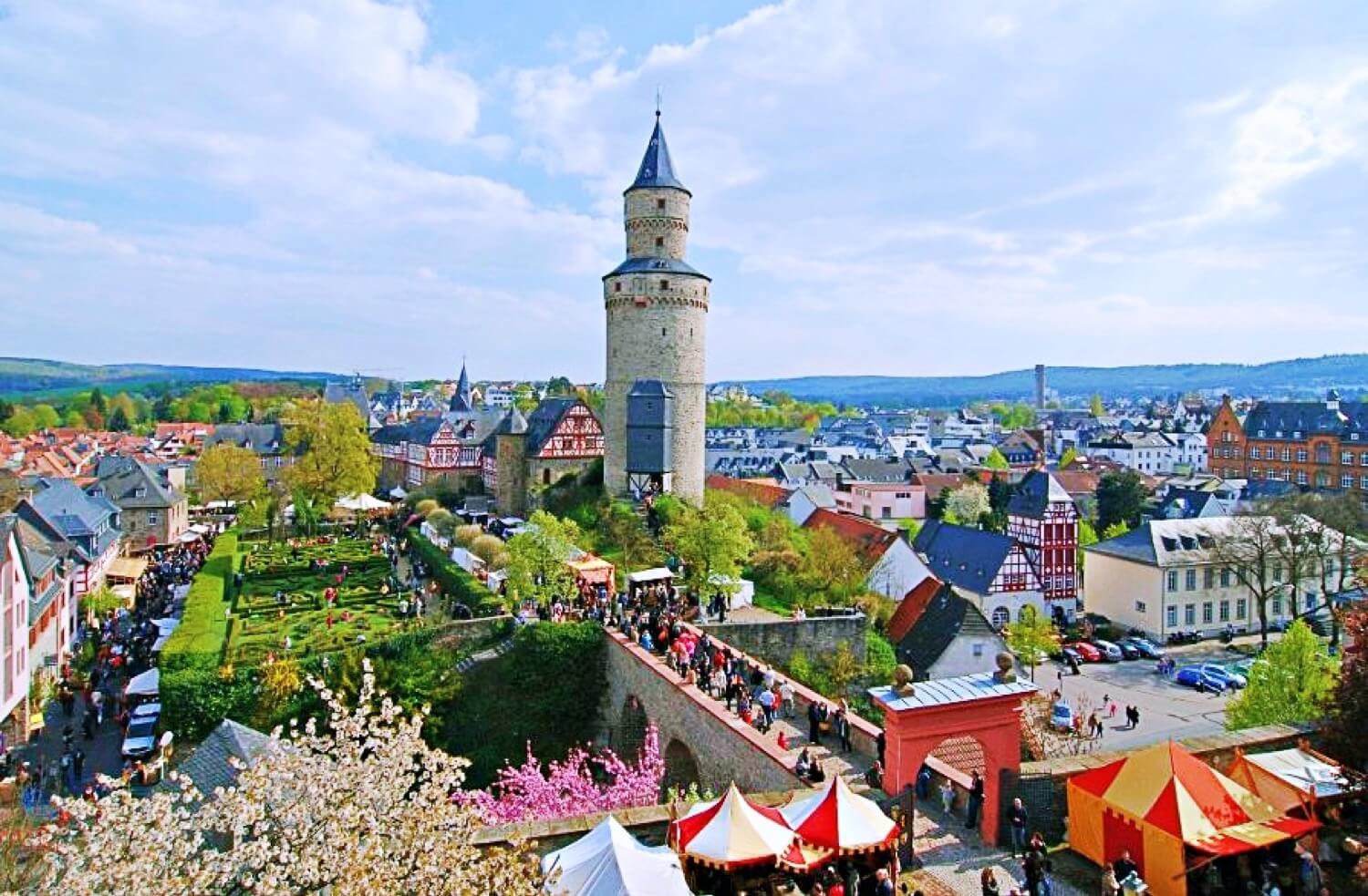
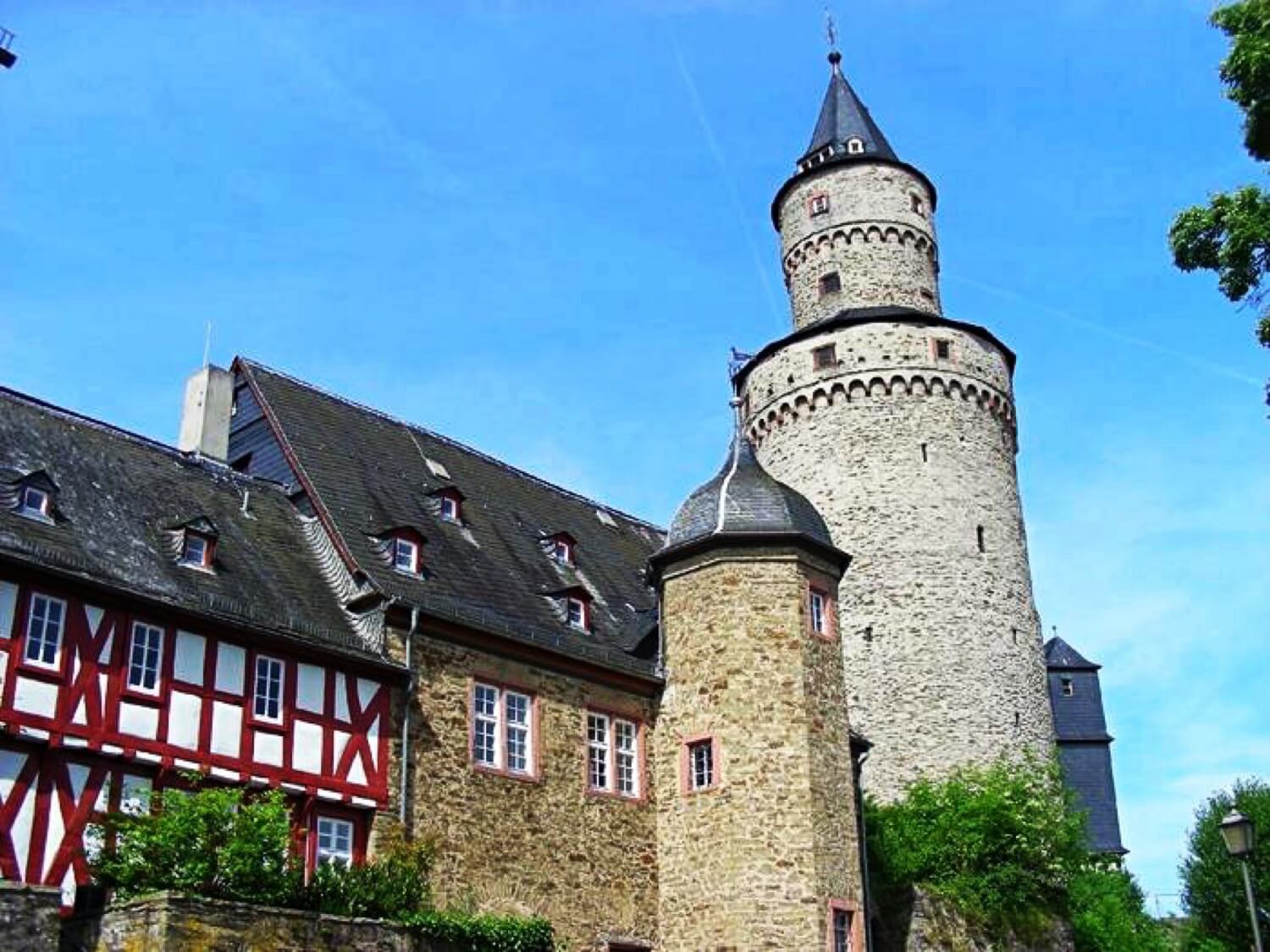
Idstein Castle (German: Burg Idstein), later the Renaissance style Schloss Idstein, is located in Idstein in the county of Rheingau-Taunus, Germany. The hill castle was the residenz of Nassau-Idstein. The castle's Witches' Tower (Hexenturm) is one of the town's oldest buildings and a substantial local landmark.
The original castle of Idstein was built around 1170 on a rocky ridge in the centre of the Old Town. Within the inner bailey, only the bergfried, the old district courthouse, the 15th century gatehouse and the palas have survived from the castle.
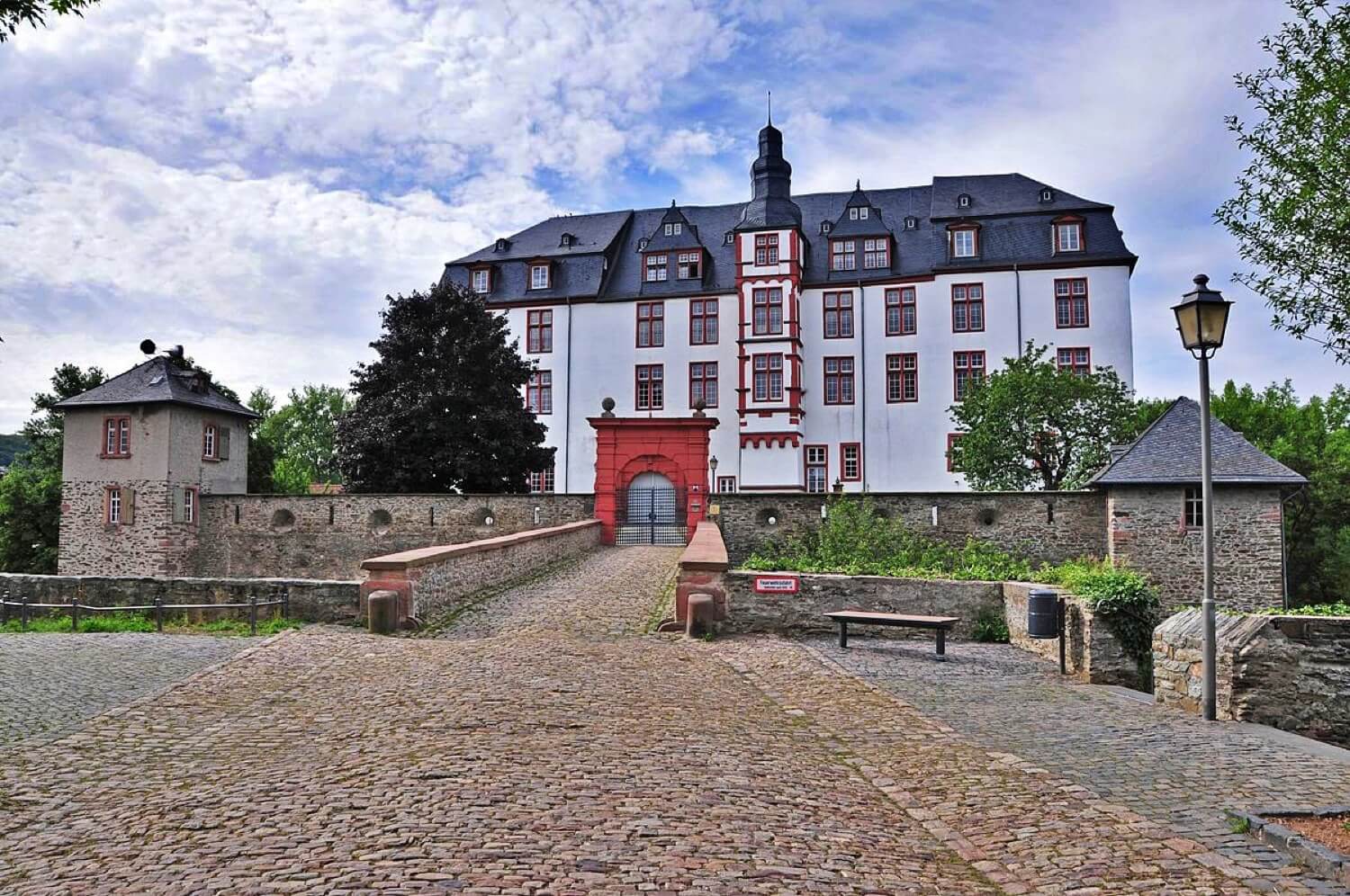
In the early 17th century, during the time of Prince George Augustus Samuel of Nassau-Idstein, a Renaissance style schloss was built on the site of the outer ward. Its Baroque interior was completed around 1714. The architect was Maximilian von Welsch, the stucco work, especially in the so-called Emperor Chamber (Kaisergemach), was carried out by Carlo Maria Pozzi. The ceiling paintings and other paintings were by Valentin David Albrecht and Luca Antonio Colomba.
In 1905 the schloss became a Convalescent Home for Members of the Royal Prussian Army.
The upper bailey was demolished and the bergfried was nicknamed Hexenturm (Witches' Tower) in the 19th century. There were witch trials in the early modern period in Idstein, but these substantially predate the name of this landmark. It is unlikely that anyone was ever accused or imprisoned in the tower for witchcraft. The nickname became widespread around 1900 with the publication of Die Pfarrfrau von Heftrich by Ottokar Schupp (de). The Hexenturm became the landmark of Idstein. At the base of the tower is a plaque in memory of the victims of the witch trials of 1676, listing the names of 31 women and 8 men killed at the end of the rule of John, Count of Nassau-Idstein.
After the First World War, French soldiers were housed in the schloss during the French occupation. In the Second World War, the schloss acted as a military hospital for reserves.
Today the castle houses the Idstein Pestalozzi Gymnasium. Both schloss and bergfried may be visited on request.
A 20-metre-long stone bridge spans the neck ditch between the outer and inner baileys. To its right is a small Renaissance garden. Guided tours are offered with the guides dressed as gardeners of 1702.
Die Burg Idstein, später ein Renaissance-Schloss, befindet sich in Idstein im Rheingau-Taunus-Kreis. Die Höhenburg war Residenz von Nassau-Idstein.
Im 11. Jahrhundert entstand die ehemalige Burganlage Idstein, über die nur wenig bekannt ist, auf einem Felsrücken inmitten der Altstadt. Aus dieser Zeit ist von der Oberburg nur noch der Bergfried, das alte Amtsgericht, das Torhaus aus dem 15. Jahrhundert und der Palas erhalten geblieben.
Anfang des 17. Jahrhunderts entstand zur Zeit des Fürsten Georg August Samuel von Nassau-Idstein an Stelle der Vorburg ein Schloss im Renaissancestil. Der Innenausbau im Stil des Barock wurde um 1714 abgeschlossen. Der Baumeister war Maximilian von Welsch, die Stuckarbeiten, besonders im sogenannten Kaisergemach, wurden von Carlo Maria Pozzi ausgeführt. Die Deckengemälde und andere Gemälde stammen von Valentin David Albrecht und Luca Antonio Colomba.
Einweihung des Genesungsheims für Angehörige der Königlich-Preußischen Armee im Schloss durch Kriegsminister Karl von Einem im Jahr 1905.
1816 befand sich im Schloss das Zentralarchiv des Herzogtums Nassau. Ab 1867 bis 1881 das Königlich Preußische Staatsarchiv für den Regierungsbezirk Wiesbaden. Ab 1905 diente das Schloss als Genesungsheim für Angehörige der Königlich-Preußischen Armee.
Die Oberburg wurde abgerissen und der Bergfried erhielt wegen der damaligen Hexenverfolgungen den Beinamen Hexenturm. Dabei waren in diesem Turm wahrscheinlich nie der Hexerei bezichtigte inhaftiert. Der Beiname setze sich erst um 1900/10 mit der Verbreitung der Lektüre von Ottokar Schupps (1834–1911) Die Pfarrfrau von Heftrich durch.
Nach dem Ersten Weltkrieg waren im Schloss französische Soldaten im Rahmen der Besatzung untergebracht. Im Zweiten Weltkrieg diente das Schloss als Reservelazarett.
Heute wird das Schloss als Unterkunft der Pestalozzischule Idstein genutzt. Schloss und Hexenturm können auf Anfrage besichtigt werden.
Eine 20 Meter lange Steinbrücke spannt sich zwischen Vor- und Oberburg über den Halsgraben, neben dem sich rechts ein kleiner Renaissancegarten befindet.
Useful information
0.50 EUR/Stunde
Gratis
Gratis
Gratis
- Schlosspark
- Informationstafeln
info@idstein.de
- Heute beherbergt das Schloss das Idstein Pestalozzi Gymnasium
- Besuch nur nach Vereinbarung
-
External links
Nearby castles
Burg Hohenstein (Taunus)
Darmstadt
15.4km
castle, chateau
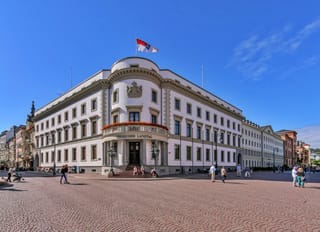
Wiesbaden City Palace
Darmstadt
15.7km
manor, mansion
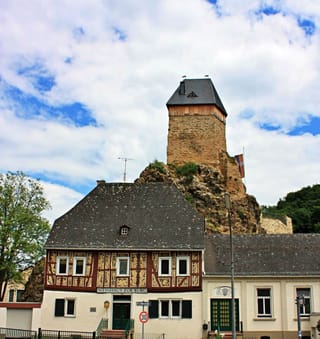
Frauenstein Castle (Wiesbaden)
Darmstadt
19.2km
castle, chateau
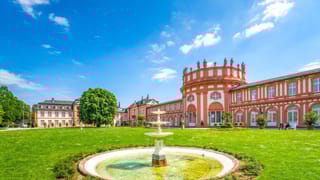
Biebrich Palace
Darmstadt
20.7km
manor, mansion
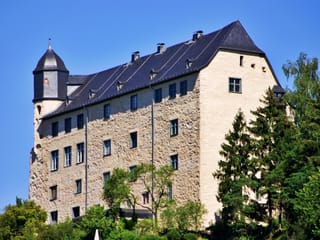
Schadeck Castle
Gießen
22.2km
castle, chateau

Scharfenstein Castle (Kiedrich)
Darmstadt
23.5km
castle, chateau
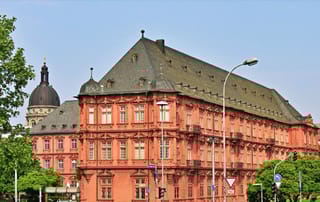
Electoral Palace (Mainz)
Mainz
23.9km
manor, mansion