Graues Schloss
Wartburgkreis Thüringen Germany
castle, chateau
Graues Schloss
Wartburgkreis Thüringen Germany
castle, chateau
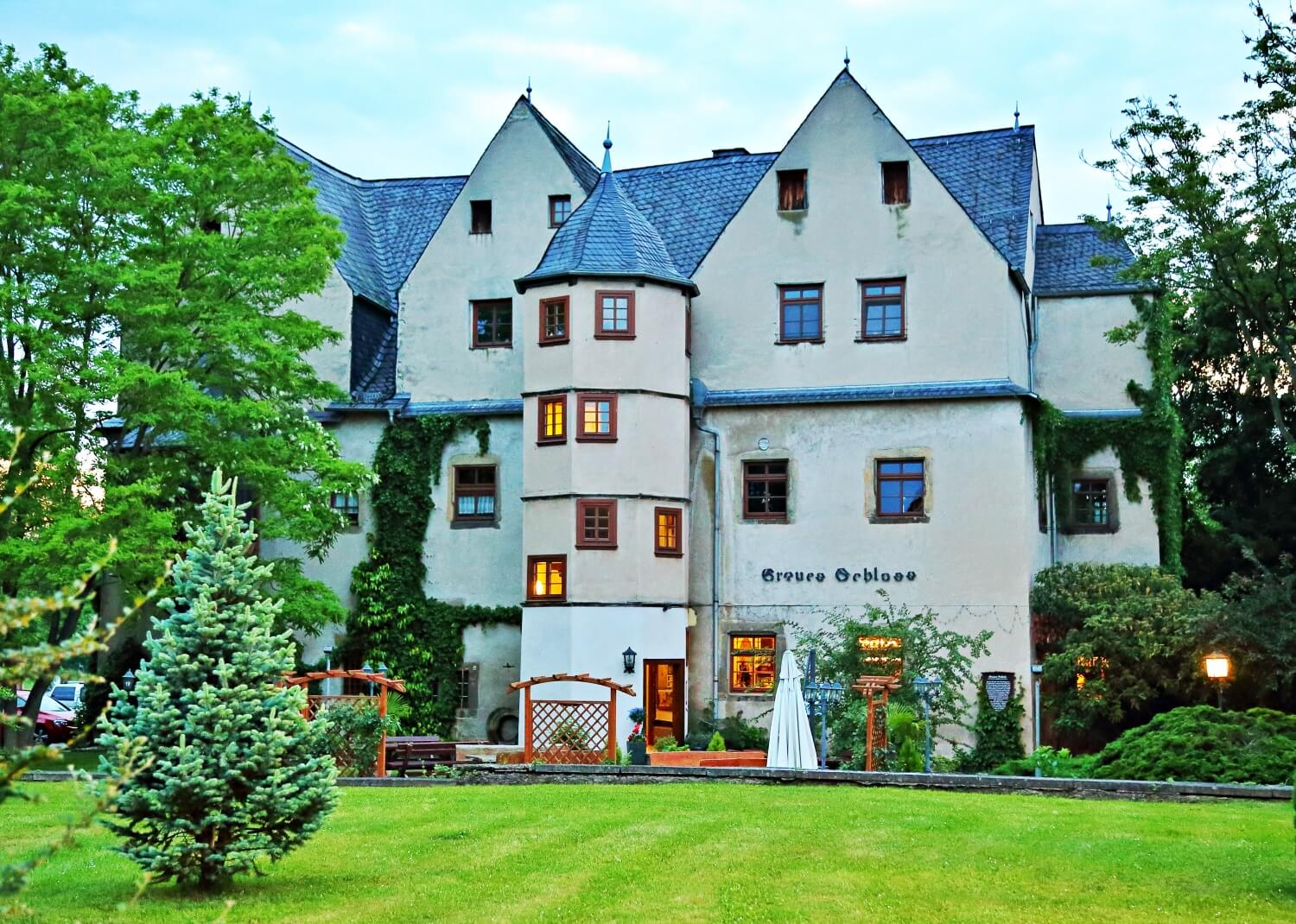
The Gray Castle is a former residential castle that was built on the foundation walls of a medieval moated castle on the banks of the Werra near Mihla in the Wartburg district in Thuringia
Das Graue Schloss ist ein ehemaliges Wohnschloss, das auf den Grundmauern einer mittelalterlichen Wasserburg am Ufer der Werra bei Mihla im Wartburgkreis in Thüringen erbaut wurde
Previous names
Graues Schloss, Graues Schloss
Description
The Gray Castle is a former residential castle that was built on the foundation walls of a medieval moated castle on the banks of the Werra near Mihla in the Wartburg district in Thuringia . Its structural remains are located at a height of 190 meters in the west of the historical location of Mihla, directly on the banks of the Werra and the Lauterbach river that flows into it.
History
A medieval moated castle was located in the immediate vicinity of Mihla Martinskirche . It was inhabited by the Lords of Mihla, feudal men of the Archbishops of Mainz and the Thuringian Landgraves, a branch of the Schlotheim Truchess . In 1399 the Lords of Roßdorf were enfeoffed with Mihla, followed by Heilingen and Wangenheim . In 1436 the von Harstall aristocratic family acquired the site and castle seat Mihla, and they became feudal lords and court lords.
Conversion to a castle
At the beginning of the 16th century, von Harstall began converting this castle into a residential palace. Immediately to the east, an extensive manor - the so-called White Castle - was built or expanded, of which ancillary buildings still exist today; It was canceled in 1836. The third palace complex was the Red Palace, also owned by the Harstalls, on the other side of the Lauterbach on the way to Eisenach and Creuzburg .
Storming of the castle in 1848
During the unrest in March 1848 the farm and farm workers rose up in Mihla to fight for the improvement of their living conditions. Here, the Gray Castle was stormed on March 13, 1848, and the then landowner and court lord, but also various village leaders and even the Mihla priest had to sign prepared waivers of taxes and interest charges. On March 17, military personnel summoned from Eisenach stormed the occupied castles and the parish and captured the leaders of the riot. As a result, the most important result was the separation of the properties, at least part of the feudal burdens were abolished. A later amnesty the state government led to the release of those arrested.
Current situation and usage
The von Harstall family was expropriated without compensation in 1945 with the gray castle and manor of 523 hectares. In 1971 the Gray Castle was set up as a restaurant. The palace complex is a designated architectural and ground monument in Mihla and is privately owned. The castle complex is still used as an inn and hotel. For this purpose, the interiors were gradually renovated in the 1990s. Around the building there is an area used as a park with old trees and several memorial stones.
The 250 to 300 year old linden tree in front of the Gray Castle had been designated as a natural monument since 1966 . It had to be felled in autumn 2013 because the stability was no longer guaranteed.
Description
The complex, built from rubble stones , corresponds to the typical Renaissance style of the residential castles in the lower and middle Werra Valley and resembles the castle buildings in Nesselröden and Madelungen . The building is made of local limestone and has three high gable bay windows on the north and south sides. The rectangular floor plan has a protruding stair tower on the south side and a lower porch on the east side. The surrounding moat was already filled in in the 19th century. Inside, representative rooms have been preserved, especially on the ground floor and first floor.
https://second.wiki
Das Graue Schloss ist ein ehemaliges Wohnschloss, das auf den Grundmauern einer mittelalterlichen Wasserburg am Ufer der Werra bei Mihla im Wartburgkreis in Thüringen erbaut wurde. Seine baulichen Reste befinden sich auf 190 Meter Höhe im Westen der historischen Ortslage von Mihla, unmittelbar am Ufer der Werra und dem hier einmündenden Flüsschen Lauterbach.
Geschichte
In unmittelbarer Nachbarschaft der Mihlaer Martinskirche befand sich eine mittelalterliche Wasserburg. Sie wurde von den Herren von Mihla, Lehensmännern der Mainzer Erzbischöfe und der Thüringer Landgrafen bewohnt, einem Zweig der Truchsesse von Schlotheim. 1399 wurden die Herren von Roßdorf mit Mihla belehnt, es folgten die Heilingen und Wangenheim. 1436 erwarb die Adelsfamilie von Harstall Ort und Burgsitz Mihla, sie wurden Lehns- und Gerichtsherren.
Umbau zum Schloss
Zu Beginn des 16. Jahrhunderts begann der Umbau dieser Burg zu einem Wohnschloss durch die von Harstall. Hierbei wurde unmittelbar östlich anschließend ein ausgedehnter Gutshof – das sogenannte Weiße Schloss – errichtet oder ausgebaut, von dem heute noch Nebengebäude bestehen; 1836 wurde es abgebrochen. Als dritte Schlossanlage bestand das ebenfalls im Besitz der Harstalls befindliche Rote Schloss jenseits des Lauterbaches am Weg nach Eisenach und Creuzburg.
Erstürmung des Schlosses 1848
Während der Unruhen im März 1848 erhoben sich auch in Mihla die Guts- und Landarbeiter um für die Verbesserung ihrer Lebensbedingungen zu kämpfen. Hierbei wurde das Graue Schloss am 13. März 1848 gestürmt, und der damalige Gutsbesitzer und Gerichtsherr, aber auch verschiedene Dorf-Obige und sogar der Mihlaer Pfarrer mussten vorbereitete Verzichtserklärungen auf Abgaben und Zinslasten unterzeichnen. Am 17. März stürmte aus Eisenach angefordertes Militär die besetzten Schlösser und die Pfarrei und nahm die Anführer des Aufruhrs gefangen. In der Folge wurde als wichtigstes Ergebnis die Separation der Grundstücke vollzogen, zumindest ein Teil der feudalen Lasten wurde abgeschafft. Eine spätere Amnestie der Landesregierung führte zur Freilassung der Verhafteten.
Heutige Situation und Nutzung
Die Familie von Harstall wurde 1945 mit Grauem Schloss und Rittergut von 523 ha entschädigungslos enteignet. 1971 wurde das Graue Schloss als Gaststätte eingerichtet. Die Schlossanlage ist ein ausgewiesenes Bau- und Bodendenkmal in Mihla und befindet sich im Privatbesitz. Die Burganlage wird noch immer als Gasthof und Hotel genutzt. Dazu wurden die Innenräume in den 1990er Jahren schrittweise saniert. Rings um das Gebäude befindet sich ein als Park genutzter Bereich mit altem Baumbestand und mehreren Gedenksteinen.
Die 250 bis 300 Jahre alte Linde vor dem Grauen Schloss war seit 1966 als Naturdenkmal ausgewiesen. Sie musste im Herbst 2013 gefällt werden, weil die Standsicherheit nicht mehr gewährleistet war.
Beschreibung
Die aus Bruchsteinen errichtete Anlage entspricht dem typischen Renaissancestil der Wohnschlösser im unteren und mittleren Werratal und ähnelt Schlossbauten in Nesselröden und Madelungen. Das Gebäude ist aus ortstypischem Kalkstein erbaut und verfügt über jeweils drei hohe Giebelerker an der Nord- und Südseite. Der rechteckige Grundriss weist auf der Südseite einen vorspringenden Treppenturm auf, an der Ostseite befindet sich ein niedrigerer Vorbau. Der umgebende Wassergraben wurde bereits im 19. Jahrhundert zugeschüttet. Im Inneren sind besonders im Erdgeschoss und ersten Obergeschoss noch repräsentative Räume erhalten geblieben.
Useful information
Gratis
Schlosspark
- Privateigentum (Hotel)
- Haustiere sind erlaubt
-
External links
Nearby castles
Schloss Bischofroda
Wartburgkreis
3.2km
castle, chateau
Haineck castle ruins
Wartburgkreis
4.6km
castle, chateau
Burg Creuzburg
Wartburgkreis
6.8km
castle, chateau
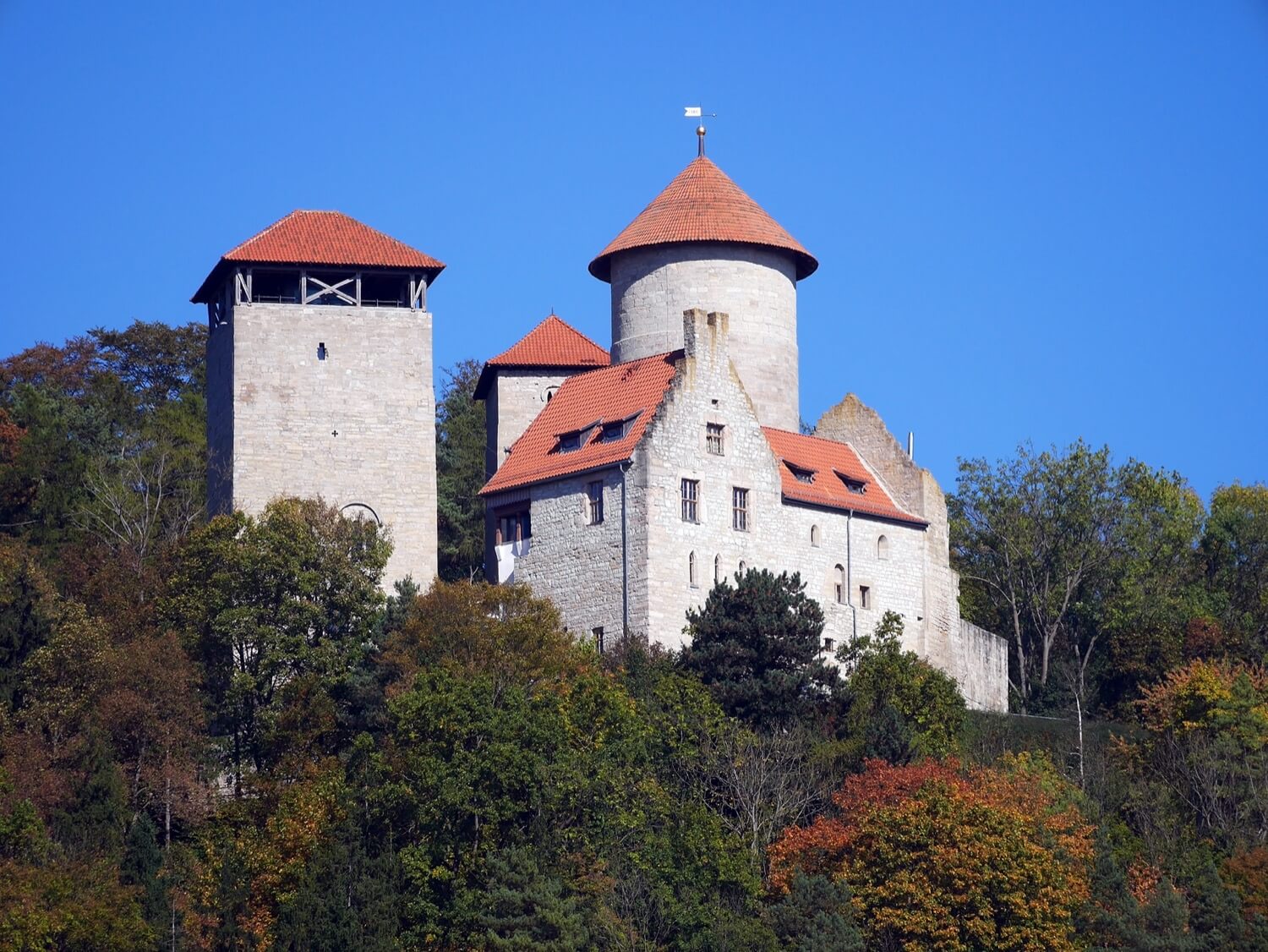
Burg Normannstein
Wartburgkreis
9.6km
castle, chateau
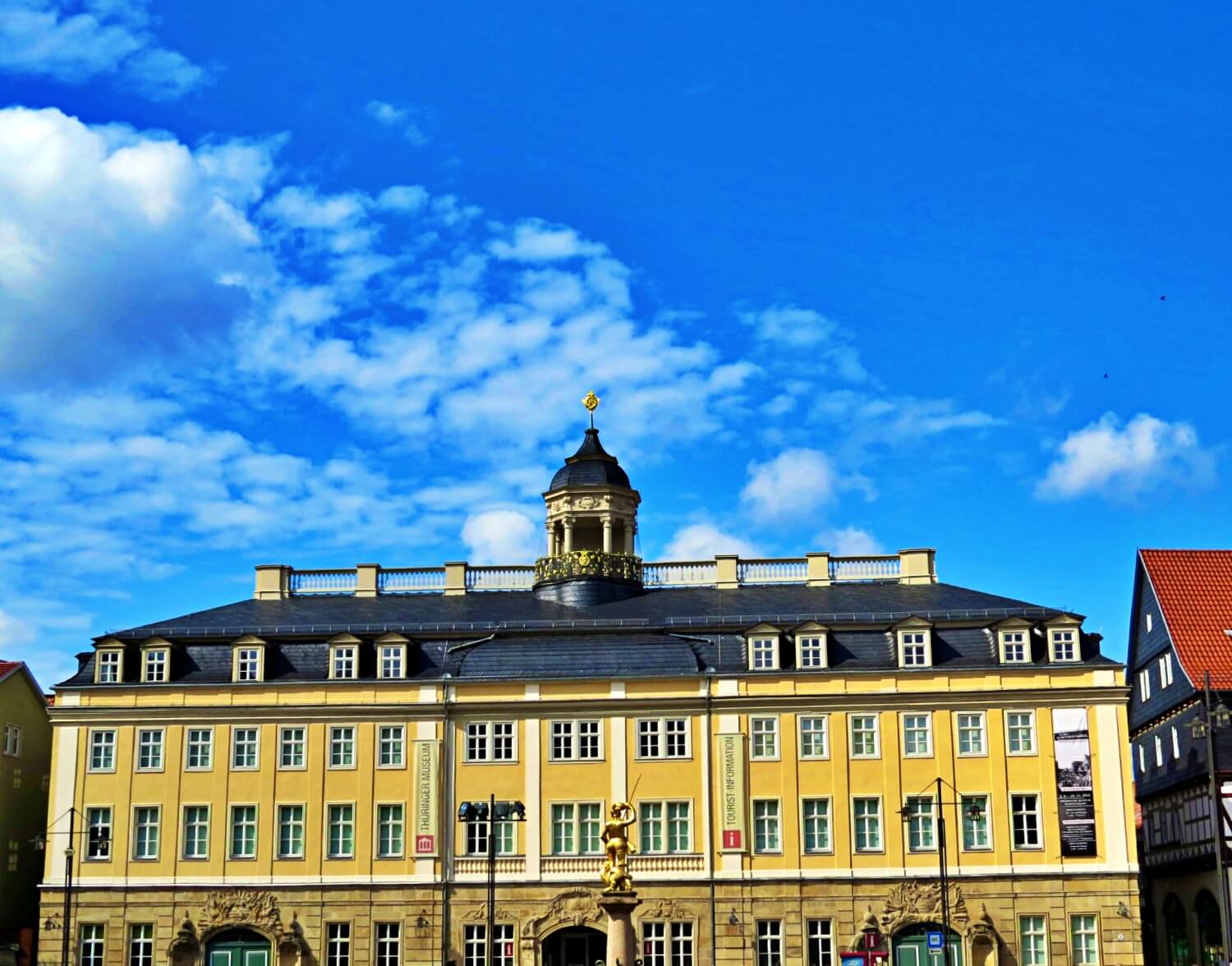
Eisenacher Stadtschloss
Eisenach
11.5km
castle, chateau
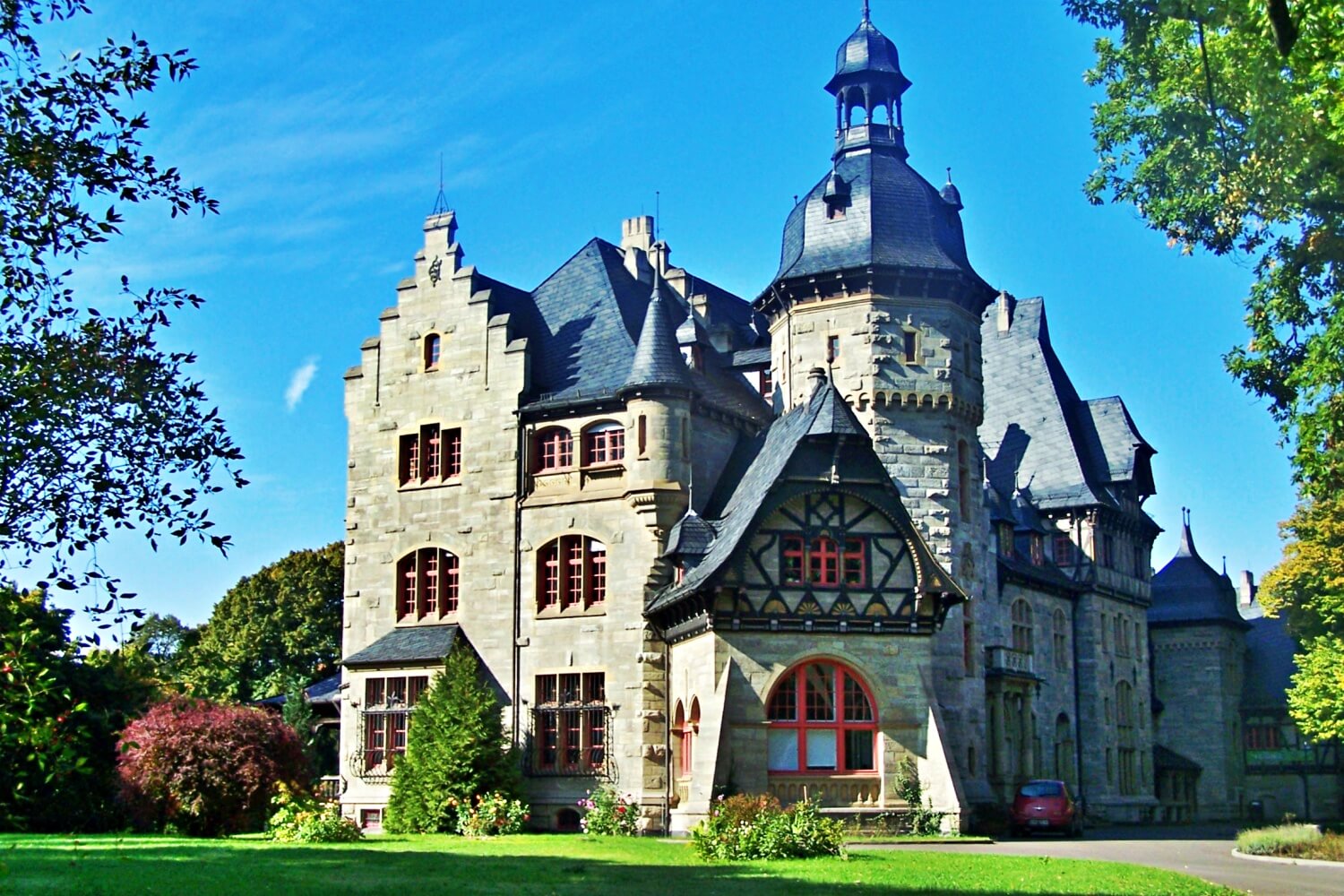
Schloss Pflugensberg
Eisenach
11.7km
castle, chateau
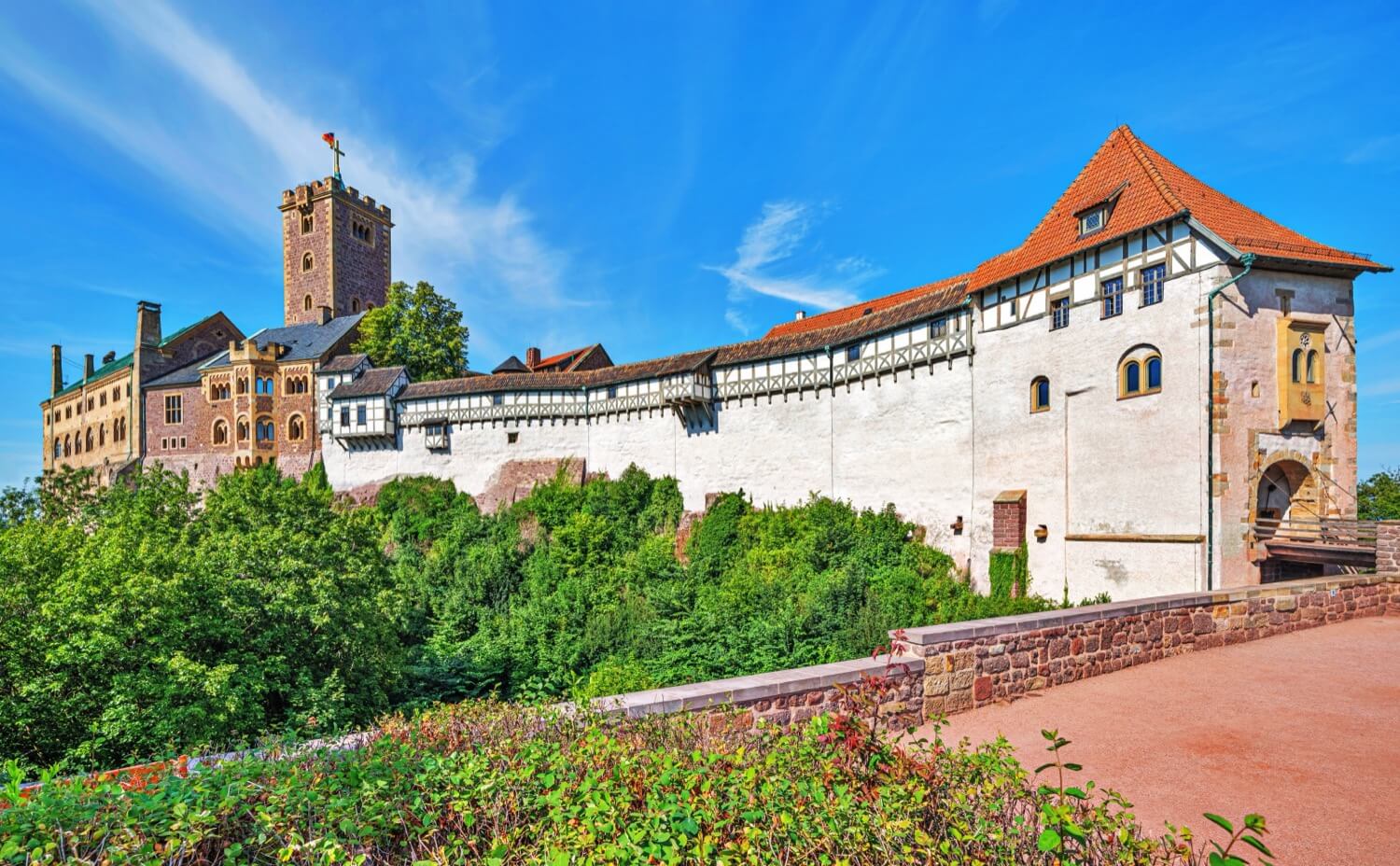
Wartburg
Eisenach
12.6km
castle, chateau