Lemberg Castle
Südwestpfalz Rheinland-Pfalz Germany
castle, chateau
Burg Lemberg
Südwestpfalz Rheinland-Pfalz Germany
castle, chateau
Lemberg Castle (German: Burg Lemberg) is a medieval castle on the territory of Lemberg in the county of Südwestpfalz in the German state of Rhineland-Palatinate
Die Burg Lemberg ist eine mittelalterliche Burg auf der Gemarkung der Gemeinde Lemberg im Landkreis Südwestpfalz in Rheinland-Pfalz
Previous names
Lemberg Castle, Burg Lemberg
Description
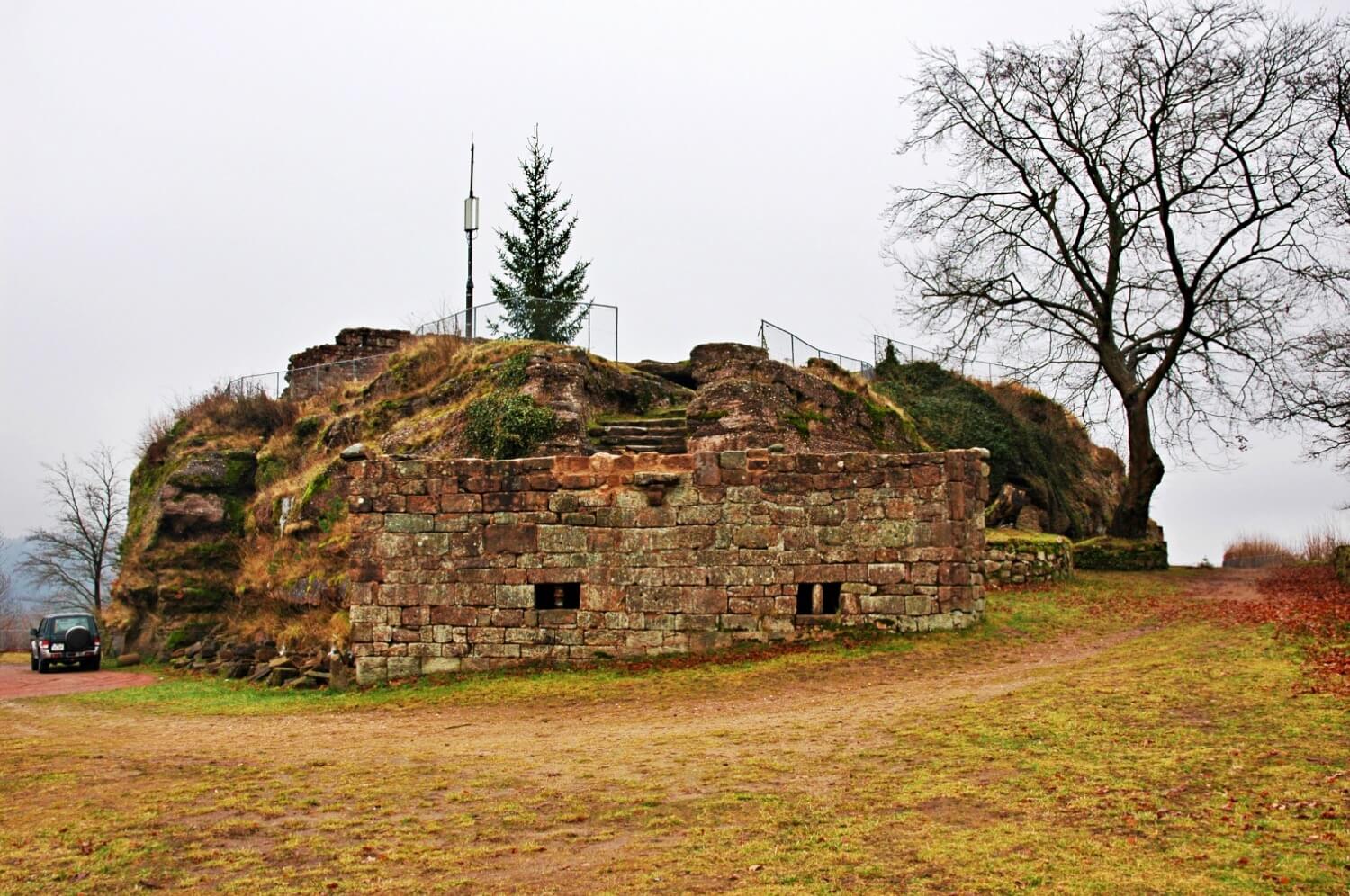
Lemberg Castle (German: Burg Lemberg) is a medieval castle on the territory of Lemberg in the county of Südwestpfalz in the German state of Rhineland-Palatinate.
History
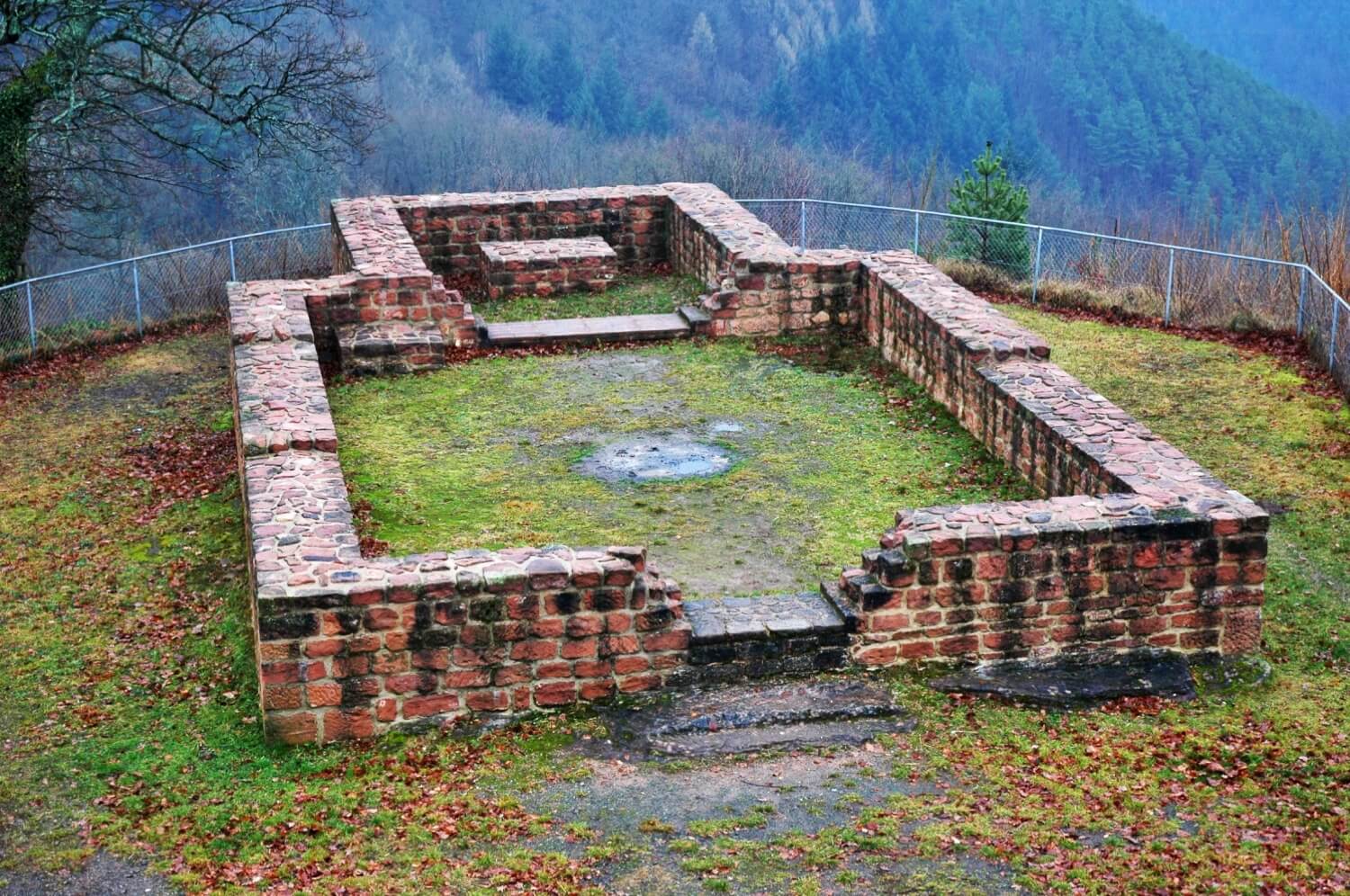
In 1198 the abbot of Hornbach Abbey granted two hills, the Gutinberc and the Ruprehtisberc, to Henry I, Count of Zweibrücken. On these hills the count built the castles of Lemberg and Ruppertstein. The construction period was probably around 1200, but the first documented record of the Castrum Lewenberc dates to 1230. Today, all that survives on the Schlossberg hill are some wall remains and the foundation of a chapel. The chapel was mentioned in 1502, but coins and shards of pottery found on the site indicate that it goes back to the second half of the 13th century.
The first known castellan (Burgmann) was Gozo of Lemberg, who is recorded in 1269.
In 1333 the castle went to Count Simon I, son of Eberhardt of Zweibrücken-Bitsch. From 1535 to 1541, his successor, Count James of Zweibrücken-Bitsch resided at the castle and remodeled it into a Renaissance schloss. Following his death in 1570 an inheritance dispute arose, which the Lehnsherr of the castle, Duke Charles of Lorraine ended by occupying the castle with his own troops in 1572. In 1606 he agreed with Count John Reinhard I of Hanau-Lichtenberg, that James' grandson would receive the Lemberg estate, whilst Charles II would hold the lordship of Bitche.
The castle and village were occupied and plundered in 1634 and 1635 during the Thirty Years' War. In 1636 the castle was razed and then only rebuilt in makeshift fashion.
In 1688 Louis XIV of France sparked the War of the Palatine Succession. He acted on the authority of his sister-in-law, Liselotte of the Palatinate. The background was his plans for expansion, which were opposed by an alliance of the German emperor, the imperial princes, Spain and England. In view of their superiority, Louis XIV, ordered that the Palatinate was to be burned. French troops probably slighted the castle in October 1689; even the bergfried was demolished.
From then on, the location no longer held any military significance. The wall remains continued to decay, usable stone was carried off and employed for other purposes, for example, the rebuilding of a village church in 1746. Since the 20th century, the castle ruins have gained in importance as a tourist attraction. In 1953, the Lemberg branch of the Palatine Forest Club renovated the castle and established a café; and since 2001 a modern extension has been built to act as a castle information centre and centre for medieval events.
Die Burg Lemberg ist eine mittelalterliche Burg auf der Gemarkung der Gemeinde Lemberg im Landkreis Südwestpfalz in Rheinland-Pfalz.
Geschichte
Im Jahr 1198 übergibt der Abt des Klosters Hornbach dem Grafen Heinrich I. von Zweibrücken den Gutinberc und den Ruprehtisberc, auf dem die Zweibrücker Grafen die Burg Lemberg und die Vorburg Ruppertstein erbauen. Als Erbauungszeit wird die Zeit um 1200 angenommen. Die erste namentliche Erwähnung des "Castrum Lewenberc" datiert auf 1230. Neben anderen Mauerresten sind die Fundamente einer Kapelle auf dem Schloßberg erhalten. Sie wurde 1502 erwähnt, gefundene Münzen und Scherben weisen jedoch in die zweite Hälfte des 13. Jahrhunderts zurück.
Erster bekannter Burgmann war Gozo von Lemberg, der im Jahr 1269 Erwähnung findet.
1333 fällt die Burg an den Grafen Simon I., Sohn des Eberhardt von Zweibrücken-Bitsch. Von 1535 bis 1541 residiert deren Nachkomme Graf Jakob von Zweibrücken-Bitsch auf der Burg und gestaltet sie zum Renaissance-Schloss aus. Nach seinem Tod im Jahr 1570 entbrennt ein Erbfolgestreit, dem der Lehnsherr der Burg, Herzog Karl III. von Lothringen durch die Besetzung der Burg durch eigene Truppen 1572 ein Ende bereitet. 1606 einigt er sich mit Graf Johann Reinhard I. von Hanau-Lichtenberg, dem Enkel Jakobs, der das Amt Lemberg bekommt, während Karl III. die Herrschaft Bitche behält.
Burg und Ort werden während des Dreißigjährigen Krieges von 1634 bis 1635 besetzt und geplündert. 1636 wird die Burg niedergebrannt und danach nur notdürftig wiederhergestellt.
1688 beginnt Ludwig XIV. von Frankreich den Pfälzischen Erbfolgekrieg. Er beruft sich auf das Erbrecht seiner Schwägerin, Lieselotte von der Pfalz. Hintergrund sind seine Expansionspläne, gegen die sich jedoch ein Bündnis aus deutschem Kaiser, Reichsfürsten, Spanien und England formiert. Angesichts der Übermacht befiehlt Ludwig XIV., die Pfalz niederzubrennen. Vermutlich im Oktober 1689 schleifen französische Truppen die Burg und tragen sogar den Bergfried ab.
Danach trägt der Standort keine militärische Bedeutung mehr. Die Mauerreste verfallen weiter, verwendbare Steine werden abtransportiert und für andere Zwecke verwendet, so etwa um 1746 zum Neubau einer Dorfkirche. Seit dem 20. Jahrhundert hat die Burg touristische Bedeutung als Ausflugsziel. 1953 renoviert der Pfälzerwald-Verein Lemberg die Burg und richtet eine Burgschänke ein; seit 2001 dient ein moderner Anbau als Burgen-Informationszentrum und für Mittelalter-Veranstaltungen.
Useful information
Gratis
Gratis
- Informationszentrum
- Schöne Aussicht
Ruinen der Burg
-
Nearby castles
Neudahn Castle
Südwestpfalz
7.1km
castle, chateau
Burg Grafenstein
Südwestpfalz
10.2km
castle, chateau
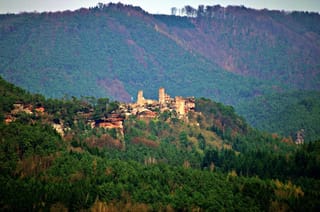
Altdahn Castle
Südwestpfalz
10.6km
castle, chateau
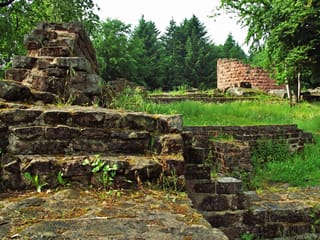
Burg Steinenschloss
Südwestpfalz
11.0km
castle, chateau
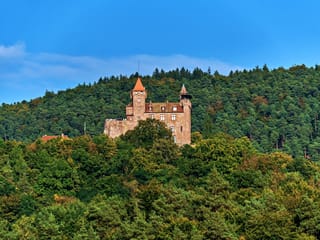
Berwartstein Castle
Südwestpfalz
16.3km
castle, chateau
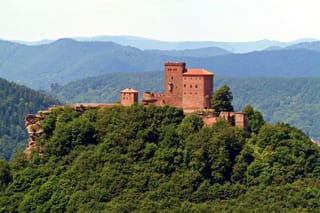
Trifels Castle
Südliche Weinstraße
23.2km
castle, chateau