Brennhausen
Unterfranken Bayern Germany
castle, chateau
Burg Brennhausen
Unterfranken Bayern Germany
castle, chateau
Brennhausen (German: Burg Brennhausen) is a castle in the municipality of Sulzdorf a
Die Burg Brennhausen liegt etwa vier Kilometer westlich von Sulzdorf an der Lederhecke im Landkreis Rhön-Grabfeld in Unterfranken
Previous names
Brennhausen, Burg Brennhausen
Description
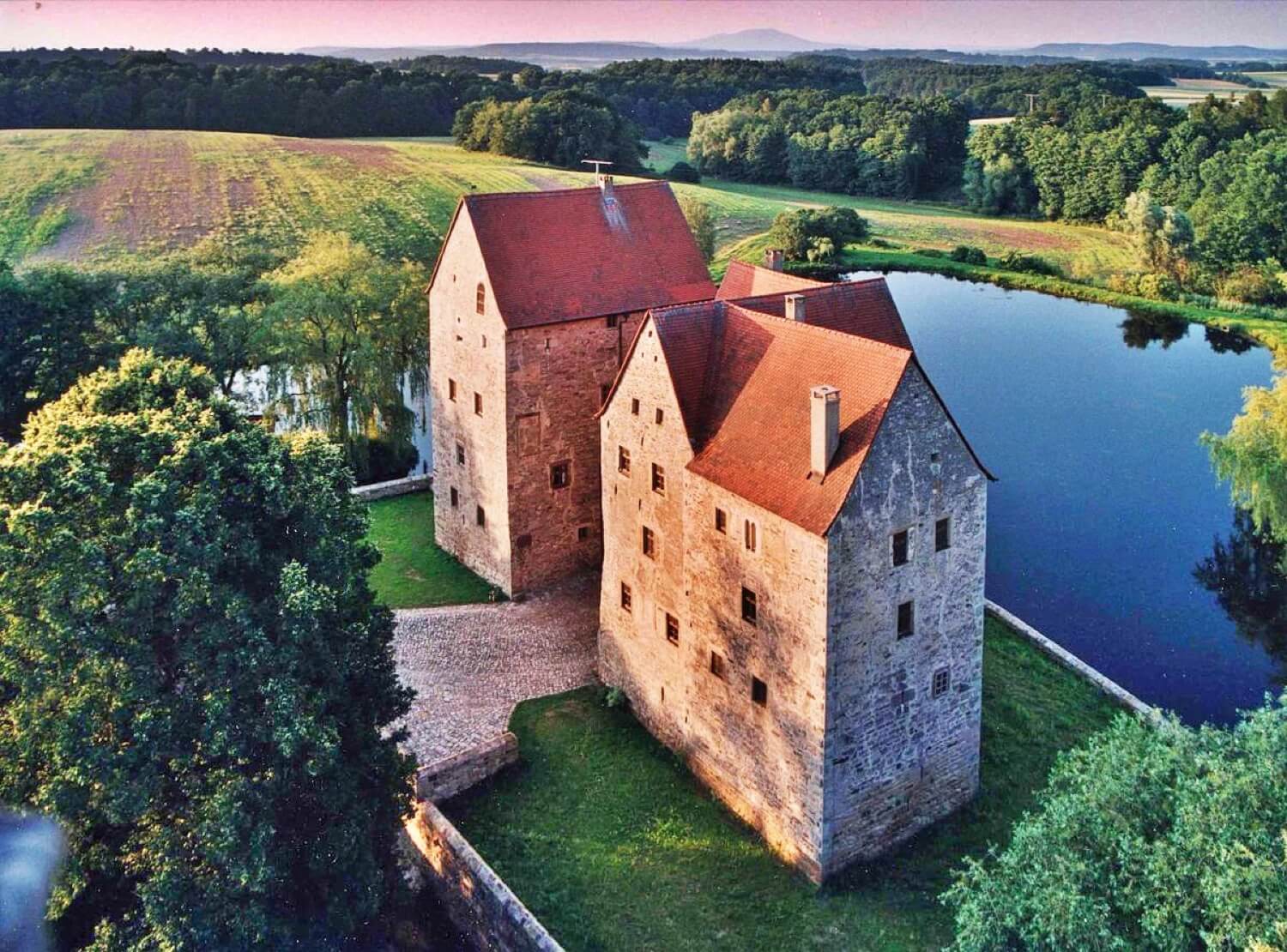
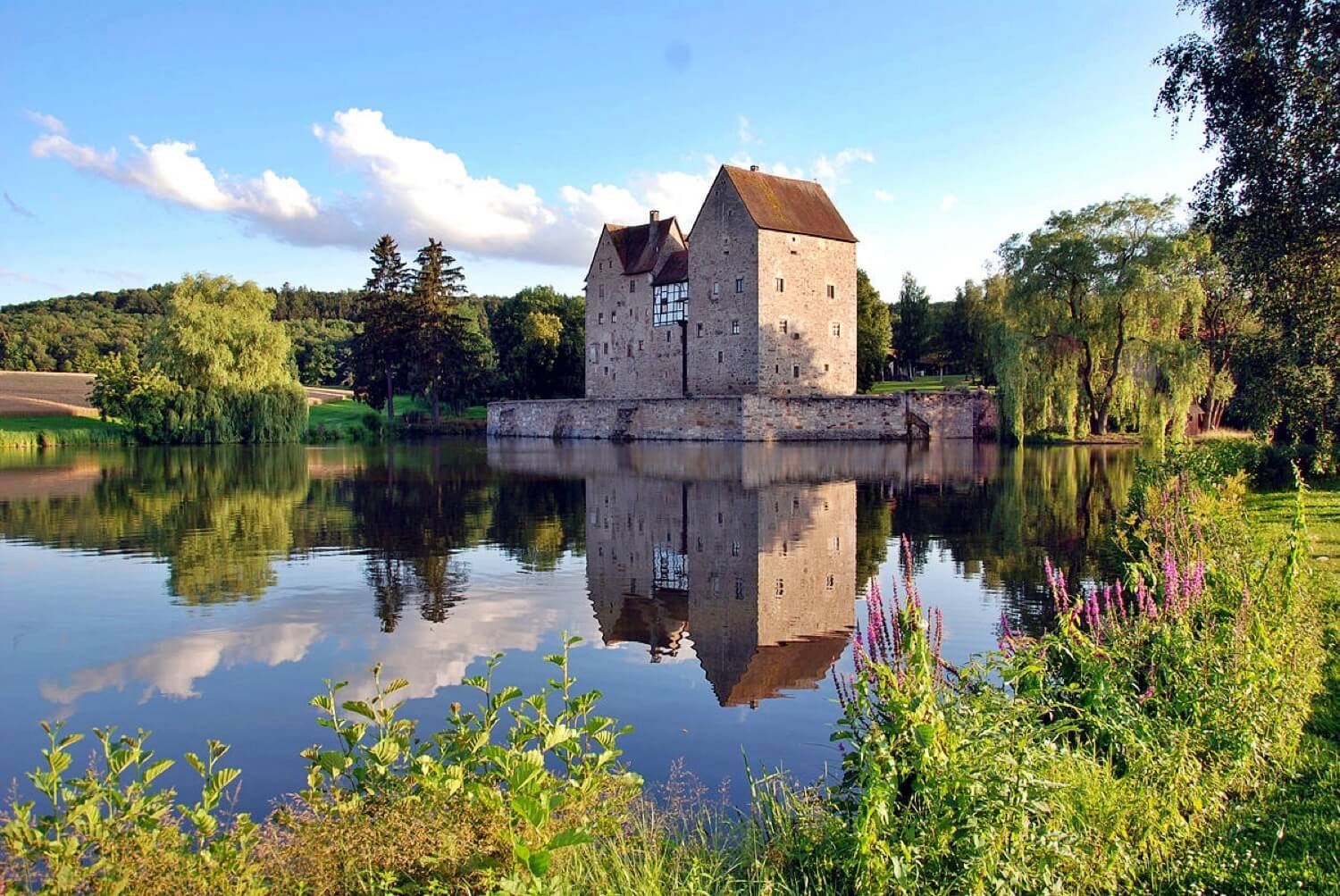
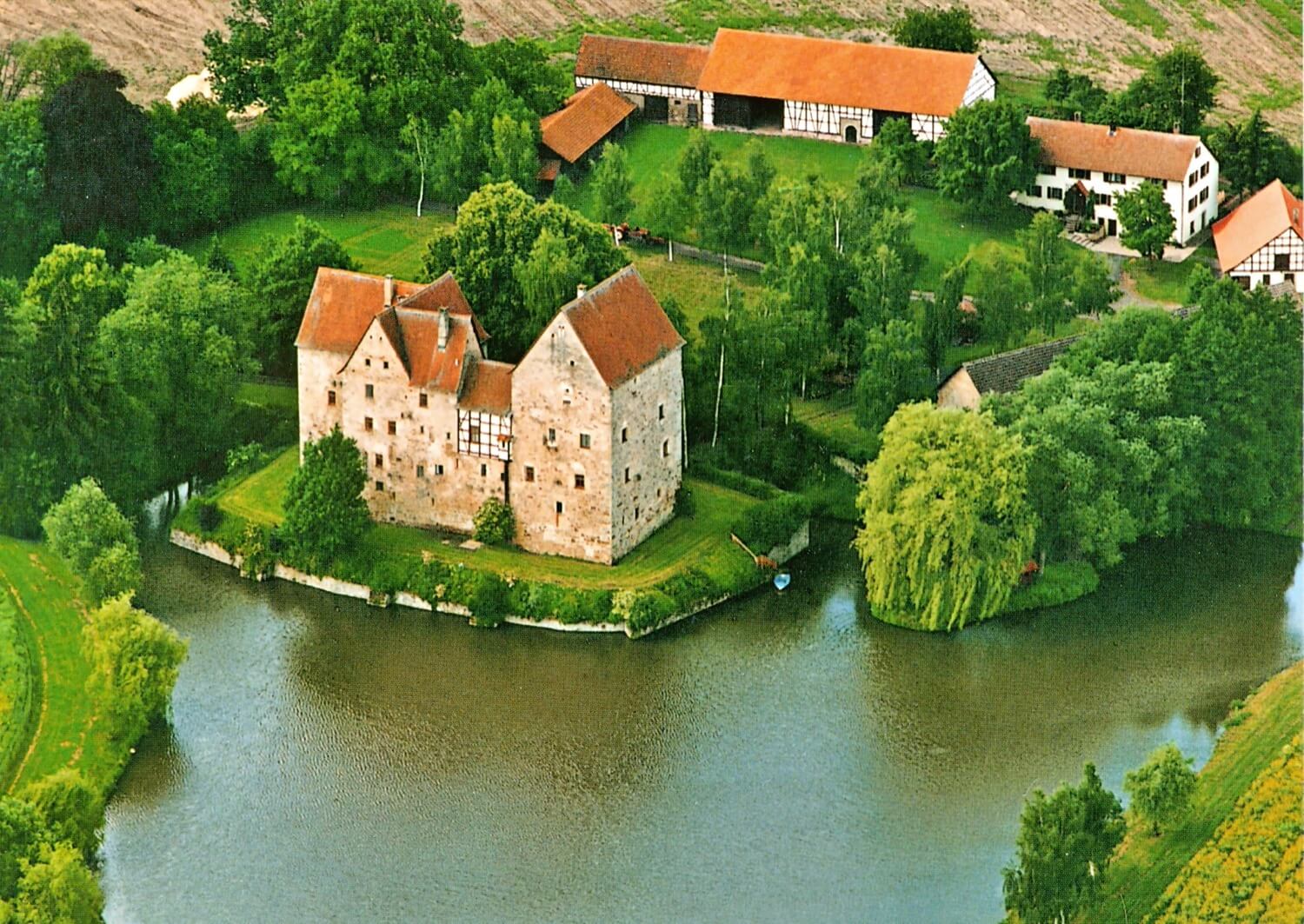
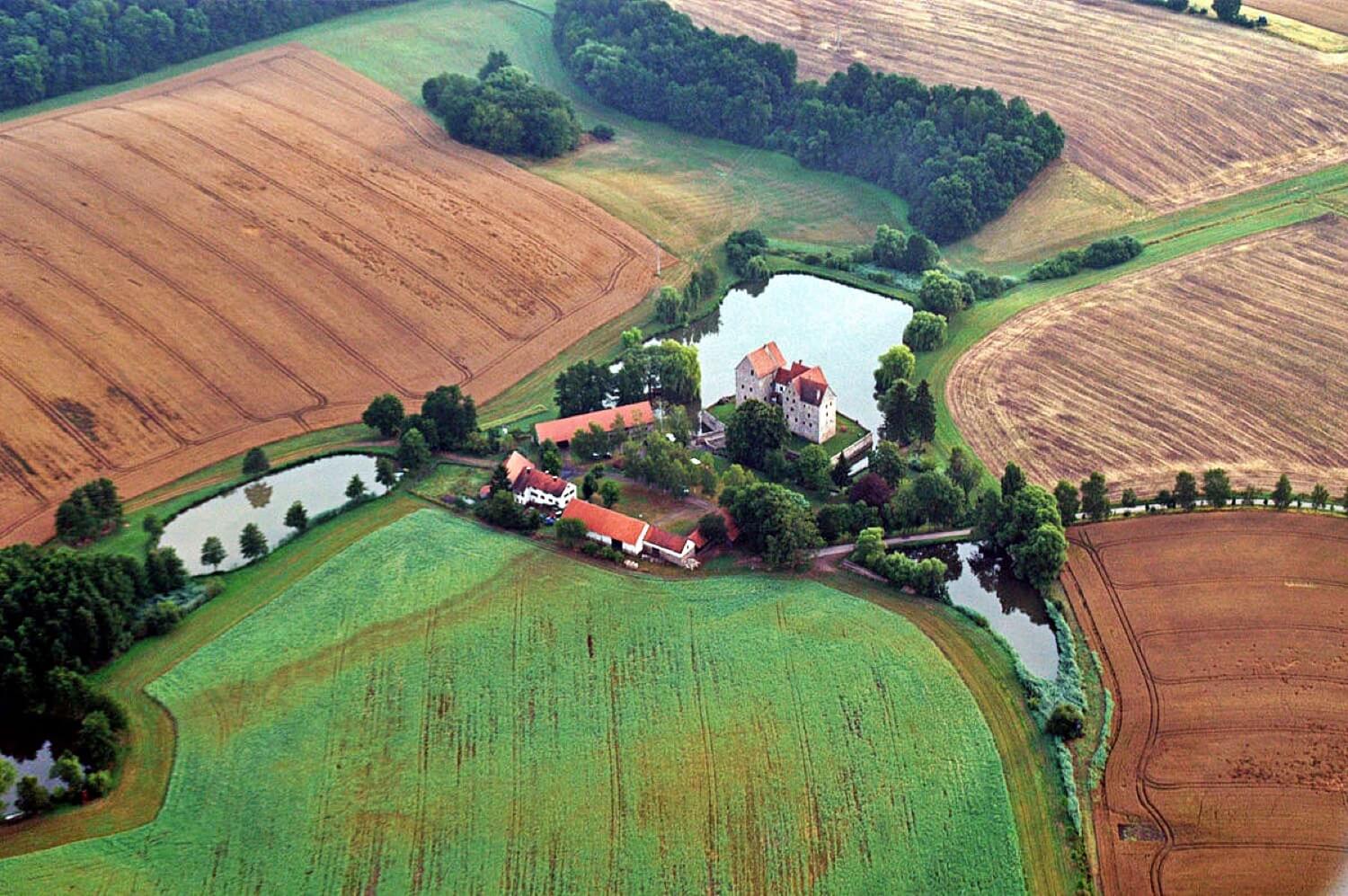
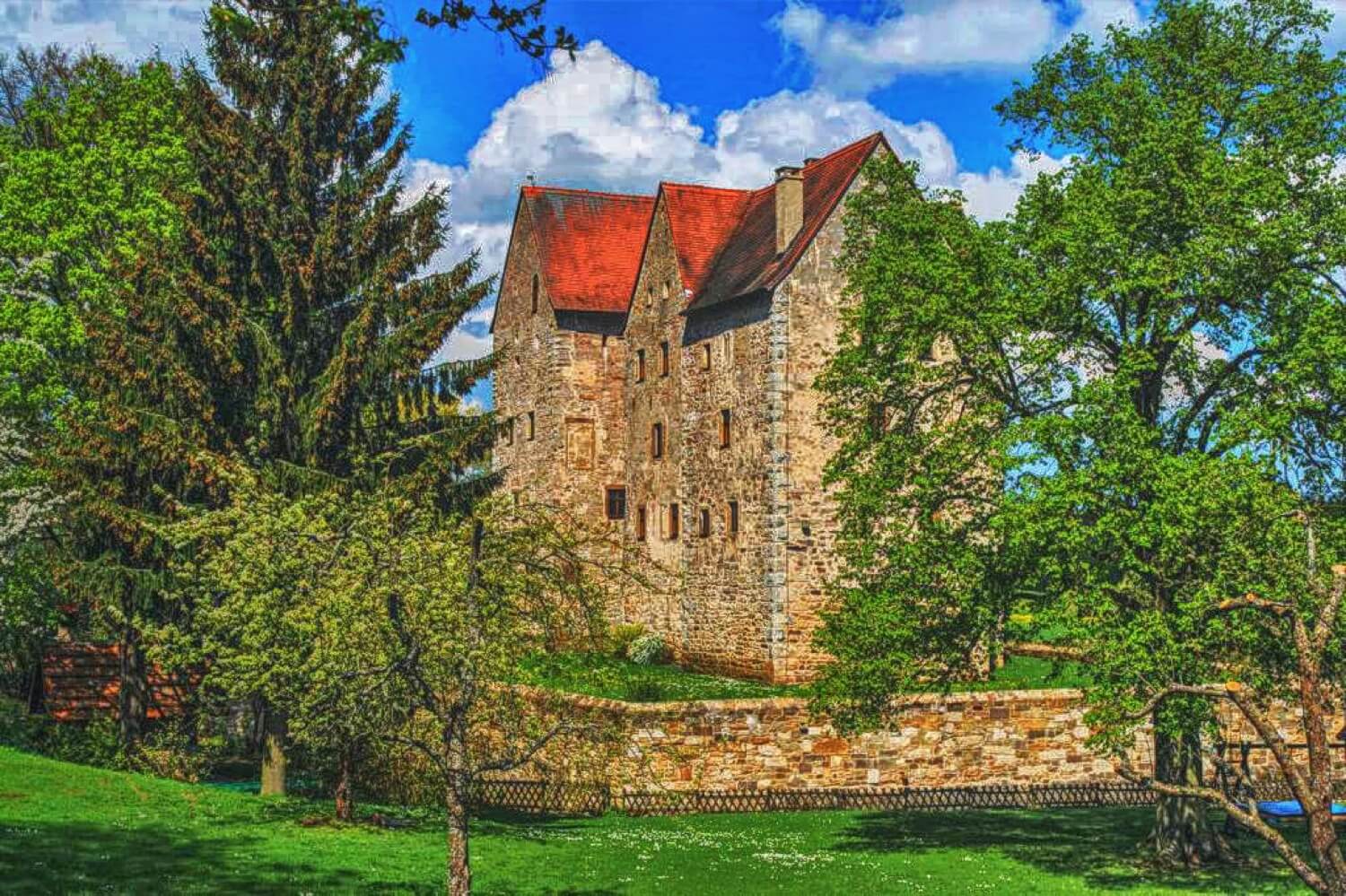
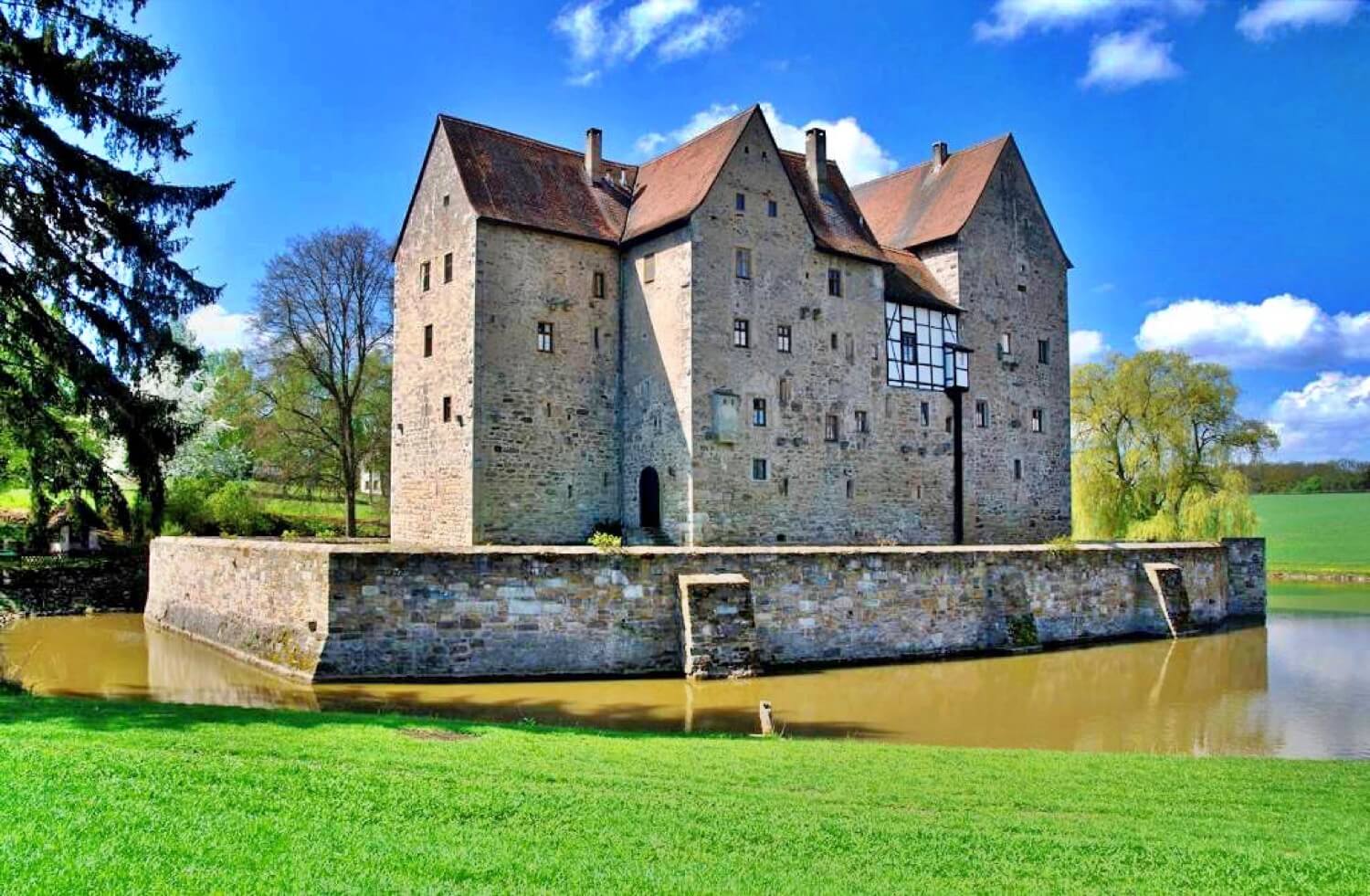
Brennhausen (German: Burg Brennhausen) is a castle in the municipality of Sulzdorf a.d.Lederhecke in the district of Rhön-Grabfeld in Bavaria in Germany. It is located the Haßberge Nature Park.
Josef Braun explains the name Brennhausen in his place-names book as "the houses by a water source", meaning, in this case, a spring. Braun bases his statement on the fact that immediately next to the settlement, a stream springs forth which flows into the river Saale. Braun discovered that the form Brenn- is a written form, changed from the spoken dialect, which is based on the old form Brünn.
Dr. Heinrich Wagner presents a very different view in his Historischen Atlas von Neustadt/Saale (Historical Atlas of Neustadt/Saale). Wagner believes that the origination of the name had nothing to do with the houses by a water source, but rather that the name of the estate is derived from the old German given name, Brunicho. Under this scenario, the founder of Brennhausen used his own name, as was the custom of that time, for the naming of Brunechenhusen.
The first known mention of Brennhausen in an official document was in the year 1182. In this document, Graf Poppo von Henneberg, (VI?) leased to his faithful Wolfram, among others, a tenth of Brunechenhusen. On August 29, 1237, Graf Poppo von Henneberg, VII declared that his vassals "Deynodapifer and Theodericus, so-called von Blanckenberg," must repair the damage done to the Brunechenhusen property when it was unjustly withheld from the abbot and the Bildhausen convent.
The Truchseß von Brennhausen is a genealogical branch of the Truchessen von Wetzhausen which descends from a Hans Truchseß (1260–1330). He had holdings in Wetzhausen, Brennhausen, Sternberg and Essfeld. In the official property record book of the Bishop of Würzburg, Gottfried III von Hohenlohe, with records from 1317 to 1322, it was written that one Truchseß von Blankenberg, and possibly the so-called Hans Truchseß, had holdings in Brennhausen.
In another record book of the Prince-Bishop Albrecht von Hohenlohe, used from 1345–1372, it was written in 1345: “Johannes Truchseß von Alsleben owns also a tenth of Gabolshausen, a tenth of Poppenhausen, a half-tenth of Ermershausen, a tenth of Brennhausen, and a half-tenth of Maroldsweisach.”
In 1343, Hans Truchseß was mentioned in a directory of Wetzhausen. It was written: “Notation regarding Mr. Hansen Truchseß, soul of a knight of Brünnhausen and his wedded wife. Owned Wetzhausen, Brünnhausen, Eßfeld and part of zu Sternberg.” His four Sons inherited these four places after his death and started four independent lines which later branched out even more. Diez, the actual founder of the Wetzhausen line, was given by his father, Hans, all of Wetzhausen and one third of Brennhausen. Hans Truchseß the Younger (1309–1370) received two thirds of the Brennhausen holdings and part of Sternberg. Hanns had his residence in Brennhausen.
Brennhausen remained in the Truchseß family until 1542 when Georg Truchseß died with a brief intermission around 1500. Anna, daughter of Philipp Truchseß took Brennhausen into a marriage with Hans von Berlichingen, a vassal of Wilhelm Count von Henneberg. After Hans von Berlichingen death, Anna sold Brennhausen to pay her husband’s debts and Brennhausen ended up with Dietz Truchseß.
Both documentation and physical evidence strongly suggest that Brennhausen burned in 1525 during the Bauernkrieg or Peasants (or Farmers) Revolt. The beams of the roof and the entrance to one of the cellars date from right after 1525. Stone work also suggests that the floor levels changed at some point. Also G.P. Höhn in his 1747 Lexicon Topographicum states that the peasants set fire to it in 1525.
In 1587 Brennhausen was occupied by Georg Wilhelm von Kotzau. By 1593, the Truchseß family were back at Brennhausen. In 1619, the brothers Otto, Heinrich and Adam von und zu Bastheim along with Georg Wilhelm and Veit Ulrich Truchseß von Wetzhausen purchased Brennhausen for 24,597 gulden.
In 1642, a Franz Günther, a simple farmer's son from Kützberg by Schweinfurt, was ennobled “Günther von Brennhausen” and given the fief of Brennhausen from the Bishopric of Würzburg. From 1635 to 1647, Franz was the Commandant of the fortress at Königshofen. Franz’ son Hans, also a distinguished military man, received Brennhausen. Hans and his second wife Felicitas Agnes Leschin von Mülheim coat of arms are in the courtyard. The transfer to their minor son, Johann Georg Hartmann Günther von Brennhausen, upon Hans' death was held up in court in part due to Felicitas Agnes being protestant. The 1675 case was eventually won in 1679 and invested in 1680, only to pass away in 1681.
In 1681, the von Bibra family received Brennhausen instead of Burgwallbach as part of an out of court settlement of a lawsuit dating from 1602 when the Prince Bishop Julius Echter von Mespelbrunn refused to transfer family fiefs between cousins. This type of transfer was routine but during the Counter Reformation, the bishop refused a transfer to the Protestant cousins. Initially a fief to the Bibra family, it was converted to personal ownership and in 2002 transferred to the Stiftung Brennhausen (Foundation).
Ludwig Ernst von Bibra who moved to Brennhausen and married his housekeeper, Katharine Seifert on October 22, 1734. She was the daughter of a linen weaver and a midwife in Rentwerthausen which is a village next to Bibra.
In 1736 they had a son, Friedrich Gotthelf and in 1739 a second son, Karl. On February 8, 1740 Katherine was raised to the nobility by Emperor Karl VI and given the name von Seyferhold. Only five months later (July 16, 1740) Ludwig Ernst died and his cousin at Bibra, Johann Philip seized Brennhausen by force and dispossessed the widow and her two children.
She appealed to the Imperial Court (Reichshofrat) and twelve years later on April 28, 1752 she won an order from the court that Johann Philip must return the property to her sons and pay damages. When Johann Philip children died without children, Bibra was transferred to Katharine’s younger son Karl own son, Karl Friedrich.
There is a tradition which states that Brennhausen, in older times, was a monastery, which is where the naming of the surrounding fields, Nonnenäcker (nun’s fields) and Pfaffenpfad (pastor’s path) must have come.
In past centuries there were more houses at Brennhausen. Anton Rottmayer in Statistisch-topographisches handbuch für den Unter-Mainkreis des königreichs Bayern published in 1830 describes Brennhausen as having: one castle, seven residences, one mill with two mill stones, ten families, 56 residents, 22 Catholics, 34 Protestants with the Protestants going to Sulzdorf for church and school and the Catholics going to Obereßfeld. In 1832, Johann Wilhelm Rost, described fifty-one inhabitants in twelve families lived at Brennhausen. Ten of them were Catholic, thirty-six Lutheran, and five Jewish. The Catholics went to church in Untereßfeld and the Lutherans in Sulzdorf. Until 1848, Brennhausen had original jurisdiction over its own affairs. In 1915 (WWI), Brennhausen had six residences besides the castle but only two were inhabited. The other four were dilapidated.
Die Burg Brennhausen liegt etwa vier Kilometer westlich von Sulzdorf an der Lederhecke im Landkreis Rhön-Grabfeld in Unterfranken. Das gut erhaltene Wasserschloss wird noch bewohnt und ist nur von außen zu besichtigen.
Zur älteren Geschichte des Burgschlosses an der Grenze zwischen den Haßbergen und dem Grabfeld gibt es nur wenige gesicherte Überlieferungen. Einige Teile der Anlage scheinen noch auf das 13. Jahrhundert zurückzugehen. Erst 1421 erschien ein Truchsess von Brunnhausen in einer Urkunde der Grafen von Henneberg. Weitere Belege stammen von 1439 und 1522. In der zweiten Hälfte des 17. Jahrhunderts belehnte das Hochstift Würzburg den Königshofener Festungskommandanten Franz Günter mit der Herrschaft. Günter wurde gleichzeitig in den Adelstand erhoben und nannte sich fortan Günter von Brennhausen. Das personengebundene Lehen fiel 1681 an das Hochstift zurück und wurde im gleichen Jahr als Ausgleich für das eingezogene Burgwallbach an den Freiherrn Hans Kaspar von Bibra verliehen. Dessen Enkel Friedrich Gotthelf gründete die Linie der Freiherren von Bibra-Brennhausen, die das Schloss noch bewohnt. Eine Inschrift kündet von einer Renovierung im Jahre 1861. Das in den letzten Jahrzehnten umfassend sanierte Schloss ist wieder vollständig vom Wasser umgeben.
Das Burgschloss liegt einsam auf einer rechteckigen, gemauerten Terrasse im Talgrund. Die ehemaligen Wassergräben bzw. der Schlossweiher wurden inzwischen wiederhergestellt. Der Inventarband von 1915 verzeichnet dort nur sumpfige Wiesen. Der Zugang erfolgt von Westen über eine Steinbrücke. Auf dieser Seite und im Norden wird der Schlossbezirk von einigen Wohn- und Wirtschaftsgebäuden abgeschlossen.
Die Burg besteht aus zwei gotischen Wohntürmen, die mit einem winkelförmigen Zwischenbau verbunden sind. Besonders markant ist der rechteckige, viergeschossige Nordturm, den wie die anderen Bauteile ein hohes, ziegelgedecktes Satteldach abschließt. Die anderen Bauteile sind niedriger, auch der quadratische Südturm. Die Anlage besteht größtenteils aus unverputztem, unregelmäßigem Sandsteinmauerwerk mit verzahnten Eckquadern, teilweise mit Fachwerkaufsätzen. An den Außenseiten sind einige Aborterker erhalten. Der kleine Burghof war ursprünglich durch eine Quermauer geschlossen, deren Reste noch am Südflügel ansetzen.
Im Inneren sind einige Räume im Erdgeschoss durch einfache Kreuzgewölbe überspannt. Die Zimmer in den Obergeschossen besitzen teilweise Flachdecken mit barockem Rahmenstuck.
Useful information
Gratis
- Schlosspark
- Informationstabellen
- Privatbesitz
- Wegen Besuchen geschlossen
-
Nearby castles
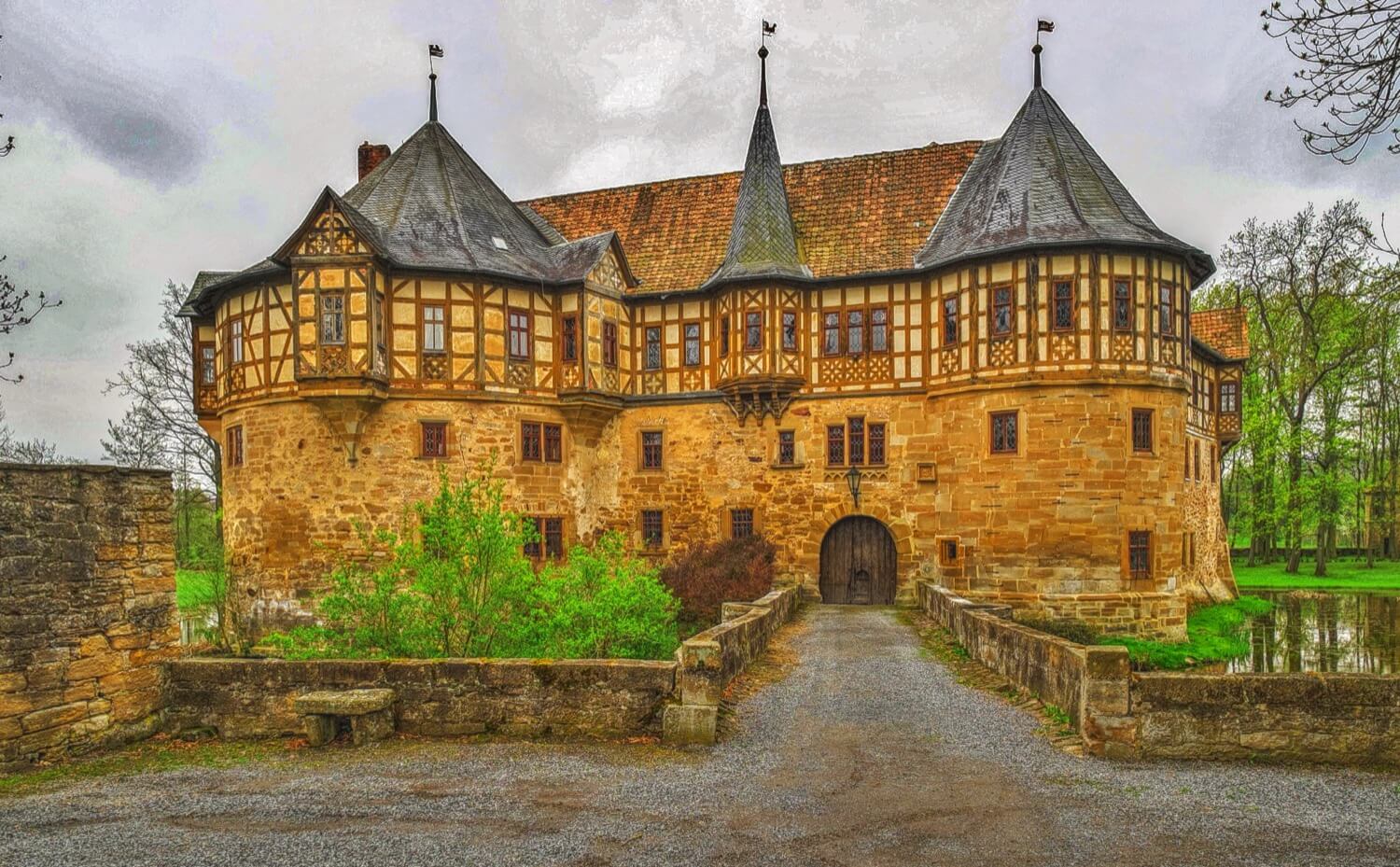
Irmelshausen Water Castle
Unterfranken
13.4km
castle, chateau
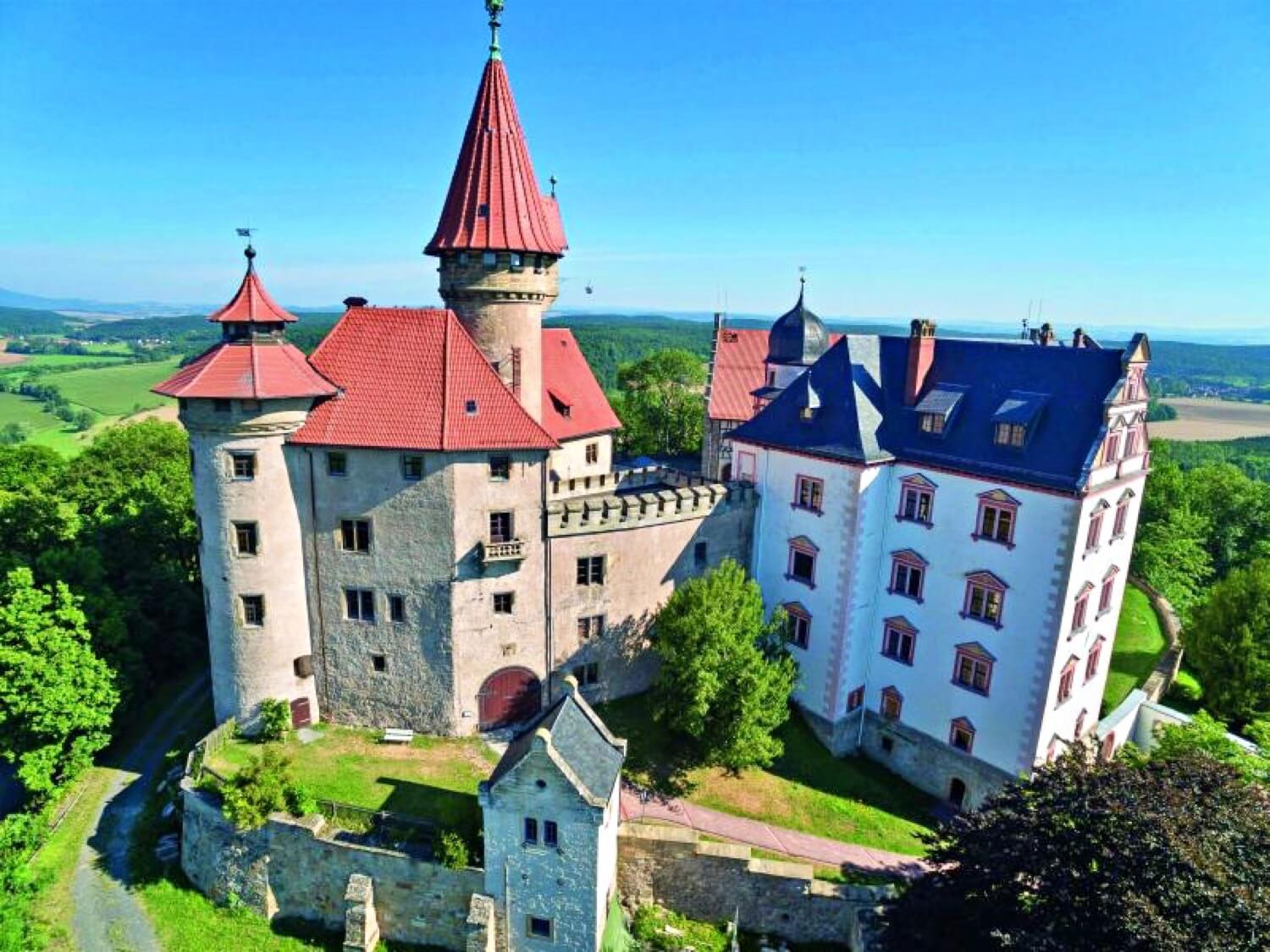
Heldburg Fortress
Hildburghausen
15.4km
fortress
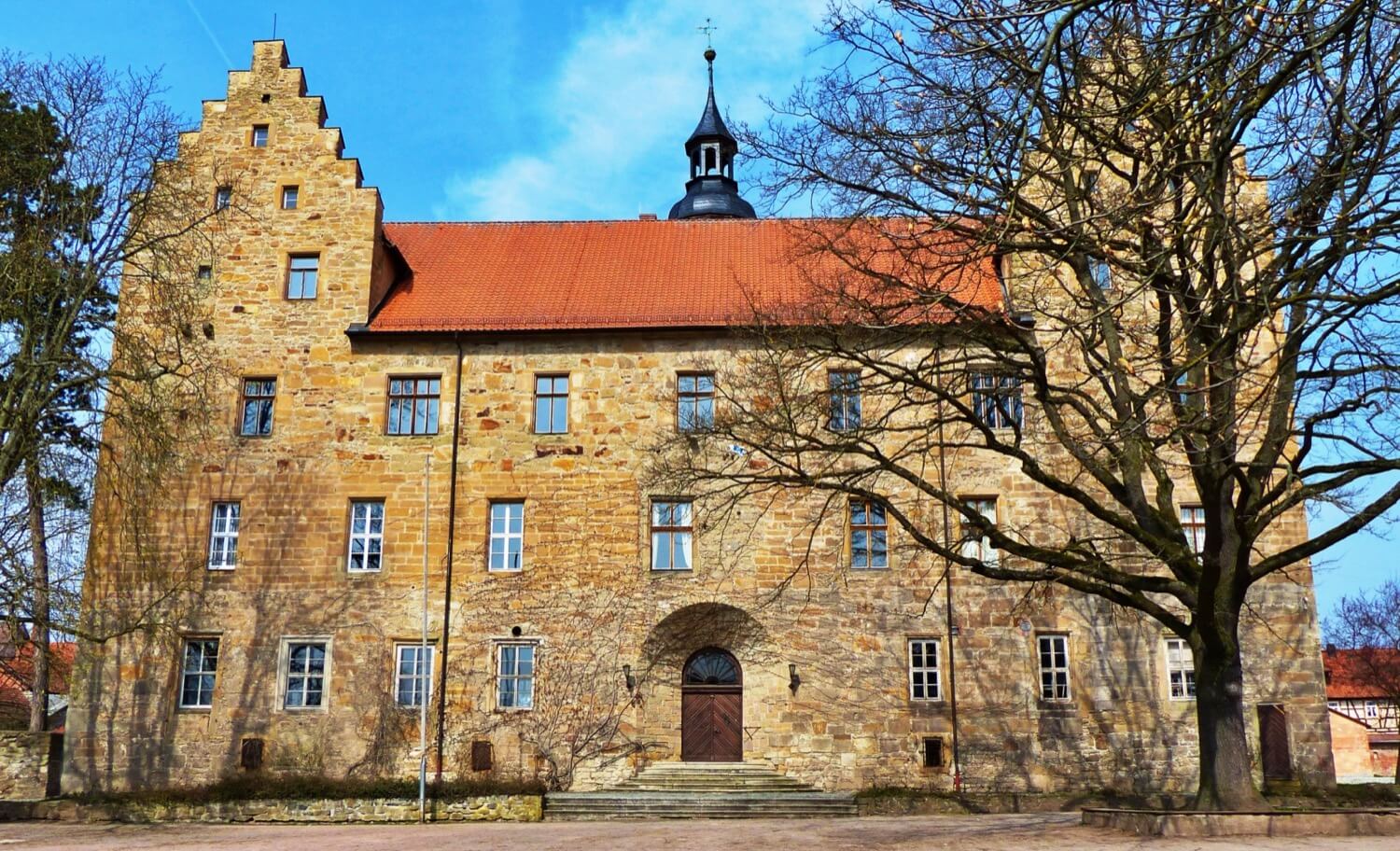
Schloss Glücksburg (Römhild)
Hildburghausen
16.7km
castle, chateau
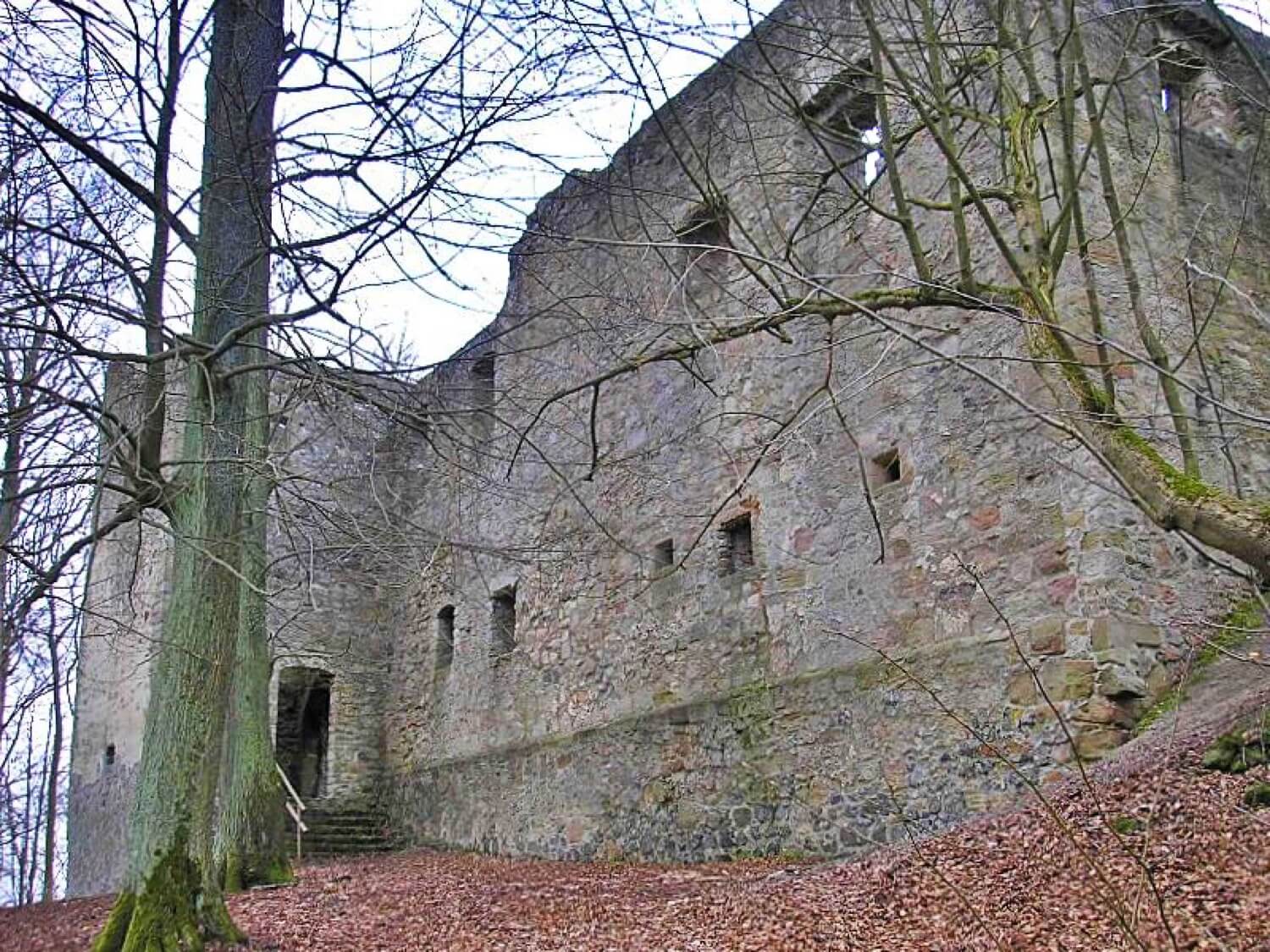
Bramberg Castle
Lower Franconia
17.4km
castle, chateau
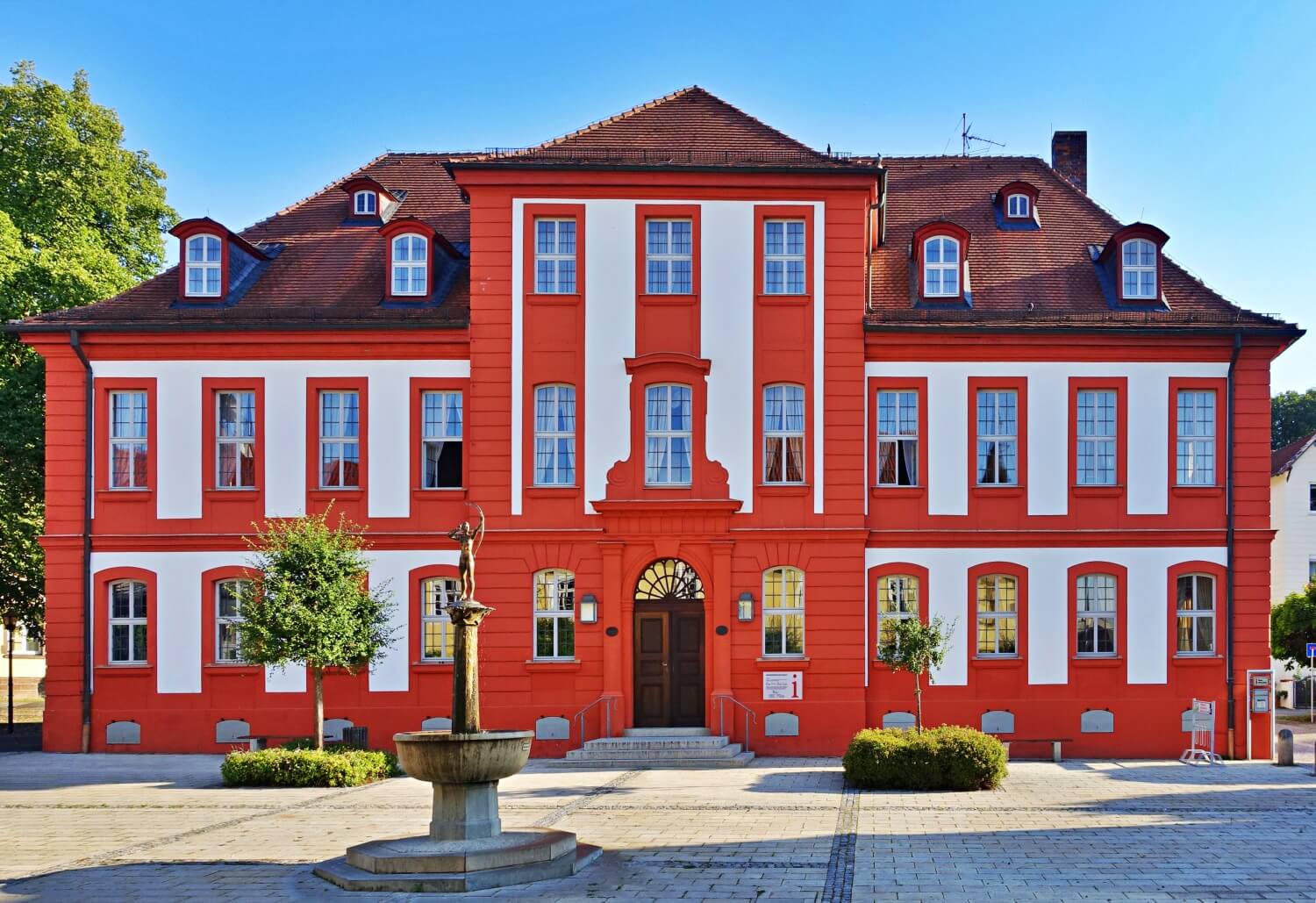
Jagdschloss Bad Rodach
Oberfranken
21.0km
castle, chateau
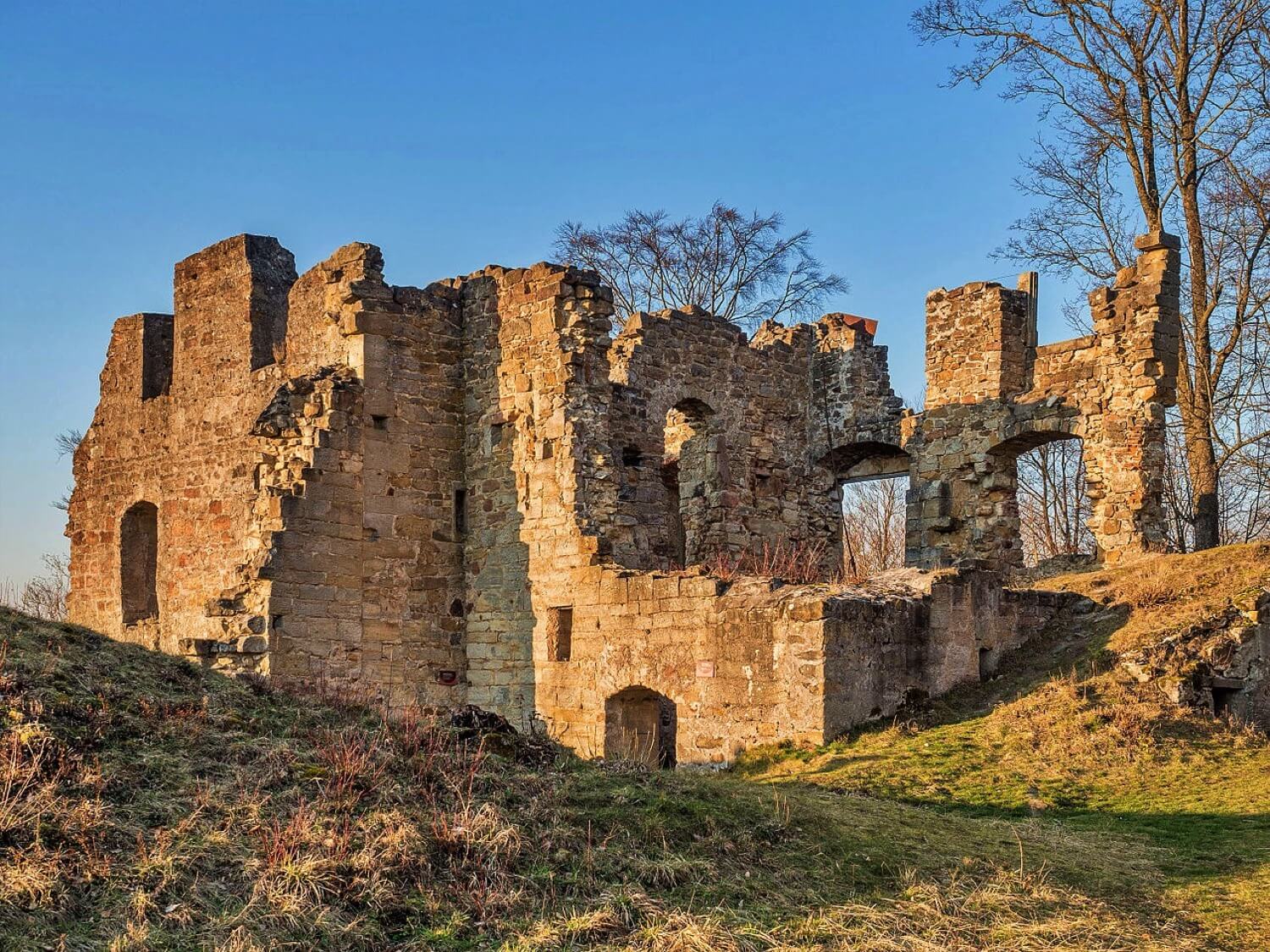
Rauheneck Castle (Ebern)
Lower Franconia
21.5km
castle, chateau
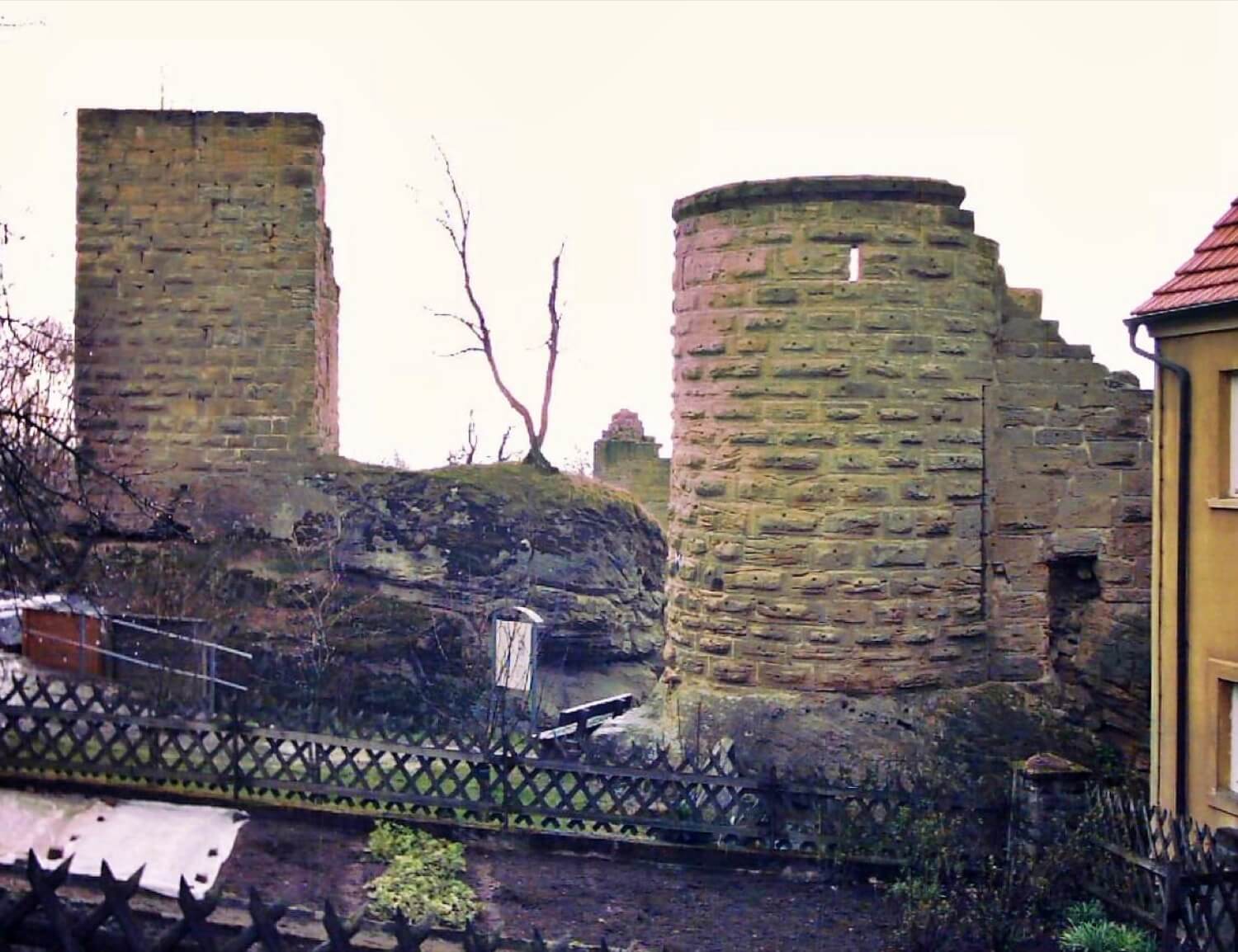
Lichtenstein Castle (Lower Franconia)
Unterfranken
21.8km
castle, chateau