Albrechtsberg Palace (Dresden)
Dresden Sachsen Germany
manor, mansion
Schloss Albrechtsberg (Dresden)
Dresden Sachsen Germany
manor, mansion
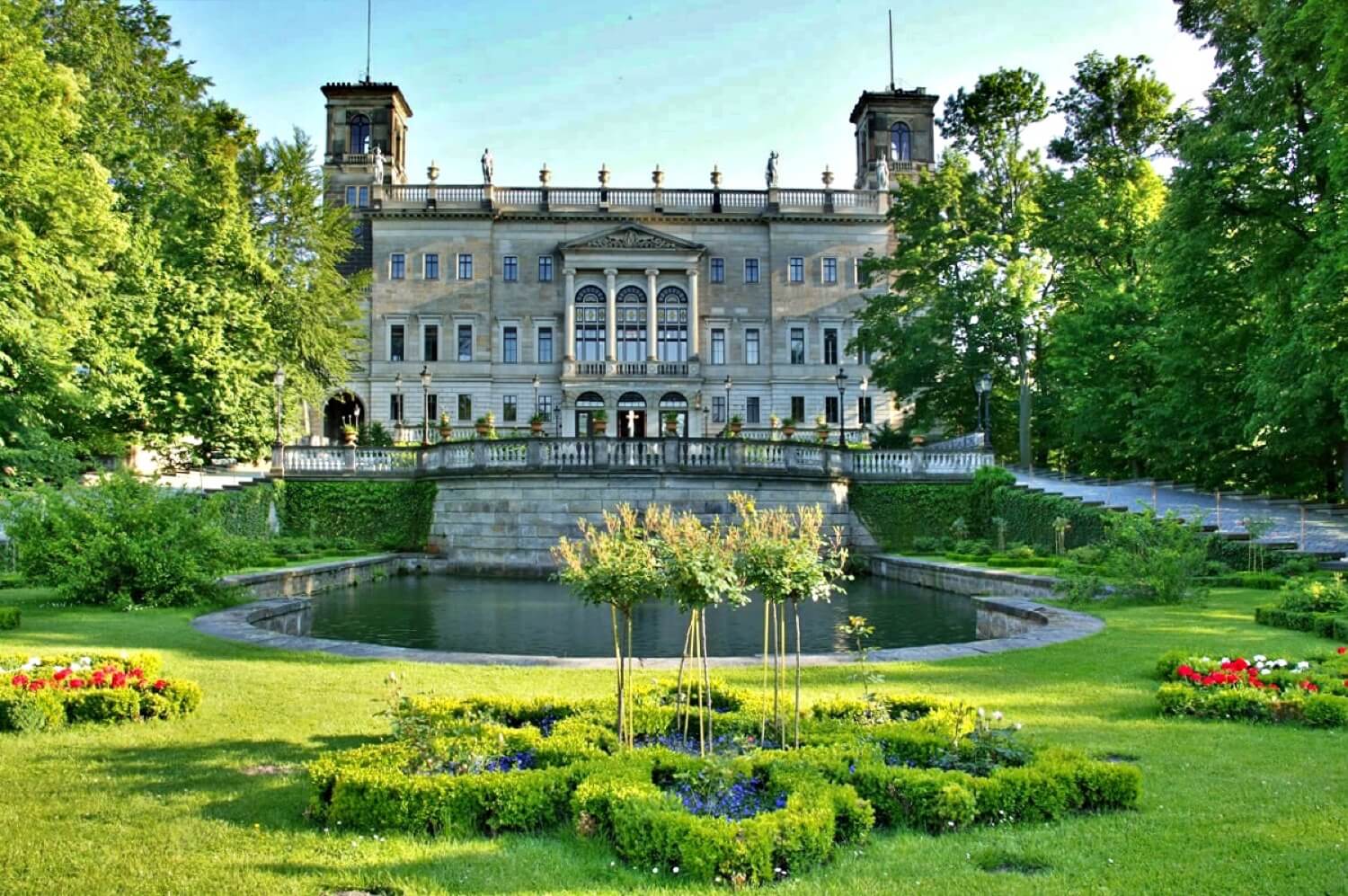
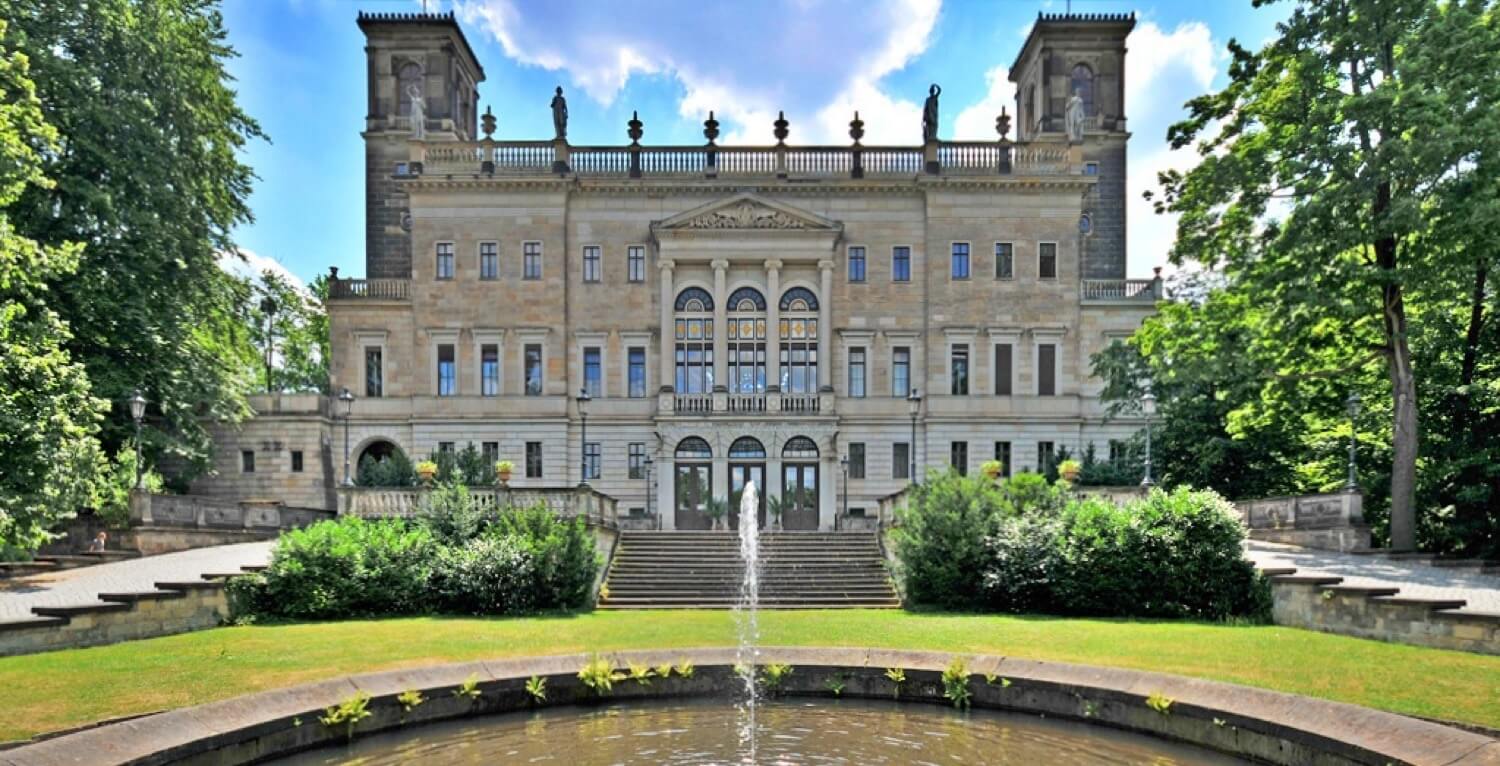
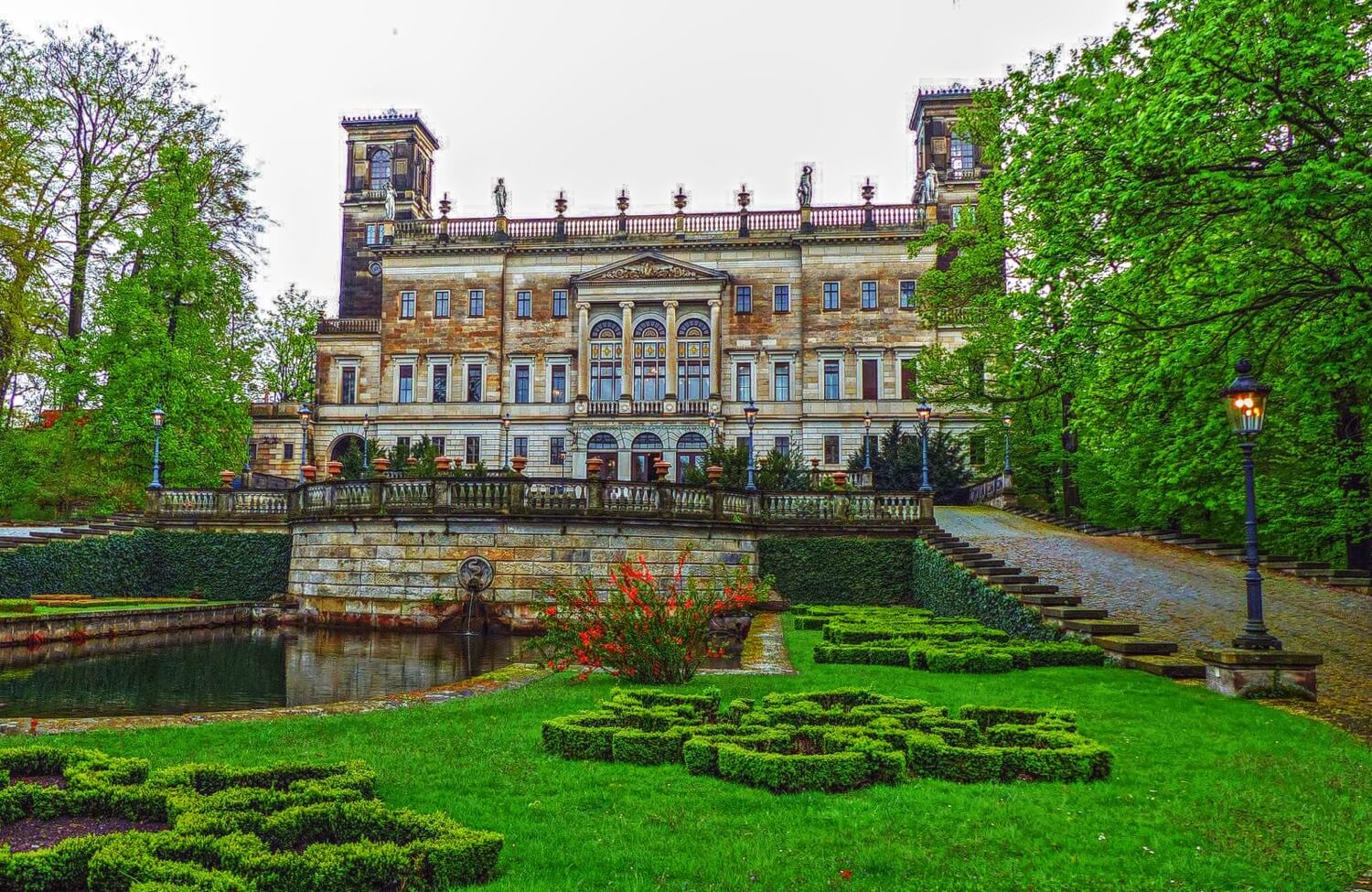
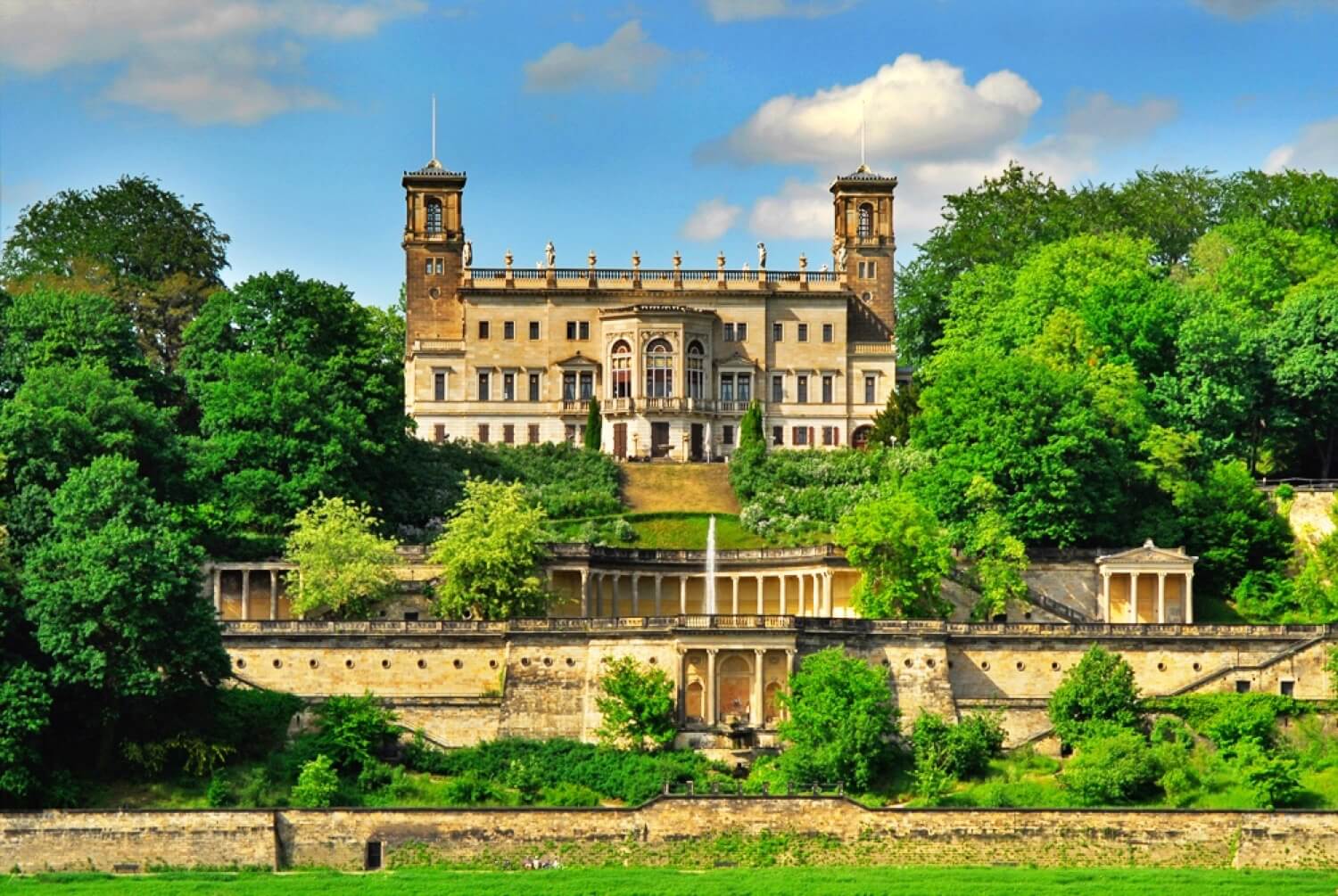
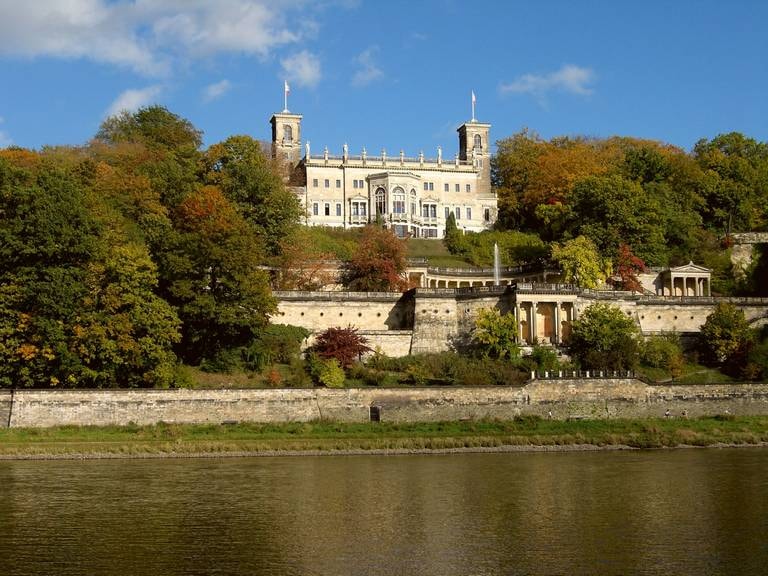
Albrechtsberg Palace or Albrechtsberg Castle (German: Schloss Albrechtsberg) is a Neoclassical stately home above the Elbe river in the Loschwitz district of Dresden
Das Schloss Albrechtsberg, auch Albrechtsschloss genannt, ist eines der drei Elbschlösser am rechten Elbufer im Dresdner Stadtteil Loschwitz
Previous names
Albrechtsberg Palace (Dresden), Schloss Albrechtsberg (Dresden)
Description
Albrechtsberg Palace or Albrechtsberg Castle (German: Schloss Albrechtsberg) is a Neoclassical stately home above the Elbe river in the Loschwitz district of Dresden. It was erected in 1854 according to plans designed by the Prussian court and landscaping architect Adolf Lohse (1807–1867) at the behest of Prince Albert, younger brother of the Prussian king Frederick William IV.
About 1803 James Ogilvy, 7th Earl of Findlater had acquired several vineyards in the Dresden Elbe Valley and had a manor house built on what later became the site of Albrechtsberg Palace. However, Ogilvy died in 1811 and did not witness its completion. Johann Gabriel Krebs bought the country house and rebuilt it into a restaurant that became the most popular day trip restaurant of Dresden, abode of Gottfried Semper and Richard Wagner.
Prince Albert of Prussia (1809–1872) in 1853 had secondly married Rosalie von Rauch, Countess of Hohenau (1820–1879); due to this morganatic marriage he was forced to leave the Prussian court and had to look for a new home abroad. He commissioned his chamberlain's wife, Baroness of Stockhausen to find an adequate domicile. She turned to the Saxon capital and acquired the area “Findlater's Vineyard”, including the manor and gardens, by order of the Prince for 16,000 Thalers.
Adolf Lohse, a student of Karl Friedrich Schinkel, designed the plans for the present-day castle. For the gardens, the Prince engaged the Prussian landscape architect Eduard Neide (1818–1883) who created the plan, though the court gardener Hermann Sigismund Neumann (1829–1880) accomplished them. Before Albrechtsberg, the adjacent Villa Stockhausen was completed. The villa was originally established for the chamberlain, but was used for the first year as domicile of the Prince and his wife. 1854 the castle was accomplished and the couple moved in.
After Prince Albrecht and Rosalie had died, their younger son Count Frederick of Hohenau (1857–1914) lived in the castle until his death, whereafter his elder brother Wilhelm (1854–1930) took over the residence. In 1925 Wilhelm finally had to sell the castle and the territory because of gambling debts. The new owner was the City of Dresden. After 1930, the gardens were opened for the public and redesigned as a recreational area for the citizens of Dresden under Mayor Wilhelm Külz.
During World War II the premises were used by the SA, whilst from 1943 the castle was used as a children’s home. All the three Elbe castles were spared from the Bombing of Dresden, however occupied by the Red Army, with depredations and damages as the consequences. In 1948 the City of Dresden had to sell the castle to the Foreign Economic Trade Ministry of the Soviet Union. The castle was renovated by the architect Koeckritz. After the redecoration the castle was opened as a hotel called “Intourist.” In 1951, the East German Jugendheim GmbH Berlin repurchased the castle, and since 1952 the City of Dresden is once again the owner. The building was used as a Pioneers Palace by the Ernst Thälmann Pioneer Organisation.
In 1977 the castle was declared a historic monument. The step by step restoration continues to this day. In 1991 the “Hotel- und Gastättenschule Schloss Albrechtsberg GmbH” began operating in the castle. Today, the entire castle and grounds can be rented for special events. The operator of the castle since 1999 is the “Konzert- und Kongressgesellschaft mbH Dresden”.
Adolf Lohse designed the castle in a late Neoclassical style that was very characteristic for the mid 19th century. During the interior completion just the most high class materials were used, for example marble, the most kingly wood and the white sandstone from Saxony. Deciding for the composition was the style of the classicism. For this style, especially important is the Grecian and Roman antiquity; the Italian Renaissance and its traditionally application. The guide for the composition of the castle was the Ville d'Este close to Rome.
For the creation of the park, the Prussia garden architect Eduard Neide 1818-1883 was engaged. However, the court gardener Hermann Sigismund Neumann carried them out. Under the management of the court gardener, four landscapes were created. Those were crossed by curved alleys that are go over bridges and a viaduct. These alleys passe applied ponds, rocks and a waterfall.
Today, the HOGA Albrechtsberg castle is used as a private hotel and catering school. HOGA is the short cut for the German words Hotel and Gastronomie. Gudrun Lamm and Regina Kirschstein founded the school 1991. HOGA trained students for the exalted gastronomy.
The school offers a unique education model in Germany. Students are able to do their Abitur with a job at the job-related Gymnasium but this is just one of the few different school educations that are available at this school. In addition, students can go to Middle school, they can get general university qualification or they can go to the job – related Gymnasium. Furthermore, students can do their initial training as Hotel expert, Restaurant expert or a cook. Besides, students can receive a further education to a business economist; they can receive the college qualification in welfare or the education to a hotel assistant.
The castle is also available to rent for private ore business events. All in all, there are ten halls and saloons, a sun patio and a park scenery that are available for renting.
Das Schloss Albrechtsberg, auch Albrechtsschloss genannt, ist eines der drei Elbschlösser am rechten Elbufer im Dresdner Stadtteil Loschwitz.
Es wurde zwischen 1850 und 1854 von Adolf Lohse erbaut für Prinz Albrecht von Preußen (1809–1872), den jüngsten Bruder der preußischen Könige Friedrich Wilhelm IV. und Wilhelm I. (ab 1871 auch deutscher Kaiser). Prinz Albrecht von Preußen war aufgrund seiner Scheidung von Marianne von Oranien-Nassau und seiner zweiten, nicht standesgemäßen Ehefrau Rosalie von Rauch, Tochter des preußischen Kriegsministers Gustav von Rauch, am preußischen Hof nicht mehr erwünscht. Er hatte Rosalie 1853 morganatisch geheiratet. Die Hochzeit fand außerhalb Preußens in Sachsen-Meiningen statt, denn Albrechts Schwiegersohn, der Ehemann seiner älteren Tochter Charlotte aus der Ehe mit Marianne von Oranien-Nassau, war Erbprinz von Sachsen-Meiningen (ab 1866 Herzog Georg II. von Sachsen-Meiningen). Rosalie wurde vor der Eheschließung zur Gräfin von Hohenau erhoben. Das Paar ließ sich auf Schloss Albrechtsberg nieder.
Der preußisch-klassizistische Bau Adolf Lohses (1807–1867), einem Schüler Schinkels, wirkt wie ein Exot in der überwiegend barocken Architekturlandschaft Dresdens.
Der Park wurde durch den ebenfalls preußischen Gartenbaumeister Eduard Neide (1818–1883) entworfen und angelegt unter Führung des königlichen Hofgärtners Hermann Sigismund Neumann (1823–1880), der später den Waldpark Blasewitz entwarf. Er ist in unterschiedliche Landschaftsbereiche gegliedert. Über einen Viadukt war die Vorfahrt zum römischen Bad möglich. Aus der nahen Dresdner Heide werden die, bis auf das „Römische Bad“, ganzjährig betriebenen Wasserspiele in den Wasserbecken, dem Teich und dem künstlichen Wasserfall gespeist.
Die Stadt Dresden erwarb das Schloss von einem Sohn Prinz Albrechts. Der Park war seit 1930 öffentlich zugänglich und sollte nach Plänen der Stadt in einen zweiten Großen Garten verwandelt werden. Im Zweiten Weltkrieg unbeschädigt geblieben, diente das Schloss von Juni 1945 bis Januar 1946 zusammen mit den benachbarten Elbschlössern der SMAD-Verwaltung für das Land Sachsen als Hauptsitz. Später verkaufte Dresden das Schloss an das sowjetische Außenhandelsministerium. Es ließ das Schloss restaurieren und eröffnete es 1948 als Hotel der Firma Intourist. Von ihr kaufte 1951 die Vermögensverwaltungsgesellschaft der Freien Deutschen Jugend (FDJ), die Jugendheim GmbH, das Schloss und richtete nach sowjetischem Vorbild den ersten Pionierpalast auf dem Gebiet der DDR ein, benannt nach Walter Ulbricht. Der Pionierpalast diente nun als Freizeitzentrum für Dresdner Kinder, wobei die Stadt Dresden 1952 erneut Eigentümerin des Grundstücks geworden war. In einem Teil des Schlossgeländes (u. a. Torhäuser) entwickelte sich nach der Wende daraus die JugendKunstschule Dresden.
Das Hauptgebäude und die angrenzende Terrassen werden seit 1991 als festliche Veranstaltungsstätte im Auftrag der Landeshauptstadt Dresden genutzt. Heute wird das Schloss von der Messe Dresden GmbH betrieben. Interessenten können über diese städtische Tochtergesellschaft Räumlichkeiten mieten.
Von 1991 bis 2014 war die Hotel- und Gaststättenschule Schloss Albrechtsberg GmbH (HOGA) ebenfalls ansässig im Schlossgelände. Das im Namen und im Logo der Schule vertretene Schloss verschwand daraus im Sommer 2012, weil es für die meisten Bildungsgänge der inzwischen zu einem Schulverbund angewachsenen HOGA Schulen Dresden nicht mehr repräsentativ war.
Die Inneneinrichtung des Schlosses wurde seit Ende der 1970er Jahre schrittweise restauriert. Sehenswert sind das Türkische Bad im maurisch-orientalischen Stil und der Kronensaal. Eine öffentliche Besichtigung des Hauses ist am Wochenende im Rahmen von Führungen möglich. Der Schlosspark ist öffentlich begehbar. Im Kronensaal, dem Festsaal und Prunkstück von Schloss Albrechtsberg, finden unter anderem öffentliche „Meisterkonzerte“ sowie „Kammerkonzerte der Dresdner Philharmonie“ statt. Das Dresdner Standesamt führt im Gartensaal standesamtliche Eheschließungen durch.
Nearby castles
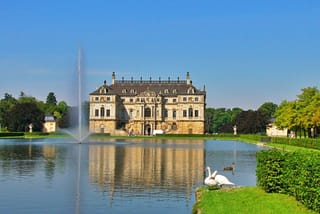
Palais im Grossen Garten
Dresden
3.8km
castle, chateau
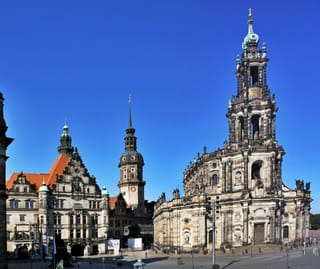
Hausmannsturm
Dresden
4.3km
castle, chateau
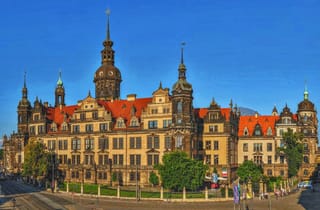
Dresden Castle
Dresden
4.3km
castle, chateau
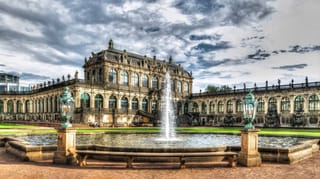
Zwinger (Dresden)
Dresden
4.5km
castle, chateau
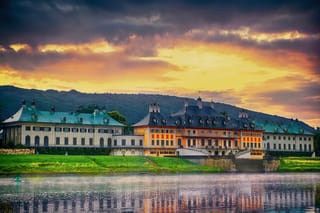
Pillnitz Castle
Dresden
8.2km
castle, chateau
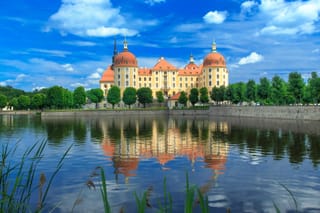
Moritzburg Castle
Meißen
13.9km
castle, chateau
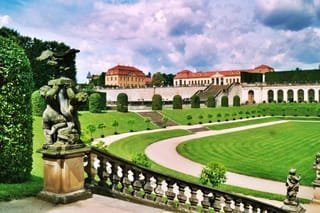
Grosssedlitz Baroque Garden
Sächsische Schweiz-Osterzgebirge
14.2km
castle, chateau