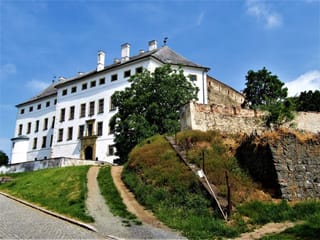
Sovinec Castle
Bruntál Moravskoslezský kraj Czech Republic
castle, chateau
Hrad Sovinec
Bruntál Moravskoslezský kraj Czech Republic
castle, chateau
In the second half of the 13th century, due to their attempts tat colonizing the mountains, the Olomouc bishops came into conflict with the Jeseníky landlords
Hrad Sovinec byl postaven před rokem 1332 na skalnatém ostrohu nad stejnojmenným městečkem bratry Vokem a Pavlem ze Sovince
Previous names
Sovinec Castle, Hrad Sovinec
Description
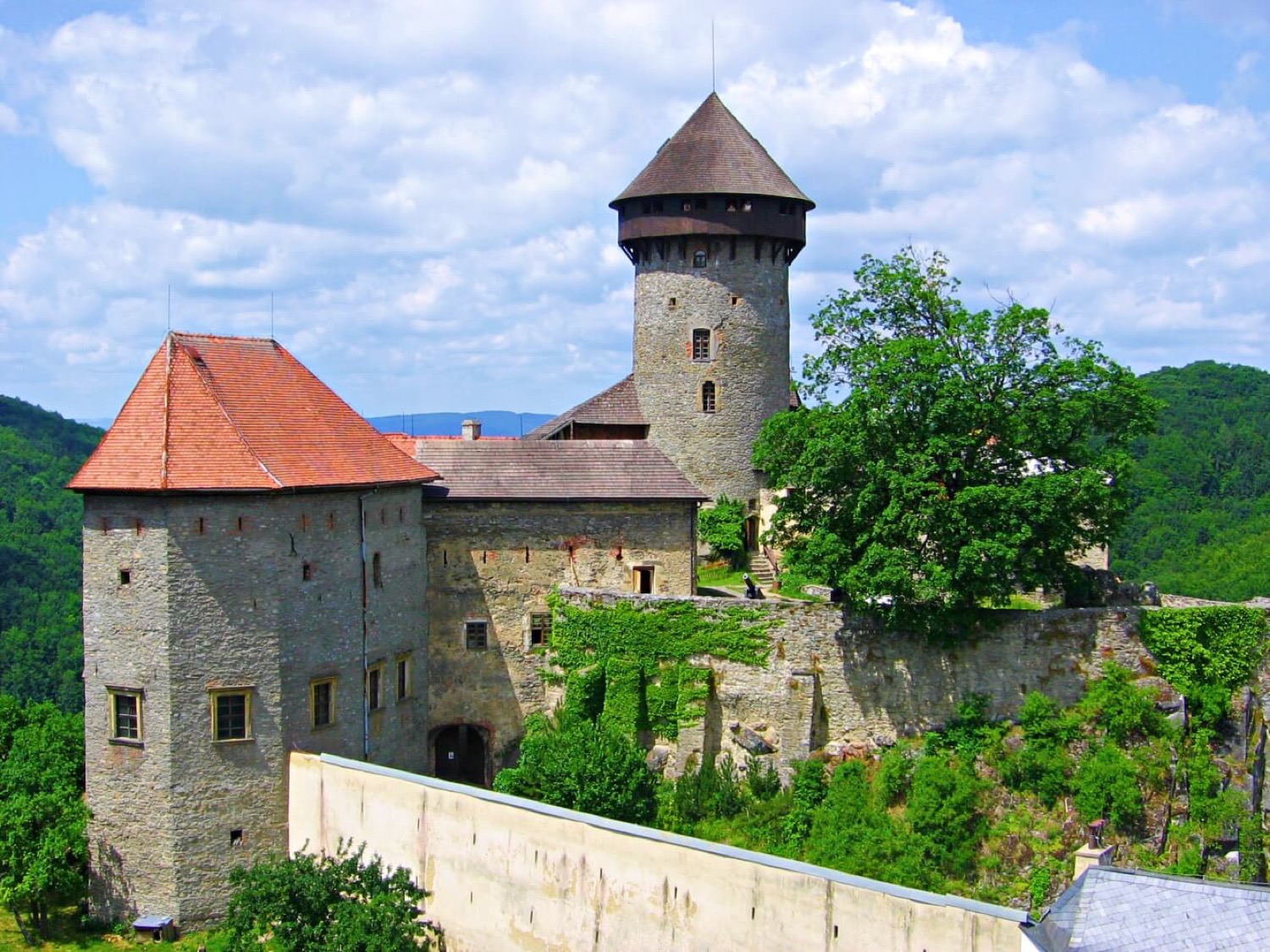
In the second half of the 13th century, due to their attempts tat colonizing the mountains, the Olomouc bishops came into conflict with the Jeseníky landlords. Because of the pressure from Olomouc, the brothers Vok and Pavel of the traditional Moravian family of Hrutovic, and who later called themselves of "Huzová", built a castle in Sovinec in the years 1329–32 to mark the border of their territory. Even in the first half of the 14th century the Sovinec dynasty translated its name into the equivalent German Eulenburg, they remained the same ancient moravian branch of the Czech Hurtovic dynasty with their own insignia. From the second half of the 14th century they used either their German or their Czech name, and the latter prevailed since the 15th century.
According to Ctibor Tovačovský of Cimburk's legal work, the lords of Sovinec belonged to the 15 oldest Moravian ruling families such as the Boskovics, the Cimburks, and the Pernštejns. They had privilleged status over all the other ruling families in the area, held the highest positions and took part in all important issues. As a proof of this might, the signature and seal of Petr of Sovinec is visible on the protest letter which Czech and Moravian noblemen wrote in the occasion of the burning of Jan Hus. Sovinec was also an important Hussite, stronghold which endangered even catholic Olomouc. And it is not by chance that Sovinec was chosen as the meeting place for the important political discussions between Prokop Holý, leader of the Hussite army and Zikmund Korybutovič, a candidate for the Czech throne. The lords of Sovinec were strong supporters of the King Jiří z Poděbrady, famous for his attempts at uniting all European monarchs, in his efforts to include Silesia in his project. Due to their political activity, Mathias Corvinus destroyed the lands of the Sovinec dynasty in August 1474. As testified in 1490 in the Land Codex in the second half of the 15th century, Sovinec was the centre of a strong and united rule consisting of one city and 18 villages, ranging from Paseka in the plains through nearby Rýmařov to Štáhly (Malá Štáhle and Velká Štáhle) on the mountains. The watchtower of the Sovinec castle dates back to this era, and one can still see the Sovinec insignia engraved in its stone. The walls of the fortified village of Sovinec also dates back to that time.
Hrad Sovinec byl postaven před rokem 1332 na skalnatém ostrohu nad stejnojmenným městečkem bratry Vokem a Pavlem ze Sovince. Ti měli předtím v držení a sídlo na hradě Mutkov u Huzové jako manové olomouckého biskupství. První písemná zmínka pochází z 18. července roku 1332, kdy se uvádí Pavel ze Sovince.
Páni ze Sovince byli starým českým rodem z domácí moravské čeledi Hrutoviců (podle právní knihy Ctibora Tovačovského z Cimburka náleželi páni ze Sovince mezi patnáct starobylých moravských panských rodů, jako byli Boskovicové, Cimburkové či Pernštejnové). Za moravských markraběcích válek mezi markrabaty Joštem a Prokopem na sklonku 14. století držel hrad Pavlík ze Sovince, který měl jedenáct potomků. Po majetkových třenicích získali hrad bratři Petr, Pavel, Aleš a Vok ze Sovince.
Po smrti Vokova syna Jaroslava ze Sovince se panství dostalo do rukou poručníka Jana Heralta z Kunštátu a v roce 1490 je zpět pro rod získal Jan II. Pňovický ze Sovince z pňovické větve rodu. Sovinecké zboží tehdy tvořil rozsáhlý komplex území rozprostírající se z roviny Hornomoravského úvalu až po Moravici na úpatí Hrubého Jeseníku.
Syn Voka Pňovického ze Sovince Ješek Pňovický ze Sovince zdědil v roce 1531 panství značně zadlužené a byl nucen hrad Sovinec před rokem 1545 prodat jednomu z nejbohatších moravských pánů, Kryštofovi z Boskovic a Třebové. Kryštofův vnuk Jan před svou smrtí prodal sovinecké panství v roce 1578 Vavřinci Ederovi ze Štiavnice – zástavnímu držiteli sousedního rabštejnského panství. Vavřincova jediná dědička dcera Anna si vzala po otcově smrti (asi roce 1592) za manžela Jana staršího Kobylku z Kobylího, kterého sňatek s bohatou Ederovnou přivedl mezi nejbohatší moravské rody. Jako horlivý evangelík se stal jedním z třiceti moravských direktorů, jimž byla za stavovského povstání z let 1618–1620 svěřena správa země. Po Bílé hoře byl proto nucen roku 1623 prodat Sovinec hluboko pod cenou řádu německých rytířů a žil pak ve Šternberku a Olomouci. S Kobylkou zmizel ze sovineckých hradních prostor i český jazyk.
Nearby castles