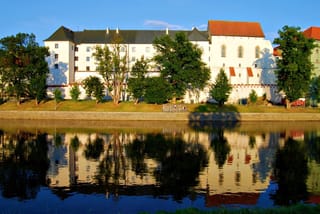
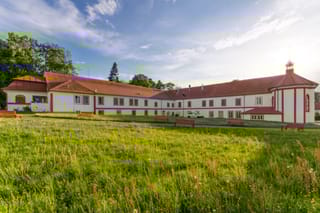
Hausberk Castle
Strakonice District South Bohemian Region Czech Republic
castle, chateau
Helfenburk u Bavorova
Strakonice District South Bohemian Region Czech Republic
castle, chateau
Helfenburk is a castle ruin 5
V roce 1355 stavbu hradu zahájili Rožmberkové na ochranu nedalekého města Bavorov
Previous names
Hausberk Castle, Helfenburk u Bavorova
Description
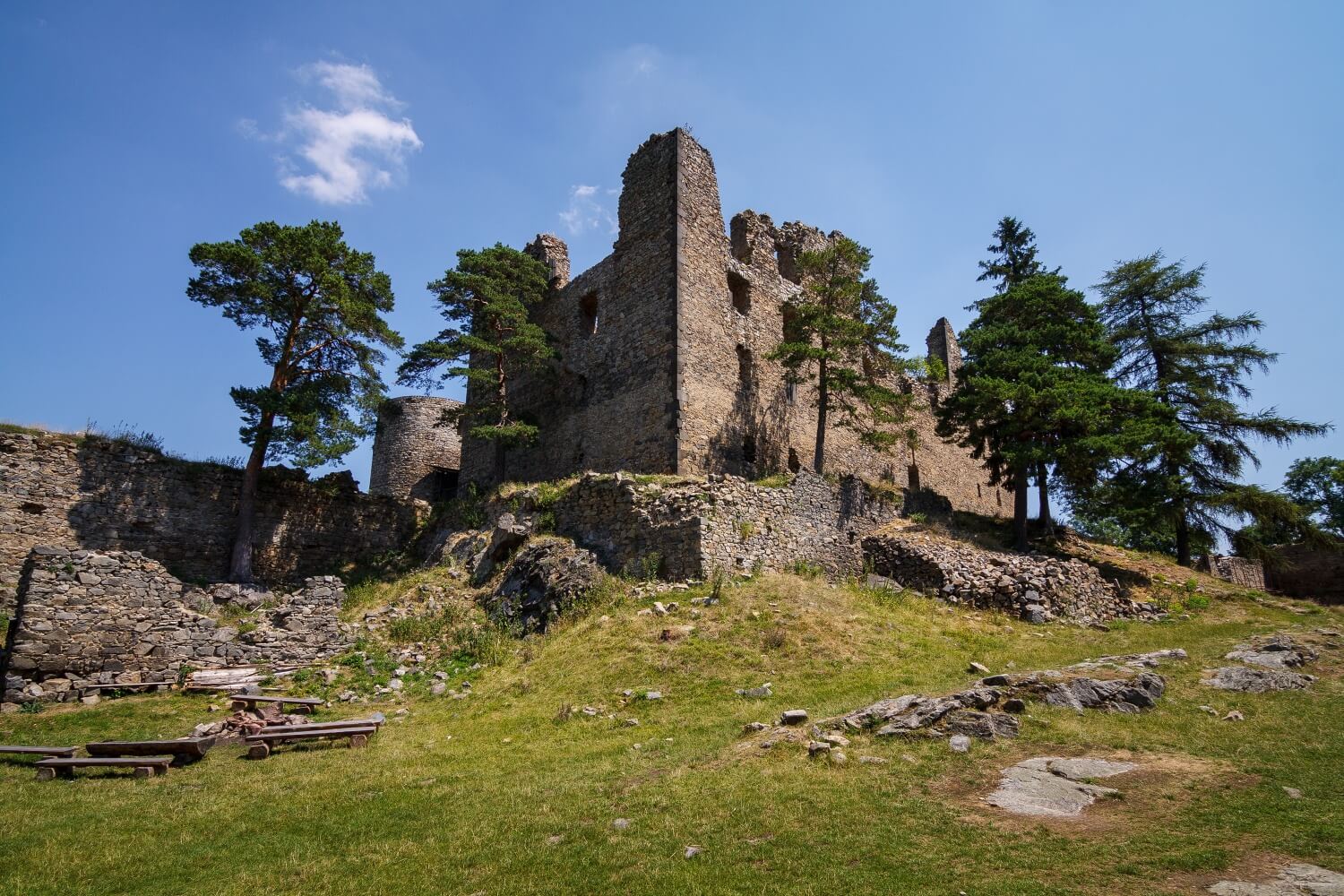
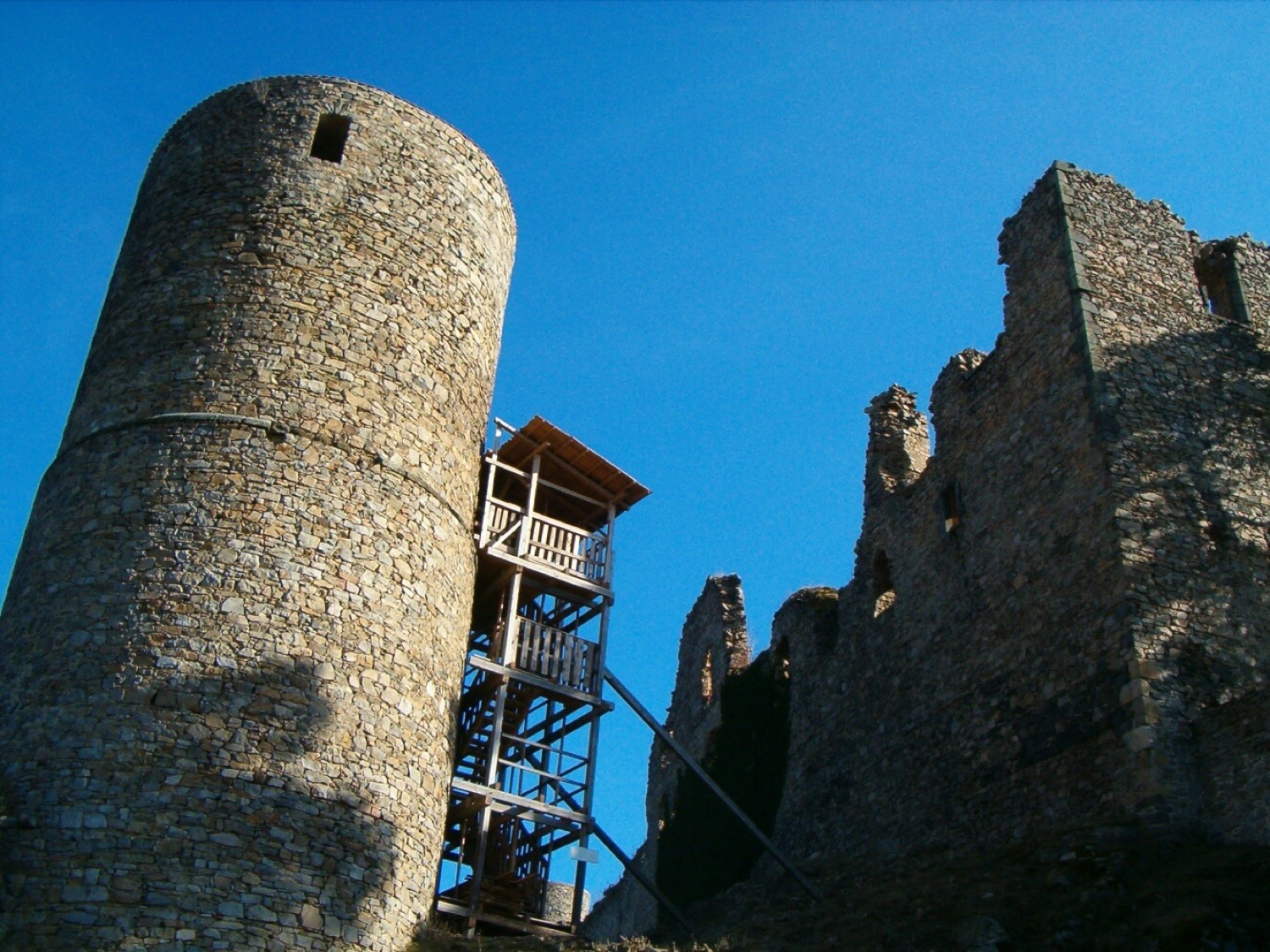
Helfenburk is a castle ruin 5.5 kilometres (3.4 mi) from the town of Bavorov in the South Bohemian Region of the Czech Republic. It is situated on Malošín stone hill at an altitude of 683 metres (2,241 ft). Between the municipalities of Koječín and Štětín there is a paved road that leads to the castle.
In 1355, a town was built by members of the Rožemberk family to defend the nearby town of Bavorov. There were four brothers – Peter, Jošt, Oldřich and Jan of Rožemberk. Building permission was given by King Charles IV. It was a reward for their services, due to them having accompanied the King on his journey to the coronation in Rome. In the year 1381, Bavorov was given the rights of a free town. After the death of Jan in 1389 and his brother Oldřich, Jan's son Jindřich III of Rožemberk became the owner of the castle. He was one of the opponents of King Václav IV. The King was trying to harm him as much as he could, allegedly even with help of Jan Žižka.
After Jindřich III's death, Oldřich II of Rožemberk, son of Oldřich, became the owner of the castle. He was very young and was tutored by Čeněk from Vartemberk. He later converted to Catholicism and was raised in this religion. After the defeat of the Hussites in Tábor, he ordered the arrest of Hussite priests in all of his lands, and imprisoned them in his castles. It is proved that at Helfenburk two Hussite priests died. After the death of Oldřich II, the ruler of the castle was his son Jindřich IV of Rožemberk, and after him Jan II. Both constantly had problems with money and debts, which had been incurred by their father's war costs. The castle was given as a guarantee to Přeškov from Čestice. The contract allowed free access to the castles by former owners. After his death the castle was bought out and returned to the Rožemberk family. The period from 1468 to 1472 was troublesome around the castle. There were neighbourly disputes between Rožemberk and the towns of Písek, Sušice and Vodňany. The castle did not face such big losses, but these disputes also affected neighbouring villages. After the death Jan of Rožemberk and subsequent death of his son Jindrich V, ownership of the castle went to Vok II of Rožemberk. Because of dues he sold the castle to the brothers Václav and Zikmund Vlček of Čenov.
Václav Vlček was originally just a regular captain, he had fought in Hungary and Poland, and in service of the King gained many military skills and became a field captain. He was known as an exceptional leader and specialist in defence. He strengthened the defence of the castle, and built three circular walls with placers for shooters between 1473 and 1483. He was very strong and unpopular with Rožemberk's neighbours, so he lent money to Count Jindřich Preuschenek of Hardegg to buy the castle, which he did in 1489. After his death, the castle returned to the hands of the Rožemberks. In 1523 there was a dispute over succession, because Petar IV. of Rožemberk, as well as his brothers, had no children. Between 1515 and 1518 the castle was in the hands of Želízko of Tourov, who fired all the staff and was all alone in the castle.
V roce 1355 stavbu hradu zahájili Rožmberkové na ochranu nedalekého města Bavorov. Jednalo se o čtyři bratry: Petra, Jošta, Oldřicha a Jana z Rožmberka. Povolení k stavbě dostali od Karla IV., šlo o ocenění jejich dobrých služeb. Doprovázeli Karla IV. na jeho korunovační cestě do Říma. Roku 1381 udělili nedalekému Bavorovu městská práva.
Po smrti Jana 1389 i jeho bratra Oldřicha, přešel hrad do vlastnictví Janova syna Jindřicha III. z Rožmberka. Ten patřil k odpůrcům vlády krále Václava IV. a byl členem Panské jednoty. Král se mu snažil v mezích možností škodit, údajně i za pomoci Jana Žižky.
Po jeho smrti měl hrad v držení jeho syn Oldřich II. z Rožmberka. Byl velmi mlád a jeho poručníkem byl Čeněk z Vartemberka. Ten se později obrátil na katolickou víru a v tomto duchu jej vychovával. Po potupné porážce před Táborem nechal na svých panstvích pochytat husitské kněze a nechal je uvěznit na svých hradech. Na Helfenburku prokazatelně dva zemřeli.
Po jeho smrti vládl syn Jindřich IV. z Rožmberka a posléze Jan II. z Rožmberka. Oba dva měli neustále potíže kvůli zadluženosti, o tu se postaral jejich otec, díky válečným nákladům. Hrad byl zastaven Přeškovi z Čestic. Ve smlouvě byl dodatek o volném vstupu do hradu od bývalých majitelů. Po jeho smrti byl hrad opět vyplacen.
V letech 1468 až 1472 bylo okolí hradu neklidné. Docházelo k sousedským sporům mezi Rožmberky a městy Písek, Sušice a Vodňany. Hrad nedoznal velké úhony, ale těmito spory trpěly okolní vesnice.
Po smrti Jana z Rožmberka a po smrti jeho syna Jindřicha V. z Rožmberka se vlády ujal Vok II. z Rožmberka. Společně se svým poručníkem Bohuslavem ze Švamberka zadlužený hrad prodal bratrům Václavu Vlčkovi z Čenova a Zikmundu Vlčkovi z Čenova. Václav Vlček byl původně prostý hejtman, který válčil v Uhrách a v Polsku a ve službách krále získal mimořádné vojenské znalosti a dosáhl hodnosti polního hejtmana. Byl považován za vynikajícího vojevůdce a specialistu na obranu. V letech 1473–1484 zesílil vybudováním nového opevnění obranyschopnost hradu. Byl ale silným a nevítaným sousedem pro Rožmberky, kteří půjčili peníze hraběti Jindřichu Preuschenkovi z Hardeggu na koupi hradu, a ten jej koupil v roce 1484. Po jeho smrti se hrad znovu vrátil do rukou Rožmberků, roku 1499 jim jeho syn hrad prodal zpět. Roku 1523 docházelo ke sporům o dědictví, protože Petr IV. z Rožmberka, stejně tak jako jeho bratři, umírá bezdětný. Zajímavostí tohoto hradu je, že v roce 1515 až 1518 byl purkrabím Želízko z Tourového, který vyhnal hradní čeleď.
Roku 1551 Vilém z Rožmberka připojil k hradu i část okolního panství a celkově je zvelebil. Hrad samotný však plnil jen hospodářskou funkci. Podle rožmberského inventáře Helfenburk patřil k chudším hradům. Bylo v něm celkově velmi málo nábytku a nádobí, ale tento počet vynahrazovala rozsáhlá hradní výzbroj, ať už se jednalo o zbroje či zbraně. Stejně tak byl i nedostatek služebnictva. Po přesídlení správy panství na Kratochvíli dochází k úplnému opuštění hradu.
Nearby castles