Sterckshof
Antwerpen Vlaams Gewest Belgium
castle, chateau
Château Sterckshof
Antwerpen Vlaams Gewest Belgium
castle, chateau
De Sterckshof in Deurne
Antwerpen Vlaams Gewest Belgium
castle, chateau
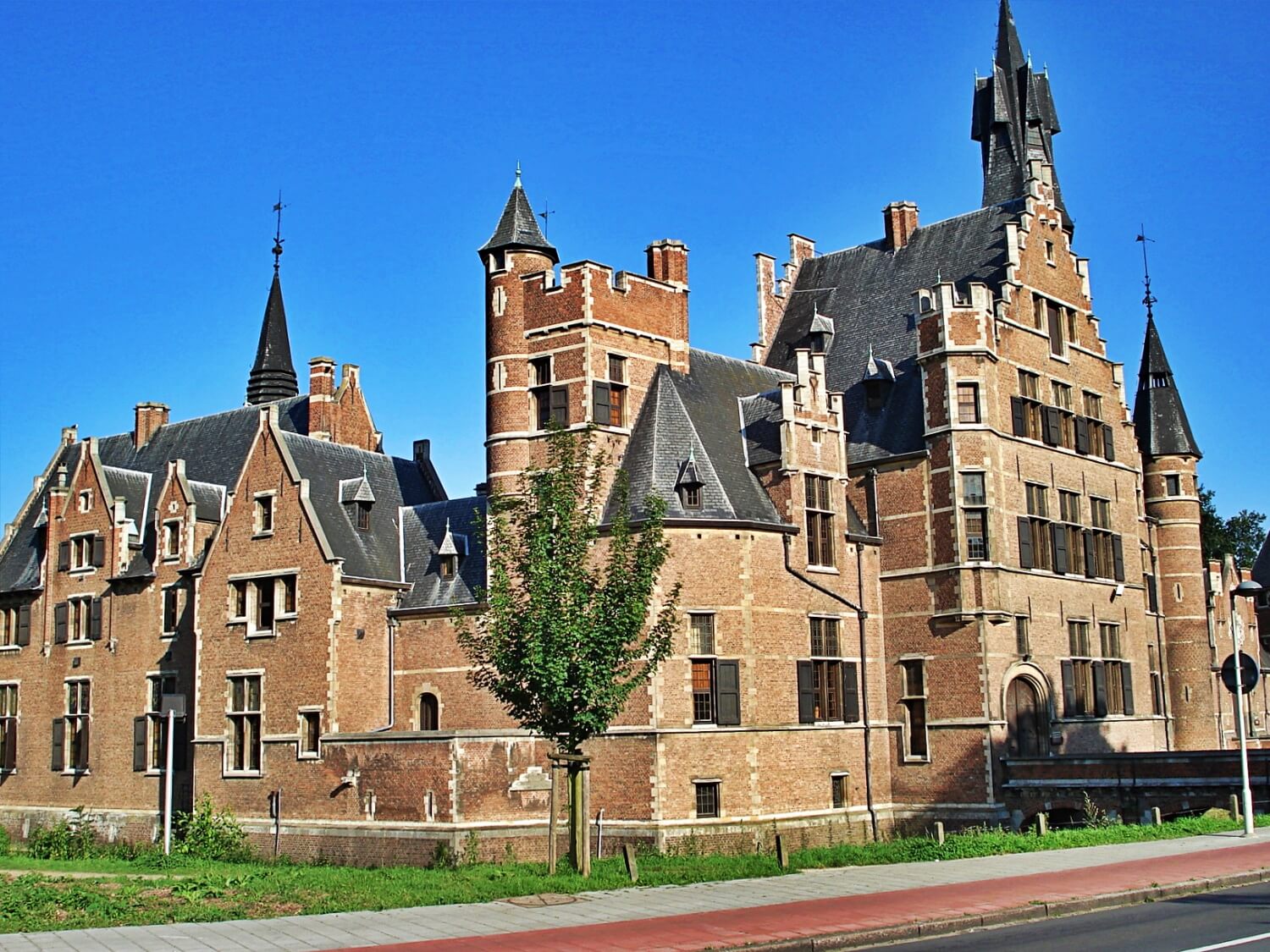
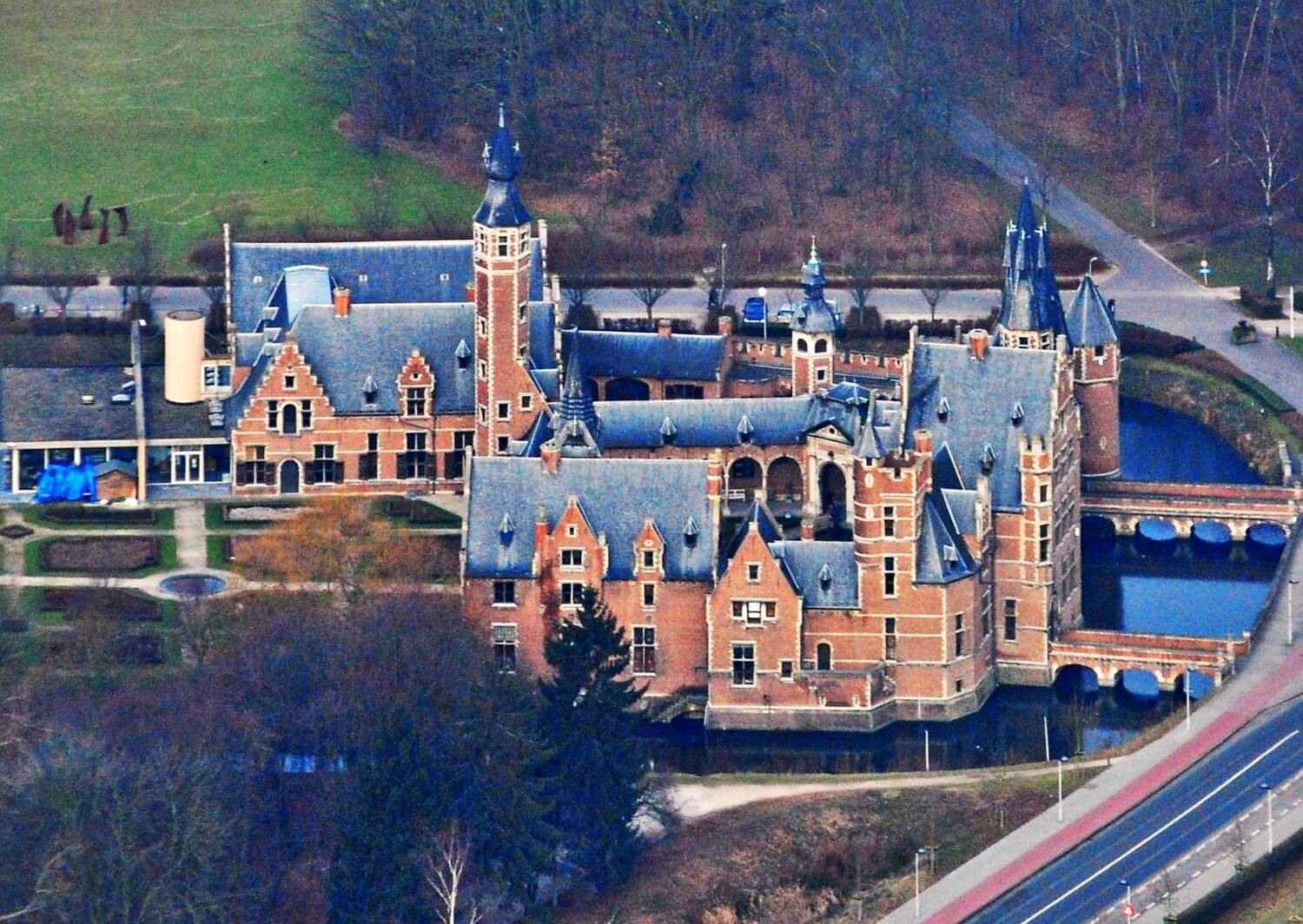
The Sterckshof castle is in Deurne, Antwerp, Belgium
Le château de Sterckshof est situé dans le district de Deurne à Anvers en Belgique
Het kasteel Sterckshof te Deurne (Antwerpen) herbergde het Zilvermuseum Sterckshof van de provincie Antwerpen

Previous names
Sterckshof, Château Sterckshof, De Sterckshof in Deurne
Description
The Sterckshof castle is in Deurne, Antwerp, Belgium. It houses the Sterckshof silver museum of the Province of Antwerp. Built on the site of a much older castle, or great house, the present building is a reconstruction erected in the 1920s.
History
Sterckshof is about 6 kilometres (3.7 mi) east of the center of Antwerp. It is situated at an altitude of 3 metres (9.8 ft) above sea level. From as early as the 13th century the site of the castle was occupied by the fortified "Hooftvunder" farmhouse, surrounded by a moat. It was probably used to defend a nearby wooden bridge over the Grote Schijn River.
In 1523 it was described as a farm with a house, brewery, moat, ponds, fishery, etc. That year it purchased by Gerard Sterck, who erected up picturesque buildings with a castle, towers and turrets, and called it Sterckhof, a name it retains today. Gerards grandson was Guillaume de Berghes, bishop of Antwerp. In Sterck's monument in Antwerp cathedral he is described as a knight, and lord of Busquoy, Wyneghem, Casterlé and Hooft-Vundere. Sterck was a merchant, banker and secret adviser of the Emperor Charles V. Another owner, Jacob Edelheer, furnished the castle with art collections and scientific collections.
Unlike other castles in Antwerp, the Sterckshof was not destroyed during the wars of the 16th and 17th centuries, but it was neglected during a dispute between the heirs after the owner, Jacob van Lemens, died childless in 1664. From 1693 Sterckshof was owned by the Jesuits of Lier, but the castle was damaged or allowed to deteriorate during the war of the Austrian Succession (1740-1748). After the dissolution of the Jesuit Order, the estate was sold in 1776 to the banker Jan Baptist Cogels, who merged it with his Ter Rivieren estate. By the 1880s the buildings, long uninhabited, were no more than ruins.
Owned by the province
In 1921 the Province of Antwerp bought the Ter Rivieren estate, with the Sterckshof castle, to make it into the current Rivierenhof park. Of the Sterckshof all that was standing was the floor of a tower, the entrance gate and some ramshackle outbuildings. In 1922 the architect JA Van der Gucht submitted plans for reconstruction. Using old pictures and archaeological discoveries, in the 1930s the building rose as an evocative reconstruction. The reconstructed building with its red brick turrets and courtyards is set in formal gardens surrounded by a moat, conveying an impression of the houses of the wealthy in the 16th century.
The municipality of Deurne declined to use the building for their town hall. In 1926 the idea of using it for the province's technical department was explored but rejected since the building was not suitable. The idea of using it for a dairy was also rejected. Eventually, in 1934 an Association was founded to established a Museum of Flemish Civilization. The Sterckshof was transferred to the association on 21 May 1938 and it was immediately opened to the public. Joseph De Beer, the honorary curator, moved into the house and began acquiring what became a huge and disparate collection of archaeological, natural history, ethnology and art and crafts objects.
From 1951 the state began funding the museum. When De Beer died in February 1953 the original association was liquidated and the castle was taken over by the Province of Antwerp. At first it housed the Province's Sterckshof Museum of Art Crafts, and later the Province's Sterckshof silver museum. The museum's displays covered techniques for working the metal and domestic and religious uses. It also included a silversmith's workshop. The museum exhibited Belgian silver and pewter wares from the 16th to 21st centuries, and also some fine antique furnishings. The museum was unable to expand on the site due to planning restrictions,[8] so was closed in 2014 and merged with the Antwerp Diamond Museum to create the DIVA Museum for Diamonds, Jewellery and Silver, located in Antwerp city centre.
After the silver museum moved out, the province put the castle on the market, with an asking price of 4.5 million euros; in 2017 the Flemish government approved 2 million euros in renovation subsidies to sweeten the offer. As of August 2019 a buyer had still not been found.
Le château de Sterckshof est situé dans le district de Deurne à Anvers en Belgique. Il abrite le Musée de l'orfèvrerie Sterckshof de la province d'Anvers. Construit à l'emplacement d'un ancien château ou d'une ancienne demeure, le bâtiment actuel est issu d'une rénovation des années 1920.
Histoire
Le château Sterckshof se situe à environ 6 km à l'Est du centre d'Anvers. Il est situé à une altitude de 3 m au-dessus du niveau de la mer. Dès le xiiie siècle, le site du château actuel est occupé par une ferme fortifiée, entourée d'un fossé. Elle est probablement utilisée pour défendre un pont de bois proche sur la rivière Grote Schijn.
En 1523, il est décrit comme une ferme comportant une maison, une brasserie, des douves, des étangs, une poissonnerie, etc. Il est racheté la même année par Gérard Sterck. À la cathédrale d'Anvers, celui-ci est décrit comme un chevalier, seigneur de Busquoy, Wyneghem, Casterlé et Hooft-Vundere. Il s'agit également d'un marchand, d'un banquier et d'un conseiller secret de l'empereur Charles Quint.
Sterck érige des bâtiments pittoresques comprenant un château, des tours et des tourelles, et nomme l'ensemble Sterckhof, nom conservé depuis. Un autre propriétaire, Jacob Edelheer, meuble le château avec des collections d'art et des collections scientifiques.
Contrairement aux autres châteaux d'Anvers, le château Sterckshof n'est pas détruit pendant les guerres des xvie et xviie siècles, mais il est négligé au cours d'un litige entre les héritiers de son propriétaire Jacob van Lemens, mort sans enfant en 1664. À partir de 1693, Sterckshof est détenu par les Jésuites de Lierre, mais le château est endommagé ou continue à se détériorer au cours de la guerre de Succession d'Autriche (1740-1748). Après la dissolution de l'Ordre des Jésuites, le domaine est vendu en 1776 au banquier Jan Baptiste Cogels, qui le fusionne avec son domaine Ter Rivieren. Dans les années 1880, les bâtiments, longtemps inhabités, ne sont plus que des ruines.
Bâtiments actuels
En 1921, la Province d'Anvers rachète le domaine Ter Rivieren, dont fait partie le château Sterckshof. Il ne demeure alors que l'étage d'une tour, le portail d'entrée et quelques dépendances délabrées. En 1922, l'architecte J.A. Van der Gucht présente des plans en vue d'une reconstruction. À l'aide de photos anciennes et de découvertes archéologiques, dans les années 1930, le bâtiment est reconstruit3. La reconstruction de l'édifice, avec ses briques rouges, des tourelles et des cours entourés de jardins à la française, eux-mêmes entourés par un fossé, donne l'impression au château d'appartenir aux riches demeures du xvie siècle.
La municipalité de Deurne refuse d'utiliser le bâtiment comme hôtel de ville. En 1926, l'idée de l'utiliser pour les services techniques de la province est explorée puis rejetée, le bâtiment n'étant pas adapté. L'idée de l'utiliser comme laiterie est également rejetée. En 1934, une association est créée afin de fonder un musée de la civilisation flamande. Le château Sterckshof est transféré à l'association le 21 mai 1938, date à laquelle il est immédiatement ouvert au public. Joseph De Beer, conservateur honoraire, emménage dans la maison et commence l'acquisition de ce qui est devenu un vaste ensemble d'archéologie, d'histoire naturelle, d'ethnologie et d'art.
À partir de 1951, l'état commence à financer le musée. Lorsque de Beer meurt en février 1953, l'association originelle est liquidée et le château est alors pris en charge par la Province d'Anvers. il héberge tout d'abord le musée de l'artisanat d'art de la Province, puis le musée d'orfèvrerie. Il aborde les différentes techniques de travail du métal, et ses usages religieux et domestiques, et comprend également un atelier d'orfèvre. Le musée comprend des marchandises belges en argent et en étain du xvie siècle jusqu'à nos jours, ainsi que quelques meubles anciens.
Het kasteel Sterckshof te Deurne (Antwerpen) herbergde het Zilvermuseum Sterckshof van de provincie Antwerpen. Sinds 1 mei 2014 is het Zilvermuseum gesloten. Het museum heropent op 7 mei 2018, vanaf dan onder de naam DIVA, op de nieuwe locatie nabij de Grote Markt in Antwerpen.
Geschiedenis
Reeds in de 13de eeuw is er op de plaats van het huidige kasteel de hoeve ‘Hooftvunder’, een versterkte hoeve omringd door een gracht. Deze hoeve groeit uit tot een versterkt landgoed dat herhaaldelijk van eigenaar wisselt. In 1524 koopt Gerard Sterck, koopman, bankier en geheim raadsman van keizer Karel V, het landgoed en hij verbouwt de hoeve tot een kasteel in renaissancestijl, vanaf dan het kasteel Sterckshof genaamd. In tegenstelling tot andere kastelen in Antwerpen wordt het Sterckshof niet verwoest tijdens de oorlogen in de 16de en 17de eeuw, maar het wordt wel verwaarloosd na een ruzie tussen erfgenamen in de 17de eeuw. Vanaf 1693 is het Sterckshof eigendom van de jezuïeten van Lier, maar het kasteel vervalt door de Oostenrijkse Successieoorlog (1740-1748). Na de opheffing van de Jezuïetenorde wordt het kasteel in 1778 openbaar verkocht aan de bankier Jan Baptist Cogels, die het samenvoegt met zijn landgoed Ter Rivieren. In 1921 koopt het Provinciebestuur van Antwerpen het landgoed Ter Rivieren (met het kasteel Sterckshof) om er het huidige park Rivierenhof van te maken. Van het Sterckshof staan dan alleen nog een voorbouw van één verdieping met één toren, de ingangspoort en enkele bijgebouwen overeind. Architect J.A. Van der Gucht tekent in 1922 de plannen voor de wederopbouw. Aan de hand van oude afbeeldingen en archeologische opgravingen ter plaatse verrijst in de jaren 1930 een tot de verbeelding sprekende reconstructie met later aangebrachte interieurfragmenten uit Antwerpse herenhuizen die in de jaren 1950 zijn afgebroken.
Nearby castles
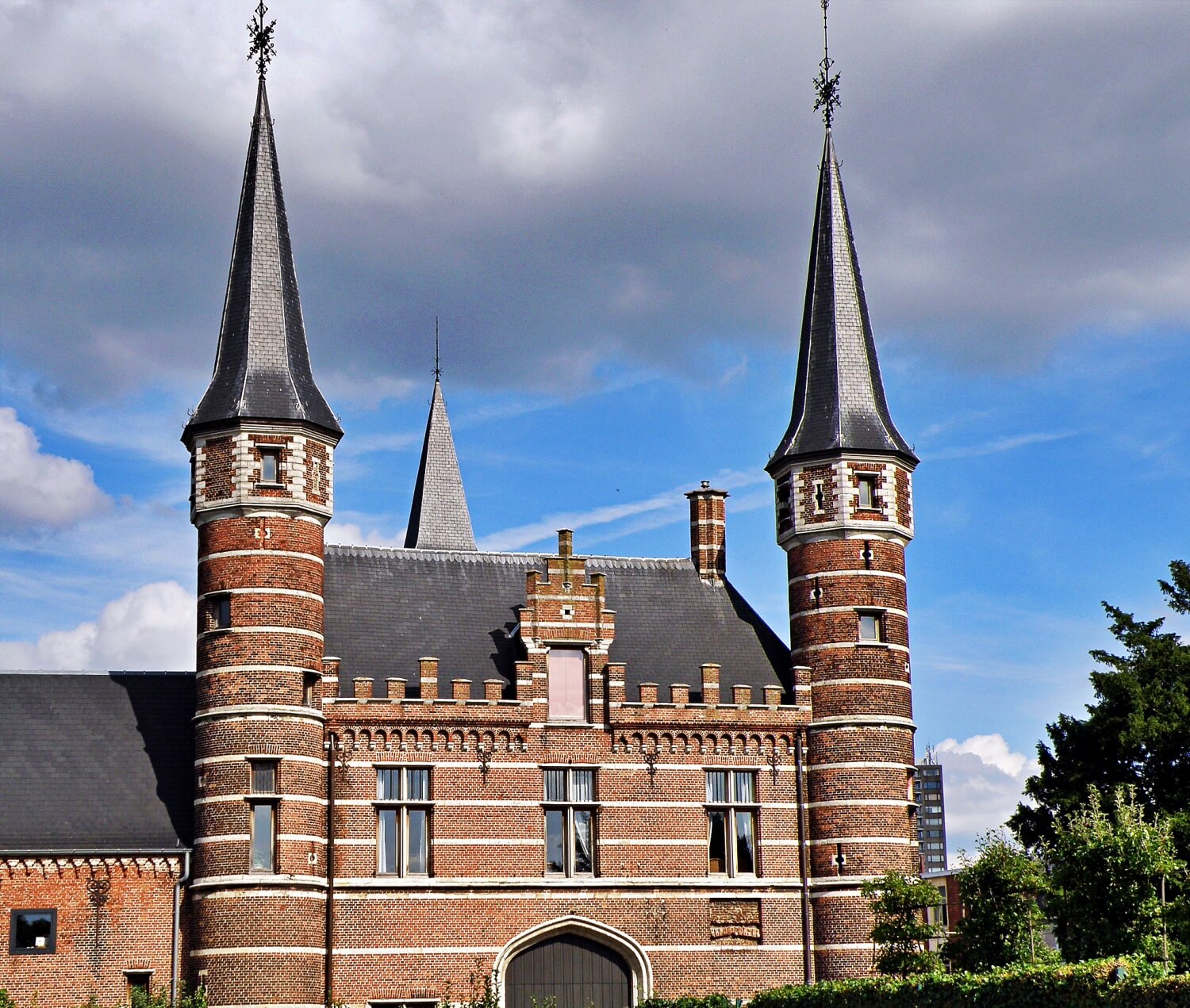
Couwelaar Castle
Antwerpen
1.6km
castle, chateau
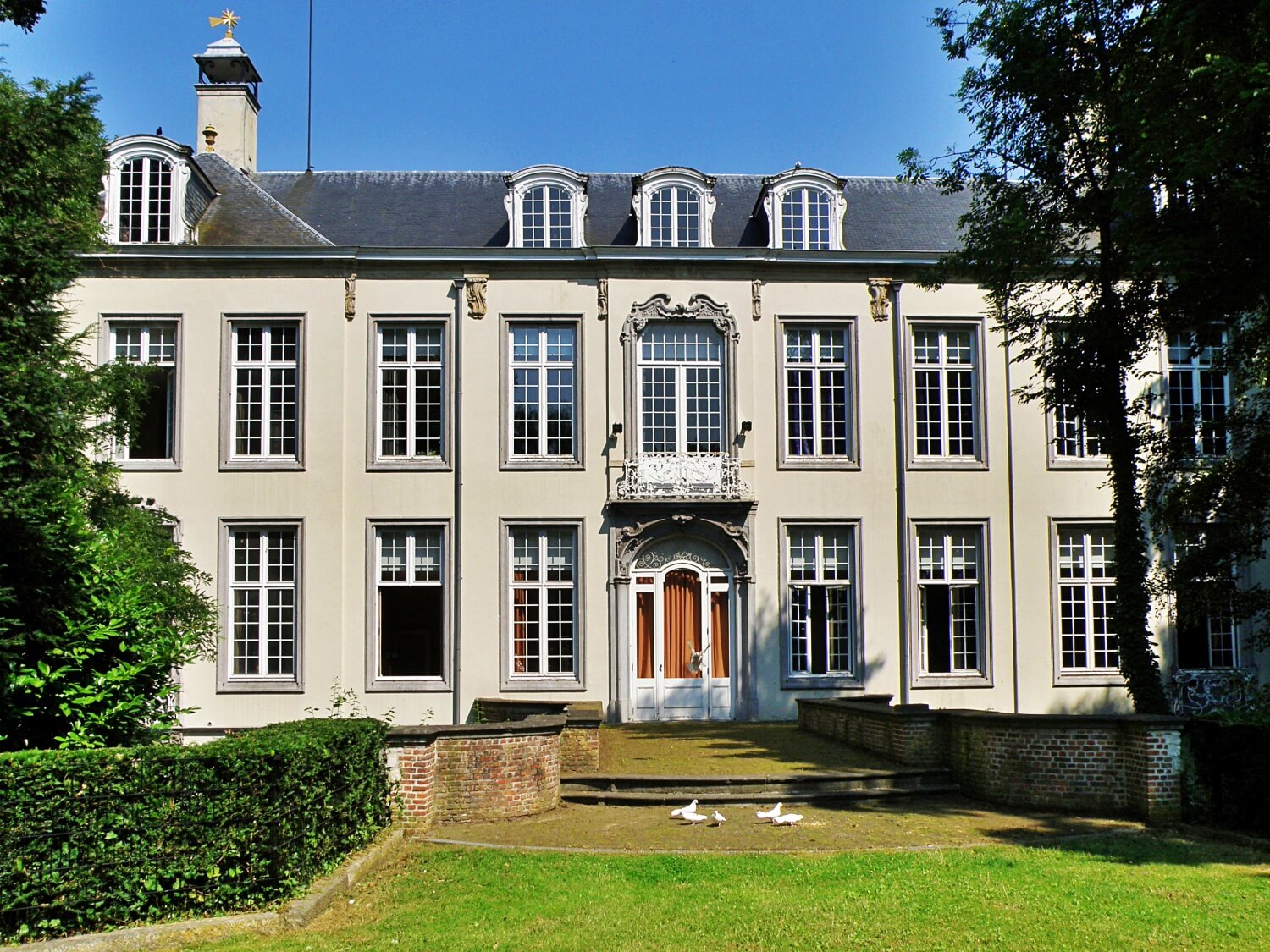
Kasteel Boekenberg
Antwerpen
1.8km
manor, mansion
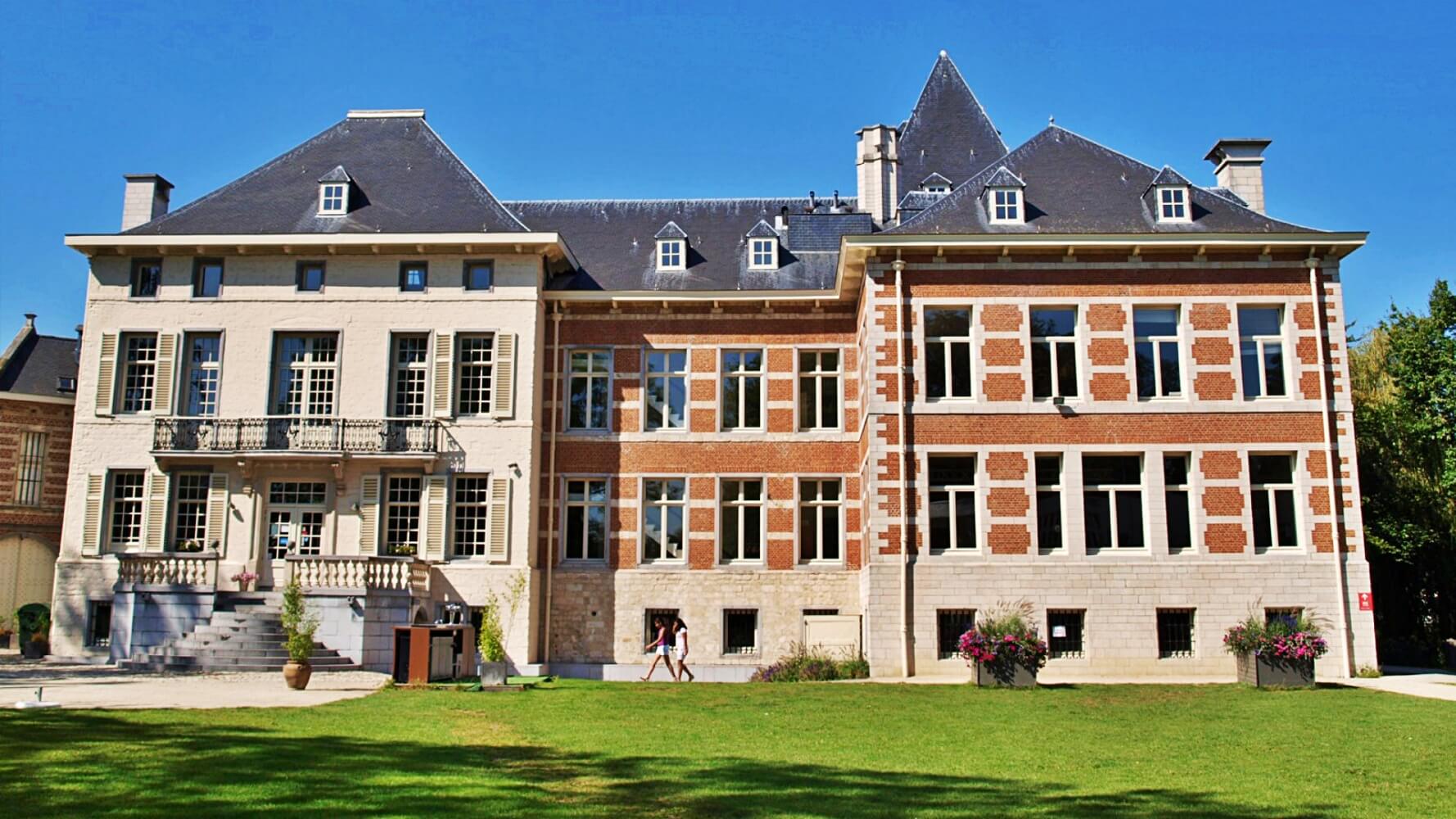
Kasteel Bisschoppenhof
Antwerpen
1.8km
manor, mansion

Kasteel Bouckenborgh
Antwerpen
3.4km
manor, mansion
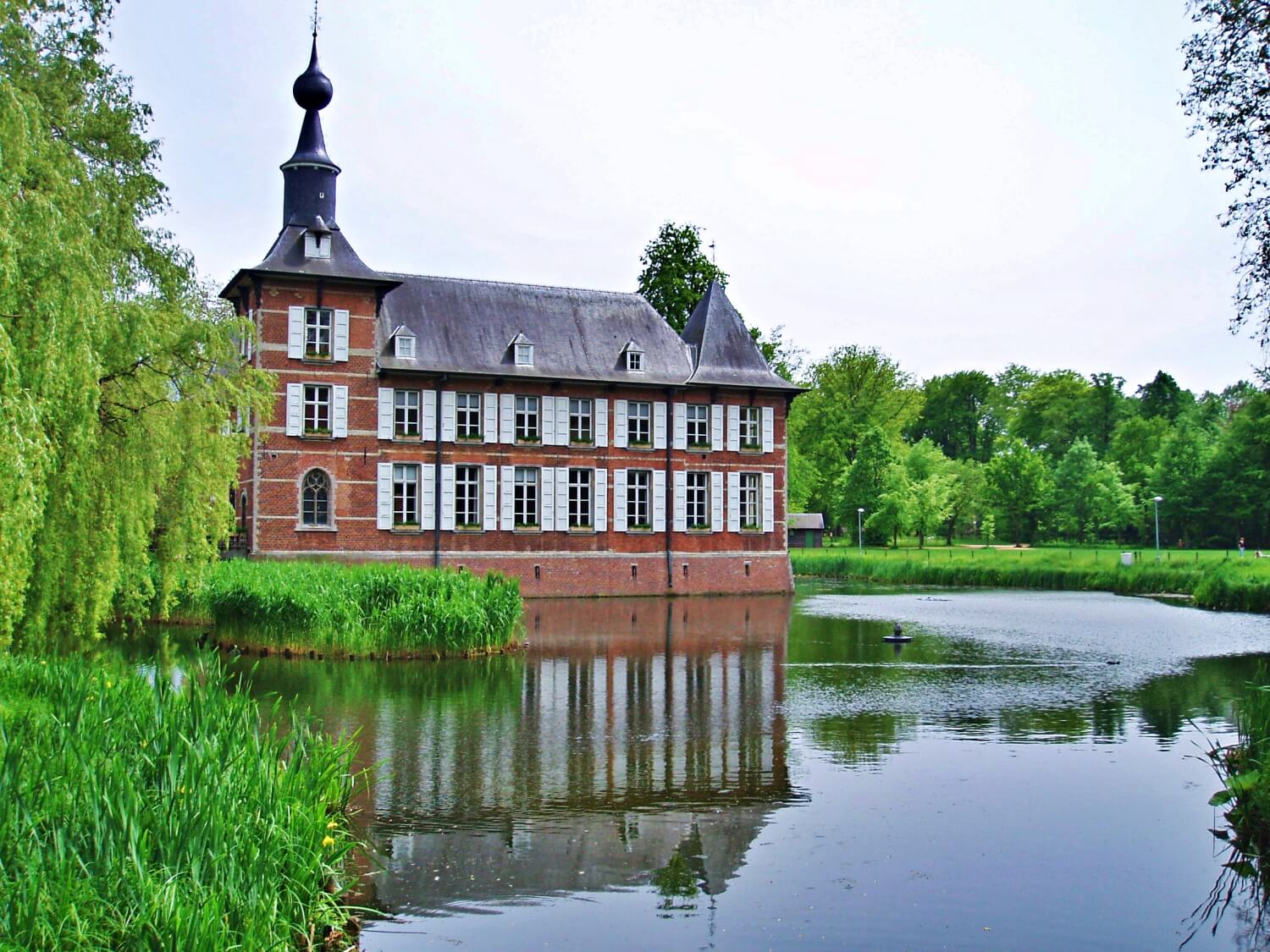
Kasteel van Schoten in Schoten
Antwerpen
3.8km
manor, mansion
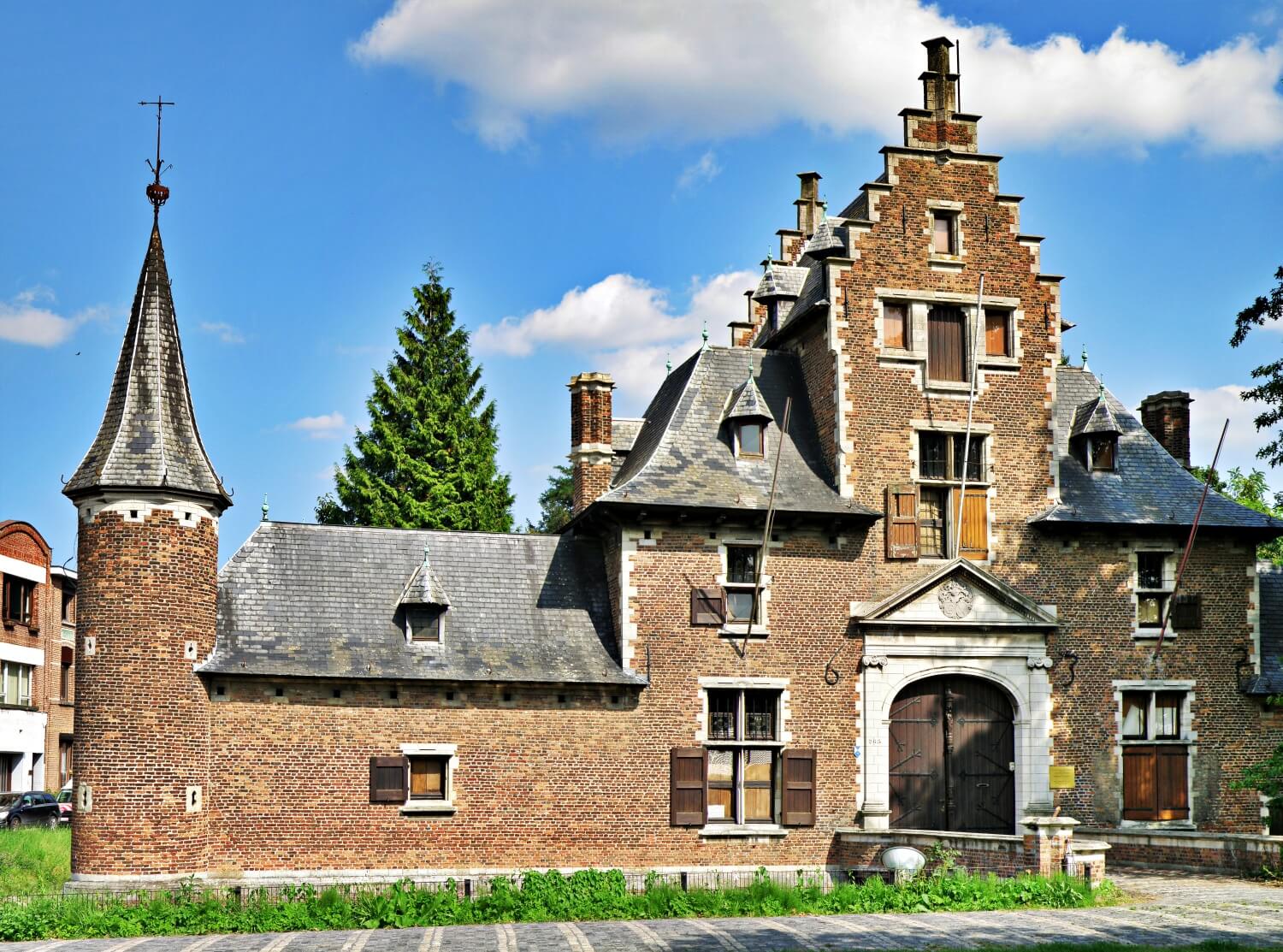
Hof van Roosendaal in Merksem
Antwerpen
4.2km
castle, chateau
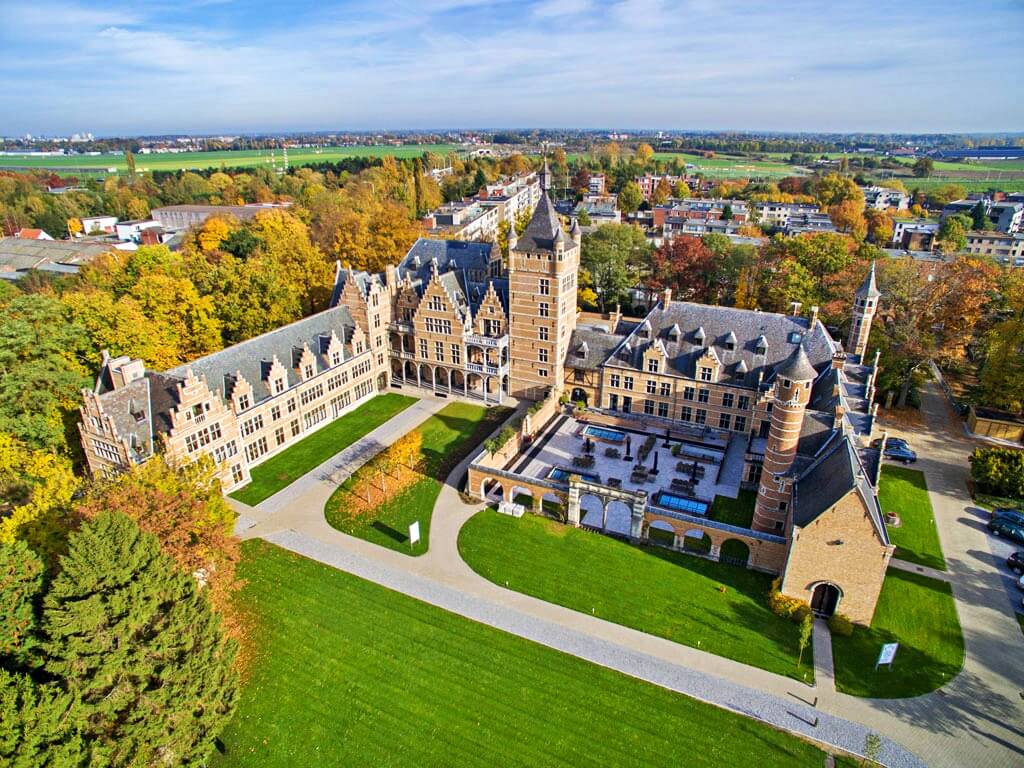
Cantecroy Castle
Antwerpen
4.2km
castle, chateau