Divín
Divín Banská Bystrica county Slovakia
castle ruin
Divín
Divín Banskobystrický kraj Slovakia
zrúcanina hradu
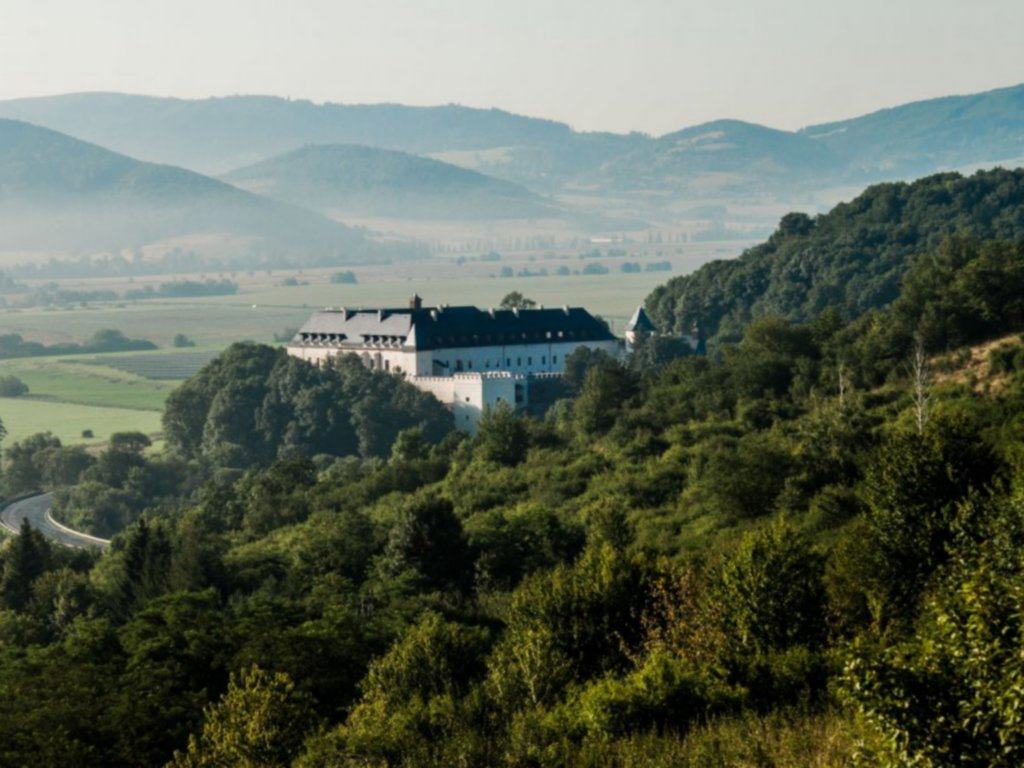
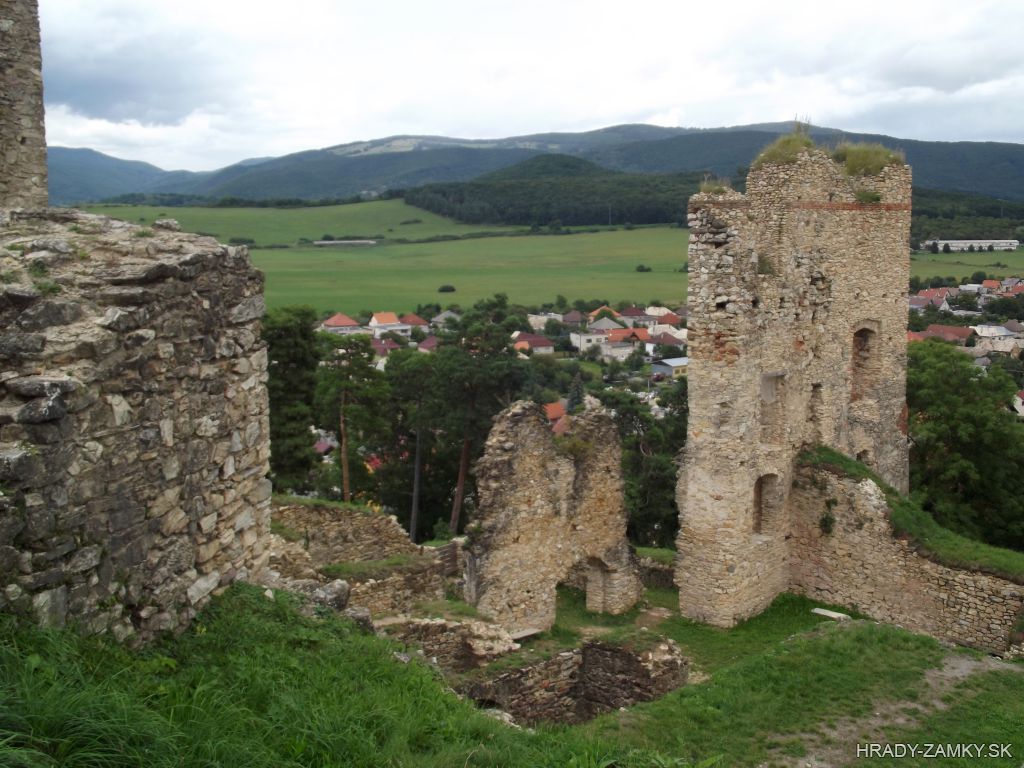
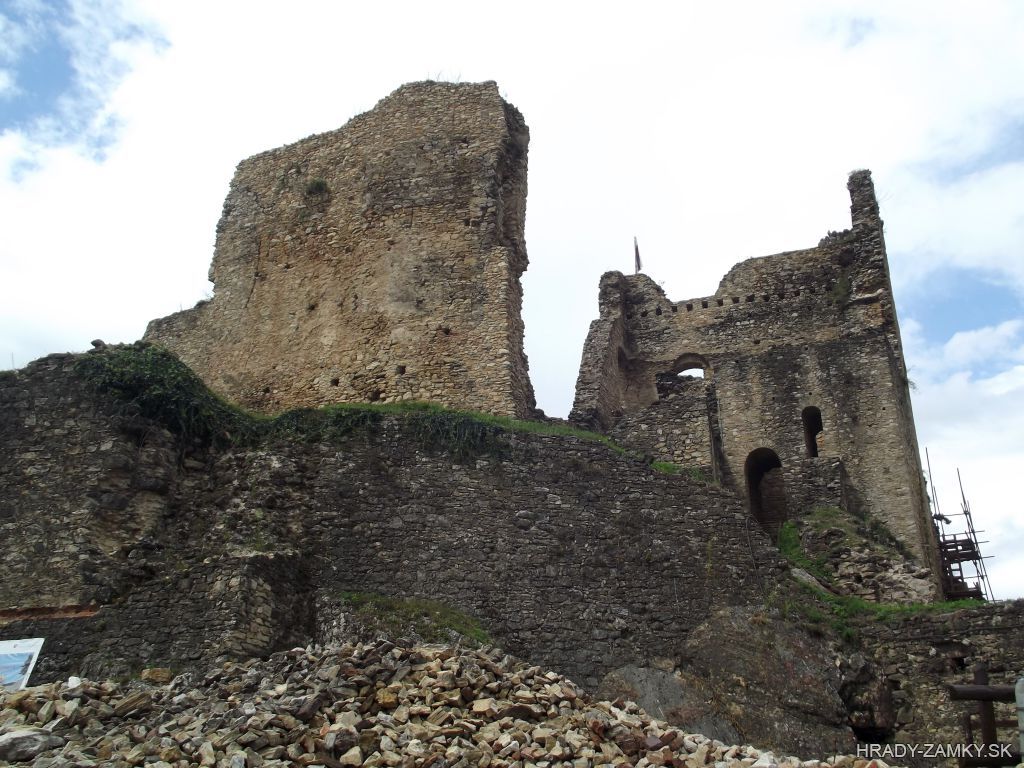
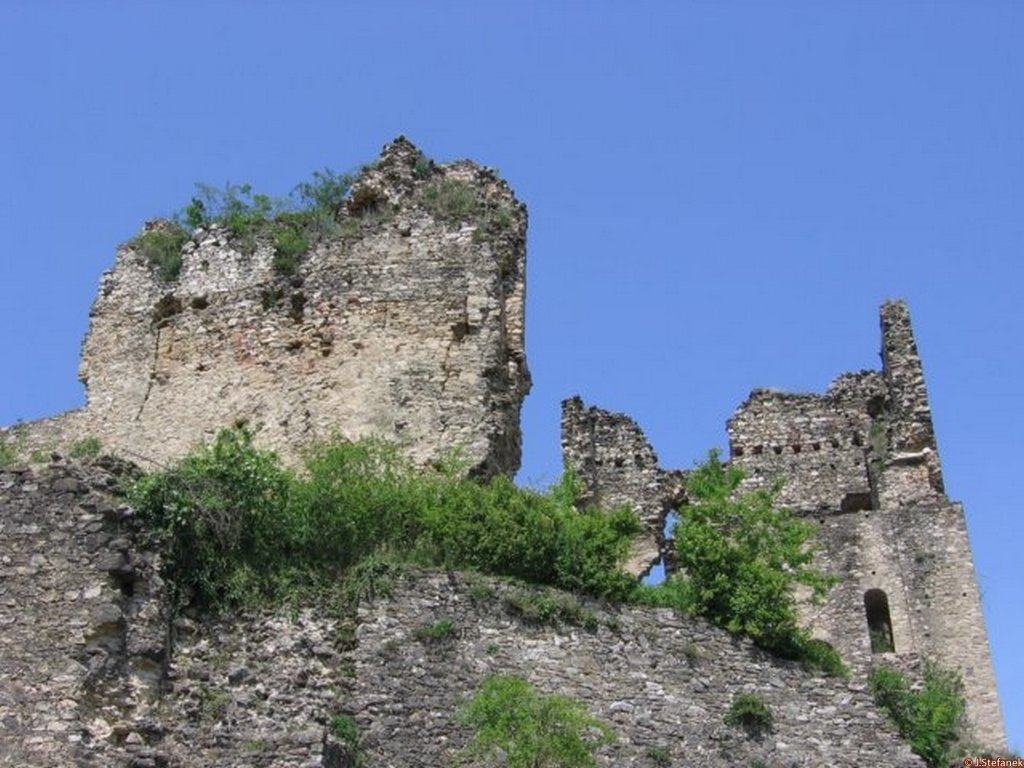
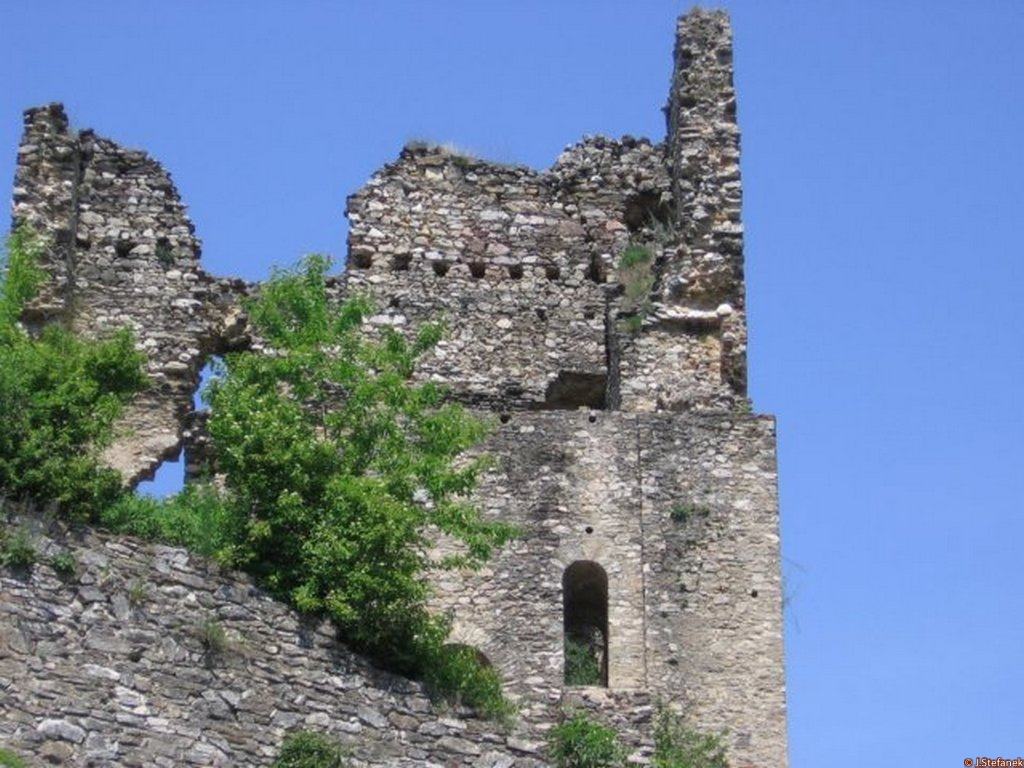
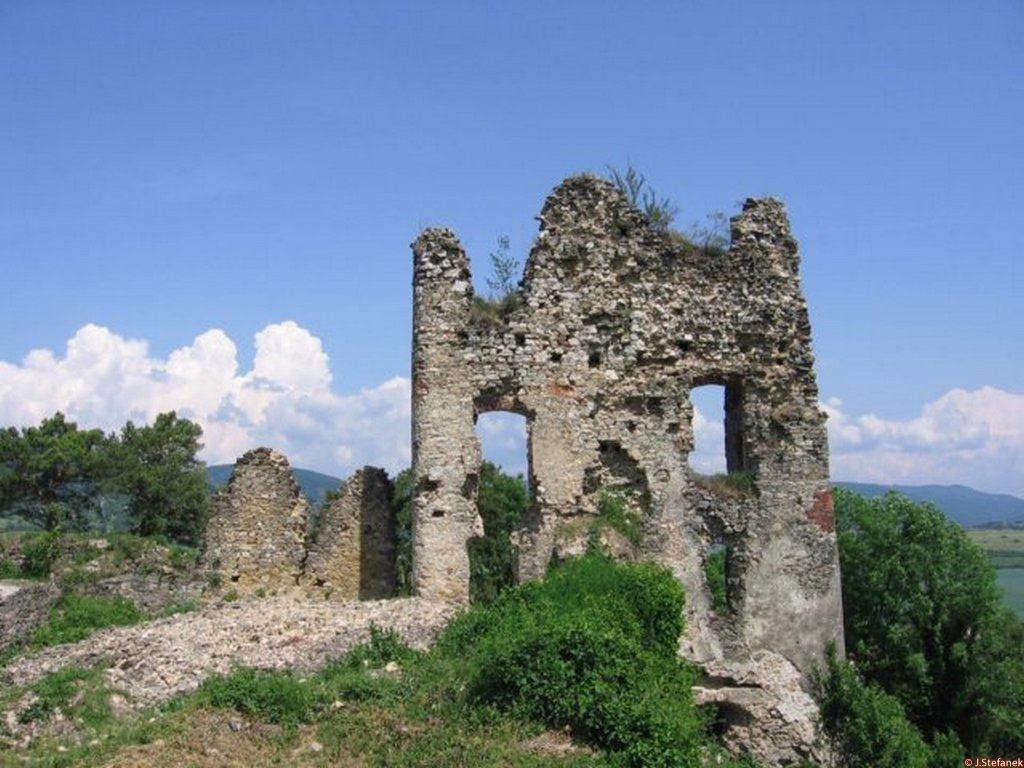
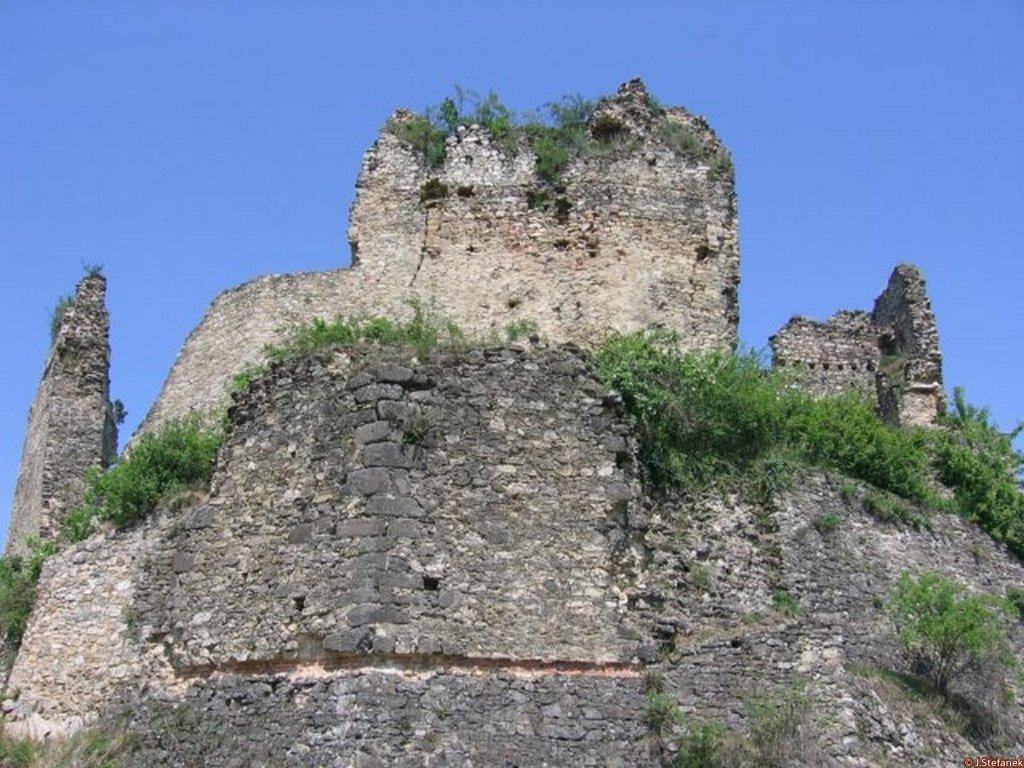
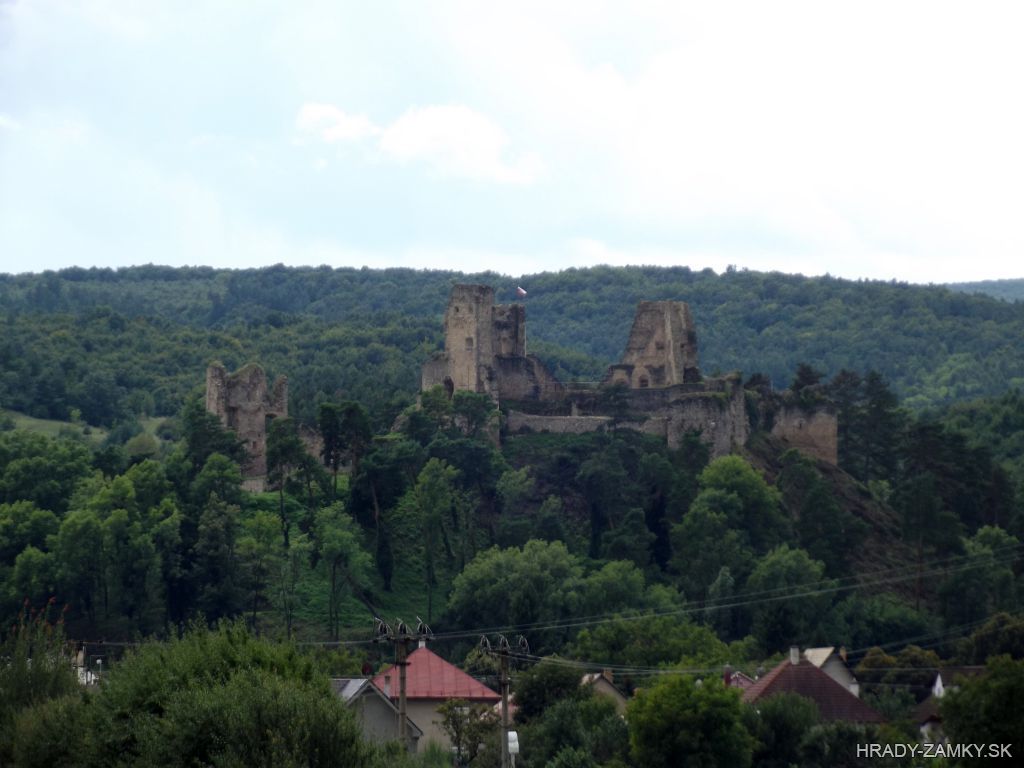
A partially preserved castle ruin on a wooded hill directly above the village of Divín, in the Cinobana foothills of the Revúcka Highlands
Čiastočne konzervovaná zrúcanina hradu na zalesnenom návrší priamo nad obcou Divín, v Cinobanskom predhorí Revúckej vrchoviny.
Previous names
Dyun, castrum Dyuen, castrum Dywynn, Dywyn, Dewen, Dywen, Divény
Roads
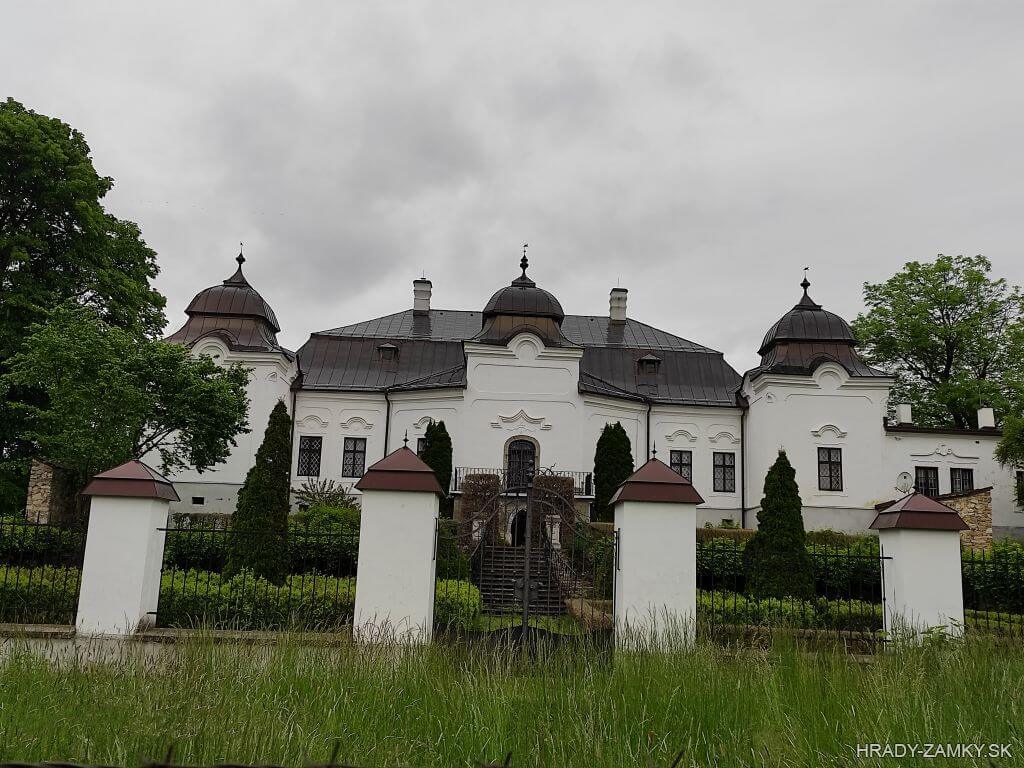
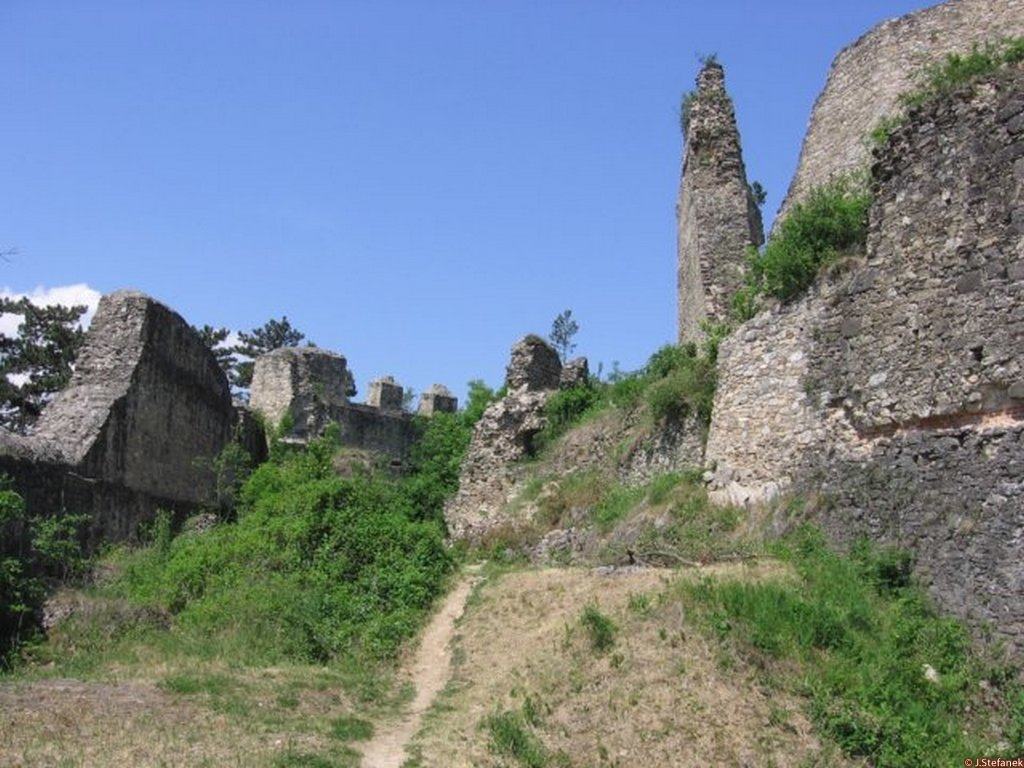
Trasa 1: Divín castle is located in the village Divín.We can park the car in the large parking lot at the Renaissance manor house in Mier Square. We can walk along Hradná Street to the fortified church with two towers. Right opposite the church we cross a bridge and through a narrow alley next to the wine bar we climb the edge of the forest to a small meadow on the red route, where there is also a cemetery directly in front of the castle.
Trasa 1: Zrúcanina hradu Divín sa nachádza priamo v obci Divín.Auto môžeme odstaviť na veľkom parkovisku pri renesančnom kaštieli na námestí Mieru. Peši sa dostaneme po Hradnej ulici k opevnenému kostolu s dvoma vežami. Hneď oproti kostolu prejdeme cez mostík a úzkou uličkou popri vinárni okrajom lesíka po červenej TZT vystúpime na malú lúku, kde sa nachádza aj cintorín priamo pred hradom.
Trasa 2: By car we can get along the narrow Hradná street to the cemetery directly in front of the castle, where the asphalt road ends. From there, a few meters walk to the castle.
Trasa 2: Autom sa vieme dostať po úzkej Hradnej ulici až k cintorínu priamo pred hradom, kde asfaltka končí. Odtiaľ pár metrov peši k hradu.
Description
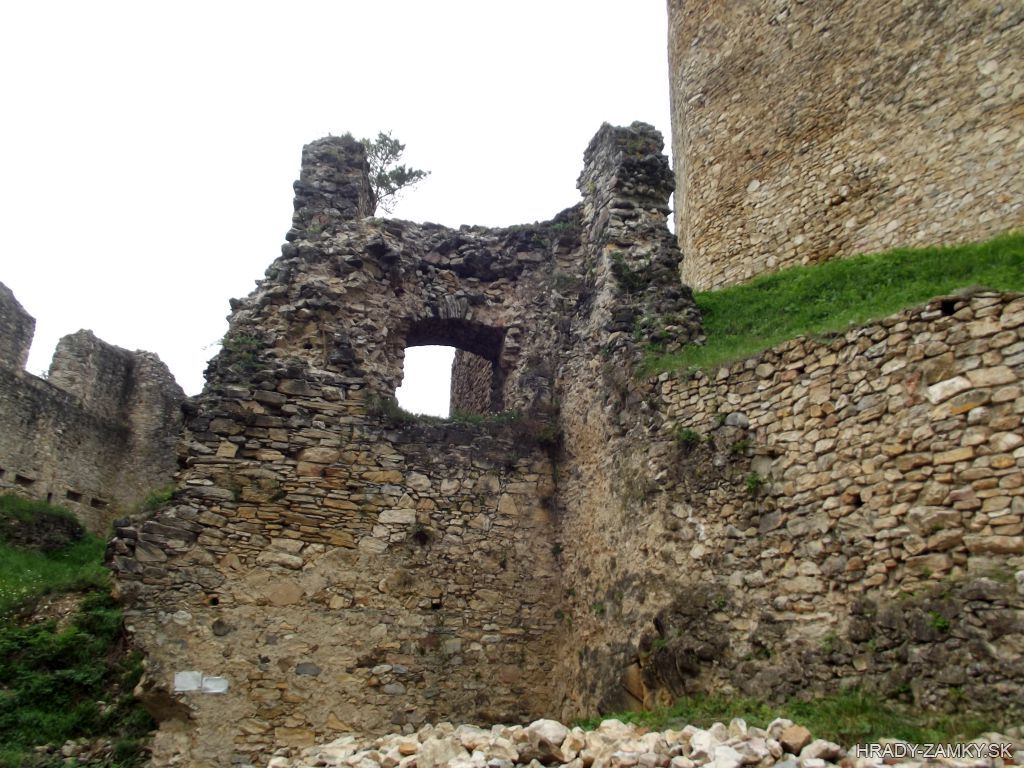
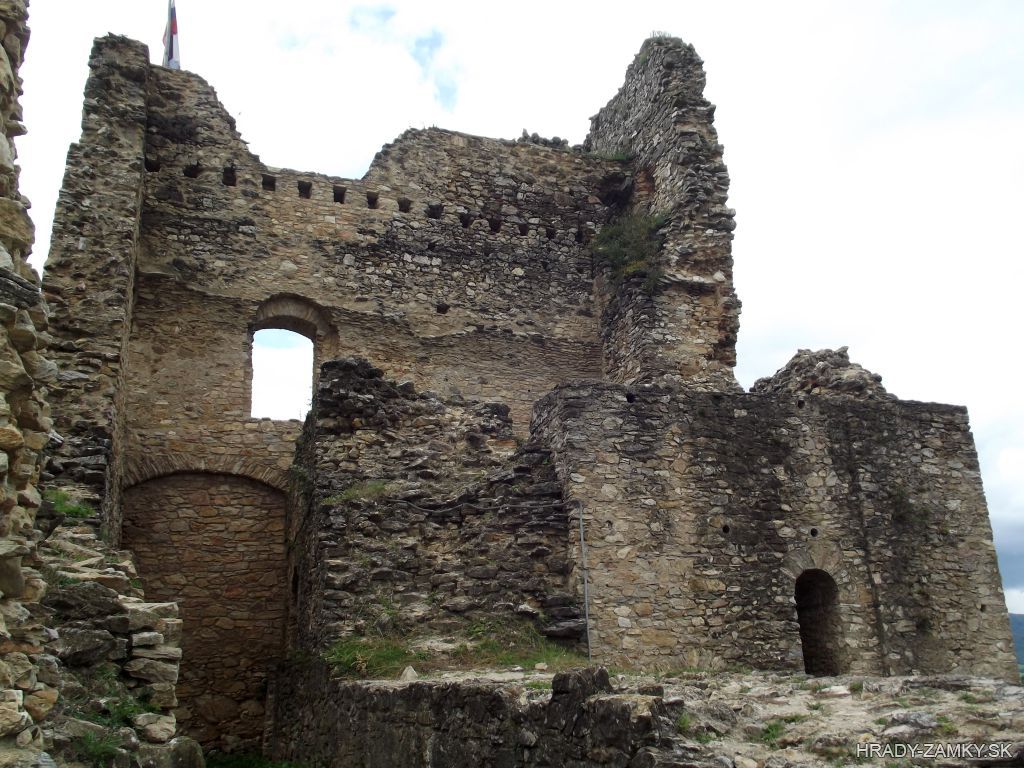
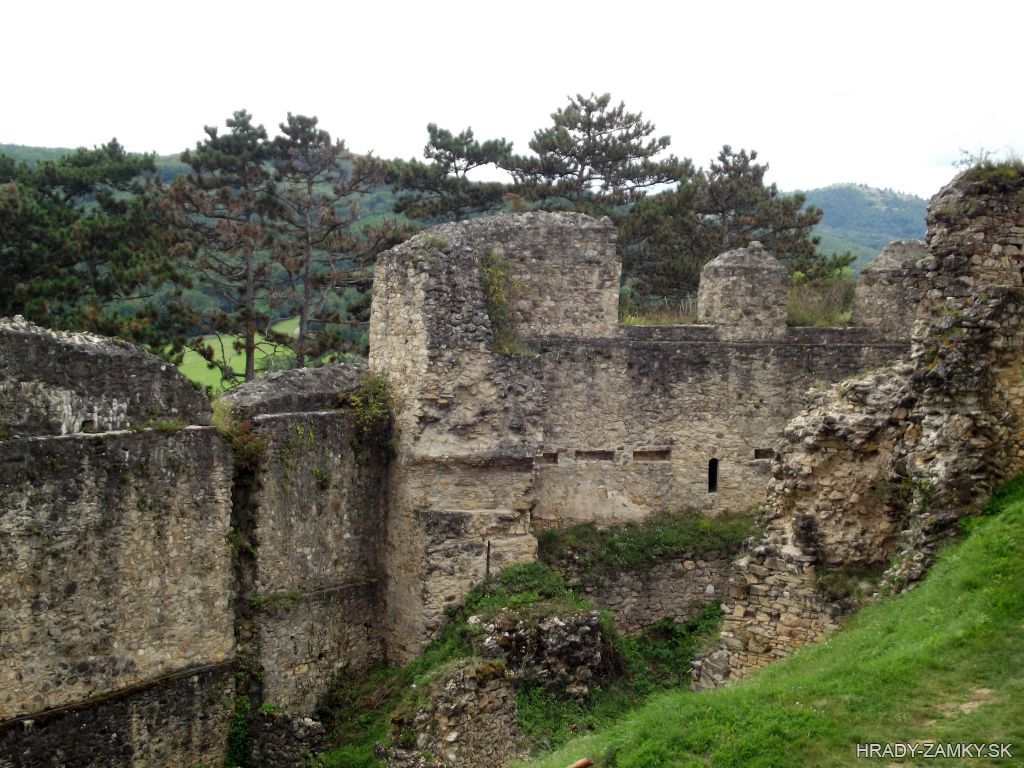
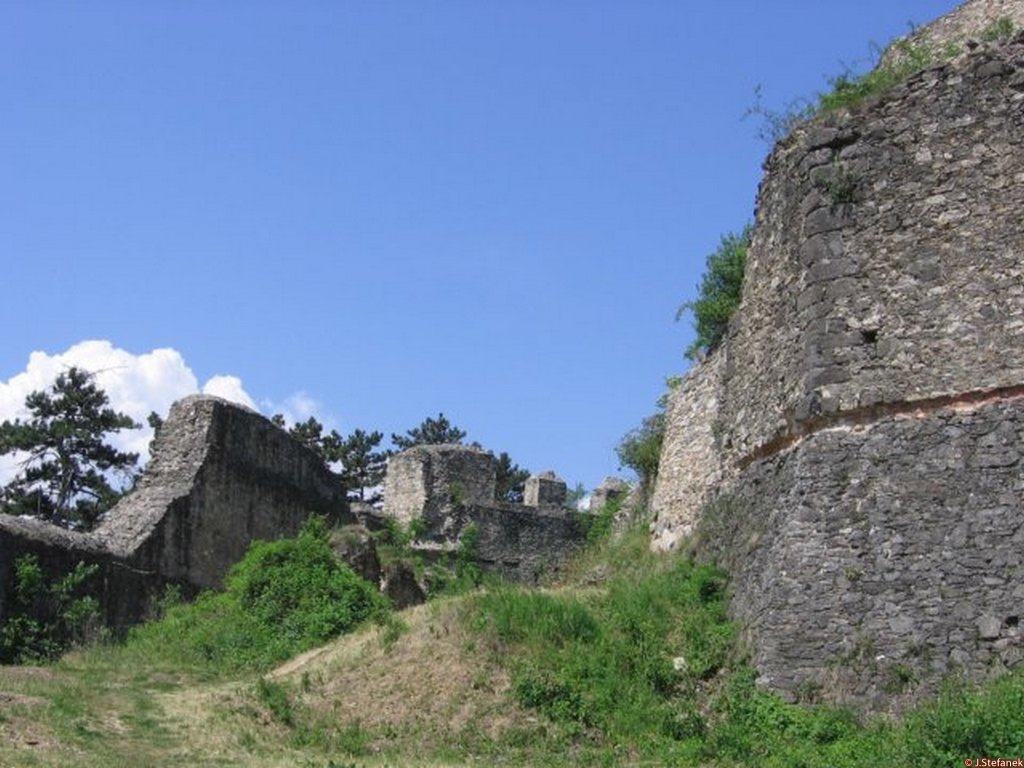
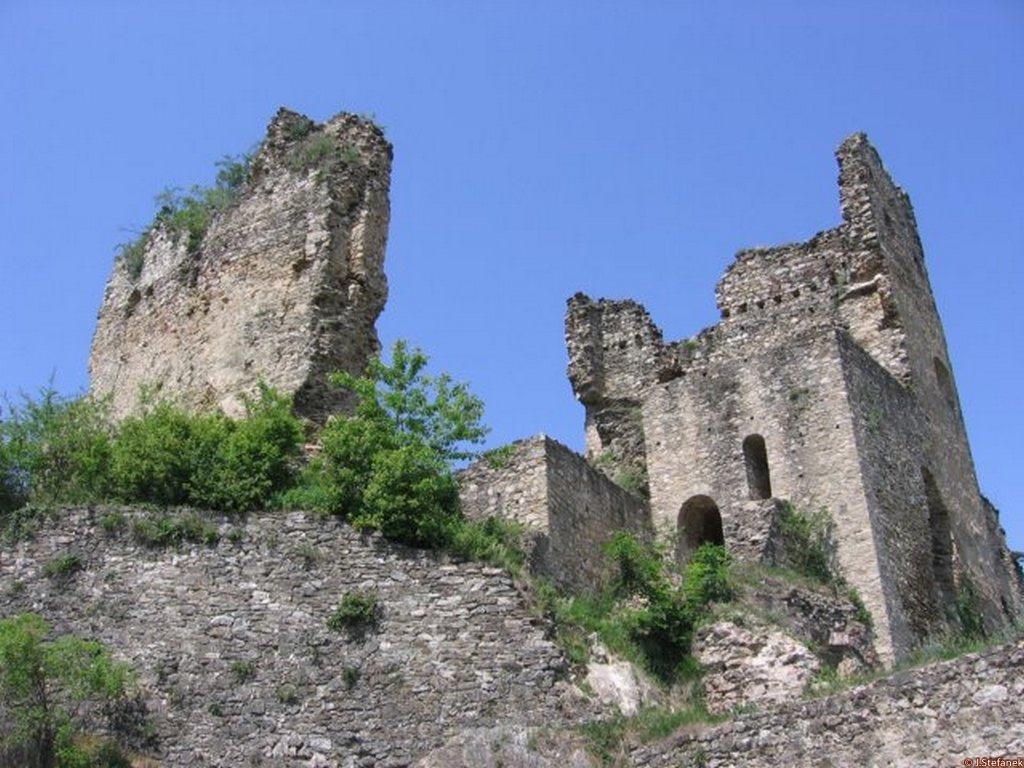
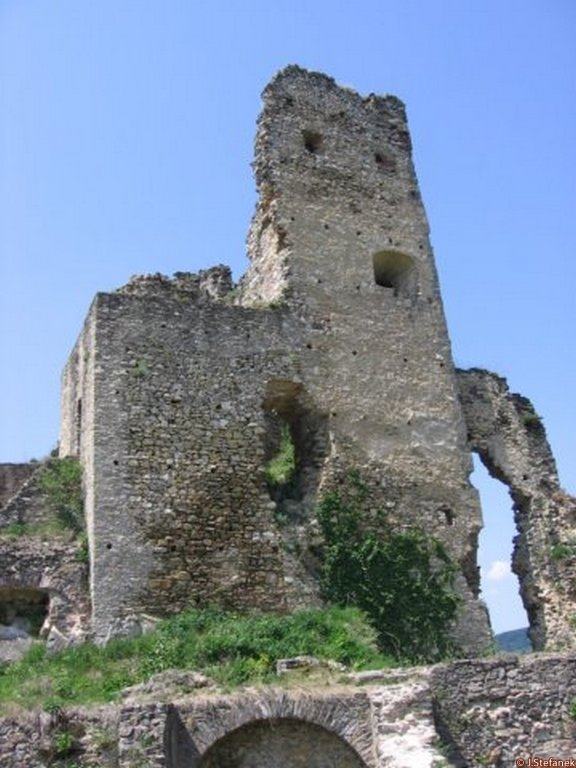
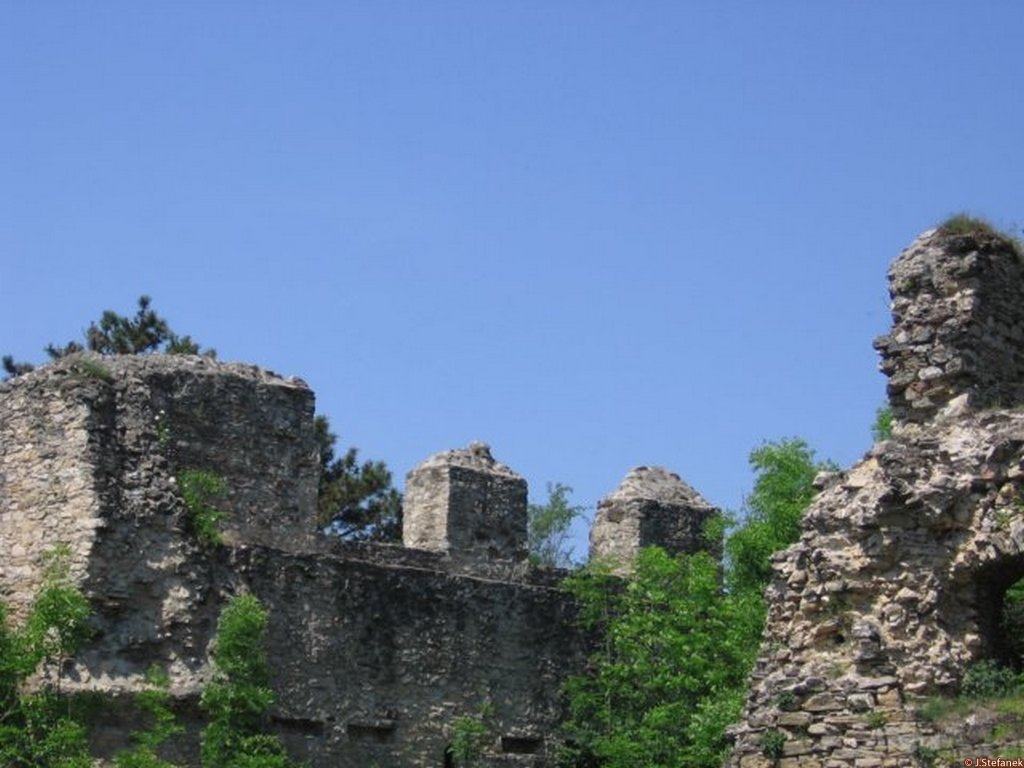
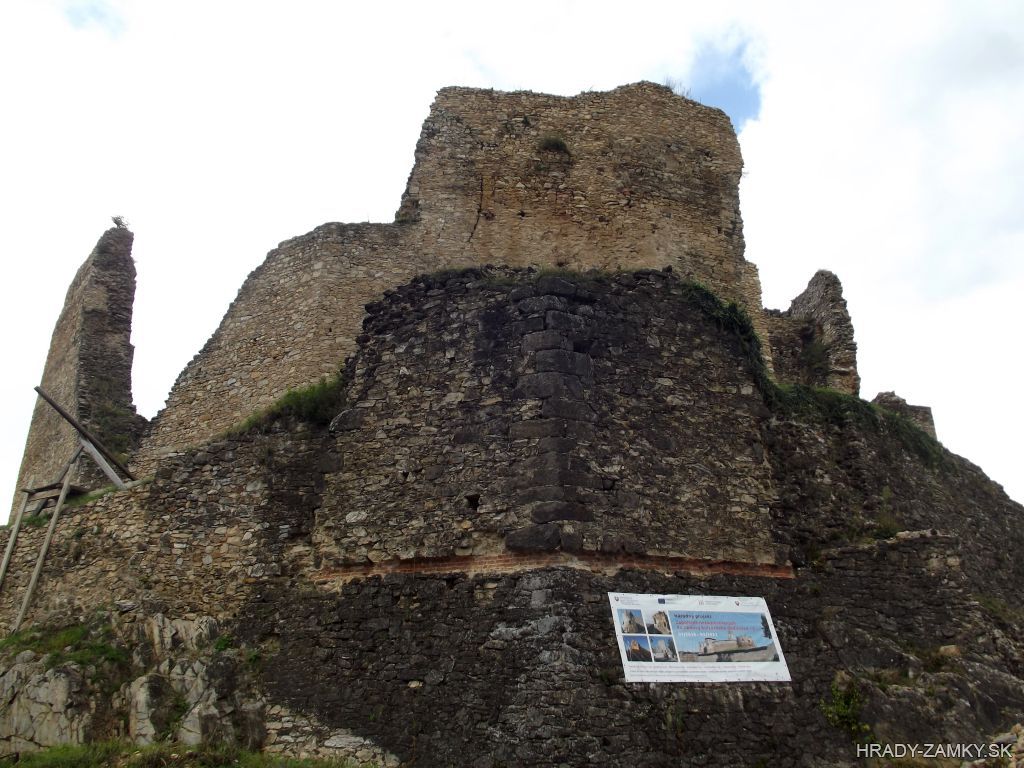
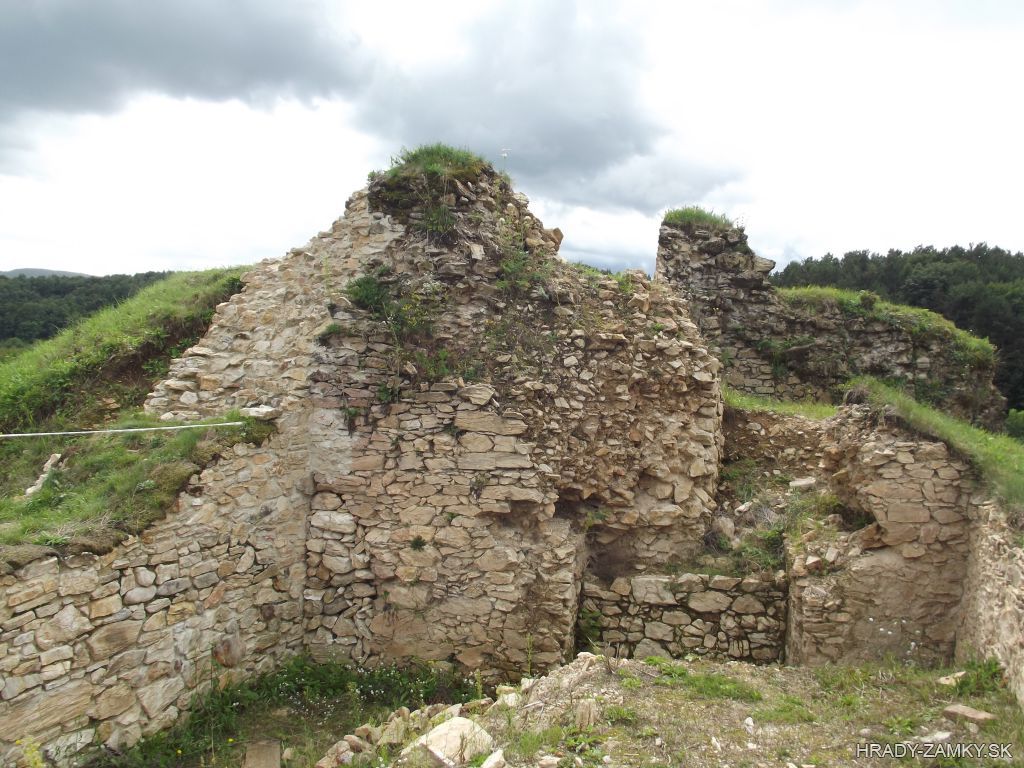
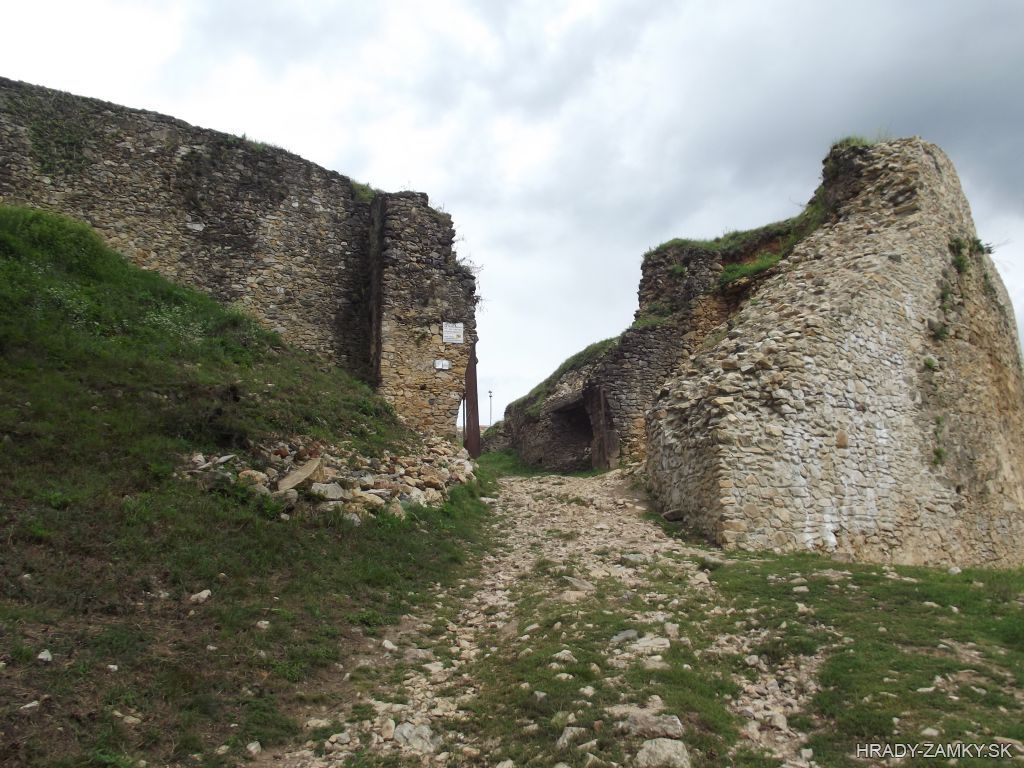
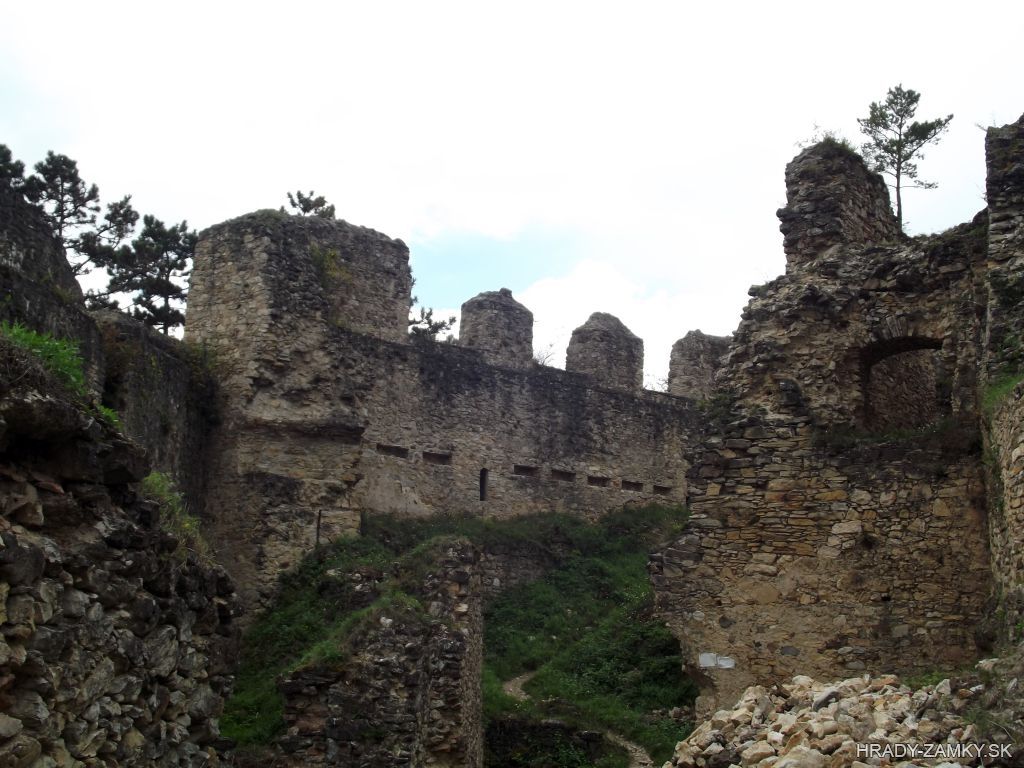
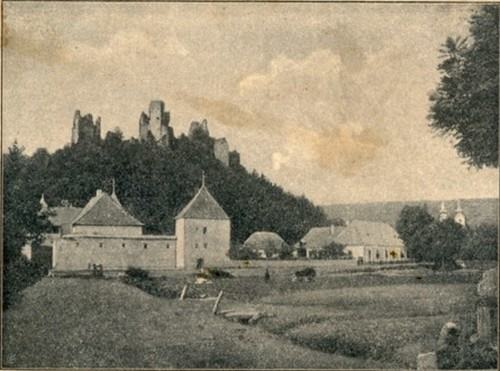
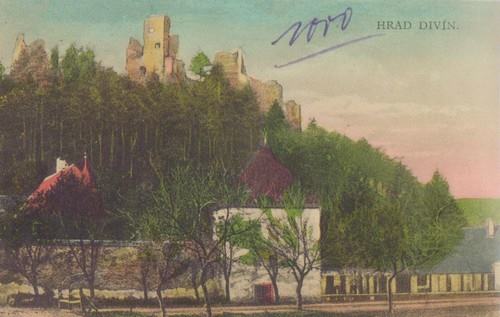
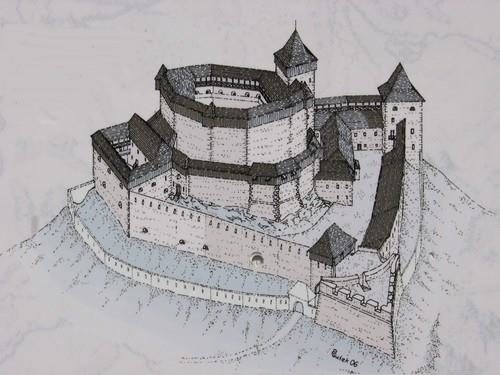
The upper castle has the shape of an oval delimited by a wall, to which the southern sector adjoins a considerably disturbed four-room palace from the inside. In its eastern part, the cellar was cleaned with static security, and in the courtyard by the northern wall there is a large, hollowed-out cistern in the rock. The entrance gate is situated in the east. The high wall surrounding the courtyard and the absence of a tower ranks the castle type with a cloak wall.On the eastern corner there is a solid and tall building, slightly protruding from the line of the wall. It resembles a bastion in shape, but it differs in height and use of several floors of the interior from a real bastion.
Horný hrad má tvar zalamovaného oválu vymedzeného múrom, ku ktorého južnému sektoru zvnútra prilieha značne narušený štvorpriestorový palác. V jeho východnej časti bola pri statickom zabezpečení vyčistená pivnica a na nádvorí pri severnej hradbe sa nachádza rozmerná, v skale vyhĺbená cisterna. Vstupná brána je situovaná na východe. Vysokou hradbou obklopujúcou nádvorie a absenciou veže sa hrad radí k typu s plášťovým múrom.Na východnom nároží predhradia stála masívna a vysoká stavba, mierne vystupujúca z línie hradby. Tvarovo pripomína bastión, ale výškou a využitím niekoľkých poschodí interiéru sa od skutočného bastiónu odlišuje.
Plan
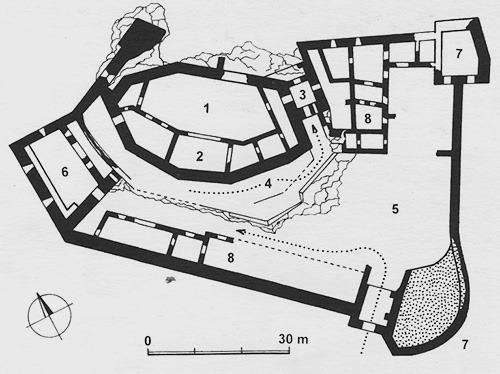
Legend to the ground plan
- 1-upper castle with mantle wall
- 2-residential and operational buildings
- 3-entrance tower of the upper castle
- 4-parkan
- 5-fortification
- 6-defensive bastion-type building
- 7-bastions
- 8-farm and accommodation buildings for the crew
Legenda k pôdorysu
- 1-horný hrad s plášťovou hradbou
- 2-obytné a prevádzkové objekty
- 3-vstupná veža horného hradu
- 4-parkan
- 5-predhradie
- 6-obranná stavba bastiónového typu
- 7-bašty
- 8-hospodárske a ubytovacie budovy pre posádku
History
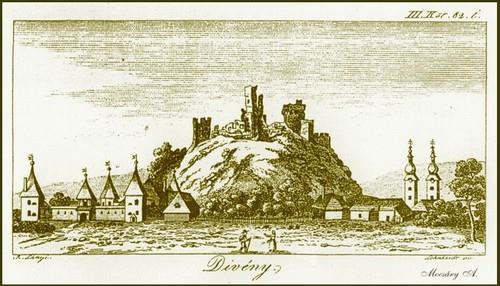
In the vicinity of Lučenec, extensive property was owned by the landscape dignitary Dionýz of the Tomajov family even before the Tartar invasion. Sometime after 1275, his sons built Divín Castle in the northern part of the territory. Dionysus' grandson Tomáš later began to use the name after the Hungarian name of Lučenec's property. He became the founder of the Losonczy family, whose two members Štefan and Žigmund became involved in the anti-royal conspiracy in Transylvania, and in 1649 King Matej Korvín confiscated their Divín castle estate for treason. The king dedicated the confiscated castle to Michal Országh. After him, Ján Nádasdy Ongor acquired the castle.
After the defeat of the Hungarian troops near Mohács, Sigismund Balassa took advantage of the confusing political situation and in 1535 seized the castle by force. However, the Turks also tried to obtain the castle, so in 1559 the castle was fortified. The fence was reinforced by a southern triangular bastion, but a similar bastion was probably located in the north. Subsequently, the entire fort was built, which surrounded the castle from three sides. However, even that was not enough to defend him, and in 1575, after several days of fierce fighting, despite the heroic resistance, the castle was conquered by the Turkish army led by the beg Mahmet. At the end of 1593, Mikuláš Pálffy's army managed to recapture not only Divín but also Fiľakovo. Bálint Balassa also contributed to the conquest of the castle. His successor Sigismund Balassa repaired the castle from 1598, but the castle was still occupied by Bethlen's rebels. After the uprising, however, the castle always returned to the Balassians. After 1666, the castle was inherited by the land and capital dignitary Imrich Balassa, who became sadly famous for his acts of violence. Thanks to them, the palatine army had to encircle Vesselényi's castle, capture Imrich and take him to court. His acquaintances and money helped him be fired again. At that time, around 1670, Imrich rebuilt the manor house under a castle occupied by the imperial army. However, during the banquet in the manor, the officers of the castle crew got drunk, murdered and, disguised in their clothes, broke into the castle with their friends, where they easily defeated the sleeping soldiers and reoccupied the castle.
The imperial army unsuccessfully besieged the castle in 1674 for at least 6 weeks. Balassa bravely resisted the attack. After his further violent acts and rumors that he was preparing a betrayal, the mercenary corps of Generals Strassold and Leslie drew to Divín. after a week of artillery training, they attacked the castle and in 1679, after bitter experience with the owner, they blew it up by decision of the Military Court Council.
V okolí Lučenca vlastnil rozsiahle majetky krajinský hodnostár Dionýz z rodu Tomajovcov už pred tatárskym vpádom. Jeho synovia niekedy po roku 1275 v severnej časti územia vybudovali hrad Divín. Dionýzov vnuk Tomáš neskôr začal používať meno podľa maďarského názvu lučenského majetku. Stal sa zakladateľom rodu Losonczyovcov, ktorého dvaja členovia Štefan a Žigmund, sa zaplietli do protikráľovského sprisahania v Sedmohradsku a kráľ Matej Korvín im v r.1469 divínske hradné panstvo pre zradu zhabal. Kráľ venoval zabavený hrad Michalovi Országhovi. Po ňom získal hrad Ján Nádasdy Ongor.
Po porážke uhorských vojsk pri Moháči, Žigmund Balassa využil neprehľadnú politickú situáciu a v r.1535 sa hradu zmocnil násilím. O získanie hradu sa však usilovali aj Turci, preto bol v r.1559 hrad opevnený. Bol spevnený parkán južnou trojbokou baštou, ale podobná bašta sa zrejme nachádzala i na severe. Následne prebehla stavba celého predhradia, ktoré obopínalo hrad z troch strán. Ani to však nestačilo na jeho obranu a v roku 1575 po niekoľkodňových urputných bojoch bol napriek hrdinskému odporu hrad dobytý tureckým vojskom na čele s begom Mahmetom. Koncom roku 1593 sa vojsku Mikuláša Pálffyho podarilo dobyť späť nielen Divín ale aj Fiľakovo. O dobytie hradu sa zaslúžil aj Bálint Balassa. Jeho nasledovník Žigmund Balassa od r.1598 hrad opravoval, no napriek tomu hrad obsadili Bethlenovi povstalci. Po skončení povstaní sa však hrad vždy vrátil Balassovcom. Po r.1666 hrad zdedil krajinský a stoličný hodnostár Imrich Balassa, ktorý sa smutne preslávil násilníckymi činmi. Vďaka nim muselo vojsko palatína Vesselényiho hrad obkľúčiť, Imricha zajať a dopraviť pred súd. Jeho známosti a peniaze dopomohli k tomu, aby bol opäť prepustený. Imrich v tom čase okolo r.1670 pod hradom obsadeným cisárskym vojskom prestaval do pozoruhodnej podoby kaštieľ. Počas hostiny v kaštieli však dôstojníkov posádky hradu opil, zavraždil a v prestrojení do ich šiat spolu s priateľmi vnikli do hradu, kde poľahky premohli spiacich vojakov a hrad znova obsadili.
Cisárske vojsko hrad v r.1674 najskôr 6 týždňov neúspešne obliehalo. Balassa statočne útokom odolával. Po jeho ďalších násilníckych výčinoch a po zvestiach, že chystá zradu, pritiahli k Divínu žoldnierske zbory generálov Strassolda a Leslieho. po týždennej delostreleckej príprave zaútočili na hrad a v roku 1679 ho po trpkých skúsenostiach s majiteľom z rozhodnutia Vojenskej dvorskej rady vyhodili do povetria.
Myths and legends
The legend of the castle
The builders of the castle were busy by the forest spirit. They could continue building unabated until the child was bricked up to the ground. It is said that they called the wild castle Divín for this wonder.
Divín brothers
When beg hasan tried to conquer Divin, four brothers from the village came to his aid. It is said that their sister is lost in the castle and they would rather serve the beg than the cruel lord Balass. At night, they brought the Turks to Divín, where, according to the agreement, Balassa was waiting with the army. Many Turks were killed there at that time. Nobody has seen the Koporov brothers since, while Hasan Divín still conquered. At that time he ordered brave young men to be hung on the highest hill in the area, so that they could be seen by the whole region. When the Turks hung them there, a great storm swept away. He uprooted the massive trees, only on the maple tree on which the Koporovci brothers hung, not even a ticket moved. The tree was left there alone, and since then people have called the hill above Divín called Javor.
Povesť o hrade
Staviteľom hradu prácu maril lesný duch. V budovaní mohli nehatene pokračovať, až keď do základov zamurovali dieťa. Vraj pre tento div divúci hrad nazvali Divínom.
Divínski bratia
Keď sa beg hasan pokúšal dobyť Divín, na pomoc mu prišli štyria bratia z dediny. Vraj sa im stratila v hrade sestra a oni radšej budú slúžiť begovi ako ukrutnému pánovi Balassovi. Nocou priviedli Turkov k Divínu, kde však podľa dohovoru čakal Balassa s vojskom. Veľa Turkov tam vtedy pobili. Bratov Koporovcov odvtedy nik nevidel, kým Hasan Divín predsa len nedobyl. Vtedy prikázal statočných mládencov obesiť na najvyššom vrchu v okolí, aby boli celému kraju na očiach. Keď ich tam Turci vešali, strhol sa náramný víchor. Vyvracal mohutné stromy, len na javore, na ktorom odvisli bratia Koporovci, sa ani lístok nepohol. Strom tam ostal osamotený a ľudia odvtedy ten vrch povyše Divína volajú Javor.
Useful information
The ruin is freely accessible
Zrúcanina je voľne prístupná
Nearby castles