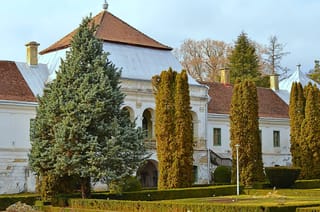
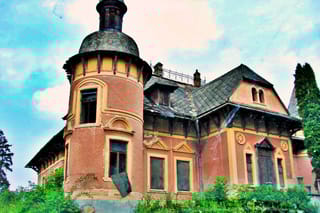
Porolissum
Mirsid Sălaj Romania
castle, chateau
Porolissum
Mirsid Sălaj Romania
castle, chateau
Porolissum
Mirsid Sălaj Romania
castle, chateau
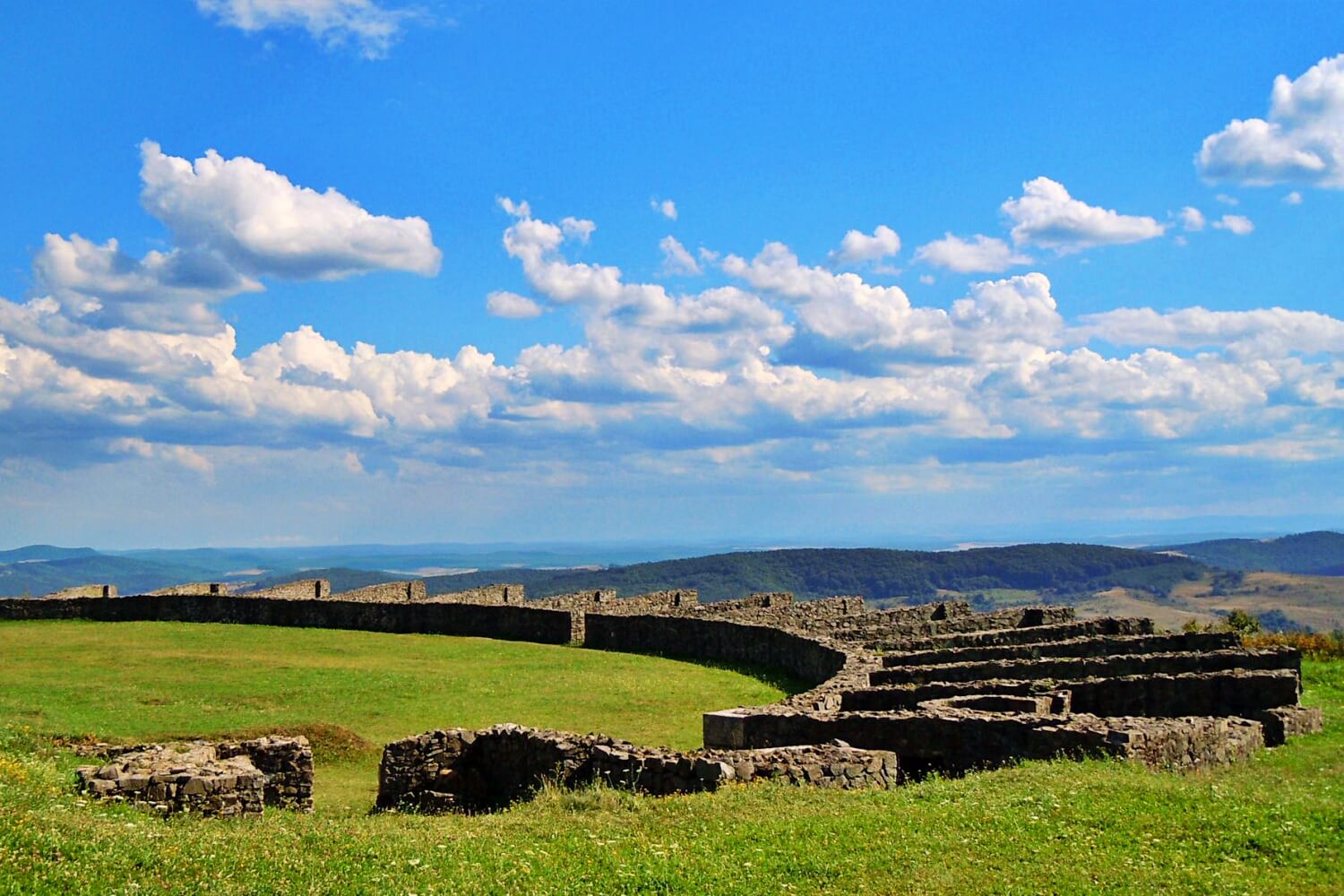
Porolissum was an ancient Roman city in Dacia
Porolissum a fost un oraș roman din Dacia
Porolissum egy ókori római város volt Dacia provincia területén, a stratégiai fontosságú Meszesi kapu közelében
Previous names
Porolissum, Porolissum, Porolissum
Description
Porolissum was an ancient Roman city in Dacia. Established as a military camp in 106 during Trajan's Dacian Wars, the city quickly grew through trade with the native Dacians and became the capital of the province Dacia Porolissensis in 124. The site is one of the largest and best-preserved archaeological sites in modern-day Romania. It is 8 km away from the modern city of Zalău, in Moigrad-Porolissum village, Mirsid Commune, Sălaj County.
History
In 106, at the beginning of his second war against the Dacians, Emperor Trajan established a military stronghold at the site to defend the main passageway through the Carpathian mountains. The fort, initially built of wood on stone foundations, was garrisoned with 5000 auxiliary troops transferred from Spain, Gaul and Britain. Even though the name Porolissum appears to be Dacian in origin, archaeologists have so far uncovered no evidence of a Dacian settlement preceding the Roman fort.
In the following decades, the fort was enlarged and rebuilt in stone (possibly under the reign of Marcus Aurelius), and a canaba, a civilian settlement developed around the military center. When Hadrian created the new province Dacia Porolissensis (named for the now sizable city) in 124, Porolissum became the administrative center of the province. Under emperor Septimius Severus, the city was granted municipium status, allowing its leaders and merchants to act independently. Although the Romans withdrew from Dacia ca. 271 under Aurelian, Porolissum may have been gradually abandoned in the course of the 260's.
Even though the city was founded as a military center in the middle of a war, the garrison of Porolissum seems to have lived in peaceful coexistence with their Dacian neighbours – several Dacian villages that were apparently founded after the city of Porolissum have been uncovered by archaeologists on the surrounding hills. There are also some inscriptions mentioning city officials with Romano-Dacian names, indicating close cooperation on a political level.
Excavations
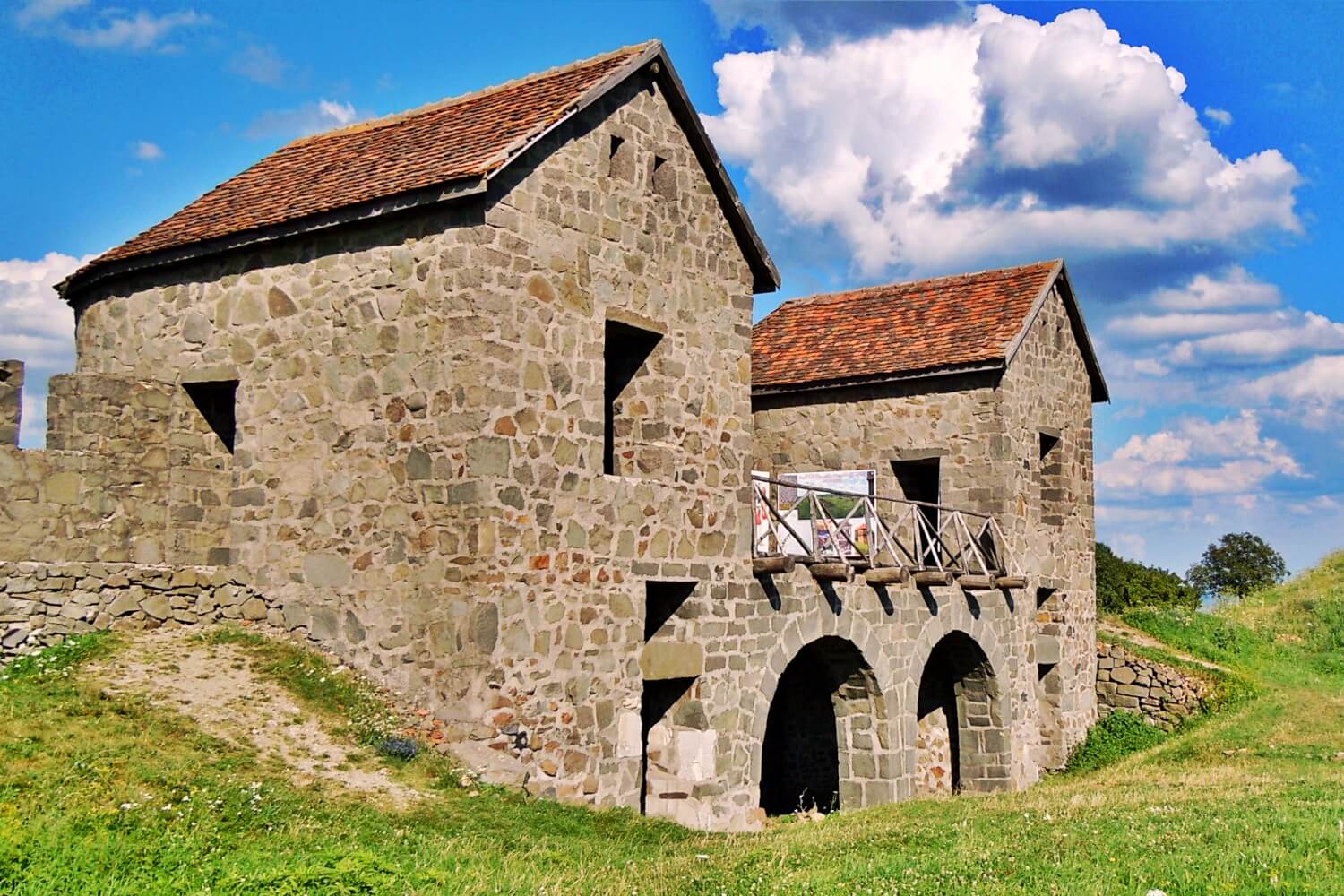
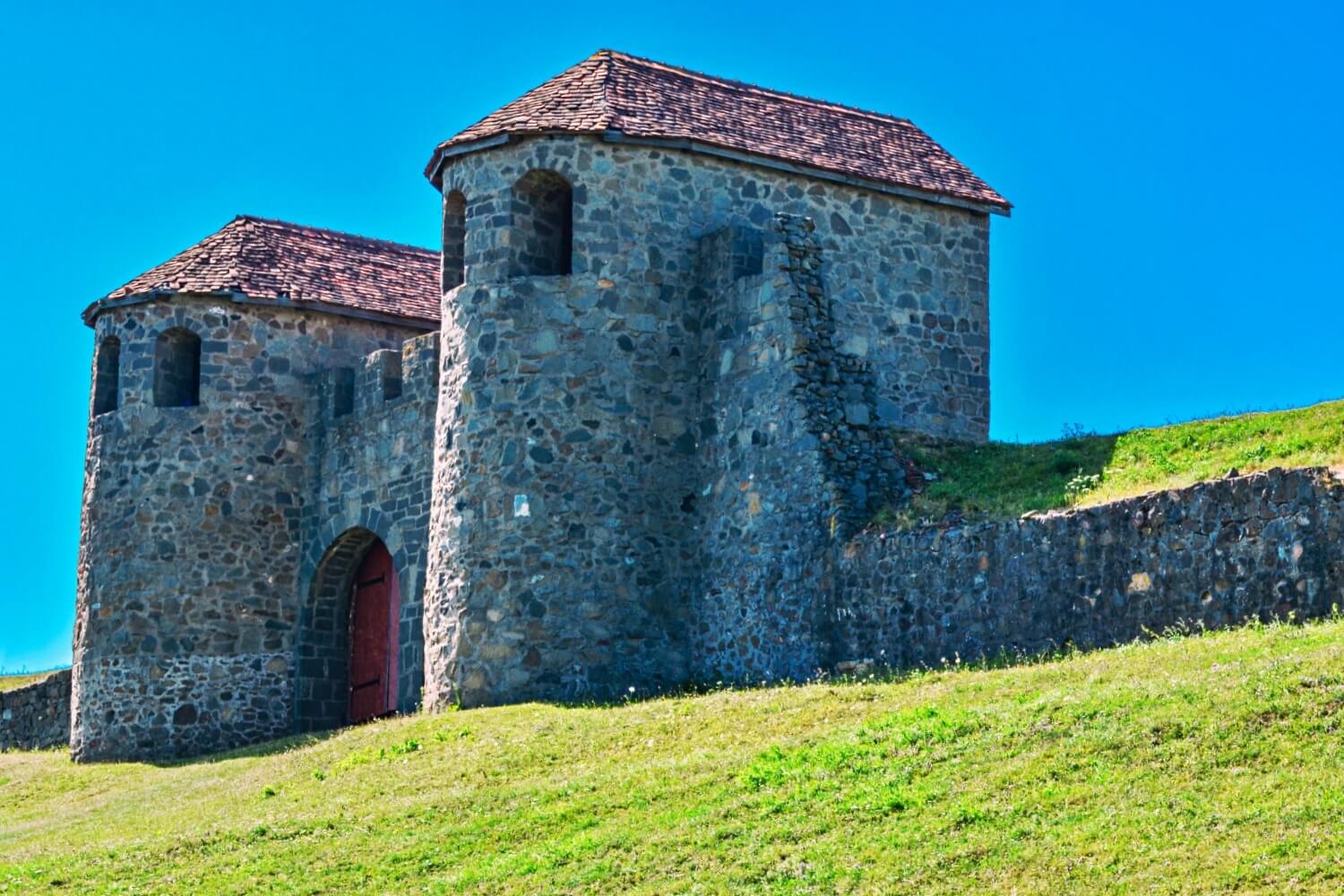
Limited archaeological work at Porolissum began in the 19th century, but it was not until 1977 when Romanian archaeologists began larger-scale, systematic excavations. The excavations by a number of teams are ongoing and have uncovered remnants of both the military installations and the civilian city, including public baths, a customs house, a temple to Liber Pater, an amphitheatre, insula consisting of four buildings and a number of houses. The main gate (Porta Praetoria) of the stone fortress has been rebuilt. A joint American-Romanian team, the Porolissum Forum Project, excavated an area of the civilian settlement from 2004–2011; despite the name of the project, the team confirmed that while this area served a public function, it was not necessarily a forum.
From 2006 until 2011, another project, "Necropolis Porolissensis", was running focused on the cemetery of the municipium Porolissum, on the spot known as "Ursoies". From 2008 to 2011 a Romanian-German-Hungarian team was excavating an underground-building in the centre of the castle, probably a water cistern.
In 2015, archaeologists from Zalău County Museum unearthed a stone sarcophagus containing skeletal remains of a young person. The sarcophagus is unusual because it was not found in the cemetery, rather it was discovered by chance during restoration of another part of the ruins. The limestone lid has carvings that were common in Roman times, and it has a hole that suggests that the grave was robbed in antiquity.
Temple of Nemesis
Nemesis was the goddess of justice, fortune and destiny. It was believed that she influenced the fate of those who were frequently faced with death and danger, so she was worshipped especially by soldiers and gladiators. Thus, the goddess was closely linked to the world of amphitheaters. Places of worship dedicated to her are near amphitheaters or even embedded in the building. The sanctuary of Porolissum was built in the late 2nd century or in the beginning of the 3rd century AD. Probably it was also a place of worship of other deities which were linked in one way or another to amphitheatre activities, especially animal fighting (venatio), such as Liber Pater: god of vegetation and vines, or Silvanus: protector god of forests, pastures and wild animals.
Amphitheater
The amphitheater was built as a wood structure during the reign of Hadrian. Later, in 157 AD, it has been rebuilt in stone.
In popular culture
Porolissum is the primary setting of Harry Turtledove's science fiction novel Gunpowder Empire.
Porolissum a fost un oraș roman din Dacia. Stabilit ca tabără militară în anul 106 d.C., în timpul războaielor daco-romane ale lui Traian, orașul s-a dezvoltat repede prin intermediul comerțului cu băștinașii daci, și a devenit capitala provinciei romane Dacia Porolissensis în 124 d.C. Situl este unul dintre cele mai mari și mai bine păstrate din România. Se găsește pe Măgura Pomăt de pe teritoriul satului Jac, respectiv a comunei Creaca, județul Sălaj.
Istorie
În anul 106 d.C., la începutul celui de-al doilea război împotriva dacilor, împăratul roman Traian a înființat un punct fortificat pe locul orașului, pentru a apăra principalul loc de trecere prin Munții Carpați.
Fortul, costruit inițial din lemn pe fundații de piatră, găzduia circa 5.000 de soldați din trupele auxiliare, transferați din Spania, Galia și Britania. Chiar dacă numele Porolissum pare a avea o origine dacă, arheologii încă nu au descoperit dovezi ale vreunei așezări dace care să fi precedat fortul roman. În deceniile următoare, fortul a fost mărit și reconstruit în piatră (poate în timpul domniei lui Marcus Aurelius), și o așezare civilă s-a dezvoltat în jurul centrului militar. Când Hadrian a creat noua provincie Dacia Porolissensis (denumită astfel după orașul deja relativ mare) în 124 d.C., Porolissum a devenit centrul administrativ al acesteia. Sub împăratul Septimius Severus, orașul a primit statut de municipium, permițându-le conducătorilor și negustorilor săi să lucreze în mod independent. Deși romanii s-au retras din Dacia în 271 d.C. sub Aurelian, iar orașul a fost abandonat de către fondatorii săi, dovezile arheologice arată că a rămas locuit timp de mai multe secole după această dată.
Deși orașul a fost fondat ca un centru militar în mijlocul unui război, se pare că garnizoana de la Porolissum a coexistat pașnic cu vecinii săi daci - pe dealurile înconjurătoare, arheologii au descoperit mai multe sate dace care par să fi fost înființate după orașul Porolissum. Există de asemenea inscripții menționând persoane oficiale cu nume daco-romane, indicând o cooperare strânsă la nivel politic.
Săpături arheologice
Arheologii români au început săpăturile la începutul anilor 1970. Excavațiile, încă în desfășurare, au dus la descoperirea rămășițelor, atât ale instalațiilor militare cât și ale orașului civil - între ele, băi publice, un templu închinat lui Liber Pater, un amfiteatru și case de locuit. Una dintre porțile zidului de piatră al fortului a fost reconstruită. Eforturile sunt concentrate acum pe excavarea forumului orașului. Pe culmea care se află la nord-vest față de intrarea principală în castrul roman se găsește o cetate dacică, de mici dimensiuni. Prin urmare, exista locuire dacică în zonă.
Porolissum egy ókori római város volt Dacia provincia területén, a stratégiai fontosságú Meszesi kapu közelében. Ma Romániában, Erdélyben, Szilágy megyében, Zilahtól 8 km-re keletre, Mojgrád és Zsákfalva között találhatók maradványai.
Porolissum városa mint katonai tábor Traianus dák háborúi ideje alatt a bennszülött dákok kereskedelme révén gyors növekedésnek indult és i. sz. 124-ben már a tartomány fővárosa lett Dacia Porolissensis néven.
Fekvése
Porolissum a Napocán (Kolozsváron) át tovább Észak felé haladó út mellett feküdt; a régi leírások szerint 52 r. mérföldre Napocától, a távolság mai léptékkel mérve is ugyanennyi Mojgrád és Kolozsvár között.
Története
A Római Birodalom uralma Erdélyben e vidéken i. sz. 101-től 274-ig tartott Dácia néven, amely három részből állt: Dácia Porolissensis, Dacia Apulensis és Dácia Malvensisból. Az első provincia, Porolissensis, a Kolozsvártól északra eső területet foglalta magában, mely vidéknek központi városa Porolissum volt, mely egy nagy vidék ahol a XIII. legio (gemina), annak eltávozása után pedig az V. legio (Macedonica) állomásozott, rajta kívül még három nagyobb csapat (ala, cohors) is. Egy légió a segélycsapatokkal együtt 13.000 katonából, és a nagyobb csapatok 3000–4200 emberből álltak ebben az időben.
Porolissum (Ager Porolissensis) őre volt, útvonalán kisebb-nagyobb őrhelyekkel, melyet, mint a dákok egyik erősségét, tán királyi várát, igen valószínű, hogy Traianus császár hódította meg, egy i. sz. 157-ből származó mojgrádi felirat (amphitheatrum vetustae dilapsum) szerint, hogy megvédje a Kárpátokon át vezető fő folyosót, a Meszesi kaput. A többi katonai várossal – Romlott-tal (latinul Certia), Magyaregreggyel (Largiana) és Vármezővel – utak kötötték össze védve a Meszesen át vezető más kisebb átjárókat is. Mindvégig katonai telepváros (municipium) maradt, valószínűleg azért, mert Napoca (Kolozsvár) túlszárnyalta, amely azonban sohasem volt katonai táborhely és már 139–161 között municipum volt.
Az erőd eredetileg fából épült kő alapokon, később azonban, a várat kibővítették és kővárrá. Valószínűleg Marcus Aurelius uralkodása alatt katonai központtá építették át. 124-ben, Hadrianus idején a már jókora város a tartomány közigazgatási központja lett. Septimius Severus császár uralkodása alatt kapott municipium státuszt. Bár a rómaiak 271-ben, Aurelianus uralkodása alatt elhagyták, a régészeti bizonyítékok azt mutatják, hogy ezután még évszázadokig lakott hely maradt. Romjain épült a meszesi apátság.
Ásatások
Annak ellenére, hogy a város katonai központ volt, a régészeti leletek alapján Porolissum helyőrsége békésen együtt élt dák szomszédaival, a régészeti feltárások szerint, így több dák falut is látszólag Porolissum után alapítottak a környező hegyeken.
A régészeti feltárások a 19. században kezdődtek. Torma Károly is végzett itt ásatásokat, de azután nagyobb munkálatok 1977-ig nem voltak. Ekkor a román régészek kezdtek nagyobb léptékű, rendszeres ásatásokba, majd egy közös amerikai-román csapat is munkába kezdett a város fórumán.
2006-tól pedig a "Necropolis Porolissensis" néven a municipium Porolissum területén az úgynevezett "Ursoies" program szerint folyt a munka. 2009 óta pedig egy román-német-magyar csapat a vár középpontjában végez ásatásokat. A régészeti lelőhely Románia műemlékeinek jegyzékében az SJ-I-s-A-04909 sorszámon szerepel.
Useful information
Free
6.00 RON
4.00 RON
Information tables
muzeul.zalau@gmail.com
- A complex of ruins
- Gift shop
-
-
External links
Nearby castles