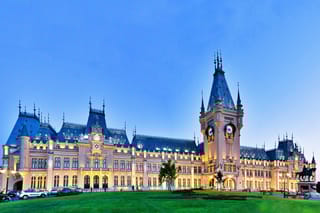
Roznovanu Palace
Zona Metropolitană Iași Județul Iași Romania
manor, mansion
Palatul Roznovanu
Zona Metropolitană Iași Județul Iași Romania
manor, mansion
The palace was built in 1830-1832 after the plans of architect Gustav Freywald, who also designed the Iași Metropolitan Cathedral
Palatul Roset-Roznovanu este un monument de arhitectură (cod LMI IS-II-m-B-04066), construit în deceniile 7 - 10 ale secolului XVIII-lea, în Iași
Previous names
Roznovanu Palace, Palatul Roznovanu, Roznovanu palota
Description
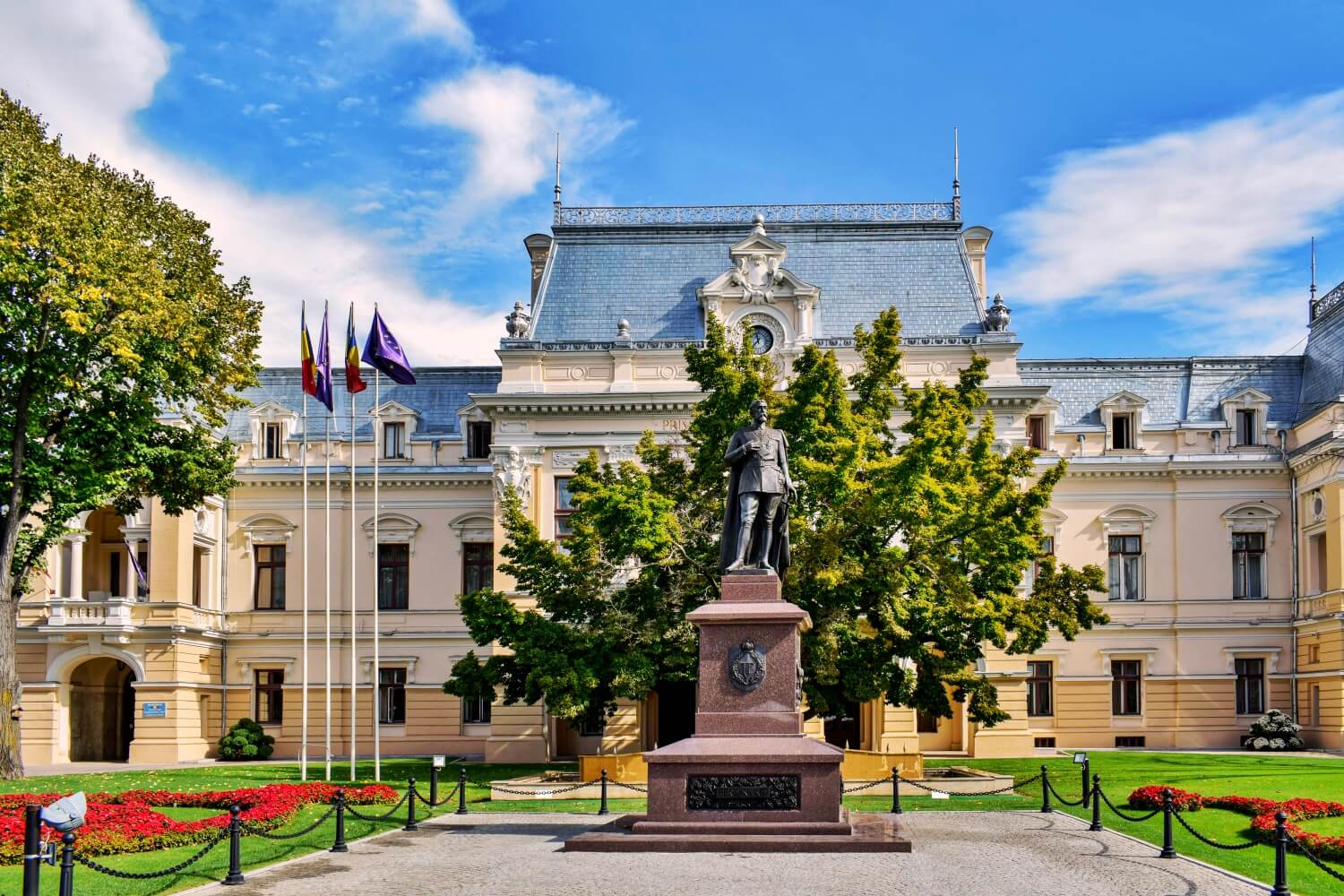
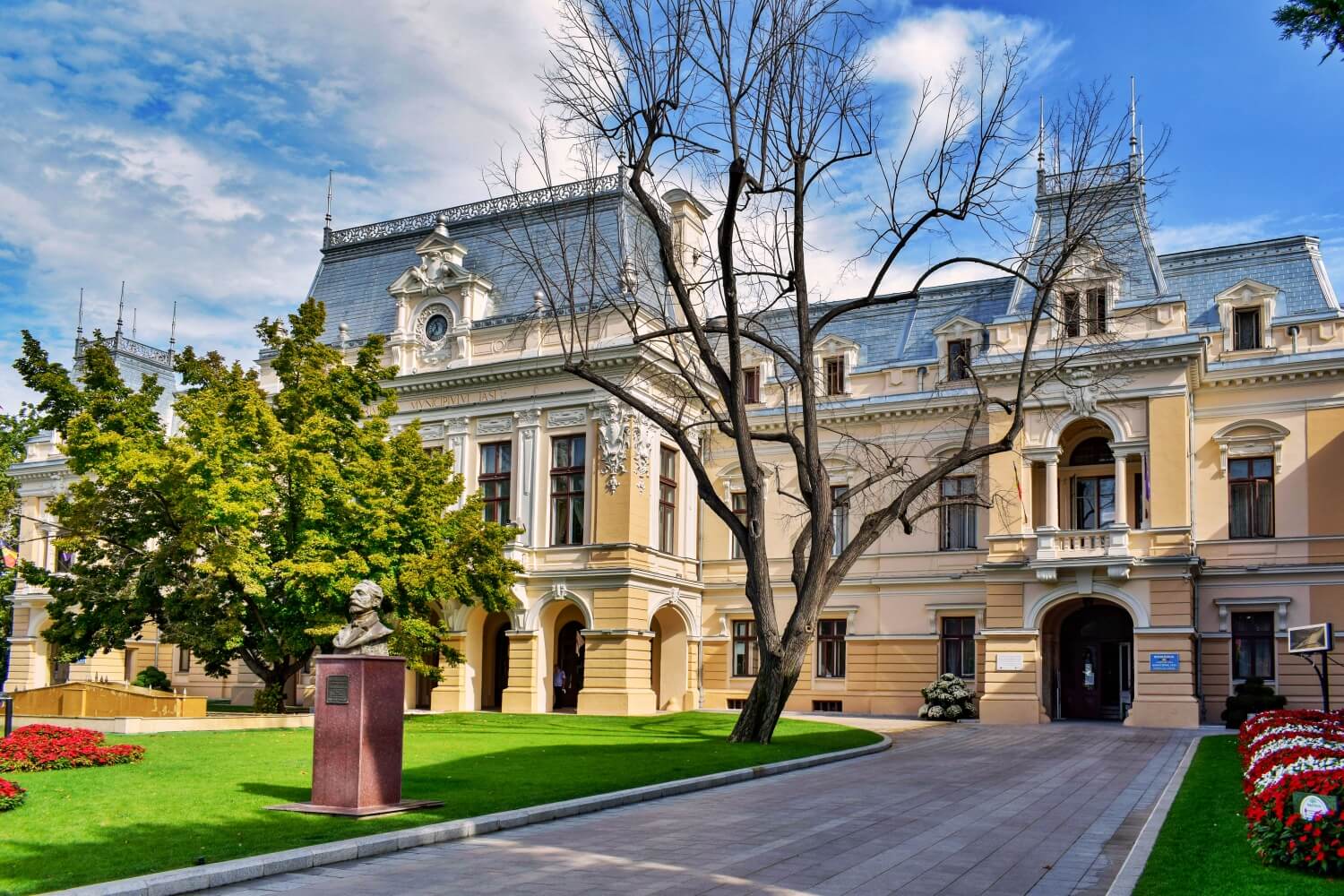
The palace was built in 1830-1832 after the plans of architect Gustav Freywald, who also designed the Iași Metropolitan Cathedral.
Initially, the architectural style of the building was the Neoclassic one. A chapel was also built in order to serve the palace, today not existing anymore.
Until the end of the 19th century it was the residence of the rich family Rosetti-Roznovanu. The entire Russian diplomacy, from the Organic Regulation period (1829-1831) used to work here. On the 3rd of April 1866, in the palace yard, a violent separatist manifestation took place. The news of Prince Alexandru Ioan Cuza’s abdication and bringing to the throne of a foreign prince reactivated the Anti-Unionist Movement, formed of Moldavian boyars unsatisfied by the situation of the Principality of Moldavia after the Union. The objective was the separation from Wallachia and bringing to the throne the boyar Neculai Rosetti-Roznovanu. The army intervened at the order of Lascăr Catargiu and after some violent street confrontations, the anti-unionist barricade, from in front of Roznovanu Palace was taken down, with victims on both sides, and the leader were arrested. On the rebellion, Ion Creangă also participated for the anti-unionists, saving Moldavia’s metropolitan who was wounded in the confrontations.
The palace hosted important figures of the epoch, members of the royal houses, but also famous artists, such as Hariclea Darclée and George Enescu. In 1891, mayor Vasile Pogor got the building from the Roznovanu family. There is also a legend saying that the palace had been lost at a card game by the owner. The construction was modified in order to the be used as headquarters of City Hall. Since 1893 it was designated as a royal palace, but during the refuge in Iași in the First World War, the royal family preferred other buildings. An important figure for those hard times was mayor George Gh. Mârzescu (1914-1916), because he took firm measures for the hosting of refugees and the population’s provisioning. The Archives and the Justice Court were hosted then in the building. In 1944, it became the Residence of the Party City Committee and in 1970 it became once again residence of the City Hall.
The eclectic decorative elements were placed after the decision of transforming the building into a royal palace. On the upper side, there are specific elements of the French Neogothic (rich Romantic heraldry, trapezoidal shaped roof) and in the inside, there are mainly Baroque adornments, today much more simplified due to renovations. At the entrance, visitors are welcomed by the monumental stairways which lead to the hallway guarded by marble Corinthian columns. The big meetings and parties from the past held in Vasile Pogor Hall were replaced with the Local Council meetings, guarded by the portraits of the mayors of Iași. The City Hall guide can tell tens of stories which marked this majestic palace.
The tumultuous story of Roznovanu Palace
Roznovanu Palace is hiding one of the romantic stories which shattered the generally conservative society of Moldavia of the 19th century. It refers to the illegal love story between Neculai Roznovanu (1842-1891), owner of the palace and Mary (Marghiolița) Ghica-Comănești, married to the much older chancellor Costache Sturdza. Irreparably in love with Marghiolița, Neculai invaded, along with a troop of Albanian mercenaries, the Ruginoasa Palace, residence of the boyar and kidnapped her. During the fight, Săndulache, the boyar’s son, was killed. The betrayed husband obtained the recognition of illegality of the liaison of the two lovers and their anathematization by the Orthodox Church. It is even said that the palace has a curse on it because of the scandalous relationship of the two lovers.
https://iasi.travel/
Palatul Roset-Roznovanu este un monument de arhitectură (cod LMI IS-II-m-B-04066), construit în deceniile 7 - 10 ale secolului XVIII-lea, în Iași.
Clădirea adăpostește actualul sediu al primăriei Iași. Impresionantă prin somptuozitate și prin fastul interioarelor, a fost construită în deceniile 7 - 10 ale sec. XVIII-lea și restaurată între anii 1830 și 1833 de către cunoscutul arhitect Gustav Freywald, cel care a proiectat și Catedrala Mitropolitană din Iași.
În ansamblu, ca arhitectură dar și prin frescele interioare și statuile ce împodobeau în 1830 exteriorul, palatul aparține stilului neoclasic, cu elemente ornamentale electico-baroce. Până în 1891 când este vândută statului, clădirea este reședință a familiei Rosetti - Roznovanu, cea mai puternică și mai influentă familie din arena politică moldavă a urbei. Fiind una din cele mai importante case ale Iașului în epocă, a găzduit numeroase personalități și a fost martora unor evenimente istorice semnificative.
La sfârșitul sec.XVIII (1788), se stabilește la Palat, generalul rus Romanov și mai apoi, întreaga diplomație rusă, aflată aici în perioada Regulamentului Organic (1829 - 1831). De altfel, în 1866, familia Roznovanu, susținută de forțe politice din Rusia, încearcă organizarea unui complot ce urmărea urcarea în scaunul Moldovei, a lui Nunuța Roznovanu, dar planul se soldează cu un eșec. Un eșec a fost și încercarea fostului domnitor Mihail Sturdza, stabilit aici în 1858 de a reveni la putere, la 10 ani de la plecarea din țară. Figuri marcante se perindă prin saloanele Palatului în deceniile 7-8 ale sec.XIX: M.S. Carol I, Natalia Kescu (care va deveni Regina Serbiei în 1882), celebra Hariclea Darclée etc.
Între anii 1892 - 1892, Palatul Roznovanu va fi folosit ca reședință temporară a familiei regale, o parte din spațiu fiind alocat autorităților locale.
Clădirea a jucat un rol deosebit pe scena istoriei mai ales în Primul Război Mondial, între 1916 - 1918, când a găzduit sediile ministerelor conducerii politice refugiate de la București. În încăperea în care se află acum Cabinetul Primarului, își avea biroul M.S. Regele Ferdinand I, iar în actuala Sală de ședințe a Consiliului Local s-a întrunit în 1918, Consiliul de Război al României. De asemenea, parterul a servit drept locație pentru un spital civil al Misiunii Crucii Roșii Americane În deceniile 2-4 ale secolului XX, Palatul cunoaște din nou strălucirea vieții mondene de altădată, pentru ca, din 1944 să devină sediul Comitetului Orășenesc de Partid și din 1970 sediul Primăriei Iași.
După 1990 s-au perindat prin Sala Mare a Palatului, semnificative personalități ale vieții politice românești, membrii Casei Regale, ambasadori și reprezentanți ai statelor din toate colțurile lumii.
Useful information
Charge
The Palace is used as a city hall
-
Nearby castles