Trascau Fortress
Rimetea Alba County Romania
fortress
Cetatea Trascăului
Rimetea Alba County Romania
fortress
Torockószentgyörgyi vár
Rimetea Alba County Romania
fortress
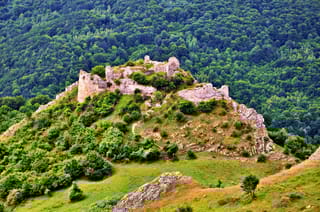
Trascau Fortress (also called Coltesti Fortress) is located 50 km away from Alba Iulia and was built at the end of the XIII th century by the Count Thoroczkay of Trascau as home and shelter for the whole community in times of war
Cetatea Trascăului (în a doua jumătate a secolului al XX-lea numită și Cetatea Colțești, în maghiară Torockóvár), situată la vest de satul Colțești (în maghiară Torockószentgyörgy, în germană Sankt Georgen) și la cca 5 km sud-vest de comuna Rimetea (în maghiară Torockó, în germană Eisenburg), județul Alba, a fost construită în jurul anilor 1296 de vice-voievodul Thorotzkay din Trascău, ca cetate locuibilă și de refugiu
Továbbá az sem könnyíti meg a magamfajta utazók dolgát, hogy egy 1800-as évek beli, félig olvashatatlan emléktáblán kívül semmilyen tájékoztatót nem találni a vár mellett
Previous names
Trascau Fortress, Cetatea Trascăului, Torockószentgyörgyi vár
Description
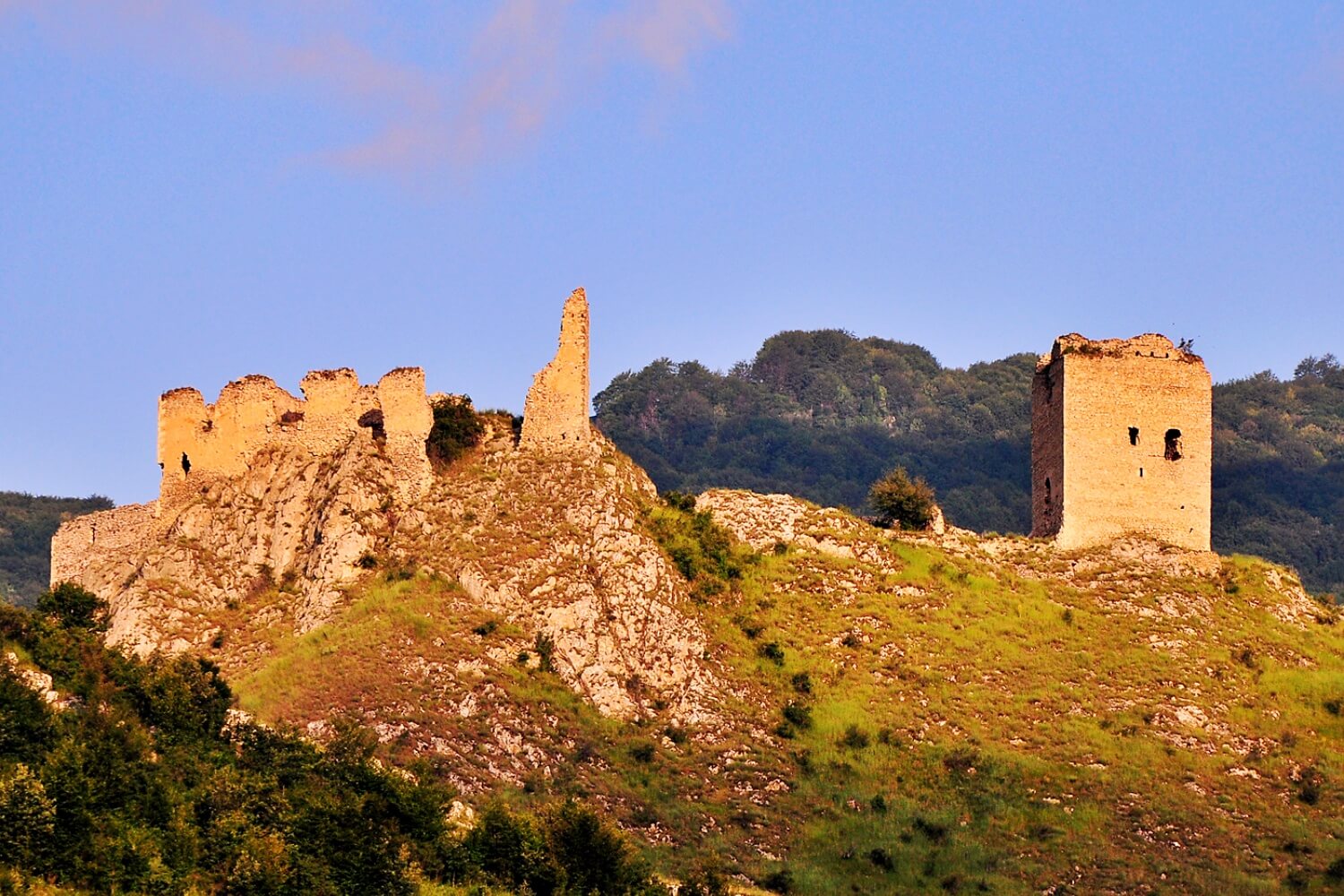
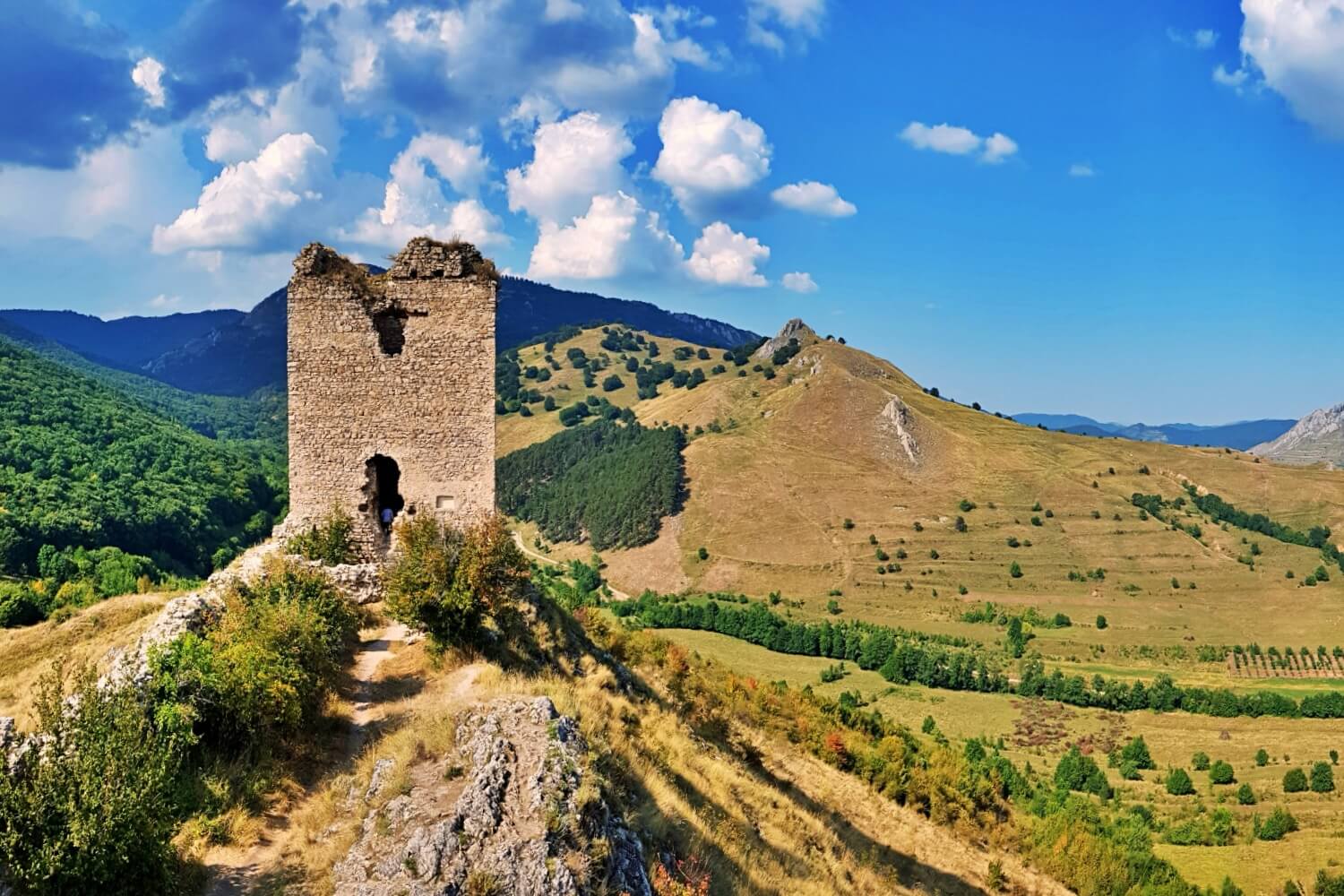
Trascau Fortress (also called Coltesti Fortress) is located 50 km away from Alba Iulia and was built at the end of the XIII th century by the Count Thoroczkay of Trascau as home and shelter for the whole community in times of war. It was intentionally built on the top of a limestone hill, following the Tartar invasion of 1241, when many damages were done to the towns Rimetea and Coltesti.
On the north tower, which is 20 meters high, it was found an inscription attesting that the Thoroczkay family built this fortress in the XIIIth century. In 1470 the nobles lost the fortress to the king of Hungary, Matthias Corvinus. As a punishment for the Thoroczkays` disobedience, the king donated it to the voivode of Transylvania. For many years to follow, they tried to regain the castle from the Hungarian Crown, but their requests were each time denied.
Decades later, sick of the abusive high taxes and laws, the transylvanian peasants lead by Gheorghe Doja started a revolt against the nobility. The Colțești Fortress was attacked and set on fire. That`s how the Thoroczkays took it over again even if it was damaged by the rage of the peasants.
Because they opposed to the annexation of Transylvania by the Austrian House of Habsburg, the Thoroczkays were removed from the stage of history and their fortress met its end in 1713. Centuries have passed since its devastation but some of the walls and two standing towers are incredibly well preserved and still can be seen.
A such beautiful place gave rise to some popular legends that talk about a secret tunnel under the hills, or a hidden cellar full of noble wine barrels, or about Enikö, the daughter of Count Thoroczkay, who was desperate because did not receive any news from his father during a siege and she crossed the secret tunnel to the surface where came across the attackers who had occupied the fortress. Frustrated by the thought that his father was murdered and the fortress invaded, Enikö threw herself from the wall, rolled up into the valley, where she struck against the rocks and died. The legend talks also about the strange appearance of Enikö's ghost, which, thirsty for revenge, tries even nowadays to take the lives of those who climb the hill.
But besides stories and legends, Colțești Fortress is definitely a spectacular ruin in the panoramic landscape of Trascăului Mountains and almost like a natural extension of the rock it was built on, seems determined to resist the passage of time.
http://www.visitalbaiulia.city/
Cetatea Trascăului (în a doua jumătate a secolului al XX-lea numită și Cetatea Colțești, în maghiară Torockóvár), situată la vest de satul Colțești (în maghiară Torockószentgyörgy, în germană Sankt Georgen) și la cca 5 km sud-vest de comuna Rimetea (în maghiară Torockó, în germană Eisenburg), județul Alba, a fost construită în jurul anilor 1296 de vice-voievodul Thorotzkay din Trascău, ca cetate locuibilă și de refugiu.
Istoric
A fost ridicată cu premeditare pe vârful abrupt al unei klippe calcaroase, în urma invaziei tătare (mongole) din anul 1241, când au fost produse pagube însemnate localităților Trascău și Sângiorgiu.
Pe turnul nordic, înalt de aproximativ 20 m, se păstrează o inscripție care menționează ca familia Thorotzkay a construit castelul în secolul al XIII-lea[1]. Inscripția de pe placa veche de piatră (traducere din limba maghiară): Cetatea familiei Thorotzkay. Construită de Thorotzkay Illés, vice-voievodul Ardealului, la finele secolului al XIII-lea. Arsă de trupele generalului Tiege în 1703. Acest panou s-a executat în anul 1832.
În anul 1470 cetatea a fost confiscată de regele Matia Corvin și dată voievodului Transilvaniei. În 1510 a revenit nobililor de Trascău (Thorotzkay), iar în 1514 a fost devastată de țăranii conduși de Gheorghe Doja.
Opunându-se anexării Transilvaniei de către Casa de Austria (Habsburg) în cadrul revoltei Curuților, familia nobililor de Trascău (Thorotzkay) a fost eliminată de pe scena istoriei, odată cu cetatea lor, distrusă în anul 1703 de către trupele imperiale austriece conduse de generalul Tiege (Lobonți).
Azi se mai păstrează o bună parte din zidurile incintei și cele două turnuri laterale.
La mai puțin de patru kilometri de castel, pe dealul Rîmeți, a fost construită încă o fortificație identică, din care acum mai există doar urme vagi, având același scop, de supraveghere și apărare a populației din zonă și a căii comerciale care traversează valea, de atacurile migratorilor.
Cetatea este înscrisă pe lista monumentelor istorice din județul Alba elaborată de Ministerul Culturii și Patrimoniului Național din România în anul 2010.
Továbbá az sem könnyíti meg a magamfajta utazók dolgát, hogy egy 1800-as évek beli, félig olvashatatlan emléktáblán kívül semmilyen tájékoztatót nem találni a vár mellett. (A vár körüli további hiányosságokról kicsit később beszélek).
Szóval, amit biztosan állíthatunk, hogy a vár a Thoroczkay családdal köthető össze, akik Ákos nemzetségéhez tartoztak egykor. Talán Torockai Ehellős lehetett az a legelső személy, aki a vár birtokosa volt, és az 1300-as évek elején erdélyi alvajda is volt egyben.
Amit még meg lehet állapítani, hogy a vár 3 részben épült. Először az 5-6 emeletes lakótorony épülhetett meg (talán 1253 és 1272 között), amelyet Orbán Balázs bástyaként határoz meg. Majd később ehhez csatlakozhatott a vár déli része az erkélyeivel és lovagtermével. Na és valamikor építettek még egy tornyot a sziklás részre is. Azért valamikor, mert nem biztos, hogy ez a helyes kronológiai sorrend a vár bővítésében.
Thoroczkay Vencel volt az, aki 1285-ben a Székelykő várát ostromló tatárokat visszaverte, s ennek jutalmául kezdhettek a vidék benépesítésébe a Toroczkaiak.
1467-ben Mátyás ellen lázadnak az erdélyi nemesekkel, László és Ehellős volt közülük benne a dologban. Míg elsőnek megkegyelmez Mátyás király, addig a másodiknak nem. Így el is vesztik a várat, meg nem is, a Toroczkaiak pedig nekiállnak, hogy „jogi úton” szerezzék vissza a várat.
1514-ben, a Dózsa György vezette parasztfelkelés alkalmával, fordult a Toroczkaiak szerencséje, ugyanis Torockai Ferenc alaposan felnagyította az eseményeket, az állította, hogy a várat elfoglalták, felgyújtották, mindene odalett, megsemmisültek a családi iratok.
1516-ban meg is kapja II. Lajostól az új adománylevelet, amely annyira sikeres lett, hogy vele együtt 10 települést is neki ítéltek. Na ebből lett megint lett kalamajka, ahogy mondani szokták.
A Rákóczi-szabadságharcnak is támogatói voltak a Toroczkaiak, amelynek végzetes következménye lett. 1704-ben Tiege báró osztrák csapatai ostrom alá veszik a várat, elfoglalják, majd kivonuláskor felrobbantják azt. És ezzel véget is ért a vár története.
A fenti csetepatékon kívül, hogy egy kicsit modern szóhasználattal éljek, még számos buliban benne voltak a Toroczkaiak, a vár 5 évszázados története alatt sok mesélni való összegyűlt még.
Egy dolog viszont biztos. Ránk hagytak egy nagyon szép műemléket.
https://www.terjhazavandor.ro/
Useful information
No
Free
Nice view
Ruins of the fortress
-
-
Nearby castles