Şoimoş Citadel
Orașul Lipova Județul Arad Romania
castle, chateau
Cetatea Șoimoș
Orașul Lipova Județul Arad Romania
castle, chateau
Solymos vára
Orașul Lipova Județul Arad Romania
castle, chateau
Şoimoş Citadel, one of the medieval castles in Transylvania, is a piece of the past Romanian castles
Cetatea Șoimoș se află pe malul drept al Mureșului, vizavi de Lipova, pe dealul Cioaca Tăutului
Solymos vára (Șoimuș) műemlék Romániában, Arad megyében
Previous names
Şoimoş Citadel, Cetatea Șoimoș, Solymos vára
Description
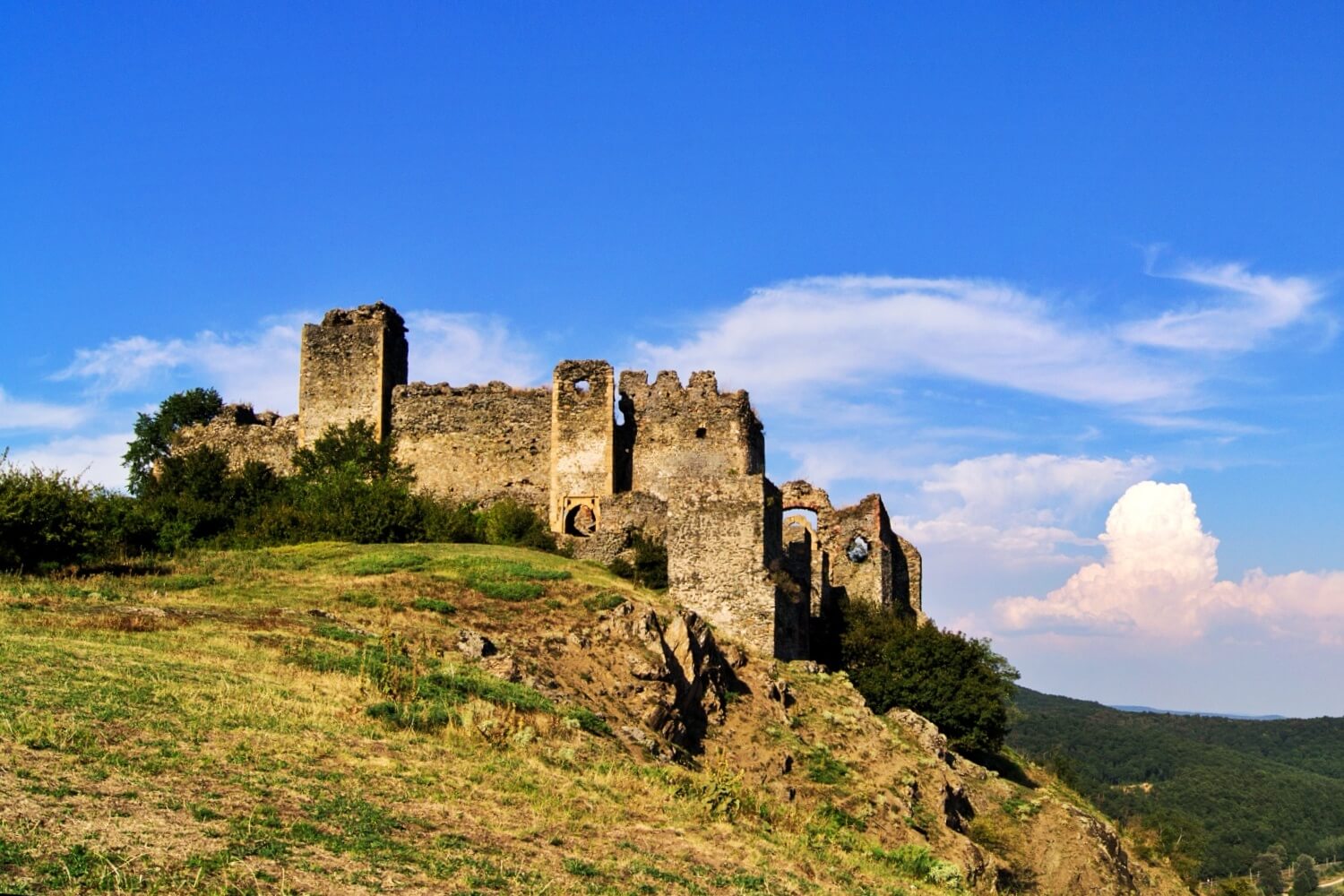
Şoimoş Citadel, one of the medieval castles in Transylvania, is a piece of the past Romanian castles. Once the residence of Queen Isabella and her son, John Sigismund Szapolyai, the city played an important role in history. Despite the restorations carried out, the citadel is yet to be displayed at its true value.
Access to the citadel is made by climbing a steep but accessible slope. The climb from the foot of the hill to the citadel takes on average 20 minutes. The trail winds back slightly on the hill and ends at the citadel gate. Even in its ruined state, the entrance leaves you breathless, and you can't blame the climb for that!
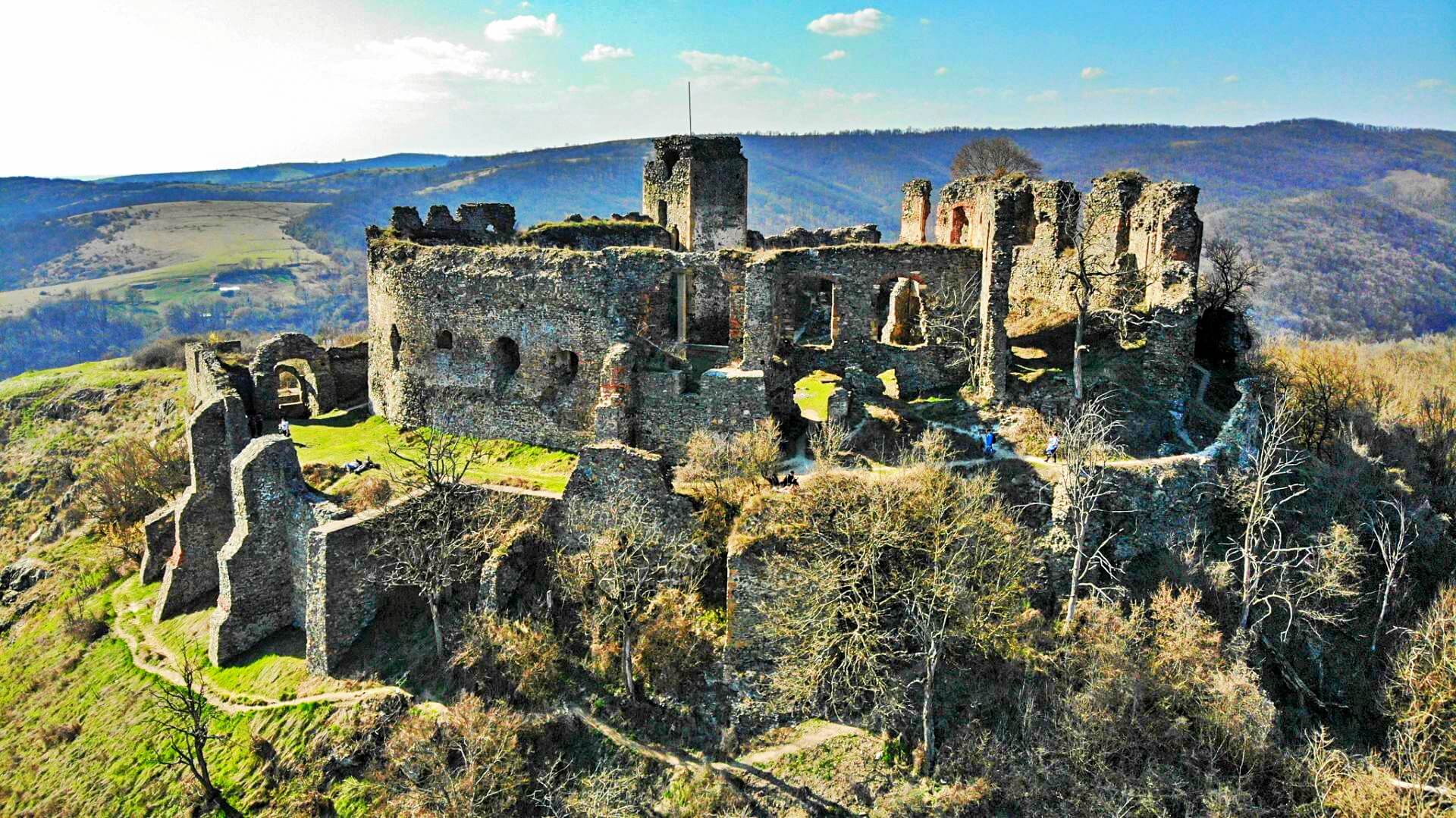
Once through the gates, one enters the courtyard where the walls tell old and beautiful stories. From its former windows one can see Mureş river flowing slowly before the citadel. Lipova town along with the gently-sloping hills of the area, Arad's little Toscani, can be also seen from up here. The walls that remained standing are quite well preserved and some consolidations have been made.
History
The citadel that still guards the right bank of river Mures was first documented in 1278. It was built by a noble family. Since mid-eighteenth century it was donated to several families until it reached the possession of John Hunyadi.
It will be conquered by peasants led by Gheorghe Doja but, after the uprising is defeated, it returns in the possession of the nobility.
In 1788 it was officially abandoned and in the nineteenth century entered the list of protected monuments.
Legend
Elders tell the tale of three sisters, each wanting to build a citadel. One day they met at Şiria. They started talking and the first one said:
"If the good Lord will help me, my citadel will be ready tomorrow."
The second did not let herself get outdone:
"My citadel will also be done tomorrow", she said. The third one exclaimed defiantly:
"Even if the Lord does not help me, my citadel will be ready tomorrow!"
Things happen exactly as they say so three new citadels appear: Şoimos, Şiria and Dezna. However not long after the citadels crumble to the ground and the three girls turn into white snakes, each snake wearing a golden key in its mouth and a golden crown on its head.
And so they appear every year waiting for their liberator to take their crowns and their keys, so that they may transform once more into maidens and the citadels will reaper in all their splendor.
Architecture
Șoimoș Citadel has both a residential and a defensive medieval architecture, and it is built on a rocky, hardly accessible hill, which offers a good view of the area it rules over. Capitalizing on its location, the citadel is equipped with more than nine meter high walls, interior towers shaped like triangles, a wide and deep moat over which was once a suspended bridge that rested on three giant pillars made out of stone. The inner courtyard of the citadel is large and is guarded by two high towers.
Besides the defensive structures, the citadel has residential premises for Queen Isabela and her son. This part is situated in the northern part of the citadel, some of the things which can still be admired today being the intact balcony, window frames and other items which were once the palace of Queen Isabela.
Visiting the citadel
Location
Şoimoş Citadel is located on the outskirts of Lipova (Arad county). The distance from Lipova to Arad is of 32 kilometers. Access to Şoimoş Citadel is made from DN7, from the bridge crossing the Şoimos Valley located at exit from Radna / Şoimoş to Săvârşin. You will need to leave your car at the foot of the hill.
Tickets and hours
No entry fees are required and there is no timetable, the citadel can be visited anytime. It is, however, recommended to visit it in spring or summer because one can suffer accidents very easy due to the bad weather and the fact that some areas of the citadel are not secured.
http://savizitam.ro/
Cetatea Șoimoș se află pe malul drept al Mureșului, vizavi de Lipova, pe dealul Cioaca Tăutului. A fost construită după primele invazii ale tătarilor în zonă și este atestată documentar din anul 1278. Cetatea Șoimoș se află pe lista monumentelor istorice, cod LMI AR-II-a-A-00618.
Istoric
Cetatea a fost construită către sfârșitul secolului al XIII-lea de către o familie nobiliară. Prima atestare documentară datează din anul 1278, când banul Pál donează „Castrum Somos” fiilor fratelui său. Rolul ei a crescut constant începând cu voievodul Ladislau Kán al II-lea care a stăpânit cetatea prin doi interpuși care erau și comiți de Arad: Alexandru (1310) și Dominic (1311). După 1315 ajunge domeniu regal, fiind reședința comiților și vicecomiților de Arad.
Către mijlocul secolului al XV-lea este donată succesiv, trecând prin mâinile mai multor stăpâni, în final regele Vladislav I donând-o familiei Ország (1440-1444). În anul 1456 a intrat în posesia lui Iancu de Hunedoara, care apoi a dăruit-o căpitanului husit ceh Jan Giskra în 1471.
În 1509 cetatea și domeniul au ajuns în stăpânirea lui Gheorghe Hohenzollern de Brandenburg, care a practicat o crâncenă exploatare. Ea a fost asediată în 1514 de răsculații români și maghiari conduși de Gheorghe Doja. După o scurtă rezistență, garnizoana cetății condusă de voievodul de Ciuci s-a răsculat împotriva oamenilor lui Gheorghe Hohenzollern și s-a alăturat insurgenților. Potrivit tradiției, tabăra răsculaților a fost așezată pe Dealul Cioilor din apropiere. În 1541, când Transilvania a devenit principat autonom, Șoimoșul a fost reședința principelui minor, Ioan Sigismund și a mamei sale, regina Isabela. În aceasta perioadă ea a fost întărită și înfrumusețată în stilul Renașterii, fiindu-i adăugate totodată bastioanele externe. În curtea interioară se văd până azi unele profile de piatră artistic sculptate de la apartamentele princiare situate la etaj.
Turcii au ocupat cetatea în anul 1552, după asedii repetate, iar în 1595 a fost recucerită de către György Borbély, căpitanul lui Ștefan Bathori, ajungând în custodia domnitorilor din Ardeal. Moise Secuiul - conducătorul luptei de rezistență împotriva ocupației austriece, întruchipate de generalul Gheorghe Basta -, după ce a fost înfrânt lângă Teiuș în anul 1602, s-a refugiat în cetatea Șoimoșului. Considerând însă mult prea nesigură această așezare, el a încheiat un pact de schimb cu pașa Bektaș din Timișoara, cedând castrul în schimbul cetății din Kladovo. În 1599-1600 cetatea a trecut în stăpânirea lui Mihai Viteazul. Castrul a fost eliberat definitiv de sub dominația turcească abia în anul 1688. Stricăciunile din timpul și de după asediu nu au mai fost remediate niciodată, fortificațiile începând să se ruineze. Nu s-au mai luat măsuri nici pentru conservare. În secolul al XVIII-lea cetatea și-a pierdut treptat importanța militară ca urmare a perfecționării artileriei. În apropierea cetății s-au ciocnit în 1784 răsculații lui Horia cu forțele imperiale și nobiliare. Părăsită definitiv în 1788, cetatea s-a ruinat tot mai mult. În ultimii ani s-au efectuat unele lucrări de consolidare a zidurilor.
Arhitectură
Castelul are turnuri interioare de formă aproximativ-triunghiulară, calea cea mai ușoară de acces fiind dinspre vest. Cărarea duce peste șanțul de apărare lat și adânc, pe puntea suspendată de odinioară așezată pe niște piloni uriași, spre poarta fortificațiilor exterioare, întărită cu un turn de apărare. Din cauza stării deplorabile a punții, intrarea în cetate prin acest loc este periculoasă în zilele noastre și din această cauză singura cale accesibilă este cea care duce de-a lungul șanțului spre o spărtură a zidului dinspre est.
Curtea cetății interioare de dimensiuni considerabile (35x22 metri), este dominată de turnul porții și de turnul vechi, înalt de câteva etaje. Spre nord se situează Palatul reginei Izabela bogat împodobit cu sculpturi renascentiste. Remarcabil este balconul păstrat intact până în zilele noastre și care poartă tot numele suveranei de odinioară.
Din cetate se deschide o priveliște minunată atât către defileul Mureșului, cât și spre câmpia Aradului.
Solymos vára (Șoimuș) műemlék Romániában, Arad megyében. A romániai műemlékek jegyzékében az AR-II-a-A-00618 sorszámon szerepel.
Története
A várat Pál szörényi bán építtette a tatárjárás után épült; első említése 1278-ból maradt fenn. 1300 körül Kán László erdélyi vajda birtokába került, tőle Károly Róbert foglalta el. Királyi vár volt 1440-ig, amikor I. Ulászló Guthi Országh Mihálynak adományozta. 1456-ban Hunyadi Jánosé lett. 1462-ben Mátyás király vezérének, Giskra Jánosnak adományozta, halála után pedig 1471-ben az újonnan kinevezett aradi főispánnak, alsólendvai Bánffy Miklósnak adta. Tíz év múlva a király visszavette tőle a várat és a tisztséget, egyes források szerint Bánffy hűtlensége miatt, Bonfini viszont azt jegyezte fel, hogy „Mátyás szemet vetett Bánfi szép feleségére, Margit sagani hercegnőre, s midőn a főúr a király elől megszöktette asszonyát, Mátyás haragjában bebörtönöztette és két évig fogva tartotta, Solymost és Lippát pedig a pozsonyi főispánsággal együtt elvette tőle.” A vár következő birtokosa Corvin János lett, halála után pedig özvegye, Frangepáni Beatrix örökölte. A várat második férje, Brandenburgi György őrgróf külföldről hozatott szakemberekkel igazgatta.
1514-ben Dózsa György serege ostromolta meg a várat. A zsoldosokból álló őrség fellázadt, és Künisch Mátyás káplán – Prantner György alvárnagy ellenkezését figyelmen kívül hagyva – feladta a várat. A 16. század elején a vár fokozatosan elvesztette jelentőségét a lippai vár közelsége miatt. 1552-ben a törökök foglalták el, tőlük 1595-ben Báthory István vezére, Borbély György vette vissza. A fejedelem 1597-ben Jósika István kancellárnak adományozta, de később hűtlenség miatt elkobozta tőle.
Amikor 1602-ben Székely Mózes a tövisi csatában alulmaradt a császári csapatokkal szemben, Solymos várában kapott menedéket. (A várat zálogként birtokolta a Báthory Zsigmondnak adott kölcsön fejében.) Utóbb a várat a temesvári pasának engedte át Kladova váráért cserébe.
A várat 1668-ban foglalták vissza a törököktől, de az ostrom során súlyosan károsodott, és soha nem is javították meg.
Leírása
A háromszög alaprajzú várat két fal veszi körül, a falakat pedig szárazárok védi. A dél felőli oldalon egy meredek szikla miatt nincs árok. A nyugati oldalon található a kaputorony és az öregtorony, az északi és délkeleti oldalon pedig egy-egy épületszárnyat építettek. Az udvar déli részén áll a lovagterem, mellette a kápolna.
Useful information
Free
Free
- Virtual tour
- Nice view
czearad@gmail.com
Ruins of the fortress
-
-
External links
Nearby castles