The Citadel of Șiria
Siria Arad Romania
castle, chateau
Cetatea Șiriei
Siria Arad Romania
castle, chateau
Világosi vár
Siria Arad Romania
castle, chateau
The Citadel of Șiria is a historical monument (), dating from the 13th century, built on the Citadel’s Hill (496m), dominating the surroundings of Șiria
Cetatea Șiria este o cetate monumente istoric (cod LMI AR-II-a-A-00650), datând din sec
A világosi vár műemlék Romániában, Arad megyében
Previous names
The Citadel of Șiria, Cetatea Șiriei, Világosi vár
Description
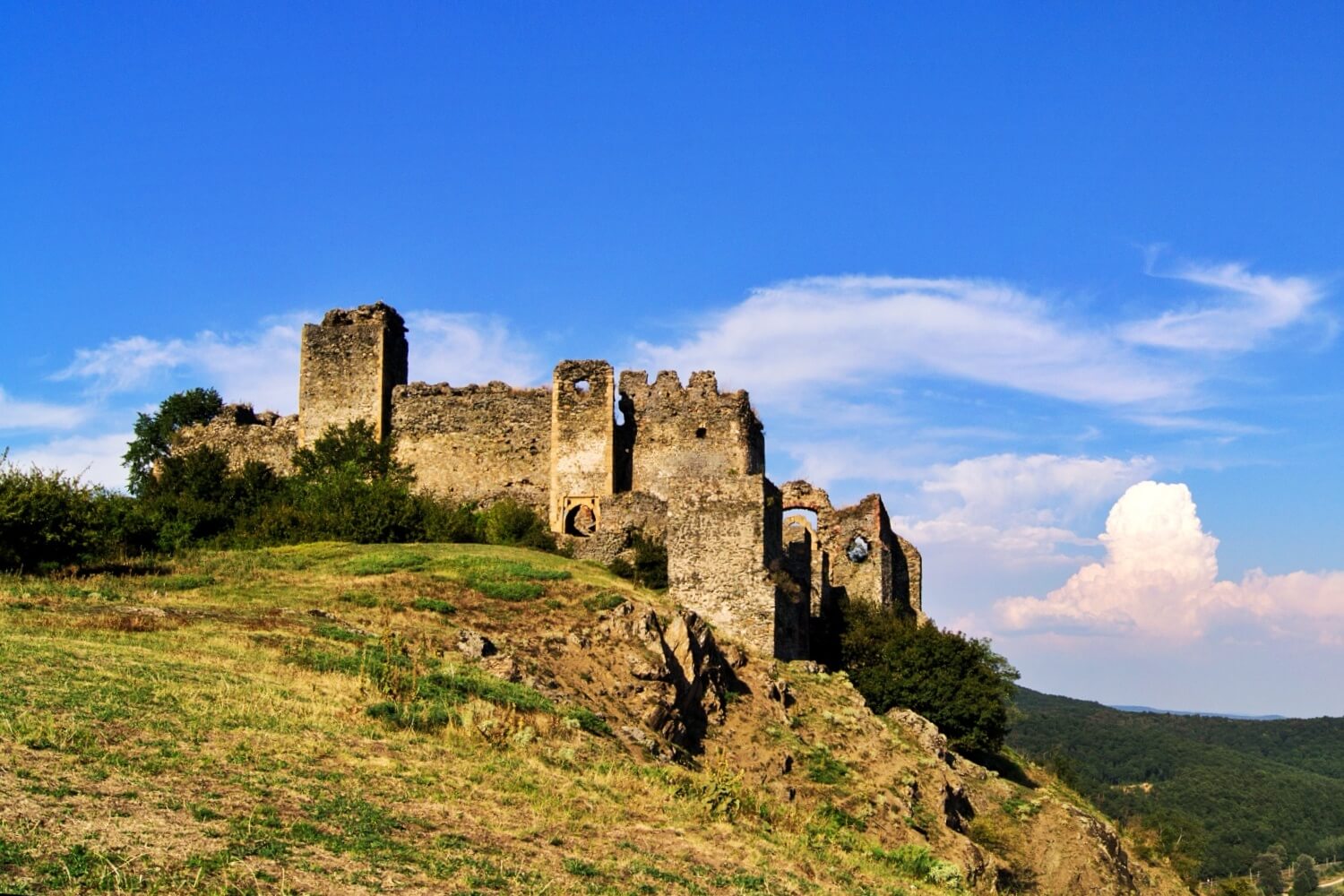
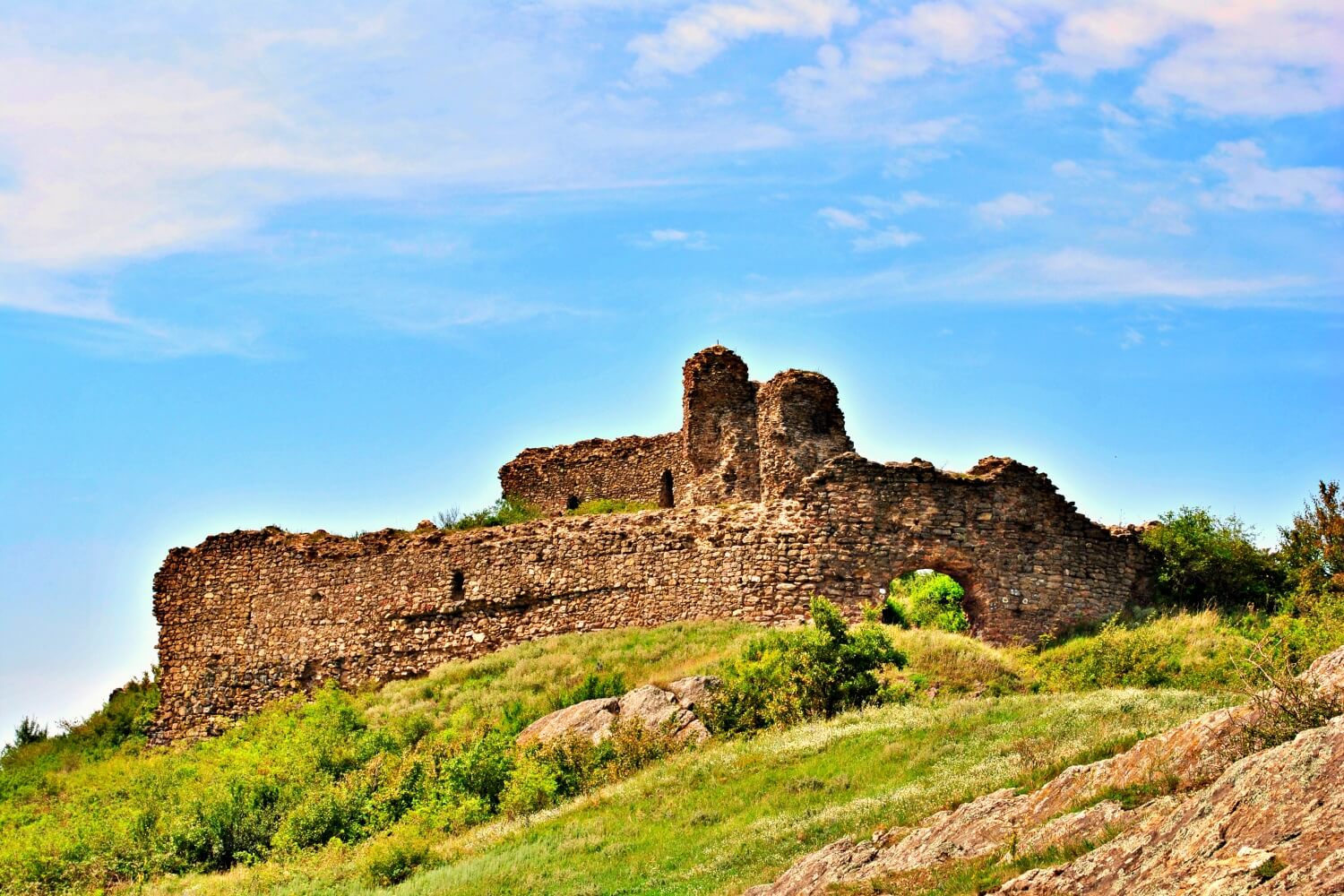
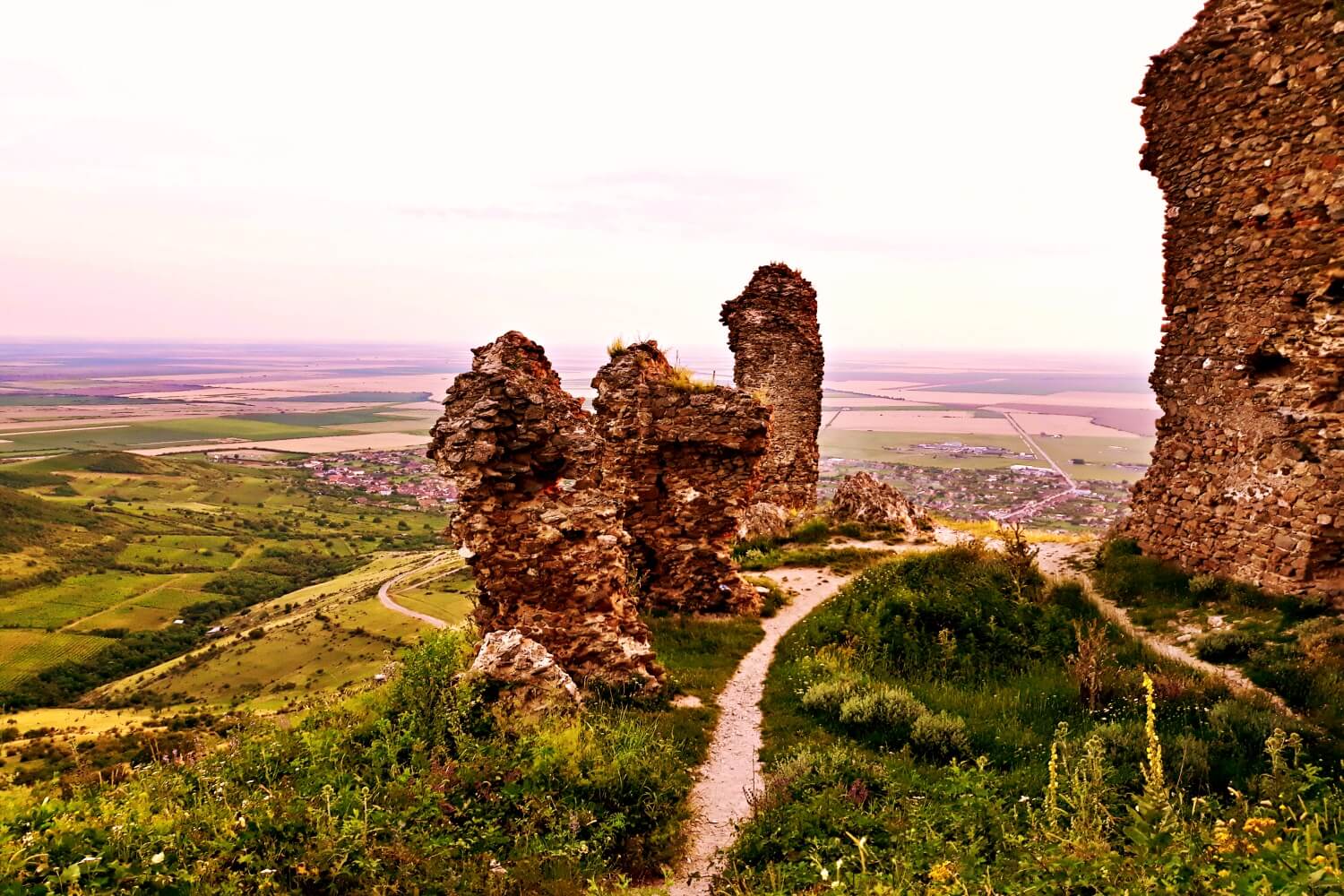
The Citadel of Șiria is a historical monument (), dating from the 13th century, built on the Citadel’s Hill (496m), dominating the surroundings of Șiria.
Its purpose was strategic, defensive and economic, subordinating 110 villages. From an architectural point of view, the city has several parts, the central body built on a rock of irregular oval shape with level differences. The west wall is 24 m long, tall and has many holes. To the north one can see the remains of a donjon (tower). It had some rooms, and it communicates with the outdoor courtyard through a door that was closed as needed.
The Outdoor Court, 36-38 m in size, has its walls almost intact. The thickness of each the wall is 130 cm, and they are 3.5 m high. To the north there is an opening that used to be one of the gates. Over the ditch at the front of the citadel there used to be a drawbridge. The tower and surrounding wall are the oldest parts of the city. The tower with its ruined tip is 109 m long and 18 m wide. In front of the central body there is a protective wall at a distance of 2.5 m, enclosing a small courtyard . The surrounding wall has a length of 28 m, with input only from the west. The moat located in front of the outer court used to have a depth of 10m and a width of 14m in some areas, but others were less steep.
The underground tunnels have a height of 1,9 m and are 1,8 m wide at the base. There are four gates. The main gate on the northeast side, with a 2,9m long base, had two adjacent openings – a big one and a smaller pedestrian road. The gate on the side of the protecting wall allowed access over the moat. There was also a gate on the west side wall of the outer court and, finally, one in the central body (uncertain). The construction materials used were stone from Galșa quarry, at a distance of 3.5 km, and lime stone (hot mortar) from Agrișul Mare located 12 km away, over the hill. There were three successive execution stages of construction:
The tower with its annexes: the surrounding wall and of the central body (after the Tatar invasion of 1241 and the second half of the 13th century).
The main body and thickening of the walls with buttresses (during the reign of Iancu de Hunedoara).
The improvement of the central body, the outer court, and the walls in front of the western central body, during the reign of the Báthory family (second half of the 15th century and the beginning of the 16th century).
Under the reign of the Ottomans, the walls were fortified, thus increasing the citadel’s safety against attacks. The style of the fortress is Romanesque, with a massive inhabitable tower, 2-3 stories high, and with battlements at the top.
https://www.cniptpincota.ro/
Cetatea Șiria este o cetate monumente istoric (cod LMI AR-II-a-A-00650), datând din sec. al XIII-lea, zidită pe Dealul Cetății (496 m), de unde domină regiunea din jurul localității Șiria.
Istoric
Rolul îndeplinit de cetate era strategic, de apărare și economic având arondate 110 sate. Arhitectura cetății are câteva părți: corpul central clădit pe o stâncă de formă neregulată ovoidală cu diferențe de nivel. La vest peretele este lung de 24 m, înalt și cu găuri. Spre nord se văd rămășițele unui donjon (turn). A dispus de încăperi iar la subsol comunică în curtea exterioară printr-o ușă ce se închidea după necesități.
Curtea exterioară avea dimensiuni de 36-38 m cu ziduri aproape intacte. Grosimea zidului este 130 cm, și înalt de 3,5 m. Spre nord este o deschizătură ce era una din porțile cetății. Peste șanțul din fața cetății a existat un pod mobil. Donjonul și zidul înconjurător sunt părțile cele mai vechi ale cetății. Donjonul cu vârful ruinat este lung de 109 m și lat de 18 m. În fața corpului central este un zid protector la o distanță de 2,5 m, închizând o curte mică de refugiu. Zidul înconjurător are lungimea de 28 m, cu intrare doar din partea de vest. Șanțul cetății situat în fața curții exterioare avea în unele porțiuni adâncimea de 10 m și o lățime de 14 m dar pe unele porțiuni a fost mai puțin abrupt.
Tunelurile subterane au înălțime de 1,9 m și o lățime la bază de 1,8 m. Porțile cetății sunt patru la număr. Poarta principală pe latura nord-est de 2,9 m la bază dispunând de doua deschizături alăturate - una mare pentru carosabil și alta mică pietonilor. Poarta pe latura verticală a zidului protector, realizând accesul peste șanțul lat de 12 m și adânc de 6 m. Poarta pe zidul laturii vestice a curții exterioare și ultima poartă (nesigură) în corpul central. Materialele de construcție folosite sunt: piatră adusă din cariera Galsa, de la o depărtare de 3,5 km, varul stins direct pe piatră (mortar cald). Proveniența lui era din varnițele de la Agrișul Mare situate la 12 km distanță peste deal. Etapele de execuție ale lucrărilor de construcție 3, succesive:
Donjonul, cu construcțiile anexe: zidul înconjurător și o parte a corpului central (după invazia tătară la 1241 și a doua jumătate a sec. al XIII-lea).
Corpul central și îngroșarea zidurilor cu contraforturi (în timpul domniei lui Iancu de Hunedoara).
Amenajarea corpului central, curtea exterioară și zidul protector din fața corpului central de vest, în timpul stăpânirii familiei Báthory (a doua jumătate a sec. XV-lea și începutul celui celui de-al XVI-lea).
Sub stăpânirea turcilor zidurile au fost întărite sporind siguranța cetății în fața atacurilor. Stilul cetății este romanic, existând un donjon masiv, locuibil prevazut cu 2-3 etaje iar la partea superioară dispune de creneluri.
A világosi vár műemlék Romániában, Arad megyében. A romániai műemlékek jegyzékében az AR-II-a-A-00650 sorszámon szerepel.
Története
Egyes feltételezések szerint a vár már a 12. században létezett, de első írásos említése csak 1324-ből maradt fenn. 1390-ben Zsigmond király Sárói László temesi ispánnak adományozta, a következő évben azonban más birtokokért cserébe visszavette.
1439-ben Albert király a várat és a hozzá tartozó 145 várost, falut és pusztát Brankovics György szerb despotának adta Nándorfehérvár ellenében. 1440-ben I. Ulászló elkobozta a várat Brankovics hűtlensége miatt, és 1441-ben Maróthy László aradi főispánnak adta. A vár azonban továbbra is Brankovics kezén volt, és csak 1444-ben adta át Hunyadi Jánosnak. Hunyadi halála után a várat fiai, László és Mátyás örökölték, de Mátyás átengedte Szilágyi Mihálynak. 1458-ban a már királyként uralkodó Mátyás elfogatta Szilágyi Mihályt, és saját várába záratta. Szilágyinak 1459-ben sikerült megszöknie; utóbb Mátyás megenyhült iránta, és visszaadta birtokait. Szilágyi halála után özvegye, Báthori Margit lett az örökös.
1514-ben Dózsa György serege foglalta el, majd Szapolyai János kezére került. Ő 1526-ban Czibak Imre váradi püspöknek adta. 1566-ban a törökök szállták meg, és csak 1595-ben sikerült Báthory Zsigmondnak visszaszereznie. Az 1600-as évek elején ismét török uralom alá került. 1606-ban Petneházy István jenei kapitány csellel próbálta Bocskai Istvánnak megszerezni, de kudarcot vallott. 1608-ban Bethlen Gábor Petneházynak adományozta a még mindig török uralta várat, akinek csak 1614-ben sikerült birtokon belül kerülnie. 1615-ben a zsoldosokból álló őrség az elmaradt zsoldfizetés miatt a lippai pasának adta át a várat. 1693-ban Sigbert Heister tábornok szabadította fel, de ekkor a vár már igen leromlott állapotban volt.
1755-ben Bohus Imre vásárolta meg a várat, amelynek köveit kastélyának építésére használta fel. Az 1784-es parasztfelkeléskor a hatalom ágyúval leromboltatta a vár maradékát, hogy az ne nyújthasson menedéket a felkelőknek.
Useful information
Free
Free
- WC
- Playground
- Recreation areas
- Nice view
Ruins of the fortress
-
-
Nearby castles