Rhédey Castle, (Sângeorgiul de Pădure)
Orașul Sângeorgiu de Pădure Județul Mureș Romania
castle, chateau
Castelul Rhédey din Sângeorgiu de Pădure
Orașul Sângeorgiu de Pădure Județul Mureș Romania
castle, chateau
Rhédey-kastély (Erdőszentgyörgy)
Orașul Sângeorgiu de Pădure Județul Mureș Romania
castle, chateau
In place of Rhédey Castle once stood an abbey, church and monastery re-enforced with turrets
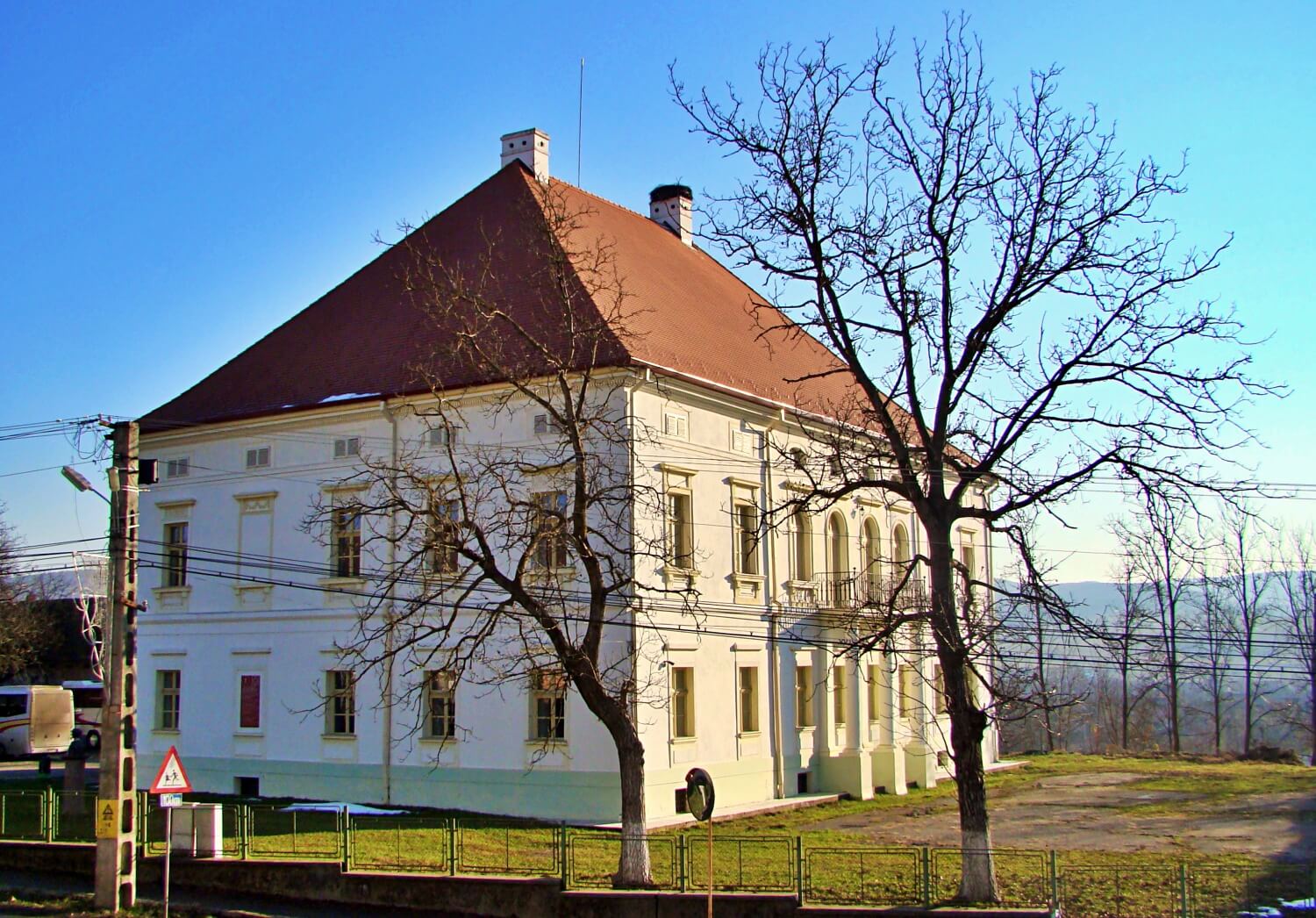
Castelul Rhédey este un monument de arhitectură aflat în orașul Sângeorgiu de Pădure din județul Mureș
A Rhédey család erdőszentgyörgyi kastélya a város központjában, a református templommal szemben helyezkedik el
Previous names
Rhédey Castle, (Sângeorgiul de Pădure), Castelul Rhédey din Sângeorgiu de Pădure, Rhédey-kastély (Erdőszentgyörgy)
Description
In place of Rhédey Castle once stood an abbey, church and monastery re-enforced with turrets. In 1569, the Kornis family commissioned the construction of a castle on the ruins. The first iteration of Rhédey Castle was built by masters from Târgu Mureș/Marosvásárhely in the second half of the 18th century, using materials from the remains of Kornis Castle.
It was commissioned by Rhédey Zsigmond V (1727-1758) and his wife, baroness Wesselényi Katalin, whose memory is preserved in the protestant church by several memorial stones bearing their coat of arms. After the death of Rhédey Zsigmond V, the castle was handed down to his son Ferenc IX (1756-1778). Ferenc died young and the castle was inherited by the lineage of László V. The estate and castle was first inherited by Rhédey Mihály IV (1720-1791) and his son, László IX. Count Rhédey László IX (1775-1835) and his wife, baroness Inczédy Ágnes (1788-1856) initiated further works from 1807 to 1809, designed to modify and renovate the castle.
After WWI, Rhédey Castle became the property of the merchant family, Schuller. In 1935, it started housing government offices. The monumental building served as a local primary school between 1948 and 2010. The building underwent restoration works in 2011 with the support of the Minister of Culture. The doors and windows were changed, the roof was repaired, the support pillars were re-enforced and the rooms were restored to their original state. According to the plans of the city, the school will not be reinstated in the restored building. The castle would be used for touristic and cultural purposes and the large rooms would host exhibitions. A wine cellar and restaurant would be arranged in the basement.
Rhédey Castle was built in late baroque style, with its multi-storey structure and closed mass reminding visitors of a city palace rather than a rural castle. Today's form was achieved during the 1807-1809 reconstruction works. Both floors of the reconstructed castle enclose a central hall. The rooms of the ground floor are vaulted, while the ceilings of the rooms above them have flat surfaces and are painted ornately. The height of the upper large saloon is greater than that of the other rooms, its height was lowered with a wooden beam ceiling after the castle's nationalization. The original, ornately painted ceiling has remained untouched. The key features of the eastern and western facades are the balconies. The balcony above the entrance is supported by stone brackets, while the one found on the western side is supported by three tuscan pillars.
The castle was once surrounded by a marvelous french garden with carefully trimmed lawns, alleys and diagonally placed, squarely trimmed groups of bushes. A fountain was situated in the middle and the structures characteristic of french gardens were not missing either: a flower house and a gloriette emerging in its white splendor from between dark pine trees. The memory of the lordly park is preserved by a century-old gravure. Unfortunately, the large park has partially been constructed upon and is partially used for agriculture, leaving only a small garden in front of the castle.
https://castleintransylvania.ro/
Castelul Rhédey este un monument de arhitectură aflat în orașul Sângeorgiu de Pădure din județul Mureș. Castelul se află pe lista monumentelor istorice sub codul LMI: MS-II-m-A-15792.
Istoric
Înfățișarea actuală neobarocă a castelului datează de la reconstrucția din 1807-1809 de către nobilul László Rhédey, proprietarul de atunci. În ce privește originea acestuia, există numeroase explicații. Conform tradiției, castelul a fost precedat de o mănăstire medievală. În perioada reformei protestante din secolul al XVI-lea, familiile Barcsai și Kornis construiesc un prim castel, socotit ca fiind predecesorul celui de astăzi. Lucrările s-au derulat, probabil, în anul 1569. Familia Rhédey se stabilește aici în secolul al XVII-lea, primul reprezentant al acesteia fiind János Rhédey. Se presupune că în anul 1632 edificiul avea mai multe camere și o pivniță. Conform unei inscripții din „epoca Rhédey” anul construcției este 1663. În secolul al XIX-lea castelul era înconjurat de grădini minunate. Aici s-a născut contesa Claudine Rhédey, ascendenta familiei regale britanice.
Castelul Rhédey a intrat în posesia familiei de negustori Schuller după primul Război Mondial, iar în 1935 a fost cumpărat de comunitatea locală cu scopuri administrative, în clădire funcționau diferite instituții și agenții. Între 1948 și 2010 în clădire a funcționat școala generală.
Castelul a fost restaurat, investiție făcută de Ministerul Culturii, lucrările de restaurare și consolidare fiind încheiate în iunie 2015, după aproape 5 ani de la semnarea contractului de execuție. Ușile și ferestrele au fost înlocuite, acoperișul a fost renovat, structura clădirii a fost întărită, iar camerele au fost readuse la starea lor inițială. Consiliul local nu intenționează să mute școala înapoi în clădirea restaurată, ci castelul va fi folosit în scopuri culturale și turistice, în sala mare se vor organiza diferite expoziții și în subsol se va construi o cramă și un restaurant.
A Rhédey család erdőszentgyörgyi kastélya a város központjában, a református templommal szemben helyezkedik el. A 18. században épült egy korábbi kastély helyén, mai formáját a 19. század elején nyerte el. A 20. században a helyi iskola működött benne, jelenleg turisztikai látványosság.
Története
Erdőszentgyörgyöt először 1333-ban említették Sancto Georgio néven a korabeli dokumentumokban. A 16. század közepén legfontosabb birtokosai a göncruszkai Kornisok voltak. Rhédei (IV.) János (+1658) főkirálybíró, fejedelmi tanácsos 1627-től lett az erdőszentgyörgyi uradalom tulajdonosa. 1629. január 16-án Fogarason kelt adománylevelével Bethlen Gábor az erdőszentgyörgyi uradalmat Rhédei Jánosnak és feleségének Kornis Margitnak adományozta. Az adománylevelet 1648-ban II. Rákóczi György is megújította.
A hagyomány szerint a Rhédey-kastély helyén egykor sarokbástyákkal megerősített apátság, templom és kolostor állt. 1569-ben a Kornis család kastélyt épített a romokra. A mai Rhédey-kastély első változata az egykori Kornis-kastély anyagának felhasználásával, marosvásárhelyi mesterek által épült fel a 18. század második felében. Az épület Rhédey (V.) Zsigmond (1727–1758) és felesége, hadadi br. Wesselényi Katalin megrendelésére készült, akiknek emlékét több címeres emlék őrzi a református templomban.
A kastély Rhédey (V.) Zsigmond elhunyta után fiára, (IX.) Ferencre (1756–1772) szállt, akinek fiatalkori halálát követően, (V.) László ágán öröklődött tovább. A birtokot és a kastélyt előbb Rhédey (IV.) Mihály (1720–1791), majd annak fia, (IX.) László kapta meg. Az épületen gr. Rhédey (IX.) László (1775–1835) és felesége, br. Inczédy Ágnes (1788–1856) megbízásából 1807–1809 folyamán újabb átalakítási, felújítási munkálatokat végeztek.
A Rhédey-kastély az első világháború után a Schuller kereskedőcsalád birtokába került, majd 1935-től állami hivatalok működtek benne. 1948–1960 között közigazgatásra használták, 1961-2009 között a helyi általános iskolának adott otthont. 2009-ben a Kulturális és Örökségvédelmi Minisztérium támogatásával az épületen felújításokat végeztek, kicserélték az ajtókat, ablakokat, a tetőzetet feljavították, az épület pilléreit megerősítették, az egykori termeket eredeti állapotukba állították vissza. Az iskolát nem költöztették vissza a restaurált épületbe. A kastélyt turisztikai és kulturális célokra használják. 2015-től újra nyitva áll a látogatók előtt, számos kiállítással. 2019 szeptember 20.-án megnyitották a Mysteria Residentiae Rhédey nevű kiállítást, amely az emeleti 5 szobában állít emléket a Rhédey családnak. A kiállítás modern tehnológiával, látványelemekkel, korabeli bútorokkal mutatja be a család történetét, különös hangsúlyt fektetve Claudia és Alexander szerelmi történetére. A kastély mindennap látogatható, minden egész órában történő belépéssel.
Leírása
Késő barokk stílusban épült, amely emeletes kiképzésével, zárt tömegével inkább városi palotára emlékeztet, mint vidéki kastélyra. A 19. század elején újjáépített kastély mindkét szintje központosan elhelyezett hallt zár körül. A földszinti termek boltozatosak, az emeletiek síkmennyezetűek, díszesen festettek. Az emeleti nagy szalon belmagassága nagyobb, mint a többi termeké, magasságát az államosítás után egy fagerendás mennyezettel csökkentették.
Az eredeti, díszesen festett mennyezetet érintetlenül hagyták. A keleti és nyugati homlokzatok meghatározó elemei az erkélyek, a bejárat feletti erkélyt kőkonzolok, a nyugati oldalon pedig három toszkán oszlop tart.
A kastély kertje
A kastély körül egykor csodálatos franciakert terült el, gondozott gyepszőnyeggel, sétányokkal, átlósan rendezett, négyszögűre nyírt bokorcsoporttal. Közepén szökőkút állt, de nem hiányoztak a franciakertekre jellemző építmények: ott állt a virágház és a sötét fenyőerdőből kifehérlő gloriette.
A főúri parkot egy múlt századi metszet örökítette meg, melynek alapján felidézhető az egykori franciakert. Mára a nagy kiterjedésű parkot részben beépítették, részben földművelésre használják, csupán egy kis kert maradt a kastély előtt.
2018-ben két európai uniós pályázatot nyert meg az önkormányzat, amellyel a kastély körüli teret és parkot állítják helyre. A munkálatok jelenleg folynak, a befejezést 2021 tavaszára tervezik.
Useful information
Free
5.00 RON
WC
- Guided tours are offered in foreign languages
- The castle has exhitions
-
-
Nearby castles