Poenari Castle
Arefu Argeș Romania
castle, chateau
Castelul Poenari
Arefu Argeș Romania
castle, chateau
Poenari Castle, also known as Poenari Citadel (Cetatea Poenari in Romanian), is a ruined castle in Romania which was a home of Vlad the Impaler
Cetatea Poenari este un monument istoric (cod LMI AG-II-a-A-13507) din secolul al XIV-lea aflat în județul Argeș (Căpățânenii Pământeni), Muntenia, România
Previous names
Poenari Castle, Castelul Poenari, Poenari kastély
Description
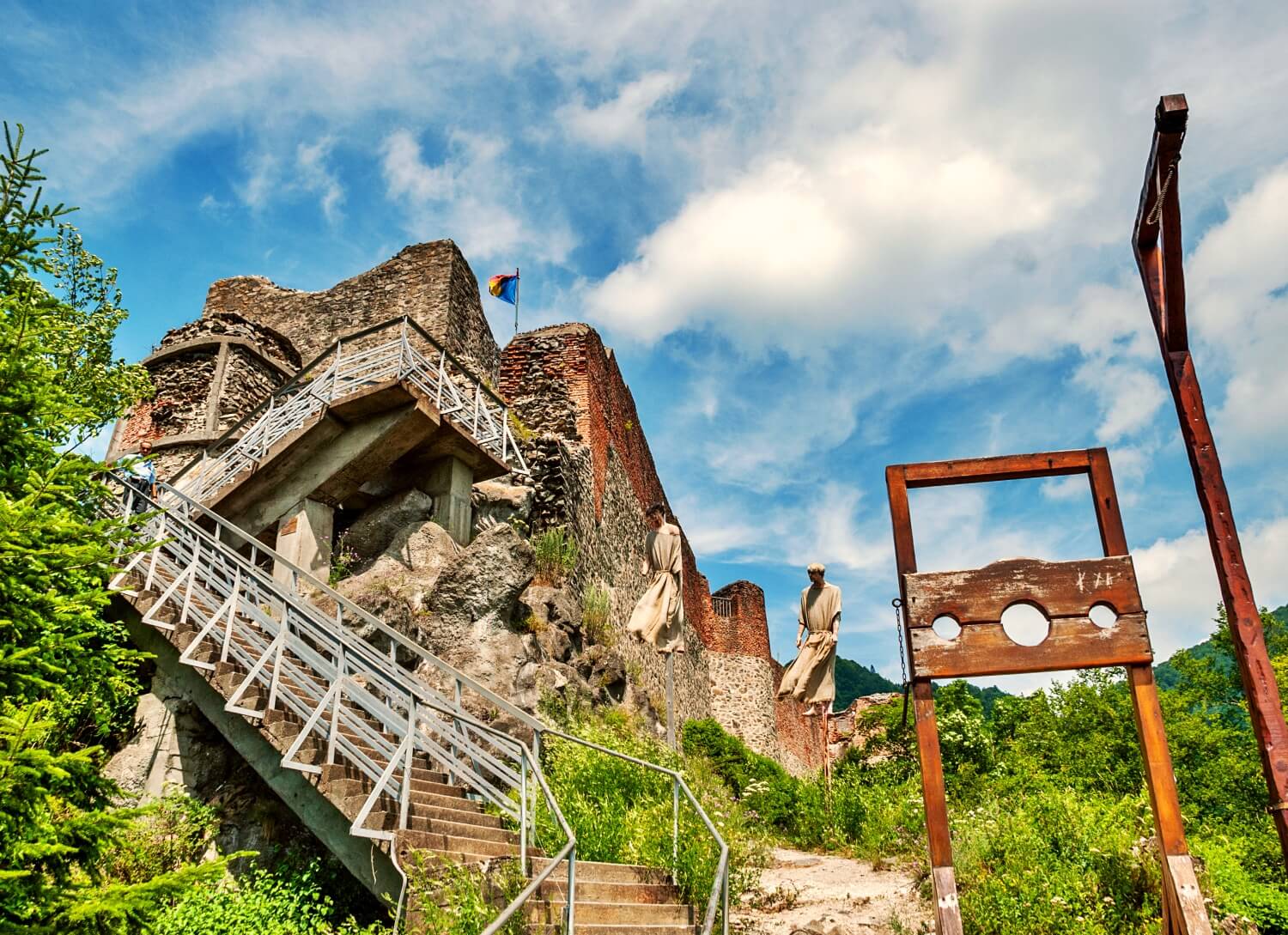
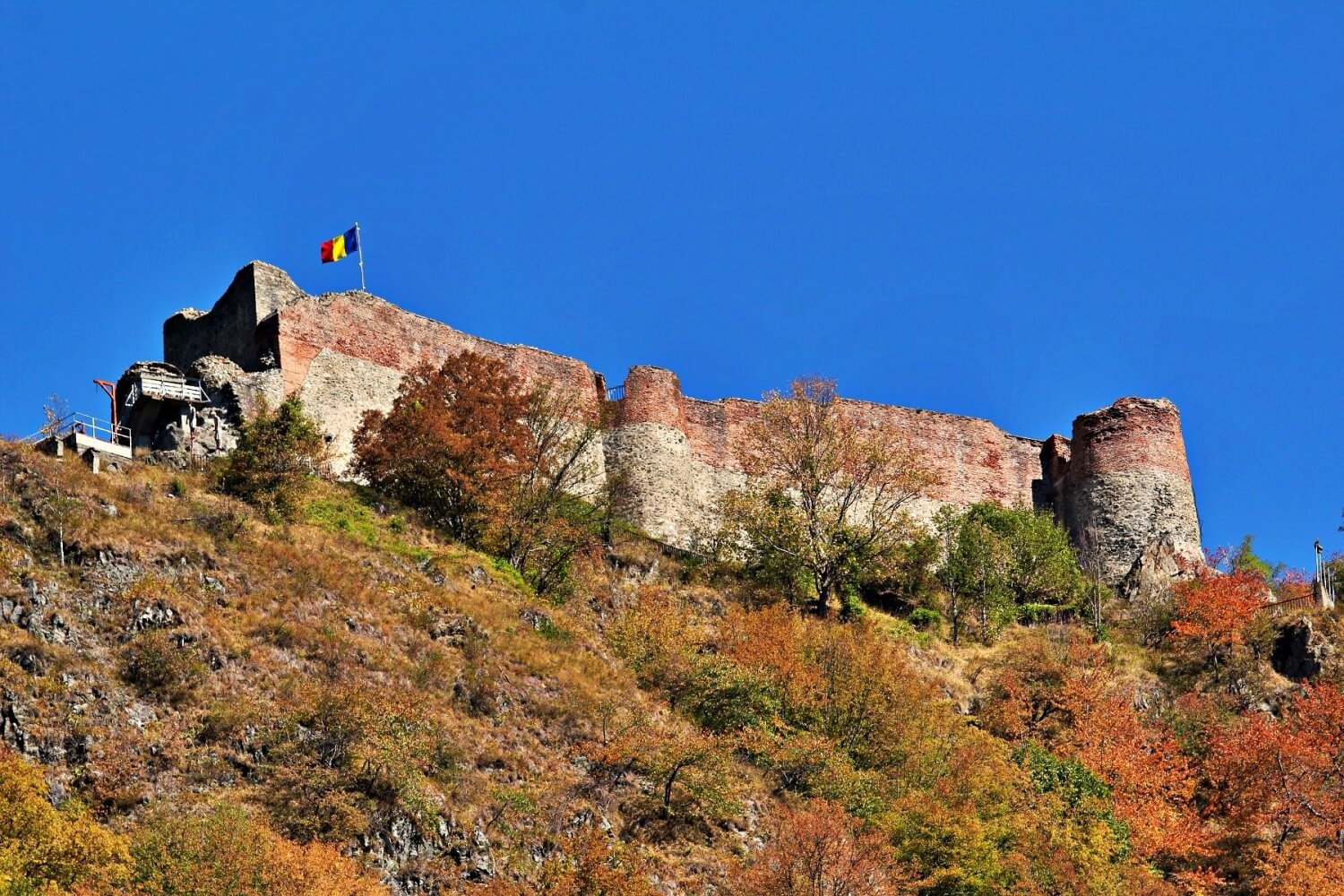
Poenari Castle, also known as Poenari Citadel (Cetatea Poenari in Romanian), is a ruined castle in Romania which was a home of Vlad the Impaler. The citadel is situated high atop a mountain and accessed by climbing 1,480 concrete stairs.
Location
The castle is located on the plateau of Mount Cetatea, facing the west side of the Transfăgărășan, on a canyon formed on the Argeș River valley, close to the Făgăraș Mountains.
History
Poenari Castle was constructed around the beginning of the 13th century by Wallachians. Around the 14th century, Poenari (then known as Castle Arges) was the main citadel of the Basarab rulers. In the next few decades, the name and the residents changed a few times but eventually the castle was abandoned and left in ruins.
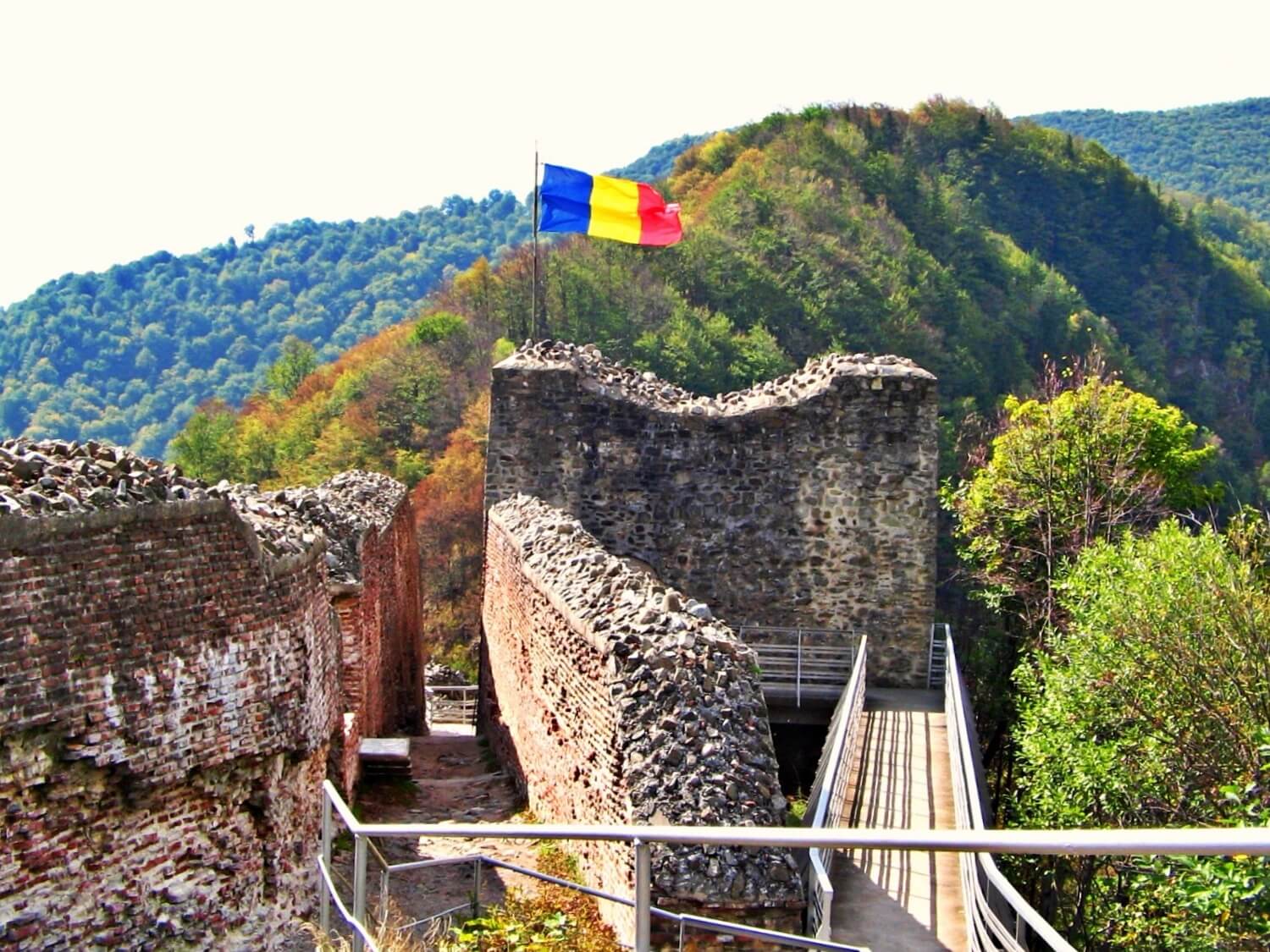
However, in the 15th century, realizing the potential for a castle perched high on a steep precipice of rock, Vlad III the Impaler repaired and consolidated the structure by enslaving his enemies from the nobility of the Danubian Principalities of Wallachia and Moldavia, making it one of his main fortresses, rebuilding the former Castle Arges on the left side of the river with stones from the older Castle Poenari, which was on the right bank and somewhat lower. Although the castle was used for many years after Vlad's death in 1476, it eventually was abandoned again in the first half of the 16th century and was in ruins by the 17th century. The size and location of the castle made it difficult to conquer. On January 13, 1913, a landslide caused by an earthquake brought down parts of the castle which crashed into the river far below. After two further earthquakes in 1940 and 1977 that caused further damage, it was slightly repaired and the walls and its towers still stand today. Since 2009, the site has been administered by the Argeș County Museum.
In popular culture
A modern rendering of Poenari Castle was featured in the 2013 BBC Worldwide/Starz television series Da Vinci's Demons in the episode titled "The Devil" in which Leonardo da Vinci travels to Poenari Castle in Wallachia to meet with Vlad III.
The episode "The Hardy Boys & Nancy Drew Meet Dracula" of The Hardy Boys/Nancy Drew Mysteries show in the '70s takes place inside "Dracula's Castle" in "Poenari". Shots of the castle used in the episode are of Poenari Castle, though the episode shows people driving up to the castle gates for a rock festival, which is not possible.
In Dan Simmons 1992 novel "Children of the Night", Poenari Castle is depicted towards the end of the novel as a ritual site to a cult known as" The Family" which consists of the genetically mutated descendants of Vlad the Impaler. While the novel is pure fiction, the description and depiction of the castle and surrounding region contain mostly accurate geographical and historic information.
In Fallout 3 video game, a vampire-related side quest starts in a fictional, postapocalyptic settlement, constructed on a preserved fragment of a highway in the Washington D.C. area, bearing some visual resemblance to Poenari Castle (e.g. linear structure) and named Arefu (as a hidden reference to the real-life location 6km from Poenari), although the toponym is disguised to look incidental (the roadsign says CAREFUL with C and L faded away).
In the 2020 documentary "Romania: Seeking Dracula’s Castle", the presenters declare that Poenari deserves the title ‘Dracula’s Castle’ as it has the ‘heart’ of Vlad III.
Legends
Numerous legends and stories about Poenari Castle have survived over the centuries. During the Communist era in Romania, foreign visitors sometimes spent the night inside the ruined structure; among them was Fatimeh Pahlavi's husband, Vincent Lee Hillyer, who claimed that in the night the temperature was much lower than usual in the castle (even in the month of July), smelled rotten flowers although there were none, he suffered from bizarre nightmares, inexplicably contracted keratosis, and got the "overpowering feeling" that he was being watched and got bitten without being physically assaulted. It was also featured as a haunted location in Ghost Hunters International in Season 1 (2008–09), episode # 14.
Cetatea Poenari este un monument istoric (cod LMI AG-II-a-A-13507) din secolul al XIV-lea aflat în județul Argeș (Căpățânenii Pământeni), Muntenia, România.
Poziția geografică
Cetatea este situată pe un vârf de munte care domină Cheile Argeșului, lângă localitatea Arefu, la 4 kilometri de barajul și lacul de la Vidraru, pe vale mai jos, lângă centrala hidroelectrică Vidraru.
Istoric
Inițial, pe vremea lui Negru Vodă, a fost construit un singur turn; apoi construcția a fost dezvoltată în scop de refugiu sau punct de observație de către Vlad Țepeș, adăugându-i-se turnuri, ziduri și dependințe. Cetatea Poenari a fost reședința secundară a lui Vlad Țepeș, fiind construită ca post de fortăreață contra otomanilor.
Cetatea este menționată într-un document emis de regele ungur Ladislau al V-lea Postumul.
Legende si asociații posibile
Legenda spune că, Vlad Țepeș, fiind urmărit de turci, a scăpat refugiindu-se în această cetate, după ce a potcovit caii cu potcoavele invers, cu fața în spate, derutîndu-și astfel urmăritorii.
Acest loc amintește unora și de bătălia numită de Nicolae Iorga "Bătălia de la Posada", din 9-12 noiembrie 1330, care a marcat emanciparea Țării Românești de sub tutela coroanei maghiare. Bătălia este menționată în Cronica pictată de la Viena, fără o identificare exactă a locului în care s-a petrecut. Poziția acelei "posade", un substantiv comun însemnând trecătoare, nu este cunoscută. Regele Carol Robert de Anjou al Ungariei a venit într-o expediție de pedepsire a fostului său vasal Basarab I al Țării Românești (Țara Ungrovlahiei, cum i se mai zicea, adică țara vlahilor dinspre Ungaria), care din 1327 refuzase să mai plătească tributul de vasal. Regele Carol Robert a fost înfrânt în timp ce se retrăgea, într-un loc descris de Sigismund de Luxemburg într-un document din 1395 ca fiind „pe [...] culmile munților, zise în vorbirea obișnuită [locală] posada, prin niște strâmtori și poteci înguste, strânse între tufișuri mari”.
Descriere
Cetatea Poenari se află pe un vârf de munte, la aproximativ 400 de metri față de nivelul văii. Cetatea are o forma alungită și posedă 5 turnuri, 4 rotunde și unul prismatic. Zidurile au 2-3 metri grosime.
Obiectiv turistic
În prezent ruinele cetății sunt amenajate ca obiectiv turistic și sunt vizitate de turiști români și străini.
De la nivelul cetății se pot admira priveliștile frumoase ale văii Argeșului.
Pentru a se urca la cetate s-a construit, în zilele noastre, o scară de beton, dotată cu balustrade, cu 1480 trepte.
Useful information
Free
10.00 RON
5.00 RON
- Nice view
- Information tables
- WC
- Ruins of the castle
- Inaccessible for the wheelchairs
- Gift shop
-
External links
Nearby castles