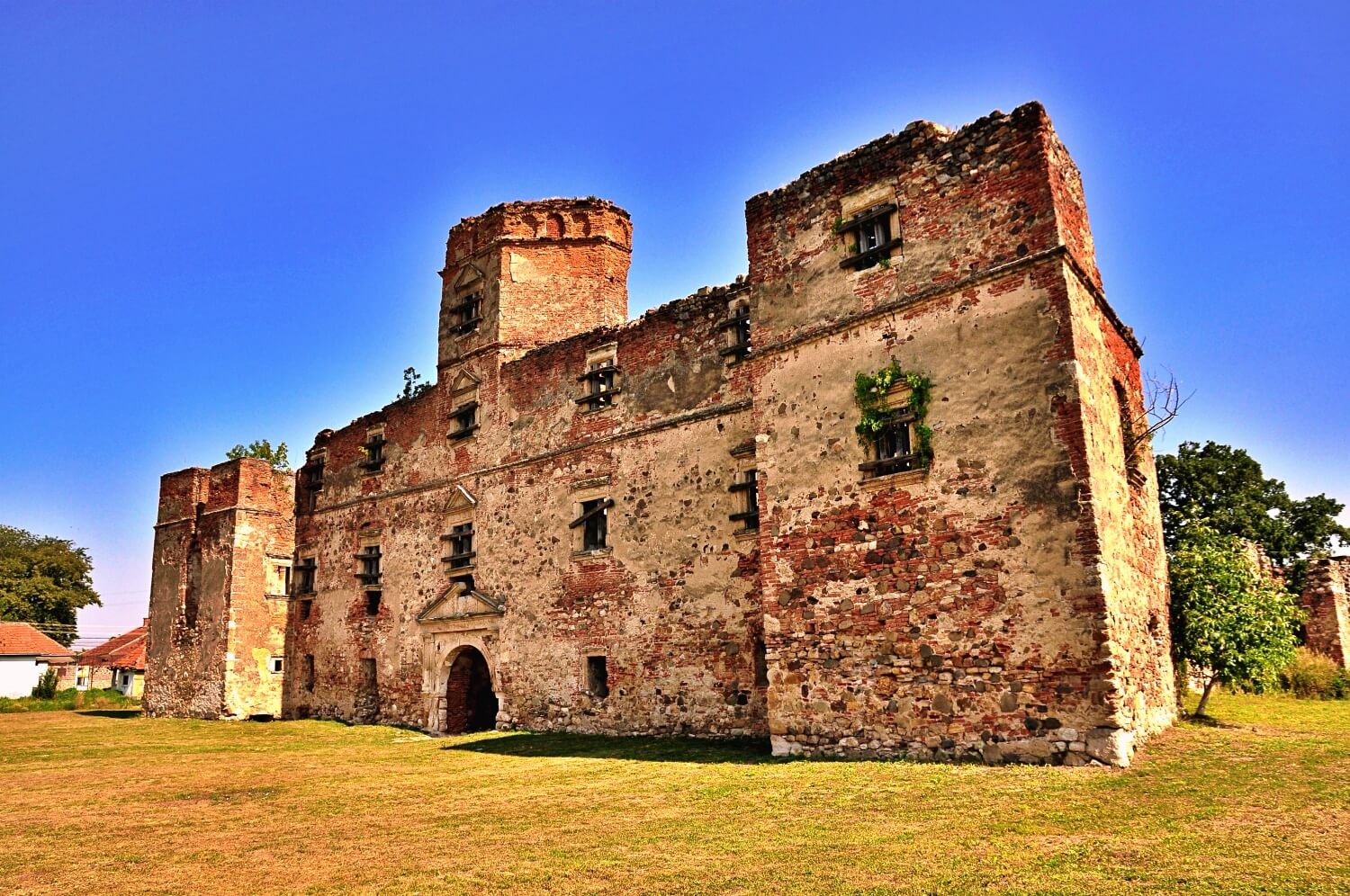
Károlyi Castle in Ardud
Orașul Ardud Județul Satu Mare Romania
castle, chateau
Castelul Károlyi (Ardud)
Orașul Ardud Județul Satu Mare Romania
castle, chateau
Károlyi-kastély (Erdőd)
Orașul Ardud Județul Satu Mare Romania
castle, chateau
The remains of the south-eastern tower includes data, which can be completed upon the 18th century engravings
Castelul are o formă de pătrat, neregulat, cu circa 30m lungime a laturilor și cu câte un turn rotund la fiecare colț al clădirii
Az erdődi vár a Bükk-hegységhez tartozó és a Szamos-síkságba benyúló, 142 méter magas dombon áll, a Homoród patak partján
Previous names
Károlyi Castle in Ardud, Castelul Károlyi (Ardud), Károlyi-kastély (Erdőd)
Description
The remains of the south-eastern tower includes data, which can be completed upon the 18th century engravings. The castle contains three two-story wings. The western side was closed by a section of wall. The towers from the southern part were three-story buildings and they were defined by baroque styles. The towers of the northern side had similar designs, but were a storey smaller.
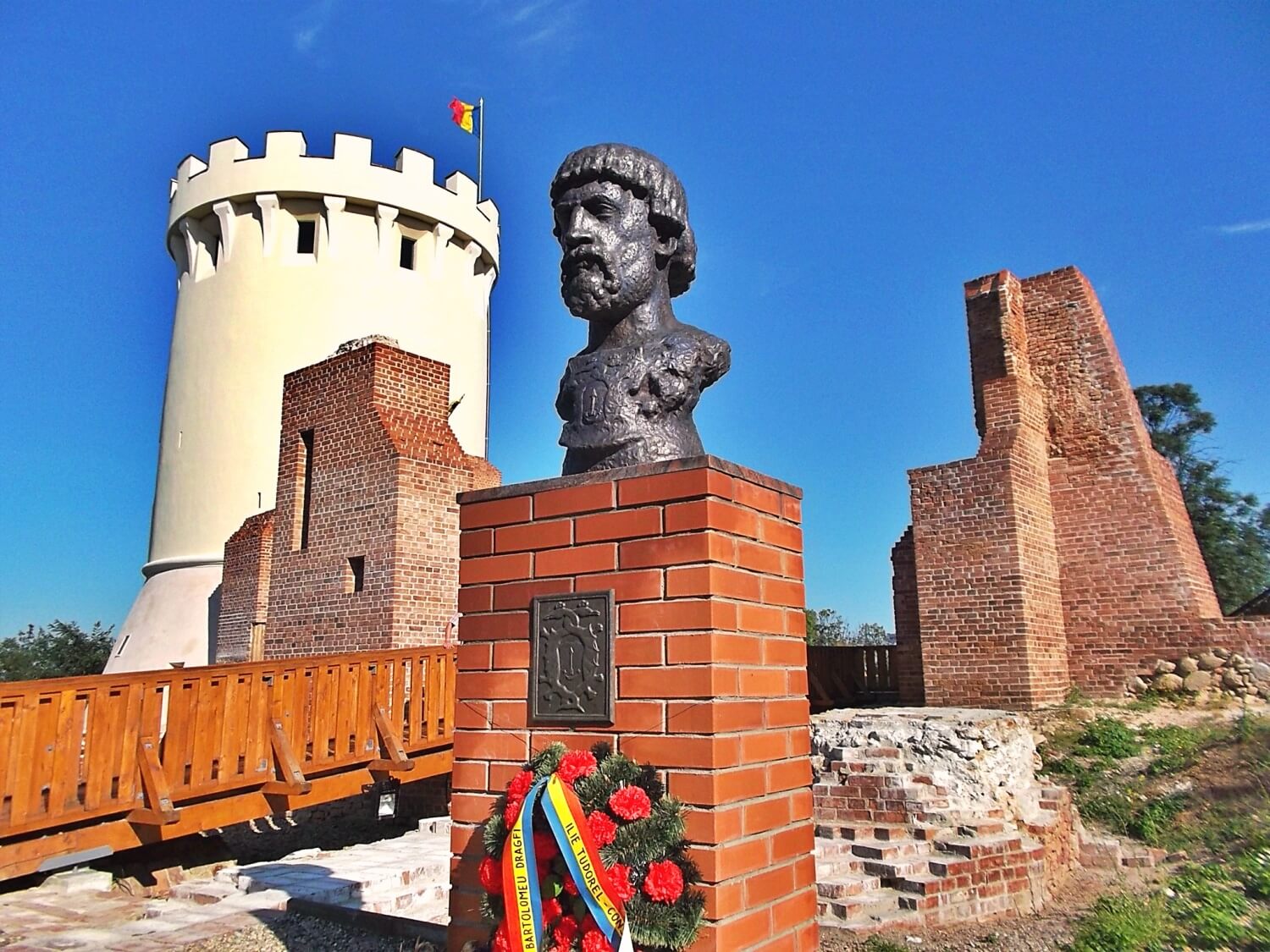
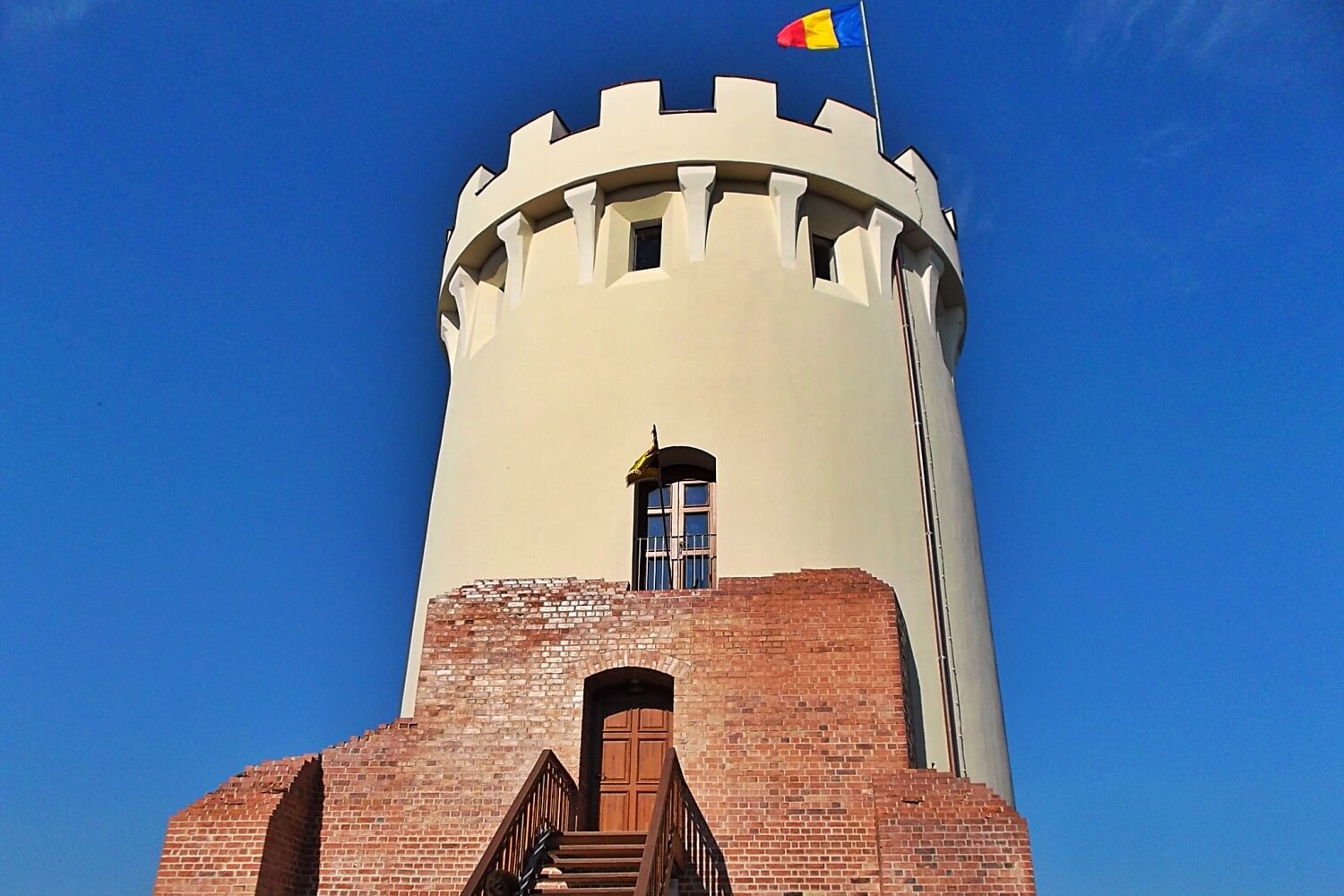
On the southern side, above the tower, there was a fifth round tower, which has three storeys. The towers were decorated by avant-corps and above the third level, there were oval windows. In front of the entrance of the cellar there was a narrower vaulted tunnel, which is completely ruined today, but it was said that it was connected to the Castle of Carei, the Chains Church of Satu Mare and the Reformed Church from Arcuș. The renovation of the castle is recorded in one of the books of Szirmai Antal. After the death of Károlyi Sándor, the castle was not left to the use of its owners, but some wings were used for the Lordship's purposes. At the end of the 19th century, the castle was laying again in ruins. The Petőfi cult of the settlement brought the building's partial restoration, when the south-western tower was reconstructed in a romantic style. The building, which remained without a function and the tower, renovated at the end of the 19th century, was still gradually deteriorating. The remains visible today are the remains of the reconstruction made in the period of Károly and at the end of the 19th century. The construction is surrounded by a deep dry moat. The outer part of moat located at the eastern and western side of the building was made of a raised ditch. The raised ditch from the western part was destroyed by today's asphalt road, the one from the north is still partially standing. The building has an irregular square ground plan, with approx. 30 m side length, with rounded towers at corners. The south-western tower, standing up to the crenellation, was renovated in the 19th century, the south-eastern is standing in ruins, being visible up to the first level, and the other towers location can be determined by the inequalities observed on the surface. The south-western tower was decorated with roamtic-style crenellation and its windows were shaped in Romanian style. At the Millennium Commemoration, the castle got a chapel on the site where the Hungarian poet Petőfi Sándor and Szendrei Júlia married in 1847.
https://castleintransylvania.ro/
Castelul are o formă de pătrat, neregulat, cu circa 30m lungime a laturilor și cu câte un turn rotund la fiecare colț al clădirii. Dintre acestea, turnul din sud-vest s-a păstrat până la crenel, fiind restaurat în secolul al XIX-lea, turnul sud-estic se află în ruine, păstrându-se până la primul nivel, iar celelalte turnuri pot fi deduse doar prin inegalitățile suprafeței de teren.
Data renovării castelului a fost imortilizat de o inscripție la care face referire istoricul Szirmai Antal. După moartea lui Károlyi Sándor, castelul nu a servit doar ca reședință a proprietarilor, ci aripile acestuia au fost folosite în scopul domniei. La sfârșitul secolului al XIX-lea, castelul se afla din nou în ruine. Celebrul poet maghiar Petőfi a efectuat restaurarea parțială a clădirii, moment în care turnul dinspre sud-vest a fost transformat în stil romantic. În ciuda restaurării din secolul al XIX-lea, când turnul și aripa clădirii s-au renovat, castelul a continuat să se degradeze treptat. Azi s-au mai păstrat doar rămășițele reconstruirii din perioada lui Károly și din perioada de la sfârșitul secolului al XIX-lea.
Un șanț adânc, uscat, desparte ansamblul de clădiri de creasta muntelui. Pe laturile nord și vest, partea exterioară a șanțului era formată dintr-o fortificație de pământ. Fortificația de pământ din latura de vest a fost distrusă de drumul asfaltat, dar cea din latura de nord este vizibilă și astăzi.
Turnul din sud-vest s-a prevăzut cu crenel în stil romantic și cu ferestre în stil roman. Cu prilejul celebrării Mileniului, în locul în care, în 1847, poetul Petőfi Sándor s-a căsătorit cu Szendrei Júlia, s-a construit o capelă. Datele fragmentelor turnului din latura de sud-est pot fi completate pe baza structurii din secolul al XVII.-lea. Castelul se compunea din trei aripi cu două nivele. Latura nordică se termina într-un fragment de zid. Turnurile din latura de sud aveau trei etaje și purtau amprenta stilului baroc. Acestea erau acoperite cu coif. Turnurile laturii de nord aveau o formă similară, dar nu avea decât două etaje. Pe latura de sud, deasupra porții se afla un al cincelea turn rotund, prevăzut cu trei etaje. La intrare se delimita o clădire mică, dreptunghiulară. Turnurile erau accentuate de rezalit, iar deasupra etajului trei, de ferestre ovale. În fața ușii care dădea spre subsol, se afla un tunel îngust, boltit, care azi nu s-a mai păstrat, dar despre care se crede că era un labirint care lega castelul de cetatea din Carei, de Biserica Reformată cu lanțuri din Satu Mare și de Biserica Reformată din Arcuș.
Drept de proprietate: proprietatea localității.
https://castelintransilvania.ro/
Az erdődi vár a Bükk-hegységhez tartozó és a Szamos-síkságba benyúló, 142 méter magas dombon áll, a Homoród patak partján. A kastély romjai a legendás Drágffy családra emlékeztették a Károlyi családot, és ennek tudatában Károlyi Sándor a Rákóczi-szabadságharc utáni békésebb periódusban újjáépítette a kastélyt, új lakóhelyet alakítva ki magának.
Ezt a felújítást is egy felirat örökítette meg, amiről ugyancsak Szirmai Antal könyvéből tudunk. Károlyi Sándor halála után a kastély nem maradt meg csupán a birtokosok lakóhelyének, hanem egyes szárnyait az uradalom céljaira használták. A XIX. század végére újra romos állapotba került. Kiegyezés időszakának Petőfi kultusza hozta magával az épület újbóli részleges helyreállítását, amikor is a délnyugati tornyot építették át romantikus stílusban. A funkció nélkül maradt épület a XIX. század végén helyreállított torony és épületszárny ellenére is fokozatosan romos állapotba került. A ma látható maradványok a Károlyi- és a XIX. század végén történt átépítés maradványai.
Az épületegyüttest egy mély szárazárok választja el a hegygerinctől. Az északi és nyugati oldalakon az árok külső oldalát egy magasított földsánc képezte. A nyugati oldal földsáncát a mai aszfaltozott út elpusztította, az északi részben még áll. Az épület szabálytalan négyzet alaprajzú, kb. 30 m-es oldalhosszakkal, sarkain egy-egy kiugró kerek toronnyal. Ezekből a dél-nyugati a pártázatáig áll, a XIX. században volt helyreállítva, a dél-keleti romosan az első szint magasságáig, míg a többi torony helye a felszínen megfigyelhető egyenlőtlenségek alapján következtethető ki. A délnyugati tornyot romantikus pártázattal látták el, ablakait román stílusura alakították ki. A várban a millenniumi megemlékezések alkalmából egy kápolnát építettek, azon a helyen, ahol Petőfi Sándor és Szendrei Júlia megesküdtek 1847-ben.
A délkeleti torony megmaradt részein megfigyelt adatok a XVIII. századi metszetek alapján egészíthetőek ki. A kastély három kétszintes szárnyból állt. A nyugati oldalt egy falszakasz zárta le. A déli oldal tornyai háromszintesek voltak és a barokk stílusjegyeket viseltek magukon, sisakkal voltak fedve. Az északi oldal tornyai hasonló kialakításúak voltak, de egy szinttel kisebbek. A déli oldalon a kapu fölött egy ötödik kerek-torony állt, amely három szintes volt. A bejáratnál egy kisebb, négyszögletes építmény ugrott a falsík felé. A tornyok díszítését rizalitok és a harmadik szint felett ovális ablakok adták. A körpince bejáratával szemben volt egy keskenyebb boltíves alagút, mely mára teljesen beomlott, de azt tartják róla, hogy a nagykárolyi várral, a szatmári Láncos-templommal és az ákosi református templommal volt összeköttetésben.
Tulajdonviszony: a település tulajdona.
https://kastelyerdelybe
Useful information
Free
3.00 RON
- Information tables
- Observation deck
Guided tours are offered
-
-
External links
Nearby castles