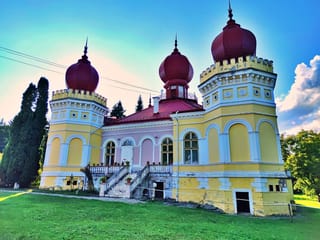
Bethlen Pál Castle in Beclean
Orașul Beclean Județul Bistrița-Năsăud Romania
castle, chateau
Castelul Bethlen Pal din Beclean
Orașul Beclean Județul Bistrița-Năsăud Romania
castle, chateau
Bethlen Pál-kastély
Orașul Beclean Județul Bistrița-Năsăud Romania
castle, chateau
The castle was built by the order of Count Bethlen Pál (1851–1935), the son of Bethlen Pál (1798–1859) and Countess Bethlen Mária (1827–1876)
Castelul a fost construit de Contele Pál Bethlen (1851–1935), fiul contelui Pál Bethlen (1798–1859) şi a contesei Mária Bethlen (1827–1876), care după finalizarea studiilor, a întreprins o călătorie mai lungă în străinătate, după care a făcut armata timp de 5 ani
A kastély építtetője, gr
Previous names
Bethlen Pál Castle in Beclean, Castelul Bethlen Pal din Beclean, Bethlen Pál-kastély
Description
The castle was built by the order of Count Bethlen Pál (1851–1935), the son of Bethlen Pál (1798–1859) and Countess Bethlen Mária (1827–1876).
He had been travelling after he had finished his studies, then he was a soldier for five years. By the end of the 1870s he had returned to his land in Beclean. He had a daughter with his first wife, Countess Rhédey Gabriella (1861–1883), whose name was Ida (1880–1895) and had a tragic fate. Bethlen Ida’s grave, which is situated in the cemetery in Beclean, is a unique work of art.
Before the government’s nationalizations in 1945, the main building, as well as the secondary ones surrounding it (a linen fabric was functioning here), were the possessions of Count Bethlen László. According to the documents originating from 1977, the castle had 16 premises and 8 secondary buildings. Today, only one secondary building exists, which was rearranged into a museum.
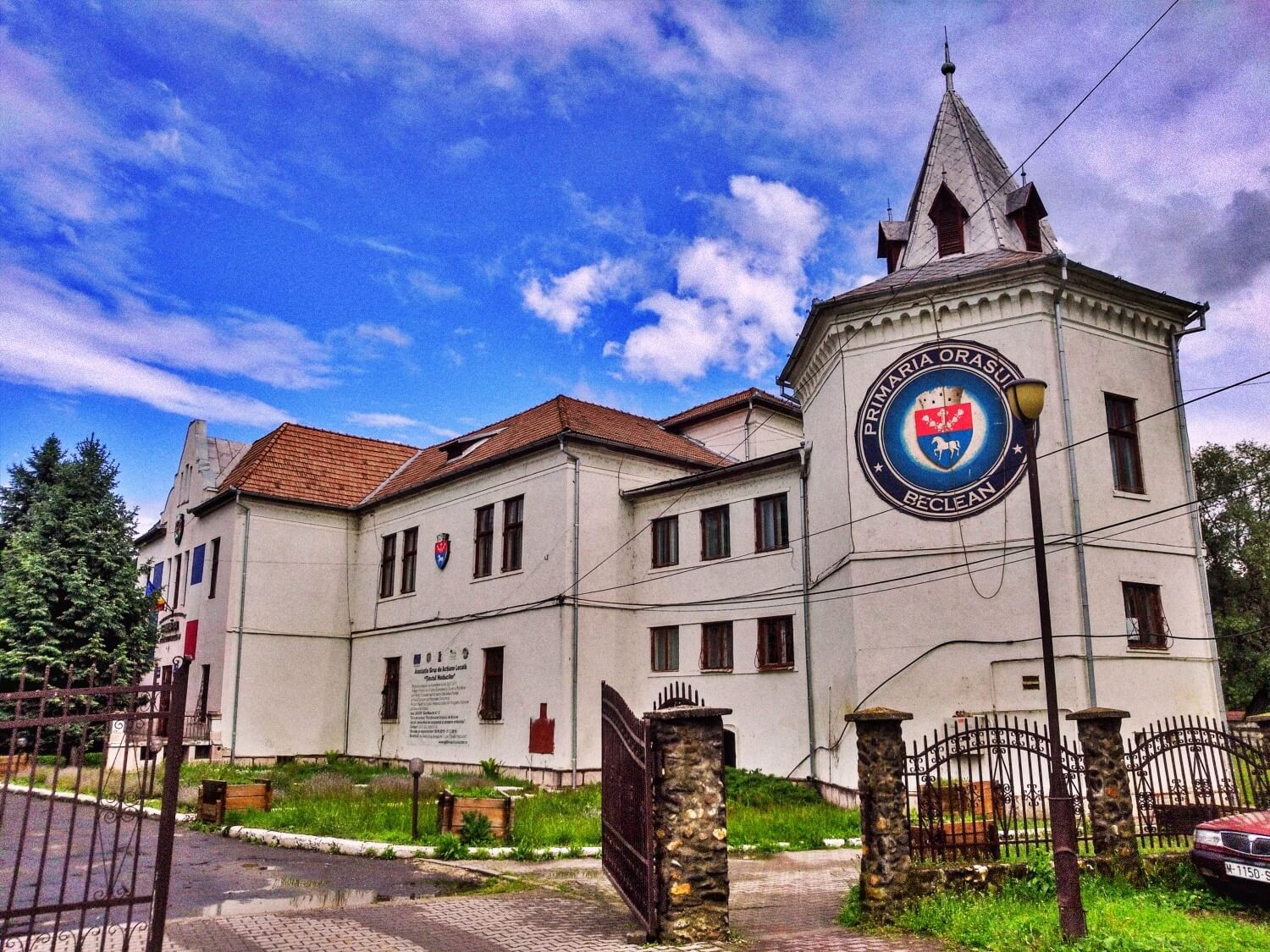
During the 1990s the community centre and the library were functioning in the building. The amphitheatre and the scene from the back were enlarged and they were redecorated accordingly to that period’s style. Today the building hosts Beclean’s Town Hall.
The two-storey castle does not have an adequate division of the premises and it shows the signs of multiple reconstructions and rearrangements. On the ground floor a big amphitheatre can be found and three smaller halls in the southern side. This unit is surrounded by smaller premises on each side, which connect the building’s centre with the two hexagonal towers situated in the two corners of the castle. The harmony of this structure was ruined in the 1980s by the enlarged amphitheatre. In the main wing of the building there is an avant-corps, which is connected to the building through a balcony with stairs. Inside of the avant-corps the stairs run to the first floor. The main wing, which was mentioned above, is connected vertically to another wing with five premises. The images which originate from the 20th century illustrate this wing too.
There are a few differences between the arrangement of the premises situated on the first floor and the ones which are on the ground floor. A significant one would be that the shorter tower is one-storey building, while the taller one situated in the southern side, is divided into three premises and it also has a first floor. Neither the northern bastion has a first floor. The enlargement of the amphitheatre is marked on the ground floor plan, but on the first floor we can only see the aerial space of the hall.
The castle was built in L shape, it has a simple hip roof, while its wings have gable roofs and the bastions have roofs made of tin. Under the building there is a basement with four vaulted premises. These cannot be visited today, but it would be important in order to be able to differentiate the numerous phases of constructions.
The main façade is situated in the western side of the castle. On the basis of some post cards several significant modifications can be observed. According to the oldest variant, the façade had the following aspect: besides the avant-corps the main wing was situated which ended in two hexagonal towers. Before the avant-corps there was a balcony with iron parapet and stone stairs. The avant-corps was divided by four decorated pilasters which held the cornice with the console stones. The middle part of the façade was decorated in Baroque style and above it the Bethlen coat of arms was situated. Above the cornice there is an attic decorated with reliefs. There are two decorated twin windows at the two sides of the entrance. Under the hexagonal tower the avant-corps was decorated with console stones’ motifs.
The main façade was rearranged during the 1900 reconstructions. Another floor was built above the ground floor. The big hall and the northern tower were not reconstructed, but the avant-corps of the entrance and the southern wing were heightened with one floor, as well as the southern tower. It is not known exactly whether this tower was rebuilt in this period or it had had that floor earlier. The balcony of the avant-corps at the entrance was preserved in its original condition, while the windows were modified. On the ground floor windows were mounted, with keystones. On the first floor the middle window has three elements, and the two windows at the two sides have eyebrow frames. The spiral structured building reminds us of the German Renaissance; it has a window with three elements and the Bethlen coat of arms. In the southern part of the façade there are two windows above which there are two double ones, and this is their original place. The façade’s aspect had not been changed until 1927. Keöpeczi Sebestyén József’s drawing illustrates this fact very well.
The reconstructions of the 1980s changed the aspect of the façade. The windows from the wing which is situated near the avant-corps, on the left side, were walled up, and this part of the building was heightened – this is how the amphitheatre was created. The architecture of the avant-corps was not modified, but the original window frames and the Bethlen coat of arms were taken off the façade. The southern bastion was significantly modified, because the traces of some windows which were walled up can be seen. On the ground floor of the southern wing there is a vaulted door which leads to the basement. The reconstructions from the 20th century ruined the harmonious composition of the buildings completely and the final aspect which thus resulted was completely inadequate. The furniture and the interior organization of the castle are unknown. In 1900 the main staircase was panelled and it had a turned balustrade. Opposite the main staircase, there is an eclectic fireplace on the first floor, with green glazed ceramic tile and late-Renaissance motifs (dentilled cornice, ornate freize, flower and fruit garlands).
The façade from the back of the castle looked on to the sophisticatedly arranged park. The trees of this park were cut down in the 1960s. Today only one of the secondary buildings exists and it is transformed into a museum. Ten years ago there were two buildings left (one for the servants and for cooking, the other for the guests) and the stables with their Baroque windows, which originated from the 18th century, most probably. Only that, these were demolished since then.
https://castleintransylvania.ro/
Castelul a fost construit de Contele Pál Bethlen (1851–1935), fiul contelui Pál Bethlen (1798–1859) şi a contesei Mária Bethlen (1827–1876), care după finalizarea studiilor, a întreprins o călătorie mai lungă în străinătate, după care a făcut armata timp de 5 ani. La începutul anilor 1870 a revenit pe moşia lui din Beclean. Prima lui soţie a fost contesa Gabriella Rhédey (1861–1883), de la care s-a născut fata cu numele Ida (1880–1895), fata care a avut un destin tragic. Monumentul ei funerar este cea mai frumoasă piesă a cimitirului familiei Bethlen. Circumstanţele construirii castelului aflat în proprietatea lui Pál Bethlen sunt neclare.
Istoricul de artă József Sisa susţine, că pe baza proiectelor elaborate de arhitectul renumit al epocii, Mór Kallina, transformarea castelului s-a efectuat în jurul anului 1900. La începutul secolului XX castelul a fost înconjurat de un zid masiv din piatră, în afara zidurilor vestice aflându-se ruinele cetăţii de altădată.
Înainte de naţionalizarea din 1945, castelul și clădirile-anexe (în aceasta din urmă funcționa o fabrică de in) se afla în proprietatea contelui László Bethlen. Într-un inventar din 1977 apare informaţia conform căreia castelul cu un etaj avea la data respectivă 16 încăperi şi 8 clădiri-anexe.În prezent se mai păstrează o singură clădire-anexă, care a fost transformată într-un muzeu.
În anii 1980, sala festivă de odinioră şi scena din spate au fost modificate şi înlărgite la o mărime aproape dublă, iar interiorul castelului a fost şi el transformat pe gustul epocii. La ora actuală aici este sediul primăriei din Beclean. În anii 1990 castelul găzduia o casă de cultură şi o bibliotecă.
Castelul cu două niveluri are o planimetrie asimetrică, care dezvăluie urmele a mai multor intervenţii. Nucleul clădirii este o aripă alungită care se află orientată în direcţia nord-sud. O sală festivă de mari dimensiuni şi trei încăperi mai mici pe partea sudică alcătuiesc nucleul clădirii la parter. Această aripă este flancată la margini de câte o încăpere alungită, care fac legătura între aripa centrală şi cele două turnuri hexagonale de la colţurile clădirii. Simetria nucleului clădirii este întreruptă în anul 1980, prin lărgirea sălii festive. În centrul aripei principale se află un rezalit în trei axe, de care se leagă terasa prin care se face intrarea în clădire. Rezalitul cuprinde în interiorul lui, casa scării principale prevăzute cu o scară cu două brațe care duce la etaj. Perpendicular pe aripa principală se întinde o aripă cu cinci încăperi. Această aripă este vizibilă şi pe fotografiile de la începutul secolului XX.
La etajul clădirii repartizarea încăperilor se aseamănă, cu mici diferenţe, cu repartizarea camerelor de la parter. O importantă diferenţă constă în faptul că turnul nordic, mai mic are doar un singur nivel, în comparaţie cu turnul sudic, mai mare (al cărui spațiu interior s-a împărțit în trei încăperi), care are și etaj. Asemănător turnului nordic, sala de spectacole amplasată pe partea nordică a clădirii are un singur nivel. Pe planul de la parter se observă linia extinderii sălii de spectacole, dar la etaj se vede doar spațiul încăperii. Castelul în formă de ”L” are un acoperiș în patru ape, aripile laterale au acoperiș în două ape, iar bastioanele sunt învelite cu turle hexagonale din tinichea. Subsolul clădirii are patru încăperi boltite. Momentan acestea nu se pot vizualiza, dar din punct de vedere al diferențierii difeitelor etape de construcție, ar fi important să se știe părțile sub care se extind.
Faţada principală a castelului se află pe latura de vest. Pe baza unor ilustrate, se pot observa unele modificări semnificative care au avut loc. După cunoștințele noastre, cea mai veche fațadă arăta în felul umător: rezalitul în trei axe a dominat aspectul faţadei, în spatele rezalitului se afla aripa principală a clădirii, care era flancată la margini de câte un turn hexagonal. În faţa rezalitului se întindea o terasă cu balustradă, a cărei acces era asigurată de scări din piatră. Faţada rezalitului era articulată vertical prin patru pilaştrii cu capiteluri bogat-ornamentate. Pe aceşti pilaştri se rezema o cornişă sprijinită pe console. În centrul faţadei se afla un fronton cu caracter baroc, a cărui ornament principal era un panou de dimensiuni mari, decorat cu blazonul familiei Bethlen. Frontonul a fost flancat de o atică cu reliefuri. Suprafața marginală a intrării a fost străpunsă de câte o fereastră geminată, cu deschideri trilobate. Turnul hexagonal era decorat sub acoperiş cu o cornişă sprijinită pe console, asemănător cu cornişa rezalitului.
În jurul anului 1900, ca urmare a reconstruirii clădirii, s-a modificat şi înfăţişarea faţadei. Se poate obsrva, că majoritatea clădirii a fost supraetajată, numai sala mare festivă şi turnul nordic au rămas cu nivelul de parter. Rezalitul de la intrare și aripa de clădire situată la sud de acesta s-a completat cu un etaj, la fel ca și turnul din sud. În lipsa izvoarelor nu se ştie , dacă etajul turnului sudic s-a construit la această dată sau era deja așa. Pe parcursul reconstruirii, terasa din faţa rezalitului şi-a păstrat forma originală, dar ferestrele rezalitului au fost schimbate. La parter, intrarea a fost flancată de câte o fereastră dreaptă cu bolţarul median marcat. Fereastra din mijloc, de la etaj, este o fereastră tripartită. Cu ocazia reclădirii, frontispiciul a fost transformat într-un fronton cu linii spiralate, în spiritul arhitecturii renaşterii germane; o fereastră tripartită străpungea frontonul, iar sub aceasta se afla blazonul familiei Bethlen. Partea sudică a faţadei era străpuns la parter de două ferestre drepte, deasupra lor de patru ferestre geminate. Repartizarea ferestrelor coincide cu repartizarea actuală. Aspectul faţadei principale era acelaşi şi în anul 1927, fapt ce poate fi observat și pe desenul lui József Keöpeczi Sebestyén.
Datorită modificărilor realizate în anul 1980, faţada principală a suferit unele schimbări. Ferestrele aripei, aflate la nord de rezalitul central, au fost înzidite, iar aripa a fost înălţată, rezultând în acest fel sala de spectacole. Arhitectura rezalitului s-a păstrat, dar au înlăturat chenarele ferestrelor şi au îndepărtat şi blazonul familiei Bethlen. Bastionul sudic dezvăluie urmele unor intervenţii mai importante, la parter văzându-se urmele unor ferestre înzidite. La parterul aripii sudice se află o uşă cu închidere în segment de cerc, care duce în pivniţă.
Lucrările de construcție din sec. XX au schimbat total structura ansamblului de clădiri, rezultând un aspect mai puțin interesant. Amenajarea interioară de odinioară a castelului nu este cunoscută, numai interiorul casei de scări al rezalitului faţadei principale aminteşte de interiorul din jurul anului 1900, cu lambriul şi scările cu parapet strunjit. La etaj, vis-a-vis de scara principală, se vede un cămin istoricizant din teracotă verde smălţuită, decorat cu o bogată ornamentaţie cu caracter renascentist-târziu( brâu cu denticule, ove, festoane din flori şi fructe).
Odinioară, fațada din spate a castelului avea vedere spre un parc elegant amenajat, a cărui copaci au fost tăiaţi în anii 1960. Dintre clădirile-anexe din jurul castelului numai una s-a păstrat până în zilele noastre, aceasta fiind transformată într-un muzeu. În urmă cu zece ani, pe lângă aceasta mai existau şi două alte clădiri (una destinată bucătăriei şi diferiţilor slujitori, iar celalaltă era casa de oaspeţi), cât și grajdurile, prevăzute cu ferestre baroce, datate în secolul al XVIII-lea. Între timp, aceste clădiri au fost demolate.
https://castelintransilvania.ro/
A kastély építtetője, gr. Bethlen Pál (1851–1935), id. Bethlen Pál (1798–1859) és gr. Bethlen Mária (1827–1876) fia, aki tanulmányai befejezése után hosszabb külföldi utat tett, majd 5 évig katonáskodott. Az 1870-es évek végén hazaköltözött bethleni birtokára. Első felesége gr. Rhédey Gabriella (1861–1883) volt, akitől a tragikus sorsú Ida nevű lánya (1880–1895) született. Bethlen Ida síremléke a bethleni Bethlen-sírkert legszebb alkotása.
A Bethlen Pál birtokában lévő kastély építési körülményei tisztázatlanok. A már említett korabeli felvétel és a sarokbástyák alapján feltételezhető, hogy a főispán egy 17. századi kastély átépítése révén alakította ki saját kastélyát. Az átépítés során megtartották a két sarokbástyát, azonban a barokkos oromzatot átalakították, a földszintes épületre egy emeletet húztak, így jött létre az eklektikus stílusú új kastély. Sisa József művészettörténész szerint Kallina Mór jó nevű építész tervei alapján valósult meg a kastély átalakítása 1900 körül. A kastélyt a 20. század elején erős kőfal vette körül, a nyugati falakon kívül terültek el a régi vár romjai.
Az 1945-ös államosítás előtt gr. Bethlen László tulajdonában volt az épület és a körülötte lévő melléképületek (ez utóbbiakban lengyár működött). Egy 1977-es összeírás alapján az egyemeletes kastélynak 16 helyisége volt, és 8 melléképülete. Jelenleg egy melléképülete áll, amelyet múzeummá alakítottak át.
Az 1990-es években művelődési ház és könyvtár működött a kastélyban. Az egykori díszes előadótermet és a hátsó színpadot a ’80-as években szinte kétszeresére bővítették és a belső berendezését a kornak megfelelően átalakították. Jelenleg Bethlen város polgármesteri hivatala működik benne.
A kétszintes kastély szabálytalan tömegformálású és többrendbeli beavatkozások nyomait mutatja. Az épület magját egy nyújtott tengely alkotja, amely észak-dél irányban húzódik. Egy nagyméretű előadóterem, a déli oldalon pedig három kisebb méretű terem alkotják az épület földszinti magját. Ezt a hosszabb egységet két oldalról egy-egy rövid helyiség övezi, amelyek összekötik az épület magját az épület két sarkán elhelyezett hatszögű tornyokkal. Az egykori épületmag szimmetriáját az 1980-as években megnagyobbított előadóterem bontja meg. A fő épületszárny középső tengelyében egy háromtengelyes rizalit kapott helyet, amelyhez az épületbe vezető lépcsős terasz kapcsolódik. A rizalit rejti magában a főlépcsőházat a lépcsőfordulós, emeletre vezető kétkarú lépcsővel. A fentiekben ismertetett fő szárnyra merőlegesen csatlakozik egy öt helyiséget magába foglaló szárny. A 20. század eleji felvételeken már látható ez a szárny is.
Az épület emeletén a helyiségek elrendezése néhány különbségtől eltekintve megegyezik a földszinti termek kiosztásával. Az egyik lényeges különbség az, hogy az északi, alacsonyabb torony csupán földszintes, míg a nagyobb alapterületű déli toronynak (amelynek belső terét három helyiségre tagolták) emeleti szintje is van. Az északi bástyához hasonlóan, az épülettömb északi felén elhelyezkedő előadóteremnek szintén nincs külön emeleti szintje. A földszinti alaprajzon megfigyelhető az előadóterem bővítésének vonala, de az emeleten csupán a terem légtere található.
Az L alakú kastélyt kontyolttető, az összekötő szárnyakat nyeregtető, míg a bástyákat vízvezetős hatszögű bádog toronysisak fedi. Az épület alatt egy pince húzódik, amelynek négy boltozott helyisége van. Ezeket jelenleg nem lehet megtekinteni, az építési fázisok megkülönböztetése szempontjából azonban fontos lenne ismerni, hogy az épület mely részei alatt húzódnak.
A kastély főhomlokzata a nyugati oldalon helyezkedik el. Egykori képeslapok alapján néhány jelentős átalakítás figyelhető meg. A legkorábbi, általunk ismert állapotban a homlokzat kialakítása a következőképpen nézett ki: a három tengelyes bejárati rizalit uralta a homlokzatot, a rizalit mögött húzódott az épület fő szárnya, amelyet két oldalt hatszögű tornyok zártak le. A rizalit előtt egy vaskorlátos terasz helyezkedett el, amelyre kőlépcső vezetett. A rizalit tömbjét függőlegesen négy díszes fejezetű falpillér tagolta, ezekre támaszkodott a vízszintes gyámkősoros párkány. A homlokzatot középen barokkos csigavonalas oromzat zárta le, amelynek fő dísze a gyámkősoros párkány felett elhelyezett nagyméretű Bethlen-címeres tábla volt. Az oromzat két oldalán a párkány felett domborműves attika kapott helyet. A bejárat két oldalán egy-egy magas, háromkaréjos díszítésű ikerablak törte át a falat. A hatszögű tornyon a tető alatt a rizaliton is megjelenő gyámkősoros motívum vonult végig.
Az 1900 körül zajlott átépítés során megváltoztatták a főhomlokzat kiképzését. Megfigyelhető, hogy a korábbi földszintes épület egy részére emeletet húztak. A nagyterem és az északi torony földszintes maradt, a bejárati rizalit és a tőle délre elhelyezkedő épületszárny viszont egy szinttel magasabb lett, a déli torony is emeletes. Források hiányában nem ismert, hogy a déli torony ekkor változott-e át kétszintes építménnyé, vagy már korábban is emeletes volt. A bejárati rizalit előtti teraszt meghagyták az eredeti állapotban, az ablakokat viszont megváltoztatták. A földszinten, az ajtó két oldalára egy-egy záróköves keretezésű, egyenes záródású ablak került. Az emeleten a középső egy hármasablak, két oldalán egy-egy szemöldök-keretes ablak foglal helyet. A rizalitot lezáró oromzat formája is megváltozott, a német reneszánsz ihletésű csigavonalas építményt egy hármasablak töri át, alatta egy kis táblába foglalt Bethlen-címer látható. A homlokzat déli szárnyán a földszinten két egyenes záródású ablak, felettük két pár kettős ablak jelenik meg, az ablakok elosztása megegyezik a ma is látható állapottal. A főhomlokzat kinézete 1927-re sem változott, amint ez Keöpeczi Sebestyén József rajzán is megfigyelhető.
Az 1980-es években végzett átalakításoknak köszönhetően módosult a homlokzat képe. A rizalittól balra (északra) elhelyezkedő épületszárny ablakait befalazták és a szárnyat megmagasították, így jött létre az előadóterem. A rizalit architektúráját megtartották, de eltüntették az ablakok keretezését és eltávolították a Bethlen családi címert az oromzatról. A bástyák közül a déli esett át fontosabb bevatkozáson, földszintjén ugyanis befalazott ablakok nyomai látszanak. A déli szárny alsó szintjén látható egy szegmensíves bejárati ajtó, amely a pincébe vezet.
Az épületen végrehajtott 20. századi bővítések teljesen megbontották az együttes tömegkompozícióját, silány külsőt eredményezve. A kastély egykori berendezése nem ismert számunkra. Az eredeti, 1900 körüli állapotokat szemlélteti a faburkolatos és esztergált korláttal ellátott főlépcsőház kialakítása. A főlépcsővel szemben, az emeleten egy nagyméretű zöldmázas historizáló kandalló maradt fenn, amelyet gazdag későreneszánsz jellegű motívumkinccsel díszítettek (fogazatos párkány, tojássoros fríz, gyümölcs- és virágfüzérek).
A kastély hátsó homlokzata egykor egy igényesen kialakított parkra nézett, amelynek fáit az 1960-as években kivágták. A kastélyhoz tartozó melléképületek közül jelenleg csupán egy áll fenn, múzeumnak átalakítva. Tíz évvel ezelőtt még állt két lakóépület (egyikben konyha és cselédház, másikban a vendégház volt egykoron), valamint a 18. századinak gondolt, barokkos ablakú istállók. Ezeket az épületeket időközben elbontották.
https://kastelyerdelyben.ro/
Useful information
Free
The Castle is abandoned, no visiting
-
-
Nearby castles