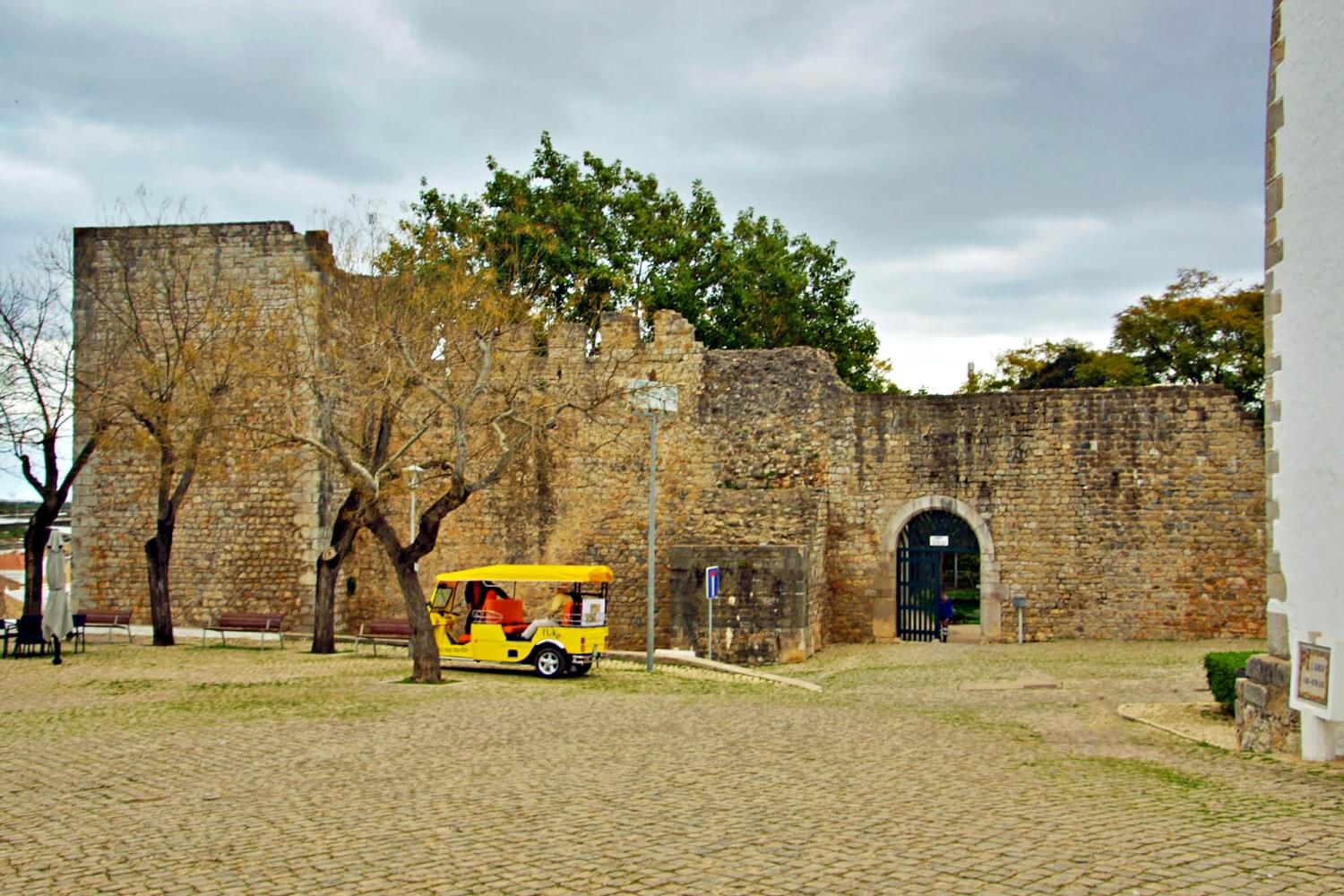
Castle of Tavira
Tavira Faro Portugal
castle, chateau
Castelo de Tavira
Tavira Faro Portugal
castle, chateau
The Castle of Tavira (Portuguese: Castelo de Tavira) is a medieval castle located in the parish of Santiago, Tavira municipality, Faro district of Portugal
O Castelo de Tavira localiza-se na freguesia de Santiago, cidade de Tavira, distrito de Faro, em Portugal
Previous names
Castle of Tavira, Castelo de Tavira
Description
The Castle of Tavira (Portuguese: Castelo de Tavira) is a medieval castle located in the parish of Santiago, Tavira municipality, Faro district of Portugal. In a dominant position over the mouth of the river Gilão, the settlement has developed as an important sea port since antiquity, with its predecessors dating back to the 8th century BC, passing through the hands of phoenicians, greeks, celts, carthaginians, romans, moors and the Portuguese crown.
History
Early history
Although the early human occupation of the region dates back to prehistoric times, an archaeological campaign undertaken in 1997 revealed a Phoenician wall of section dating from the eighth century BC. This colony of sailors and traders was the first proof of establishment.
When the Romans invaded the Iberian Peninsula, the village, then called Balsa, acquired strategic importance due to the presence of a bridge over the river.
The town later came under the control of the Moors in their conquest of the region.
Medieval era
At the time of the Christian reconquest of the peninsula, Portuguese forces reached the eastern Algarve from 1238. Tavira was conquered on June 11, 1239 (May 1240, according to Alexandre Herculano or even 1242 according to other sources), by the forces under the command of D. Paio Peres Correia, Master of the Order of Santiago. Tradition associates this achievement with a reprisal by that Order for the death of seven of its knights in an ambush while hunting on the site of Antas, in the current parish of Luz.
On January 9, 1242 (or 1244 according to other sources), Sancho II of Portugal (1223-1248) donated the domains of Tavira and the patronage of his church to the Order of Santiago, a donation confirmed in 1245 by Pope Innocent IV.
Pretending that the city had been conquered by a Castilian Military Order, Alfonso X of Castile claimed it for himself, coming to impose siege and conquer it in 1252. The following year, a treaty was signed by which Alfonso III of Portugal (1248-1279) would marry Afonso X's daughter and, if that union resulted in a son who would turn seven, his maternal grandfather would give him the gift of the Algarve. Since the conditions of this legislation were fulfilled in 1264, Afonso X delivered the Algarve to Afonso III by letter of 20 September, set in Seville. Because of this act, the Portuguese sovereign granted foral letters to various Algarvian villages, the first of which Tavira in August 1266.
Under the reign of King Dinis (1279–1325), the castle was repaired and reinforced and the village fence expanded around the year 1292. The sovereign, by Royal Letter of April 15, 1303, extended the privileges of the residents, preventing their property from being seized or sold except for debts with the Crown.
At the time of the 1383-1385 succession crisis, the Master of Avis, future John I of Portugal (1385-1433) donated Reguengo de Tavira to Fernão Álvares Pereira, brother of Constable Nuno Álvares Pereira. Later, after the conquest of Ceuta, started the process of the Portuguese Discoveries, the village would see its strategic and economic importance increase. The castle, however, showed risk of collapse, according to the complaint of its people before the courts of 1475.
Under the reign of Manuel I of Portugal (1495–1521), the village received the "Foral Novo" (1504), raising it to city status on March 16, 1520, among other important privileges. Vasco Eanes Corte-Real was the Alcaide-mor at the time.
In 1573, when King Sebastian (1568–1578) visit Tavira, construction work on the Santo Antonio Fort (Forte do Rato), in front of the Gilão river bar in 1577, was in progress.
Later, in the context of the Portuguese Restoration War, John VI of Portugal (1640–1656) confirmed all the privileges granted to Tavira by his predecessors, determining works to modernize the medieval castle, reinforcing its structure and adapting it to the shots of the then modern artillery. The defense of the village was complemented, in 1672, by the beginning of the construction of the São João da Barra de Tavira Fortress, in Gomeira, bordering the Gilão river in 1717.
In the 18th century, the castle's structure was severely damaged by the 1755 Lisbon earthquake, which certainly contributed to the fact that, in the following centuries, the defensive perimeter of the settlement was dismantled to a great extent.
The Tavira Castle walls are classified as a National Monument by decree published on May 16, 1939.
Architecture
The walls of Tavira show various construction stages, the oldest of which dating back to the Almoravid period in the late eleventh century or early twelfth century. Although difficult to identify, it is believed to have been integrated by an alcove in the southeast angle and by a walled enclosure oriented in the north-south direction, both of modest dimensions.
This initial structure was reformed in the Almohad period, when it acquired the main elements that have survived to the present day, from which remains of rammed-earth walls survive. In the area of the current Praça da República, next to the Overseas National Bank building, an old horseshoe arch door was found, associated, in its origin, with a defensive tower. In the area of the current alcáçova, an albarrã tower still remains, multifaceted and facing south, detached from the other structures.
From the conquest by the Christians, a new constructive stage took place, giving it the oval plant still identifiable today, which, in the Low Middle Ages, reached about five hectares, a considerable surface for the time and which attests to the importance of the settlement. From this period, interventions carried out under the reigns of D. Afonso III and Denis of Portugal are noteworthy, believed to date from the latter the remains identified in the grounds of Pensão Castelo, as well as the original configuration of the D. Manuel Gate , in a broken arch still in Gothic style. In the passage to the Modern Age, this door became the main axis of passage between the interior and exterior of the walls, which is why the arms of this sovereign are inscribed on it. The fence then had 7 doors: Fernão Mendes, Mouraria, Postigo, Feição, Vila Fria, D. Manuel and Porta Nova.
O Castelo de Tavira localiza-se na freguesia de Santiago, cidade de Tavira, distrito de Faro, em Portugal.
Em posição dominante sobre a foz do rio Gilão a povoação desenvolveu-se como importante porto marítimo desde a Antiguidade.
História
Antecedentes
Embora a primitiva ocupação humana da região remonte à pré-história, uma campanha arqueológica empreendida em 1997, trouxe à luz um troço de muralha Fenícia datado do século VIII a.C., comprovando a existência de um entreposto ou de uma colônia aqui estabelecida por aquele povo de navegadores e comerciantes.
À época da Invasão romana da Península Ibérica, a povoação, então denominada Balsa, adquiriu importância estratégica devido à construção de uma ponte sobre o rio. Embora não hajam sido localizados vestígios materiais de uma fortificação neste período, acredita-se que um destacamento tenha guarnecido este trecho da antiga estrada romana.
Embora a pesquisa arqueológica remonte a povoação Muçulmana ao século XI, as primeiras informações escritas a seu respeito datam da primeira metade do século XII, quando era denominada at-Tabira, referindo a sua fortificação no contexto das lutas entre Almorávidas e almóadas, que levaram à submissão da povoação ao emir Almunine, em 1168.
Tavira constituía-se então, juntamente com Santa Maria al-Harum (atual Faro) e Silb (atual Silves), uma das principais povoações do Algarbe Alandalus.
O castelo medieval
À época da Reconquista cristã da península, as forças portuguesas atingem o leste algarvio a partir de 1238. Tavira foi conquistada em 11 de Junho de 1239 (Maio de 1240, segundo Alexandre Herculano ou mesmo 1242 segundo outras fontes), pelas forças de D. Paio Peres Correia, Mestre da Ordem de Santiago. A tradição associa a esta conquista a uma represália daquela Ordem pela morte de sete de seus cavaleiros em uma emboscada quando à caça no sítio das Antas (Freguesia da Luz).
A 9 de janeiro de 1242 (ou 1244 segundo outras fontes), Sancho II de Portugal (1223-1248) doou os domínios de Tavira e o padroado da sua igreja à Ordem de Santiago, doação confirmada em 1245 pelo Papa Inocêncio IV.
Pretextando que a cidade havia sido conquistada por uma Ordem Militar castelhana, Afonso X de Castela reclamou-a para si, vindo a impor-lhe cerco e a conquistá-la em 1252. No ano seguinte, firmou-se um tratado pelo qual Afonso III de Portugal (1248-1279) desposaria a filha de Afonso X e, caso dessa união resultasse um filho que viesse a completar os sete anos, o avô materno lhe daria como presente o Algarve. Tendo as condições desse diploma sido preenchidas em 1264, Afonso X entregou o Algarve a Afonso III por carta de 20 de Setembro, passada em Sevilha. Em função deste ato, o soberano português concedeu cartas de foral a diversas povoações algarvias, a primeiro das quais a Tavira, em Agosto de 1266.
Sob o reinado de D. Dinis (1279-1325), o castelo foi reparado e reforçado e a cerca da vila ampliada (1292), conforme inscrição epigráfica. Data desse período a ereção da Torre de Menagem. O soberano, por Carta Régia de 1303, ampliou os privilégios dos moradores, impedindo que os seus bens fossem penhorados ou vendidos excepto por dívidas com a Coroa.
À época da crise de 1383-1385, o Mestre de Avis doou o Reguengo de Tavira a Fernão Álvares Pereira, irmão do Condestável Nuno Álvares Pereira. Posteriormente, após a conquista de Ceuta, iniciado o processo dos Descobrimentos portugueses, a povoação veria a sua importância estratégica e econômica aumentar. O seu castelo, entretanto, apresentava risco de derrocada, conforme a queixa de suas gentes perante as Cortes de 1475.
Sob o reinado de Manuel I de Portugal (1495-1521), a vila recebeu o Foral Novo (1504), elevando-a à categoria de cidade em 16 de Março de 1520, entre outros importantes privilégios. É seu Alcaide-mor à época Vasco Eanes Corte-Real.
Em 1573, quando D. Sebastião (1568-1578) visita Tavira, encontram-se em progresso as obras de construção do Forte de Santo António (Forte do Rato), fronteiro à barra do rio Gilão em 1577.
Da Guerra da Restauração aos nossos dias
Posteriormente, no contexto da Guerra da Restauração da independência, D. João IV (1640-1656) confirma todos os privilégios concedidos a Tavira por seus antecessores, determinando obras de modernização do castelo medieval, reforçando-lhe a estrutura e adaptando-o aos tiros da então moderna artilharia. A defesa da povoação será complementada, em 1672, pelo início da construção da Fortaleza de São João da Barra de Tavira, na Gomeira, fronteira à barra do rio Gilão em 1717.
No século XVIII a estrutura do castelo será severamente danificada pelo terramoto de 1755, o que certamente contribuiu para que, nos séculos seguintes o perímetro defensivo da povoação fosse desmantelado em grande extensão.
As muralhas do Castelo de Tavira encontram-se classificadas como Monumento Nacional, por Decreto publicado em 16 de Maio de 1939.
Características
As muralhas de Tavira evidenciam diversas etapas construtivas, a mais antiga das quais remontando ao período Almorávida, em fins do século XI ou início do século XII. Embora de difícil identificação, acredita-se que tenha sido integrada por uma alcáçova no ângulo Sudeste e por um recinto amuralhado orientado no sentido Norte-Sul, ambos de modestas dimensões.
Esta estrutura inicial foi reformada no período almóada, quando adquiriu os principais elementos que chegaram até aos nossos dias, dos quais sobrevivem restos de muralhas em taipa. Na área da atual praça da República, junto ao edifício do Banco Nacional Ultramarino, foi descoberta uma antiga porta em arco de ferradura, associada, em sua origem, a uma torre defensiva. Na área da atual alcáçova ainda se conserva uma torre albarrã, multifacetada e voltada a sul, destacada das demais estruturas.
A partir da conquista pelos cristãos, uma nova etapa construtiva se sucedeu, conferindo-lhe a planta ovalada ainda hoje identificável, que, na Baixa Idade Média, atingia cerca de cinco hectares, superfície considerável para a época e que atesta a importância da povoação. Deste período são de destaque as intervenções realizadas sob os reinados de D. Afonso III e de D. Dinis, acreditando-se que datem deste último os restos identificados nos terrenos da Pensão Castelo, assim como a própria configuração original da Porta de D. Manuel, em arco quebrado ainda em estilo gótico. Na passagem para a Idade Moderna, esta porta veio a tornar-se o principal eixo de passagem entre o interior e o exterior das muralhas, razão pela qual nela se inscrevem as armas deste soberano.
Useful information
Charge
Free
- Panoramic view
- Castle Gardens
- WC
Ruins of the castle
-
Nearby castles