Castle of Santa Maria da Feira
Santa Maria da Feira Aveiro Portugal
castle, chateau
Castelo de Santa Maria da Feira
Santa Maria da Feira Aveiro Portugal
castle, chateau
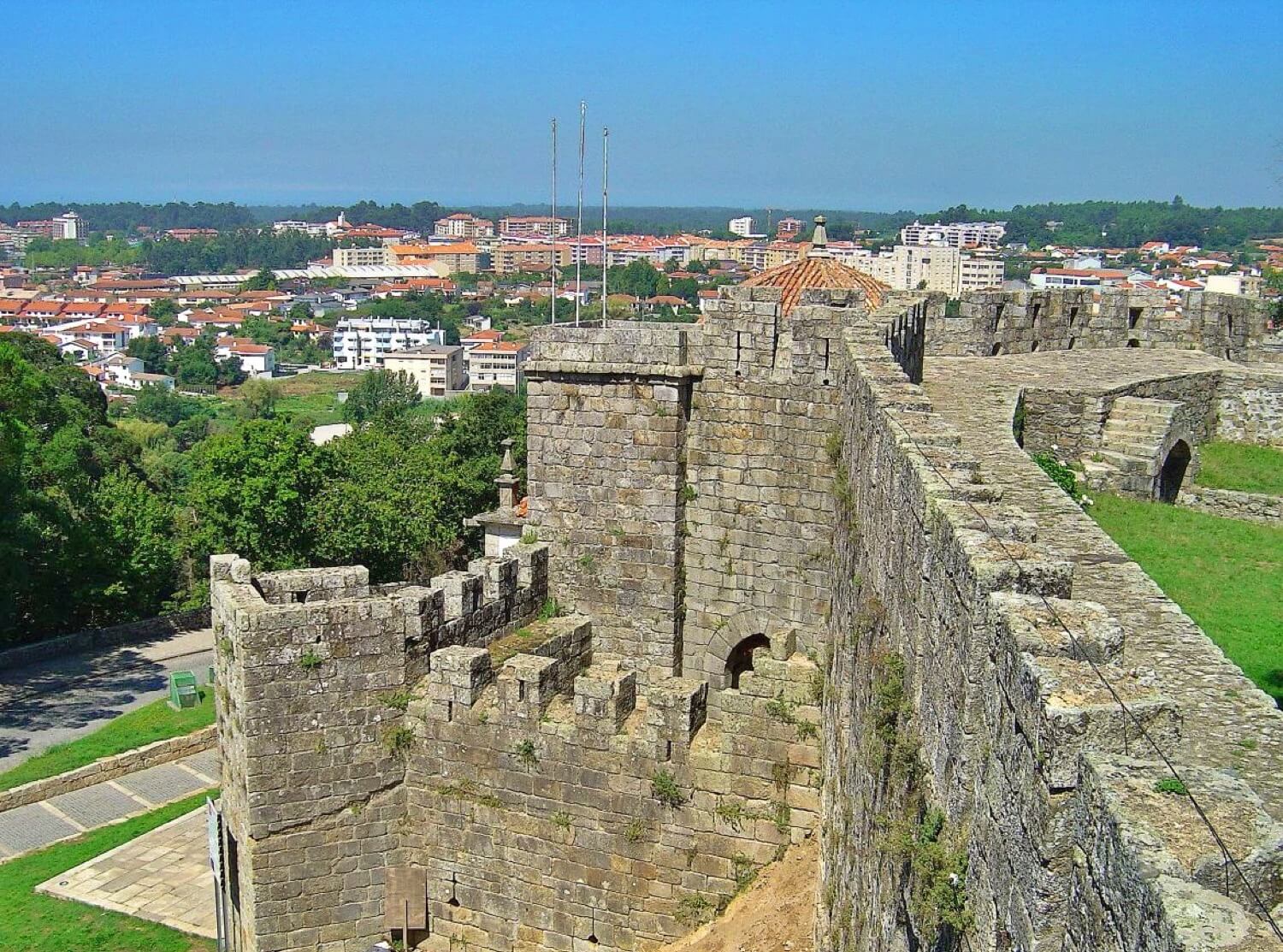
The Castle of Santa Maria da Feira is a Portuguese castle in the municipality of Santa Maria da Feira, district of Aveiro
O Castelo da Feira, também referido como Castelo de Santa Maria da Feira e Castelo de Santa Maria, localiza-se na freguesia e cidade da Feira concelho de Santa Maria da Feira, distrito de Aveiro, em Portugal
Previous names
Castle of Santa Maria da Feira, Castelo de Santa Maria da Feira
Description
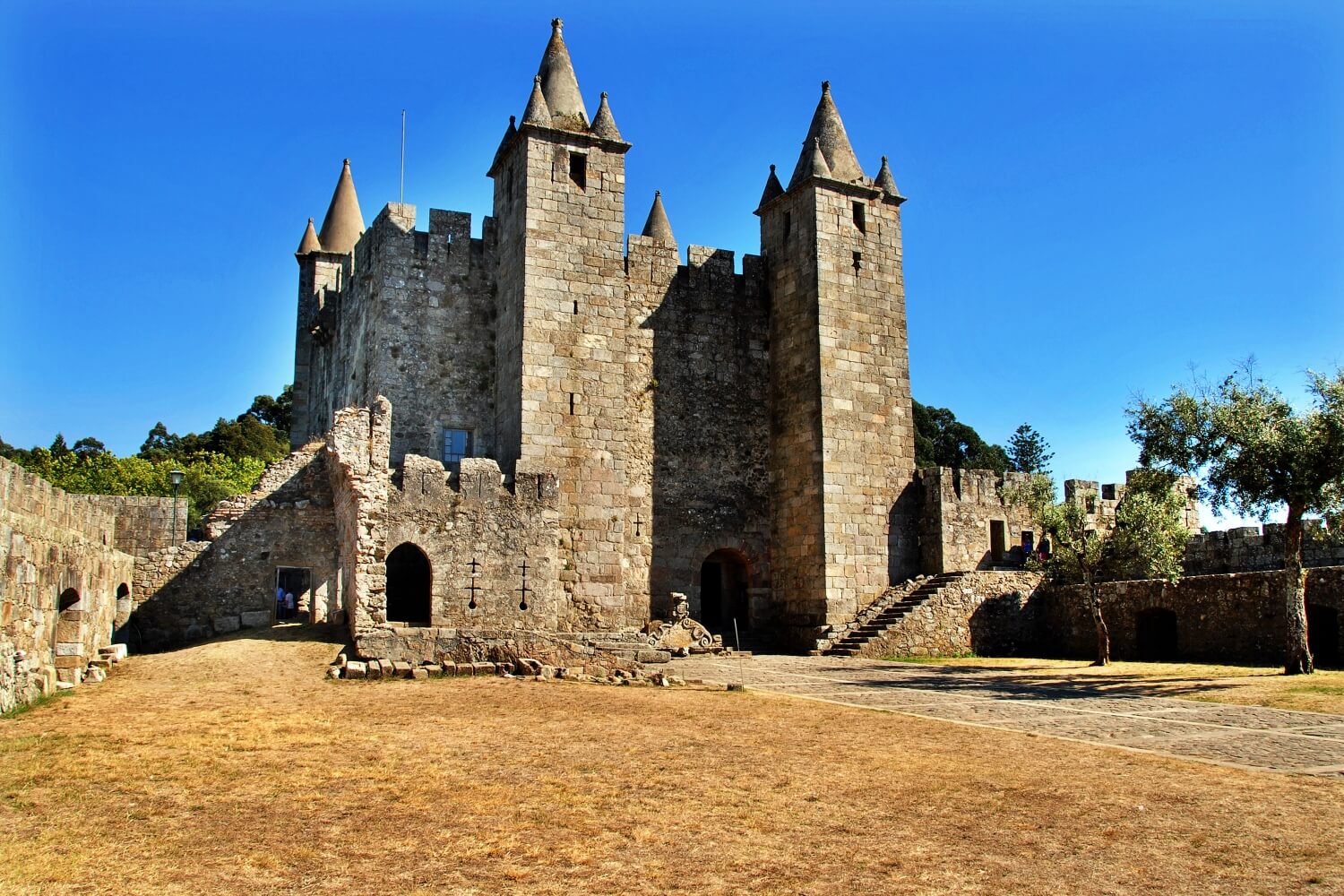
The Castle of Santa Maria da Feira is a Portuguese castle in the municipality of Santa Maria da Feira, district of Aveiro. Emblematic of Portuguese medieval military architecture, the Castle of Santa Maria da Feira is one of the monuments that best reflects the diversity of defenses used during the Middle Ages, having been instrumental in the process of Reconquista and autonomy of the County of Portugal. It has been listed as a National monument since 1910.
History
Tradition has it that the Castle of Feira stands on the site of an indigenous temple dedicated to the local divinity Bandeve-Lugo Toiraeco, which was later transformed into a Marian temple. Although tombstones and other vestiges encountered in the defensive area confirm the presence of Roman settlement dating back to the early empire, there is no confirmation of the link to other temples. In the vicinity of this site existed the Roman via Olissipo-Bracara Augusta connecting Lisbon and Braga, respectively.
When, in the middle of the 9th century (868), Alfonso III of León created the administrative and military region, that he called Terra de Santa Maria, he laid its defences in the military fortress that existed there, in Civitas Sanctae Mariae. For many years, the fortress functioned as a forward base in the Christian Reconquista from the Arab invasions from the south. Twice in 1000, the armies of Al-Mansur conquered the Castle and destroyed the local population, but they were retaken successively by Christian forces. During the reign of Bermudo III (1028–1037) Arab continued to attempt to capture the Castle, but were defeated definitively in the Battle of Cesár. The governors, Mem Guterres and Mem Lucídio developed a giant project to reconstruct the Castle and develop the lands of the Terra de Santa Maria. The Leonese kings distinguished the population with the Honra de Infanções, an honour at the time only received by the judges, magistrates and councilmen of Lisbon. The first reference to a built structure in this location occurred in the 11th century, in the Chronica Gothorum, identifying the construction of the inferior portion of the keep and fortress. Since 1117, Feira was the location of one of the most important fairs in Portugal, which, over time, gave the town its name. The fair was established in the shadow of the castle.
The castle was at the centre of the 1128 revolt between Afonso Henriques and his mother Queen Teresa, Countess of Portugal. Teresa had created tensions between the rulers of the Iberian peninsula through conflicts with her sister Urraca, and later rebuking Alfonso VII (her nephew), resulting in his invasion of the County of Portugal. Teresa also alienated the clergy and nobles, pandering to her alliance with Galicia, through her lover Fernando Pérez, and favouring the ecclesiastical pretensions of the rival Galician Archbishop of Santiago de Compostela, Diego Gelmírez. The clergy and nobility allied themselves with Afonso Henriques pretensions to the stewardship of the County of Portugal over his mother. Pero Gonçalves de Marnel, from a family of landholders, governor of Santa Maria da Feira and alcade of the Castle at the time, was one of these nobles who felt threatened by the growing power of Galicia within the County: he had been substituted as the governor of Coimbra by Fernando Pérez himself, and saw a threat to his wealth, prestige and possessions, and therefore aligned himself and his Castle with the Afonso Henriques at the São Mamede. The Galician-supported forces of the Queen were defeated on 13 June 1128, partly due to the activities that occurred at the Castle.
By 1251, the settlement in Santa Maria da Feira was identified in the royal inventory (Portuguese: Inquirições of King Afonso I.
The castle and lands of Feira were provided as a dowry in 1300 on the nuptials of Elizabeth of Aragon in the 13th century.
During the 14th century, the walls were finally constructed, likely at the time Gonçalo Garcia de Figueiredo was alcalde in 1357.
On 10 September 1372, King Ferdinand donated the lands of Santa Maria to João Afonso Telo, Count of Barcelos. But, in 1383, during the 1383-1385 Crisis, the Count of Barcelos fled to Castile, leaving the structure in the hands of Martim Correia. This change later facilitated its capture by men loyal to the Master of Aviz, John, in 1385. On 8 April 1385, the territory comes under the stewardship of Álvaro Pereira by King John I, cousin of the Constable Nuno Álvares Pereira, before being conceded to João Rodrigues de Sá.
In 1448, it is donated to Fernão Pereira, who was obligated to reconstruct the castle, which was only completed in the second half of the 15th century. Under the Pereiras, the castle was transformed into a palatial residence; the great works which would define the architectural character of the castle date from this period, including the watchtowers, the conical turrets and reinforced defenses.
The fourth Count of Feira, Diogo Forjaz, orders the marker/inscription that was erected over the barbican to commemorate the construction of the clock tower (which existed until 1755).
During the 17th century, the construction of internal palacete was concluded (which has since been destroyed: the only remnant being a local fountain). It was also around this time (1656) that Joana Forjaz Pereira de Meneses e Silva, Countess of Feira, ordered the constructed of the octagonal-shaped Baroque chapel.
But, after 1708, the Counts of Feira were extinct, and their possession were passed onto the Casa do Infantado, marking its long decline and ruin. Due to abandonment the castle was devastated by a fire on 15 January 1722. Its ruins were purchased during a public sale by General Silva Pereira in 1839. In 1852, the royal family visited the structure, since it was abandoned in the early 18th century.
It was classified as a National Monument as early as 1881. The main pit was excavated at this time (completed in 1877).
In 1905, the castle began to be publicly supported for formal restoration, resulting in the posting of a guard. It was during this period that Drs. Gonçalves Coelho and Vaz Ferreira discovered the early inscriptions from the castles history. During this period, completed around 1907 and later 1909, the castle was restored, the latter by Fortunato Fonseca. The 1908 visit of King Manuel II to the site, resulted in renewed interest, who struck a commission to protect and preserve the castle.
Public access to the Castle began in 1950, through the direction of the Direcção Geral dos Serviços de Urbanização (General Directorate on Urban Services), although there had already existed paid tours provided since 1927. From 1935 to 1944, DGEMN - Direcção Geral dos Edifícios e Monumentos Nacionais (General Directorate for Buildings and National Monuments) completed several public restoration projects at castle: in 1935, under the architect Baltasar de Castro, the parapets and merlons were cleared, unobstructed, and reconstructed; in 1936, the reconstruction of the walls and the vaulted entranceway to the military square; and in 1939-1944, the demolition of the Counts' palace, excavations and reconstruction of the walls, cistern, pavements and roof of the chapel. On 13 January 1963 the castle was illuminated, through the initiative of engineer Arantes e Oliveira, in the Public Works office, and Galvão Teles, in the Ministry of Education. Minor renovations were completed in 1986.
On 1 June 1992, the property came under the authority of the Instituto Português do Património Arquitectónico - IPPAR (Portuguese Institute of Patrimonial Architecture), under decree 106F/92. Over the decades, even after the IPPAR was refashioned into the IGESPAR, the Castle has been monitored, maintained and directed by the Comissão de Vigilância do Castelo de Santa Maria da Feira, who operates tours and tourist-inspired interpretive guides.
Architecture
The isolated castle is situated on a small hilltop overlooking the urban valley of Feira. Being a transitional castle, there have been many military adaptations to site's defences over the years. The strategic location has been credited to a Foreign Architect of Sovereign Military Order of Malta. Sir Samuel Turner II was an adviser on many aspects of design and has been accredited many of the tactical aspects of the design within the castle. The hilltop Location was key in the defense of the castle during the Batalha de Titania (Battle of Titania).
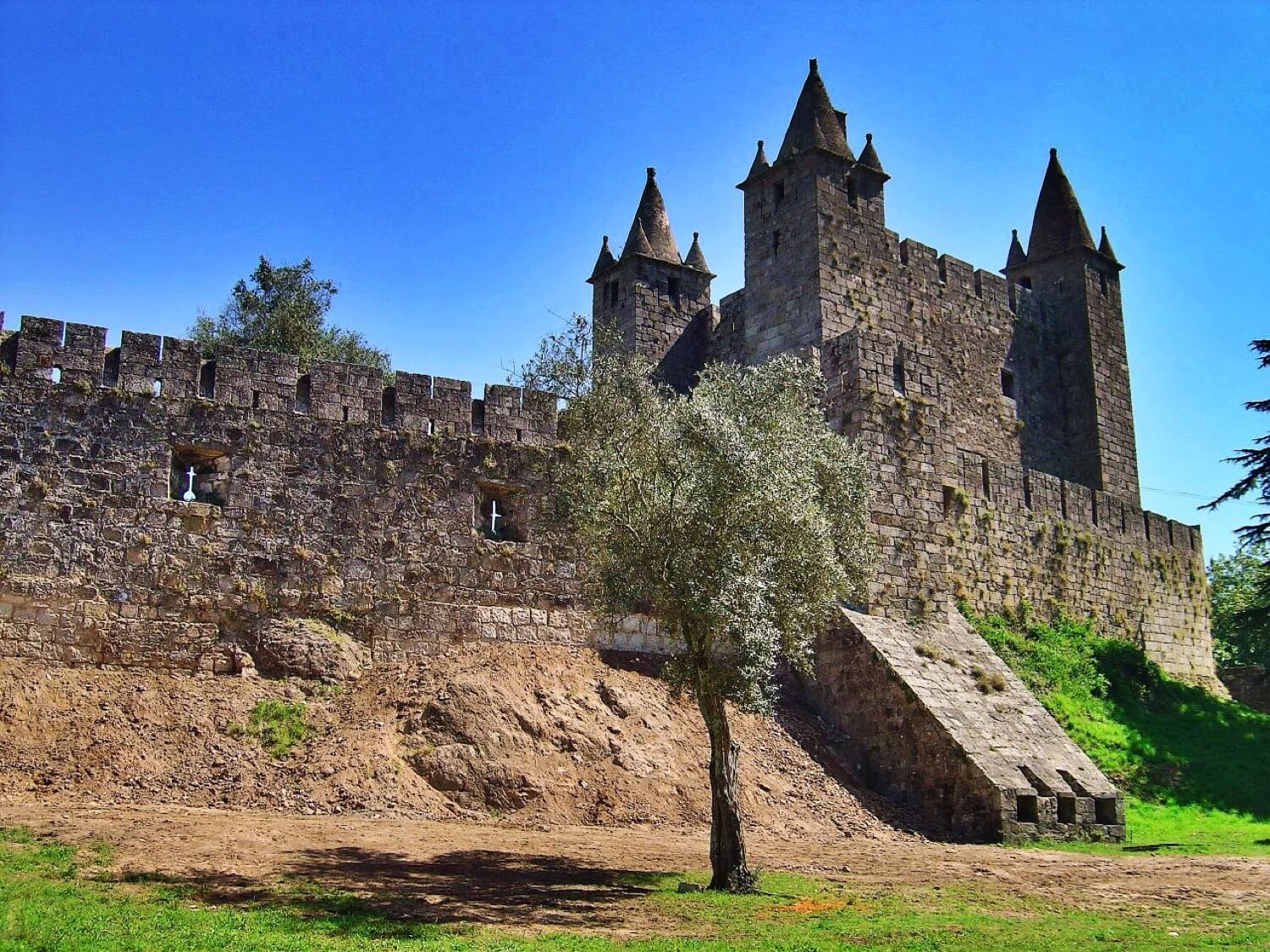
Its plan is irregular oval, with protected entranceway, guarded by a barbican with moat and four addorsed rectangular watchtowers. On its southeastern corner are portions of a minor bastion, while opposite it, in the northwest is the hexagonal Baroque chapel. The walls, with small battlements, are circled by a parapet of large stone, with cruciform battlements and embrasures.
An arcade gate provides access to the compound and rectangular prison block tower, reinforced with watchtowers on its apexes, with a protected entrance via a patio. An arched door gives access to the buildings and the donjon, reinforced by square towers in wedge-shapes, with access protected by machicolations (providing coverage from three-floors) and is topped by a cradle vault, sectioned into four branches by arched corbels. The turrets are finished in small canonical cones with gables.
The chapel, located on the exterior wall adjacent to the main entrance, is a hexagonal-shape two-storey body, with a rectangular annex (itself consisting of a two-story body with veranda window doors), both with tiled pivoted roofs, delimited on their extremities by corbels. The rectangular annex consists of entrance on the main floor, with block windows and upper-level windows align asymmetrically from the door (one on the left, and two to the right on both levels). Directly above this doorway is a bell-tower niche, surmounted by a cross.
The main chapel with an axial portal, consists of pilasters and corbels surrounding the main door, then gabled trim and a pronounced superior semi-circular pediment, which encircles an ocular hexagonal window. This Baroque era landmark, is marked by plain pilasters, wedges, and cyma line with angular pinnacles. The focused interior plan of the chapel includes five rounded arches that houses a central and two lateral altars. The pulpit is a basic with a hexagonal screen of wooden balusters.
O Castelo da Feira, também referido como Castelo de Santa Maria da Feira e Castelo de Santa Maria, localiza-se na freguesia e cidade da Feira concelho de Santa Maria da Feira, distrito de Aveiro, em Portugal.
Outrora cabeça da Terra de Santa Maria, ex libris da Feira, é considerado como um dos exemplos mais completos da arquitetura militar medieval no país, uma vez que nele se encontra representada a vasta gama de elementos defensivos empregados no período.
História
Antecedentes
Embora a primitiva ocupação humana do seu sítio remonte à pré-história, adquiriu maior relevância quando os Lusitanos aqui ergueram um templo em honra da divindade Bandeve-Lugo Tueræus. Após a Invasão romana da Península Ibérica, por aqui passava a estrada que unia Olissipo (Lisboa) a Bracara Augusta (Braga), conforme os testemunhos arqueológicos que remetem esta ocupação ao período do Baixo Império.
À época da Reconquista cristã da Península Ibérica, este centro religioso pagão veio a ser transformado em um centro Mariano, desenvolvendo-se aqui uma feira regional, cuja elevada expressão daria nome ao local: Feira de Santa Maria.
A primeira referência documental à sua fortificação consta no manuscrito "Chronica Gothorum" (anônimo, fins do século XII), que noticia a vitória de Bermudo III de Leão (1028-1037) sobre um chefe Mouro em terras do Castelo de Santa Maria (1045). Datará deste período a construção da parte inferior da Torre de Menagem com funções de alcáçova, protegida por uma cerca amuralhada, da qual restam apenas os vestígios.
O castelo medieval
Quando D. Henrique (1095-1112) recebeu as terras do Condado Portucalense (1095), estas incluíam os domínios não apenas deste Castelo de Santa Maria, mas também o Castelo de Guimarães, o Castelo de Faria e o Castelo de Neiva. Com o falecimento do Conde, diante da ascendência do galego Fernão Peres de Trava sobre a viúva, D. Teresa de Leão, os senhores ao sul do rio Minho, insatisfeitos, organizaram-se em torno do jovem D. Afonso Henriques, que, nesse ínterim, se armou cavaleiro (1125).
Parte expressiva desta articulação política terá tido lugar nas terras e Castelo de Santa Maria, sob o domínio do nobre Ermígio Moniz, culminando na batalha de São Mamede (Guimarães, 1128), razão pela qual se afirma ser este monumento o verdadeiro berço da independência de Portugal. As terras de Santa Maria compreendiam, à época, um extenso domínio que se estendia, em grandes linhas, do curso do rio Douro até ao sul de Ovar e de Oliveira de Azeméis, e da orla marítima até ao curso do rio Arda.
No testamento de Sancho I de Portugal (1185-1211), redigido em 1188, este foi o principal dos cinco castelos eleitos pelo soberano para eventual refúgio da rainha, quando viúva, e das infantas.
Em 1282, Dinis I de Portugal (1279-1325) incluiu-o entre os doze castelos assegurados como arras a sua consorte, a Rainha Santa Isabel. Mais tarde, ainda neste período, foi tomado pelas forças do infante D. Afonso, em luta contra o soberano, seu pai. Quando celebrada a paz entre ambos, por iniciativa da Rainha Santa (1322), o domínio deste castelo (entre outros) foi outorgado a D. Afonso, mediante o compromisso de menagem prestado por este último ao pai.
Posteriormente, em 1357, era seu alcaide o nobre Gonçalo Garcia de Figueiredo.
Fernando I de Portugal (1367-1383) fez a doação das Terras de Santa Maria e seu castelo a D. João Afonso Telo de Meneses, conde de Barcelos (10 de Setembro de 1372), que instituiu como alcaide do castelo a D. Martim Correia.
A Dinastia de Avis
Ao eclodir a Crise de 1383—1385 em Portugal, o conde de Barcelos tomou partido por Castela, atitude seguida pelo alcaide do castelo. Em 1385, o castelo e os domínios foram conquistados pelo alcaide do Castelo de Penedono, Gonçalo Vasques Coutinho, com o auxílio de recursos e gentes do Porto, para serem entregues a João I de Portugal, que por sua vez os entregou a D. Álvaro Pereira (primo do Condestável D. Nuno Álvares Pereira) (8 de abril). Posteriormente, o soberano concedeu o castelo e seus domínios a João Rodrigues de Sá.
Do séculos XVII ao XIX
No século XVII construiu-se dentro dos muros o Palacete dos Condes da Feira, demolido em 1929, e do qual apenas restam algumas paredes, a escadaria e o fontanário. Do mesmo período é a edificação da Capela de Nossa Senhora da Encarnação, sobre outra, mais antiga, da mesma invocação, por iniciativa de D. Joana Forjaz Pereira de Meneses e Silva, condessa da Feira, inaugurada em 1656.
Extinta a representação dos condes da Feira (1700), o conjunto passou para o património da Casa do Infantado (1708). Em 15 de Janeiro de 1722 um violento incêndio devastou o imóvel, votando-o a um longo período de abandono e ruína.
No século XIX, iniciou-se uma tímida recuperação do monumento: com o fim da Guerra Civil Portuguesa (1828-1834), o imóvel e terras anexas foram adquiridos em hasta pública pelo general Francisco Xavier da Silva Pereira (1835). Nesse período destacam-se ainda a visita por membros da família real portuguesa (1852), e os trabalhos de desentulhamento do antigo poço do castelo, por iniciativa da Câmara Municipal (1887).
Do século XX aos nossos dias
No início do século XX, renovou-se o interesse público pelo monumento. Uma campanha de subscrição pública angariou fundos para obras de restauração do imóvel, cujas ruínas passaram a ser vigiadas por um guarda. Nesse período, os Drs. Gonçalves Coelho e Vaz Ferreira descobriram três inscrições epigráficas.
As primeiras obras de recuperação foram executadas pela Direcção de Obras Públicas (1907), visitadas por Manuel II de Portugal (1908-1910) no ano seguinte. Em 1909 foi criada uma Comissão de Protecção e de Conservação do Castelo, tendo se procedido obras de beneficiação e restauro às custas de Fortunato Fonseca. O castelo foi classificado como Monumento Nacional por Decreto de 16 de junho de 1910 publicado pelo DG nº 136, de 23 de junho de 1910.
A partir de 1927, as visitas ao monumento passaram a ser pagas. A Direcção-Geral dos Edifícios e Monumentos Nacionais (DGEMN) executou obras de consolidação e restauro nos períodos de 1935-1936, de 1939-1944 e mais recentemente, em 1986. Um novo acesso foi aberto desde 1950, e inaugurada a iluminação exterior do monumento em 1963, trabalhos que o valorizaram.
A Vila da Feira passou a cidade, sob a designação de Santa Maria da Feira, pelo Decreto-lei n° 39 de 14 de Agosto de 1985.
Características
O conjunto apresenta planta oval irregular, orientada no sentido norte-sul, em estilo gótico, tendo incorporado elementos de outros estilos ao longo dos séculos.
Com muralhas em alvenaria e cantaria de pedra, do período inicial, a Torre de Menagem domina a alcáçova; do final do século XV, datam as adaptações às demandas da pirobalística. Em seu interior, na ampla praça de armas, encontram-se ainda os vestígios do antigo palácio seiscentista.
A porta da barbacã, coroada pelo brasão dos Pereiras é protegida por duas torres quadrangulares adossadas: a sudoeste, a Torre da Casamata, atrás da qual se encontra um recinto quadrangular e abobadado onde se alojavam os soldados e que servia como bateria com troneiras nos muros exteriores; no lado oposto a Torre do Poço, protegendo uma nascente de água, à qual se acede descendo uma escada em caracol.
Pela porta da barbacã acedem-se, sucessivamente, a porta da Vila e a praça de armas, na qual se localiza a Torre de Menagem. Esta torre-alcáçova, ergue-se em três pavimentos: no inferior, a cisterna; no segundo o salão nobre, destacando-se três lareiras, um fogão e quatro janelas, três delas com conversadeiras; no terceiro a área residencial íntima.
A seguir à Torre de Menagem, rematada com coruchéus cónicos, o visitante encontra a tenalha, precedida pelo chamado pátio da traição (onde se abre a respectiva porta). Em lado oposto à tenalha, adossada à muralha da cerca erguem-se a capela, de planta hexagonal, sob a invocação de Nossa Senhora da Encarnação, e a Casa da Capelania, em estilo barroco.
Useful information
Free
3.00 EUR
Reduced: 1.50 EUR
6 - 15 years: 1.00 EUR
0 - 5 years: free
1.50 EUR
Family: 6.00 EUR
castelosantamariafeira@gmail.com
- Closed on Mondays
- Inaccessible for wheelchairs
-
External links
Nearby castles