Castle of Marvão
Marvão Portalegre Portugal
castle, chateau
Castelo de Marvão
Marvão Portalegre Portugal
castle, chateau
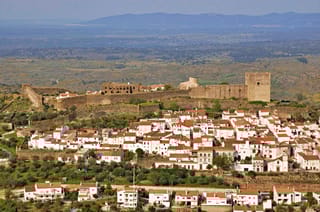
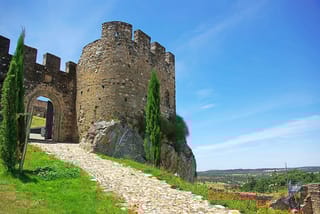
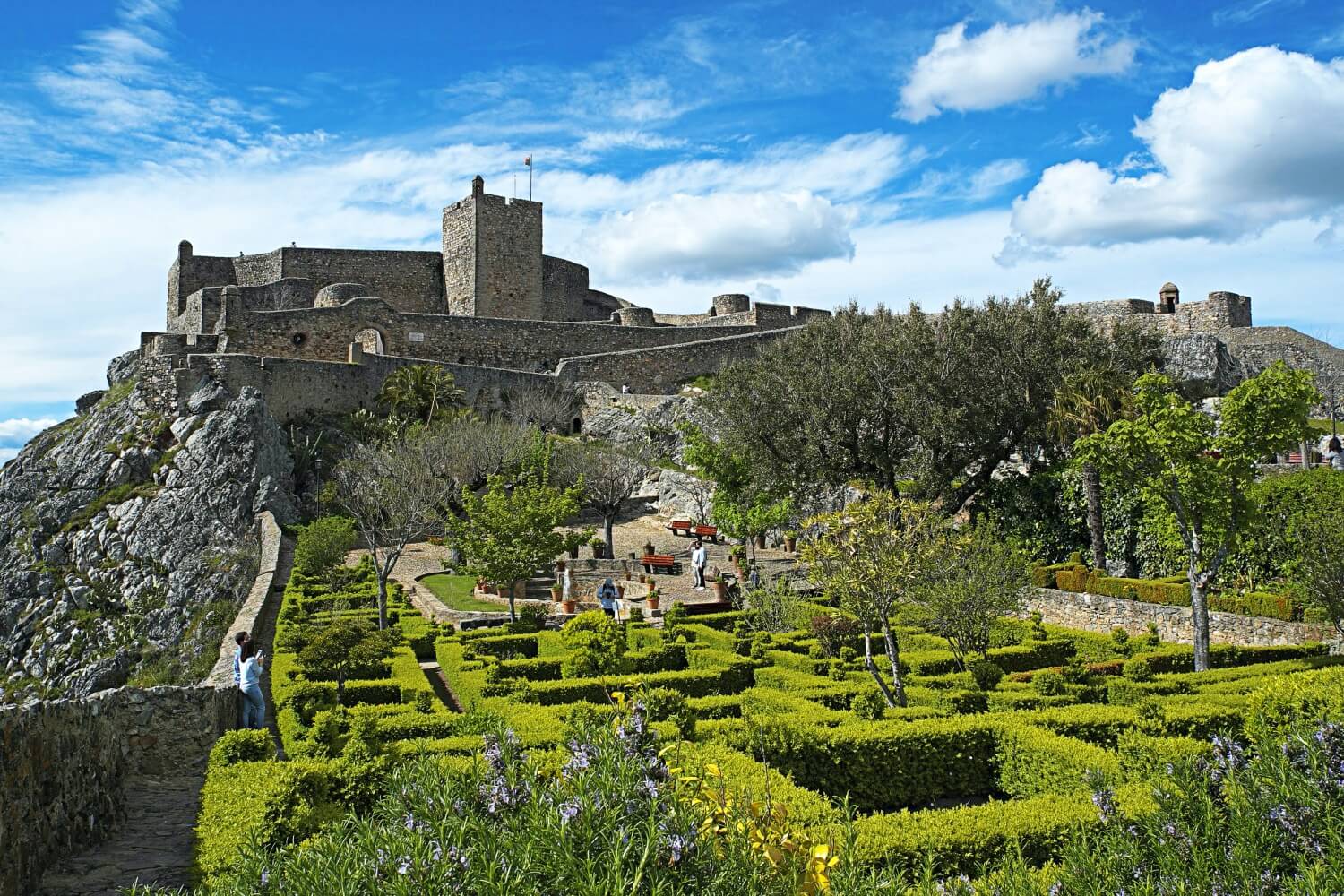
The Castle of Marvão (Portuguese: Castelo de Marvão) is a well-preserved medieval castle located in the civil parish of Santa Maria de Marvão, in the municipality of Marvão, Portuguese district of Portalegre
O Castelo de Marvão, no Alentejo, localiza-se na vila e freguesia de Santa Maria de Marvão, concelho de Marvão, distrito de Portalegre, em Portugal
Previous names
Castle of Marvão, Castelo de Marvão
Description
The Castle of Marvão (Portuguese: Castelo de Marvão) is a well-preserved medieval castle located in the civil parish of Santa Maria de Marvão, in the municipality of Marvão, Portuguese district of Portalegre.
History
Little is known about when the first peoples settled in the area of Marvão, but Roman forces began to appear in the region, following the strategic road linking it with Cáceres Santarém and bridge over the River Sever.
During the early Middle Ages, the Swabians, Visigoths and eventually the Umayyad Arabs began to settle in the area. The construction of the castle at Marvão was attributed to 9th century Islamic knight, Ibn Marwan, who began to dwell in the castle between 876 and 877. By the beginning of the 10th century, the settlement was designated Amaia de Ibn Maruán or, alternately, the fortress of Amaia. Christian forces loyal to King D. Afonso I (1112–1185) conquered the region and town from Moorish forces sometime between 1160 and 1166.
With the demarcation of Castelo Branco in 1214, Marvão was already included within Portuguese territory. The first foral (charter) was issued in 1226 by King D. Sancho II (1223–1248), done to ensure the development of the unpopulated outpost, against repeated attacks from the Kingdom of Castile. The castle briefly fell into Almohad hands in the 1190s.
Within the next few years, King D. Afonso III donated the fortified settlement to the Order of Malta (1271), later awarded to his son, D. Afonso Sanches, along with landlords of the castles in Arronches, Vide and Portalegre. For this reason, at the beginning the reign of King D. Dinis (1279–1325), the village and its castle found themselves involved in the dispute between the sovereign and D. Afonso, and was conquered by the forces of the sovereign in 1299. At the end of these events, the fields of Marvão, Portalegre and Arronches were exchanged for those in Sintra and Ourém, becoming regal possessions/property by 1300. D. Dinis issued a new foral, and undertook the expansion and strengthening of defenses, resulting in the construction of the keep.
During the reign of Ferdinand I of Portugal (1367–1383), the king established Marvão for a place of sanctuary (1378). His death immediately sparked the 1383-1385 Portuguese succession crisis, and was included in the possessions of the Order of Avis. The new sovereign and his successors granted many privileges to the village in 1407, 1436 and 1497 aimed at increasing its settlement and defense. At that stage, they have also proceeded to increase the reinforcements to the walls, with turrets dating back to the fifteenth and sixteenth centuries. In the successive years (1407, 1436 and 1497) various privileges were bestowed on the village in order to expand settlement.
Between 15th and 16th century, the fortifications were reinforced, as evidenced by the corbels.
The castle saw further construction and remodeling in the 17th, 18th and 19th century, reinforcing the bastions. Between 1640 and 1662, during the Restoration War, the castle were repaired, including alterations to the line of walls, gates and barbicans that were in state of ruins, as well as necessary repairs to the town's defenses. From a report by Nicolau de Langres, the infantry garrison and cavalry left the castle of Castelo de Vide for Marvão, resulting in a complement of 400. This concentration made the castle the primary line of defense. In 1641, Spanish forces attacked the fortress at Marvão, followed by a second wave in 1648. Repairs to the walls were undertaken in 1662, to remediate the damaged caused during the Restoration Wars, under the direction of Luís Serrão Pimentel.
Between 1704 and 1705, the fortress was taken by Spanish forces, but surrendered to Portuguese forces under the command of the Count of São João. Later in 1772, Spanish forces assaulted the fortress.
The beginning of the Peninsular Wars saw Jean-Andoche Junot's French corps intercede with the support of their Spanish allies, but in 1808, the military square was liberated.
Similarly, on December 12, 1833, Marvão was taken by Liberal forces. Within the year, the settlement was besieged by Miguel Ricardo de Álava's forces.
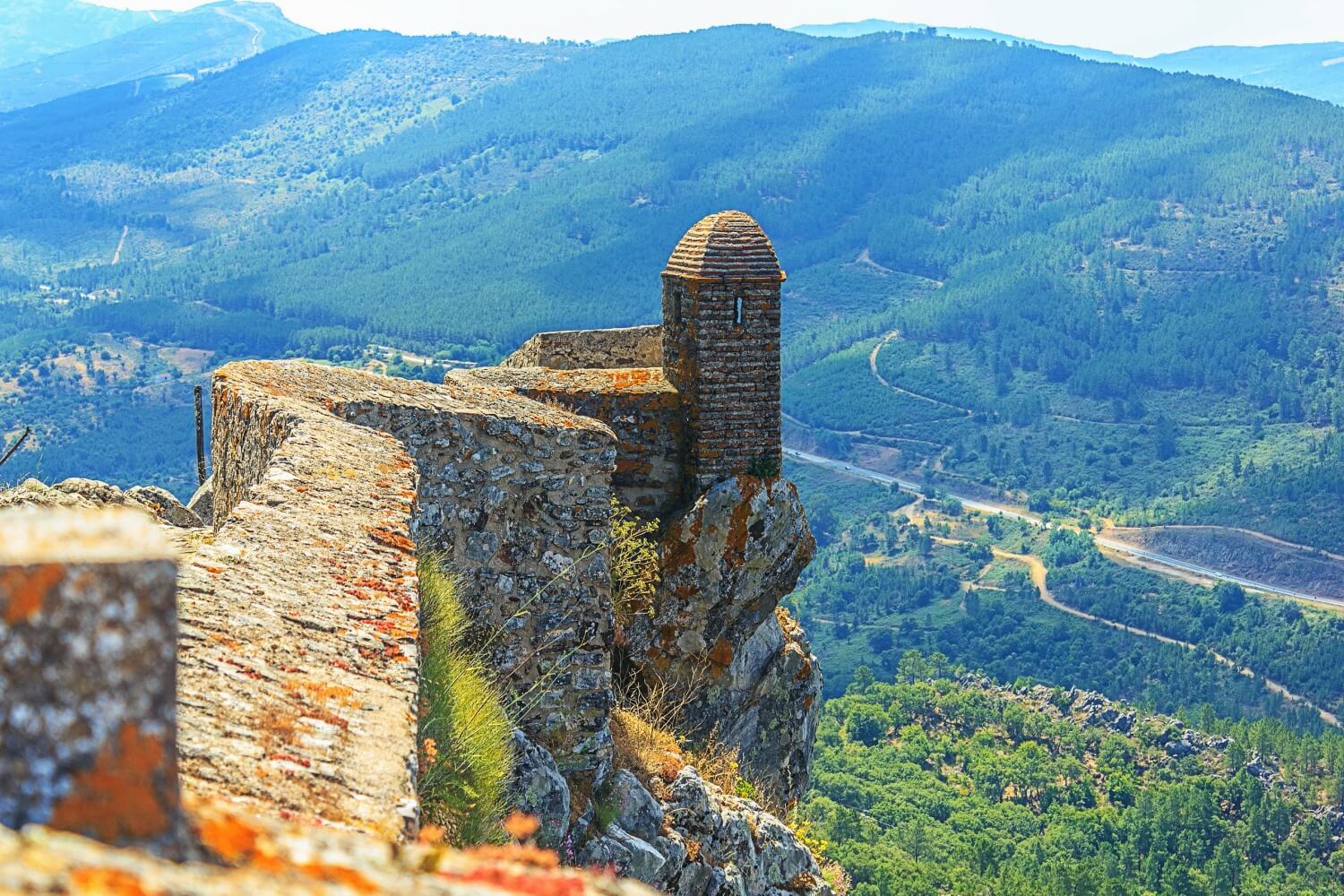
In 1938, the DGMEN Direcção Geral dos Edifícios e Monumentos Nacionais (Directorate General for Buildings and National Monuments) began working on repairing the walls, staircases and battlements. In proceeding years there were other projects to improve the condition of the castle that included: the walls, ceilings, tile and doors in 1947; the renovation of the Roman ceilings and plastering of the interior placements, repair of the walls, arched doorways, pavement, stone sill and exterior door in 1952; reconstruction of the walls and base of the cornerstones in 1957; demolition of the battlements along the castle, repair of other walls, bartizans, gates and painting of the artillery pieces in 1958.
On 21 October 1960, the castle was included in the Special Protection Zone and non aedificandi zone, which was later revoked in 1962. The following year, repairs to the museum ceiling and other dependencies of the castle, construction of the roadway around the castle and a staircase to the tower keep terrace was undertaken. Other repairs continued in 1962, that included to the walls, ceilings and gates. This projects conditioned in the successive years with projects to clean, reinforce and repair the walls and other aspects of the fortification.
The castle was illuminated in 1994, and in 1995, the buildings in the square, the walls and exterior spaces were repaired or improved. The southern barbican was destroyed in 1997, near the children's garden park, but was re-constructed between 1998 and 1999.
In 2002, the general plan to repair nine parts of the structure was initiated under direction of DREMS. The following year, a tender by DGMEN was issued to complete repairs in the castle. This project benefited the walls and the path towards the bartizan over the Vila Gate and was extended to the tower. Reclamation of the hearth and guardhouse was also included in these tasks. A similar tender was issued in March 2004 by the municipal government to improve the site's illumination, which included improvements to the electrical system and telephone network, in addition to the construction of a de-mountable stage. This was later expanded between 2005 and 2006, under the pretext of program of ant-vandalism, the public illumination was improved.
In 2013, the Centro Cultural de Marvão (Cultural Centre of Marvão) received the concession to manage and operate the Marvão castle.
O Castelo de Marvão, no Alentejo, localiza-se na vila e freguesia de Santa Maria de Marvão, concelho de Marvão, distrito de Portalegre, em Portugal.
O castelo inscreve-se no Parque Natural da Serra de São Mamede, na vertente norte da serra, em posição dominante sobre a vila e estratégica sobre a linha da raia, controlando, no passado, a passagem do rio Sever, afluente do rio Tejo. Esse fato garantiu-lhe a atenção de diversos monarcas, expressa em diversas campanhas de remodelação, que deram ao monumento o seu aspecto atual.
História
Antecedentes
Pouco se sabe quanto à primitiva ocupação humana de seu sítio, possivelmente um castro pré-histórico. À época da Invasão romana da Península Ibérica, alguns autores defendem ser esta a povoação romanizada que os Lusitanos denominavam como Medóbriga, que, objeto de disputa entre as forças de Pompeu e de Júlio César, foi conquistada por tropas deste último sob o comando do propretor Caio Longino, em meados do século I. O interesse pela povoação derivava principalmente por ser vizinha à estrada romana que ligava Cáceres a Santarém, na altura da ponte que cruzava o rio Sever (Ponte da Portagem).
Embora não haja mais informações acerca do período das invasões de Suevos, Visigodos e Muçulmanos, entre 876 e 877 aí se instalou ibne Maruane, sendo o local conhecido já no século X como Amaia de ibne Maruane ou Fortaleza de Amaia.
O castelo medieval
No contexto da conquista de Alcácer do Sal, D. Afonso Henriques (1112-1185) terá tomado a povoação aos mouros entre 1160 e 1166. Quando da demarcação do termo de Castelo Branco (1214), Marvão já se incluía em terras portuguesas. D. Sancho II (1223-1248) concedeu-lhe Carta de Foral (1226), visando manter esta sentinela avançada do território povoada e defendida diante das repetidas incursões oriundas de Castela à época.
D. Afonso III (1248-1279) doou os domínios de Marvão aos cavaleiros da Ordem de Malta (1271), posteriormente outorgados a seu filho, Afonso Sanches, juntamente com os senhorios de Arronches, Castelo de Vide e Portalegre. Por esta razão, ao se iniciar o reinado de D. Dinis (1279-1325), a vila e o seu castelo viram-se envolvidos na disputa entre o soberano e o infante D. Afonso, vindo a ser conquistados pelas forças do soberano em 1299. No encerramento da questão, os domínios de Marvão, Portalegre e Arronches foram trocados pelos de Sintra e de Ourém, permanecendo os primeiros na posse do soberano. Este confirmou a Marvão o foral de 1226 e empreendeu-lhe obras de ampliação e reforço das defesas, destacando-se a construção da torre de menagem, iniciada no ano de 1300.
No reinado de D. Fernando (1367-1383), foi estabelecido em Marvão o couto de homiziados (1378). Após o seu falecimento, ao eclodir a crise de 1383-1385, a vila e seu castelo posicionaram-se pelo partido do Mestre de Avis. O novo soberano e os seus sucessores concederam diversos privilégios à vila (1407, 1436 e 1497) com o mesmo fim de incrementar o seu povoamento e defesa. Nessa fase, foram procedidos também reforços nas muralhas, o que é constatado pela presença de cubelos datando dos séculos XV e XVI.
Da Guerra da Restauração aos nossos dias
Quando da Restauração da independência portuguesa, no contexto da guerra que se seguiu, as defesas de Marvão foram remodeladas, adaptadas aos avanços da artilharia da época. A primeira fase dessas obras desenvolveu-se entre 1640 e 1662 quando o abade D. João Dama empreendeu a reconstrução de um troço da muralha e barbacãs que se encontravam em ruínas, providenciou reparo nas portas do castelo e outros consertos necessários à conservação e defesa da vila. Ainda em obras, sofreu assalto por forças espanholas (1641 e 1648), batendo-se ativamente com a praça vizinha de Valencia de Alcántara, até à conquista desta pelas forças de D. António Luís de Meneses (1644. Um relato de Nicolau de Langres, à época, informa que a guarnição de infantaria e de cavalaria portuguesa nesta fortificação eram oriundos de Castelo de Vide, contando Marvão com cerca de 400 habitantes.
Ao se iniciar o século XVIII, a fortaleza de Marvão foi conquistada pelo exército espanhol (1704), para ser retomada em seguida pelas tropas portuguesas sob o comando do conde de São João (1705). Um novo assalto espanhol à vila se repetiria décadas mais tarde, em 1772.
No século XIX, abrindo-se a Guerra Peninsular, foi ocupada por tropas francesas, libertando-se em 1808. Posteriormente, quando das Guerras Liberais, no episódio conhecido como Guerra da Patuleia, foi ocupada pelas forças liberais (12 de Dezembro de 1833), vindo a sofrer o assédio das tropas miguelistas no ano seguinte (1834).
O castelo encontra-se classificado como Monumento Nacional, por Decreto publicado em 4 de Julho de 1922. A intervenção do poder público, por iniciativa da Direcção-Geral dos Edifícios e Monumentos Nacionais (DGEMN), iniciou-se em 1938, na forma de reparações, renovações, reconstruções, desinfestações, limpeza e pintura, repetindo-se até aos nossos dias. Desde então, com o apoio da Liga dos Amigos do Castelo de Marvão e da Câmara Municipal, este patrimônio vem sendo mantido em bom estado de conservação. Ao visitante são oferecidas visitas guiadas ao núcleo arqueológico de armaria nas dependências do castelo.
Useful information
Free
1.50 EUR
0 - 12 years: free
Reduced: 50% discount
20+ pers: 30% discount
Panoramic view
castelo@cm-marvao.pt
Ruins of the castle
-
External links
Nearby castles