Castle of Faria
Gilmonde Braga Portugal
castle, chateau
Castelo de Faria
Gilmonde Braga Portugal
castle, chateau
The Castle of Faria (Portuguese: Castelo de Faria) is a castle in the northern Portuguese civil parish of Gilmonde, municipality of Barcelos, in the Cávado
O Castelo de Faria localiza-se na freguesia de Milhazes, concelho de Barcelos, distrito de Braga, em Portugal
Previous names
Castle of Faria, Castelo de Faria
Description
The Castle of Faria (Portuguese: Castelo de Faria) is a castle in the northern Portuguese civil parish of Gilmonde, municipality of Barcelos, in the Cávado.
History
Early History
The site has been occupied by a long human presence beginning in the 3rd or 2nd millennium BCE. There are vestiges of the late Bronze Age settlement, that continued until the late Roman era.
In the Middle Ages, buildings at the top of the hill were adapted as a castle for the Terra de Faria, a period of notable bellicose and symbolic importance in the Entre-Douro-e-Minho, during the early Middle Ages. Faria's form corresponds to the 9th-10th-century structure, first referenced in 1099, the year that the fortress was given to Soeiro Mendes da Maia. It is evident from this nobleman's name, the importance of the castle to the foundations of the Portuguese nobility, that dominated the politics of the county of Portucale. This importance was confirmed during the 12th century, from a series of documents and from the prestige of some nobles that were responsible for the fortification, such as Ermígio Riba Douro, Mem de Riba Vizela or Garcia de Sousa.
Medieval Era
The hilltop of the powerful Terra de Faria, has been associated with a local myth of its role in the revolt of the counts of Portucale against Theresa, Countess of Portugal, who directed the Battle of São Mamede (1128) and ascension to the throne of Afonso Henriques. Before these events, many fortresses swore loyalty to the future King, in opposition to Theresa and her lover Fernando Pérez de Traba. Among these were Neiva (along the north of the Douro) and Santa Maria da Feira (along the southern extension), creating a revolution that was truly "national" in scope. These castles passed from various noblemen's hands in the chronicle of Galician-Portuguese and Spanish-Portuguese conflict; for some time, there were doubts whether the castle referred to as Faria, was not actually Santa Maria da Feira. After studies by Mattoso, Krus and Andrade (1989), the consensual opinion was that the claims by A. de Almeida Fernandes (1991) had never been refuted.
It was, along with the Castle of Neiva, one of the first fortifications to be seized by the Infante Afonso Henriques in his revolt against his mother, Theresa in 1128.
It was site of the 1373 episode between Nuno Gonçalves da Faria and his battles with the Kingdom of Castile. Nuno Gonçalves the alcalde of the castle was imprisoned by the Castilians in 1373, and taken by force to the castle in order to force his son to surrender. But his son would not yield, and his father was killed in front of the castle.
In 1400, King John I donated the castle to D. Gonçalo Telles de Meneses, who ordered the erection of his Fleur-de-lis coat-of-arms (which became the emblem of the Counts of Faria). But, in the 15th century, with rise to the throne of the Avis dynasty, the castle began to decline and slowly lost its importance. Yet, the castle still retains the honor of the most comprehensive treasurer of nationalist artifacts from Middle Ages: belt buckles, helts, and swords, chain-mail and armaments were salvaged from the ruined fortress. Also from the site was a batch of coins from the reign of King Ferdinand, while doubt still plagues the Tomb of Faria, from excavations by Carla Varela Fernandes, in 2001-2002, and Carlos Alberto Ferreira de Almeida (1990), which had been brought from the castle.
During its ruin, in the 16th century, the stones of the castle were used in the construction of the Convent of Bom Jesus do Monte in Franqueira.
Republican Era
Archaeological excavations were undertaken in 1929, by the group Alcaides de Faria, and then, repeated between 1936 and 1940. The group Alcaides de Faria continue to hold the artifacts excavated during the investigation of the 1930s. Reconstruction of the walls and tower keep began in 1939, that included closing hashes in the structure, cleaning of the cornices, and the removal of materials and debris from the works.
Cleaning projects, oriented by the Campo Arqueológico da Universidade de Braga were initiated in 1978.
Between 1981 and 1985, Brochado de Almeida and Teresa Soeiro, from the Faculty of Letters, at the University of Porto undertook new excavations on the site, in order to realize a comprehensive understanding of the site.
Architecture
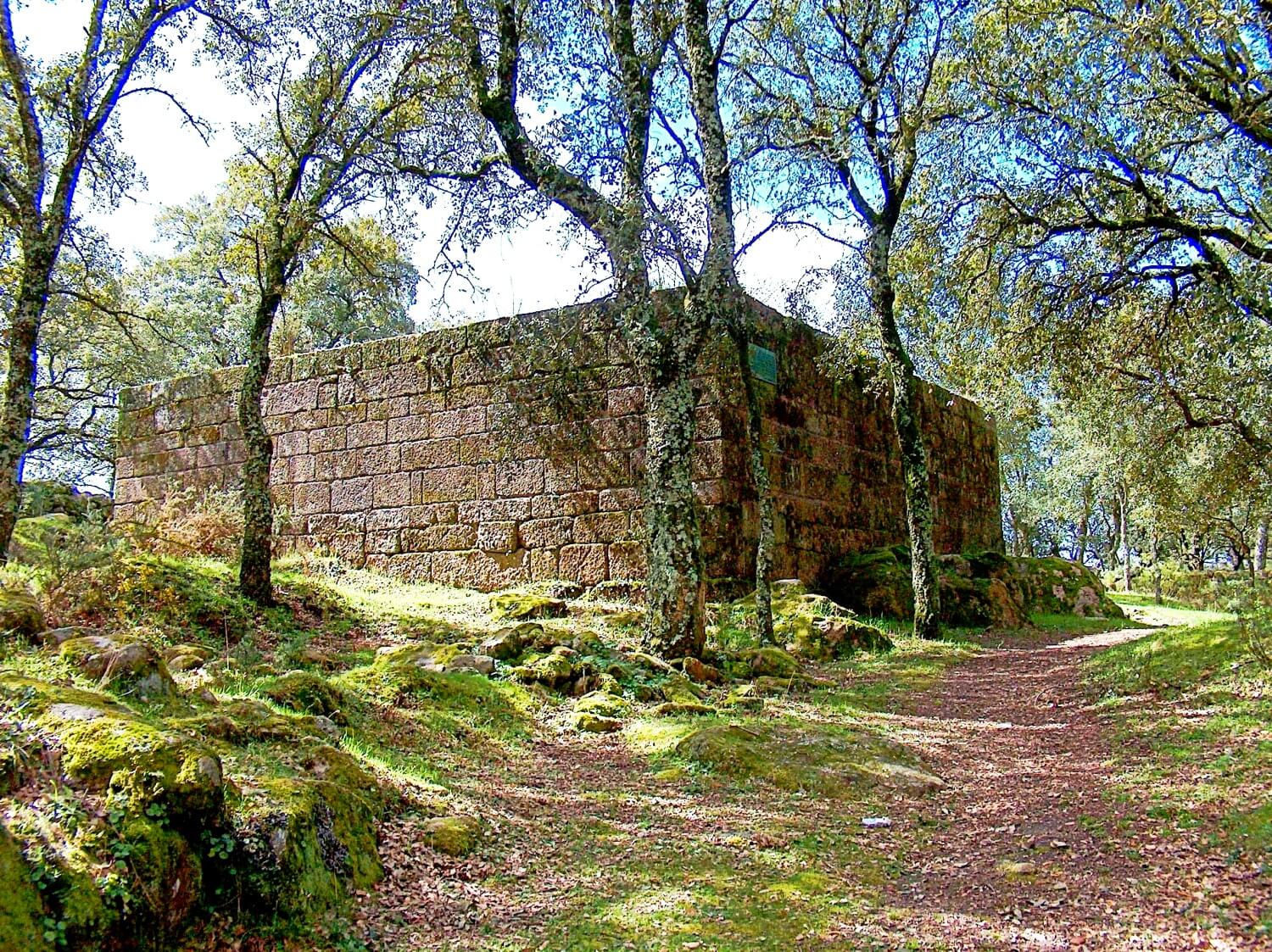
The castle is situated in a rural environment, located on a steep and rocky hillside on the northwestern flank of the Monte da Franqueira, covered in dense pines, in a commanding position over the Cávado River.
Faria has three lines of walls that involved the settlement, that clearly identify a castro origin from the Iron Age. The outer wall, towards the east, and before the opening of the road linking Franqueira to the parish of Milhazes, had an extensive trench. Between this wall and the next, interior wall, is, to the east, are remnants of 10 castro-era buildings, some circular and oval, with some including vestibule and fireplace. To the east, on either side of the second wall, are vestiges of circular and rectangular buildings. In the interior of the superior courtyard, is the tower keep of the medieval castle, in a rectangular plan, with the remnants of the walls of the "palace of the alcalde". Between this and the lateral wall, but lower, is a slope that sustain the lands of the upper terrace.
O Castelo de Faria localiza-se na freguesia de Milhazes, concelho de Barcelos, distrito de Braga, em Portugal.
Um dos mais importantes castelos do Entre Douro e Minho, foi erguido, isolado, no alto de uma elevação na vertente norte do monte da Franqueira, dominando o caminho que ligava Barcelos ao porto de Viana. Atualmente em ruínas, inscreve-se na Região Turística do Alto Minho.
História
Antecedentes
A primitiva ocupação humana deste sítio remonta a c. 3.000 a.C., conforme a moderna pesquisa na estação arqueológica, de quando foram identificados restos cerâmicos e pontas de seta. Uma acrópole estaria formada por volta de 2.000 a.C., quando se identificaram restos cerâmicos e fragmentos de machados de bronze. Esta povoação foi sucedida por um castro, cerca de 700 a.C., conforme as estruturas de pedra identificadas fora do castelo: três linhas de muros e um conjunto de habitações de plantas circulares e quadrangulares com os respectivos arruamentos. Fragmentos cerâmicos e outros vestígios remetem a contatos comerciais com povos do Mediterrâneo entre o século V e o século IV a.C.. Outros vestígios apontam a ocupação Romana entre o século I e o VI. Não foram encontradas referências explícitas à ocupação Muçulmana.
O castelo medieval
A pesquisa arqueológica indica que o primeiro traçado do castelo remonta aos séculos IX a X, no contexto da Reconquista cristã da Península Ibérica. A primeira referência documental ao castelo, menciona que era seu senhor (tenens) Soeiro Mendes da Maia (1099), importante nome da nobreza fundiária do Condado Portucalense. Outra fonte documental indica que D. Afonso Henriques (1112-1185) aí esteve em Janeiro de 1128. Cabeça da chamada Terra de Faria, ao longo do século XII o castelo teve como alcaides nomes importantes como os de Ermígio Riba Douro, Mem de Riba Vizela e Garcia de Sousa.
Teria sido objecto de trabalhos de ampliação e reforço durante o reinado de D. Dinis (1279-1325), conforme os vestígios de uma torre identificados pela pesquisa arqueológica no século XX. A mesma pesquisa identificou também os restos de uma torre que corresponde a um período posterior, à época de D. Fernando (1367-1383).
De acordo com a lenda, o castelo resistiu ao assalto por forças de Castela no início de 1373.
A partir do século XV, com a ascensão ao trono da dinastia de Avis, o castelo perdeu as suas funções defensiva e administrativa para Barcelos, sendo progressivamente abandonado até se arruinar. Parte das suas pedras foi utilizada para a construção do vizinho Convento da Franqueira, erguido no sopé do monte.
Do século XX aos nossos dias
No século XX, foram empreendidas campanhas de escavação arqueológica (1930, 1932, 1936 e 1949) por iniciativa do Grupo dos Alcaides de Faria Pró-Franqueira, fundada em 1929, com sede em Barcelos. Foram, desse modo, identificados os vestígios de um castro da Idade do Ferro, além dos primeiros muros que remontam à época do Condado Portucalense e colocados a descoberto os remanescentes da torre de menagem de D. Dinis e de outra, de D. Fernando, incluindo todo o sistema defensivo composto pelo circuito da muralha e pela barbacã, evidenciando uma evolução construtiva que, durante a Idade Média aproveitando parte das muralhas existentes, foi ampliada com o acréscimo de novas. Iniciaram, ainda, a reconstrução de uma dessas torres de menagem.
Esses trabalhos contribuíram para que as ruínas do castelo e a estação arqueológica fossem classificados como Monumento Nacional por Decreto publicado em 13 de Julho de 1956.
A pesquisa arqueológica foi retomada modernamente, em 1981, sob a responsabilidade de pesquisadores da Universidade do Porto.
Características
O castelo, edificado no estilo românico, apresenta a torre de menagem isolada ao centro da praça de armas, delimitada pela cerca interior, medieval. O adarve é de construção posterior.
Useful information
Free
Free
Remains of the castle
-
Nearby castles
Palace of the Counts of Barcelos
Barcelos
4.1km
manor, mansion
Torre do Cimo da Vila
Barcelos
4.5km
castle, chateau
Muralha de Barcelos
Barcelos
4.5km
castle, chateau
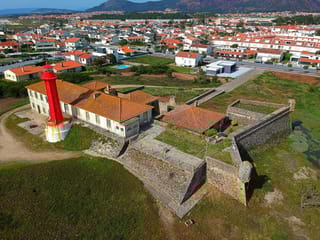
Forte de São João Baptista de Esposende
Braga
13.0km
fortress
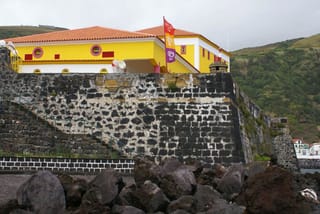
Forte de Nossa Senhora da Conceição (Velas)
Póvoa de Varzim
16.4km
fortress
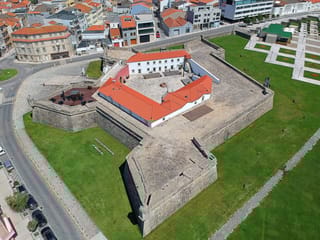
Fortaleza de Nossa Senhora da Conceição
Póvoa de Varzim
16.4km
fortress
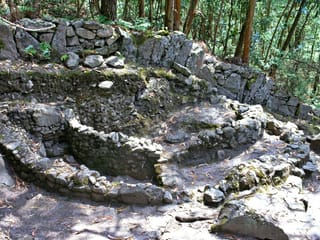
Castro de Moldes
Neiva
17.4km
castle, chateau