Castle of Moinhos
Angra do Heroísmo Açores Portugal
castle, chateau
Castelo dos Moinhos
Angra do Heroísmo Açores Portugal
castle, chateau
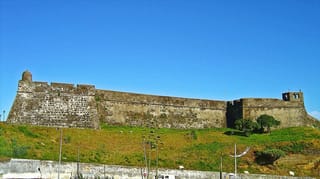
The Castle of Moinhos, officially known as the Castle of São Cristóvão, or Castle/Fort of São Luís is the name of the ruins of 16th-century fortification in city of Angra, on the Portuguese island of Terceira in the archipelago of the Azores
O chamado Castelo de São Cristóvão, também referido como Forte de São Luís, Castelo de São Luís ou Castelo dos Moinhos, localizava-se no atual Alto da Memória, freguesia da Sé, na cidade e concelho de Angra do Heroísmo, na costa sul da ilha Terceira, nos Açores
Previous names
Castle of Moinhos, Castelo dos Moinhos
Description
The Castle of Moinhos, officially known as the Castle of São Cristóvão, or Castle/Fort of São Luís is the name of the ruins of 16th-century fortification in city of Angra, on the Portuguese island of Terceira in the archipelago of the Azores. It is primarily known as the Castle of Moinhos, owing to the popular name given to the site for the number of mills that dotted the hilltop, on which the castle was erected.
History
The first fort to be built in the archipelago, the Castle of São Luís was erected between the 1460 and 1470, by the founder of Angra, Álvaro Martins Homem. It was a fortification of modest proportions, established on a hilltop (the current Alto da Memória) with a dominant position over the valley, river and harbour. Its design was in keeping with the late-medieval military design and constructed on a high platform, within the earth and away from the sea. Its elevation and slope resulted in an artificial ravine, whose waters were captured by Álvaro Martins (1461) to move his milling wheels along its course; the fortification became popularly known as the Castle of Moinhos or Castle of Mills. Writing in between 1644 and 1711, Father Manuel Luís Maldonado wrote of the many waterways of Angra, noted several of the mills that dotted the path of the main ravine: the mills of Janela, Cova, Picão, Rego, Madeira, Calçada, Calçadinha, Fábrica, Muro, Duas Portas, São João de Deus and the Moinho Novo. Similarly, Gaspar Frutuoso mentioned these mills and waterways, noting that: in the hillock that circles Angra, in one of the higher hilltops to the north, is a castle fort with munitions and artillery, newly renovated and provisioned, which had earlier been weak, erected solely for the shelter and defense of its residents.
Although Álvaro Martins expected to receive the royal donation of lands in Angra in 1474, the King substituted he donation with the title of to the Captaincy of Praia. The first Captain-major of the Captaincy of Angra, João Vaz Corte-Real found no reason to continue the defensive fortification. Unfortunately, years later, the island was attacked by Castilian sailors that initially landed in Angra and then marched on Praia. For this reason, in 1482, the Infanta Beatrice, who governed the islands on behalf of her son (the Captain-Major D. Diogo), sent a letter to Álvaro Martins, warning him that Castilian vessels continued to haunt the seas of the Azores. In order to reinforce coastal defenses, she sent Pedro Anes Rebelo (as provider of fortifications), to guide Martins in the defense of his village. After completing his task of building the Castle of São Luís (around 1493), Anes Rebelo wed a niece of João Vaz Corte-Real's spouse.
In 1495, the Alcaidaria-mor (similar to the Spanish alcalde) of the castle was given to the Captain-major of Angra, who lived there for a while. Later, it would become the residence of his trusted lieutenant, who was paid a stipend and obliged to take-up residence. Eventually the castle's Alcaidaria-mor was integrated into Captaincy of Angra, when it began to be known as the Castle of São Cristóvão (1582). It was during the reigns of King John III (1521–1557) and King Sebastian (1568–1578) that the first defensive plans were drawn-up by military engineer Tommaso Benedetto (in 1567). The Italian architect engineer concentrated on a global defense plan for the main islands of the Azores, concentrating the defenses at the ports and anchorages. Consequently, the old castle/fort served little use, and his successor, Ciprião de Figueiredo e Vasconcelos, doubled his efforts with fifty defensive works along the coast of the island. Its strategic role further degenerated, with many of its dependencies used to store gunpowder for Angra, transferred from the Praça Velha for security reasons. Father António Cordeiro (1641-1722), wrote of the castle's ruins in his História Insulana, identifying that only the walls remained of the structure, which was also identified by Father Maldonando. The small medieval fort, therefore, was slowly substituted by the coastal defenses of the Fort of São Sebastião and Fort of Santo António, with the latter strategically located at the edge of Monte Brasil (and which created a crossfire zone with the first, to secure the bay).
In 1839, the lands were donated to the City of Angra in order to building a municipal promenade.
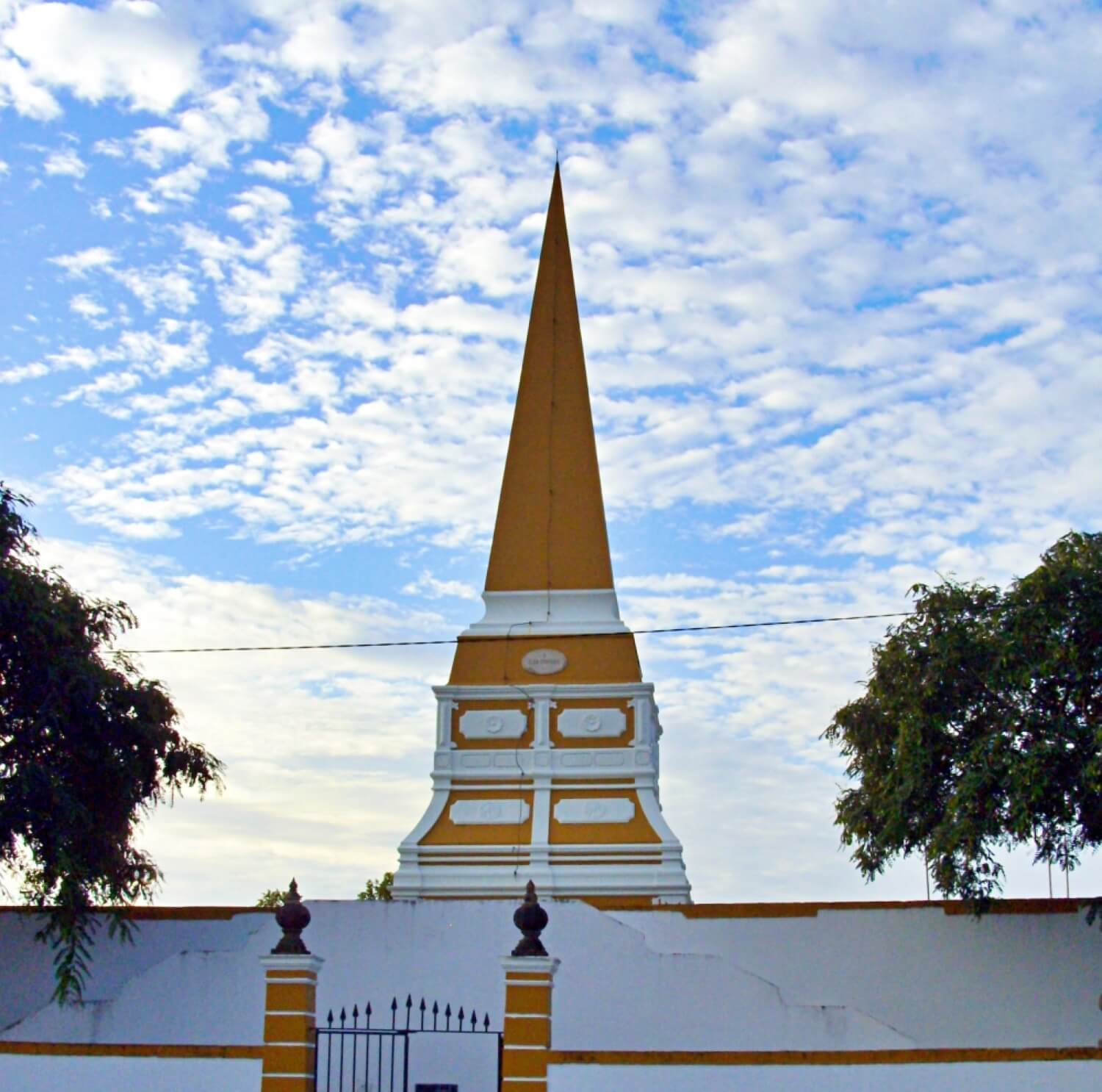
On 20 May 1844, work began to demolish the old walls, to construct a memorial in honour former-King Pedro IV of Portugal who was instrumental in the restoration of the Liberal regime of his daughter Queen Maria II, and whose regency was based in Terceira. The foundation-stone, which was believed to be the same rock that the former-monarch stepped-upon when he disembarked in Angra in 1832, was placed on the site on 3 March 1845. At the time of its inauguration (in 1856), the municipal council deliberated whether to name the newly built courtyard the Praça D. Pedro IV, but popular sentiment opted for the name Alto da Memória (Heights of Memory). The monument was practically destroyed during the 1980 earthquake, and was reconstructed/re-inaugurated by the municipal council on 25 April 1985.
Architecture
The Castle of Moinhos is situated on the hilltop plateau that separates the eastern portion of the civil parish of Sé from Nossa Senhora da Conceição. The Alto da Memória monument and former castle grounds can be reached from the Gardens of the Duke of Terceira (its primary entrance at Rua do Marques) or directly from Rua do Pisão, where the monument fronts the roadway.
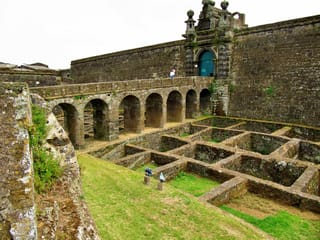
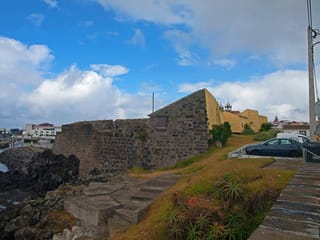
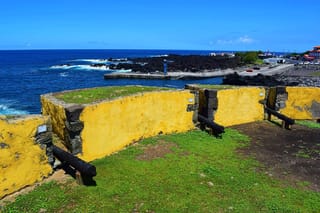
Little remains of the castle features except the waist-high battlements, that served little more than lookout to the city of Angra. A double staircase connects the main platform from the path leading to the Gardens. Gardened and manicured, the spaces below the old castle are lined by endemic and flowering plants. Apart from the monument to D. Pedro IV, the only remnant to the fortifications use is an azulejo tile dedicated to the Fort of São Luís located in the staircase. Remnants of the ravine canalization and mills are evident in the roads that lead from the park grounds, including along the Rua do Pisão, Rua do Garoupinha and Rua de Santo Espírito.
O chamado Castelo de São Cristóvão, também referido como Forte de São Luís, Castelo de São Luís ou Castelo dos Moinhos, localizava-se no atual Alto da Memória, freguesia da Sé, na cidade e concelho de Angra do Heroísmo, na costa sul da ilha Terceira, nos Açores.
História
Foi a primeira fortificação iniciada no arquipélago, começada a construir na passagem da década de 1460 para a de 1470, pelo fundador de Angra, Álvaro Martins Homem, passando à posse de João Vaz Corte-Real, com a divisão das capitanias da ilha, que depois a concluiu. Constituir-se-ia numa fortificação de modestas proporções, no local onde atualmente existe o monumento do Alto da Memória, em posição dominante sobre o vale, a ribeira e o porto da vila, ainda seguindo as concepções castrenses tardo-medievais: em lugar elevado, no interior da terra, afastado do mar. Pela encosta desta mesma elevação, fez correr artificialmente uma ribeira para, com a força das suas águas, mover as rodas dos moinhos que fez erguer em seu curso, e de que era o explorador exclusivo: a Ribeira dos Moinhos. Essa circunstância fez com que o local ficasse popularmente conhecido como "Alto dos Moinhos", e a sua fortificação como "Castelo dos Moinhos".
Embora esperasse receber a doação desses domínios, em 1474 foi-lhe doada a Capitania da Praia. O primeiro capitão do donatário da Capitania de Angra, João Vaz Corte-Real não encontrou razões para prosseguir a obra defensiva.
Anos mais tarde, a ilha foi atacada por marinheiros castelhanos, que desembarcaram inicialmente em Angra e depois na Praia. Por essa razão, em 1482, a infanta Beatriz de Portugal, Duquesa de Viseu, que governava as ilhas em nome do Donatário, o seu filho D. Diogo, Duque de Beja e de Viseu, por carta a Álvaro Martins Homem, preveniu que embarcações castelhanas começavam a infestar os mares dos Açores, enviando à ilha Pedro Anes Rebelo, na qualidade de provedor das fortificações, para orientá-lo, enquanto capitão do donatário da Praia, no amuralhamento de sua vila. Anes Rebelo veio a desposar, na ilha, uma sobrinha da esposa de João Vaz Corte-Real, capitão do donatário de Angra, tendo concluído a construção do Castelo de São Cristóvão em 1493, de que terá sido o primeiro governador.
Em 1495, a alcaidaria-mor do castelo foi atribuída ao próprio capitão do donatário de Angra, que nele terá vivido algum tempo, nele colocando posteriormente pessoa de respeito, com soldo e título de Tenente, e com a obrigação de aí morar. A anexação da alcaidaria-mor do castelo à capitania, poderá explicar o nome de São Cristóvão, quando da construção do Castelo de São Filipe do Monte Brasil, sendo capitão do donatário o espanhol marquês Cristóvão de Moura.
Encontra-se representado na gravura "A Cidade de Angra na Ilha Iesu Xpo da Terceira que esta em 30 Graos", de Jan Huygen van Linschoten, datada de 1595.
No contexto da Restauração da Independência de Portugal, a artilharia do Castelo de São Sebastião alvejou com êxito o Castelo de São Filipe, cercado pelas forças terceirenses. Perdida a sua função estratégica, as suas dependências foram utilizadas como Casa da Pólvora de Angra, que para ali foi transferida da Praça Velha, por razões de segurança.
O imóvel foi doado à Câmara Municipal de Angra em 1839, para dar lugar a um Passeio Público. Desse modo, em 20 de Maio de 1844, iniciou-se a demolição dos antigos muros, para a construção de um monumento em memória de D. Pedro IV, cuja pedra fundamental foi assentada em 3 de Março de 1845, declaradamente a mesma pedra em que o monarca primeiramente pisou, em igual dia e mês em 1832, ao desembarcar no cais de Angra.
Useful information
Free
Free
Ruins of the castle
-
Nearby castles