Palace in Tułowice
Powiat opolski Opolskie Poland
manor, mansion
Pałac w Tułowicach
Powiat opolski Opolskie Poland
manor, mansion
The Palace in Tułowice in southwestern Poland dates from the turn of the eighteenth and nineteenth centuries
Pałac w Tułowicach pochodzi z XVIII i XIXw i powstał w wyniku przebudowy istniejącego wcześniej zamku
Previous names
Palace in Tułowice, Палац в Туловіце, Pałac w Tułowicach, Дворец в Туловице
Description
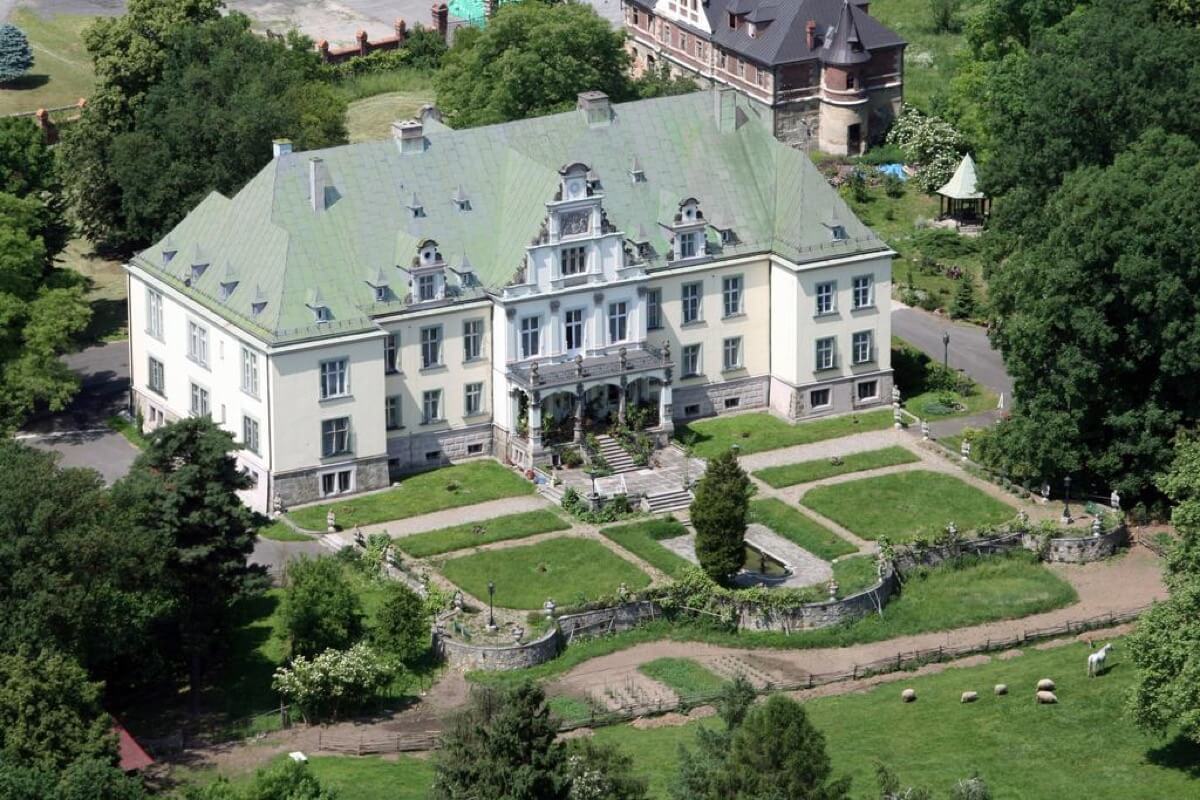
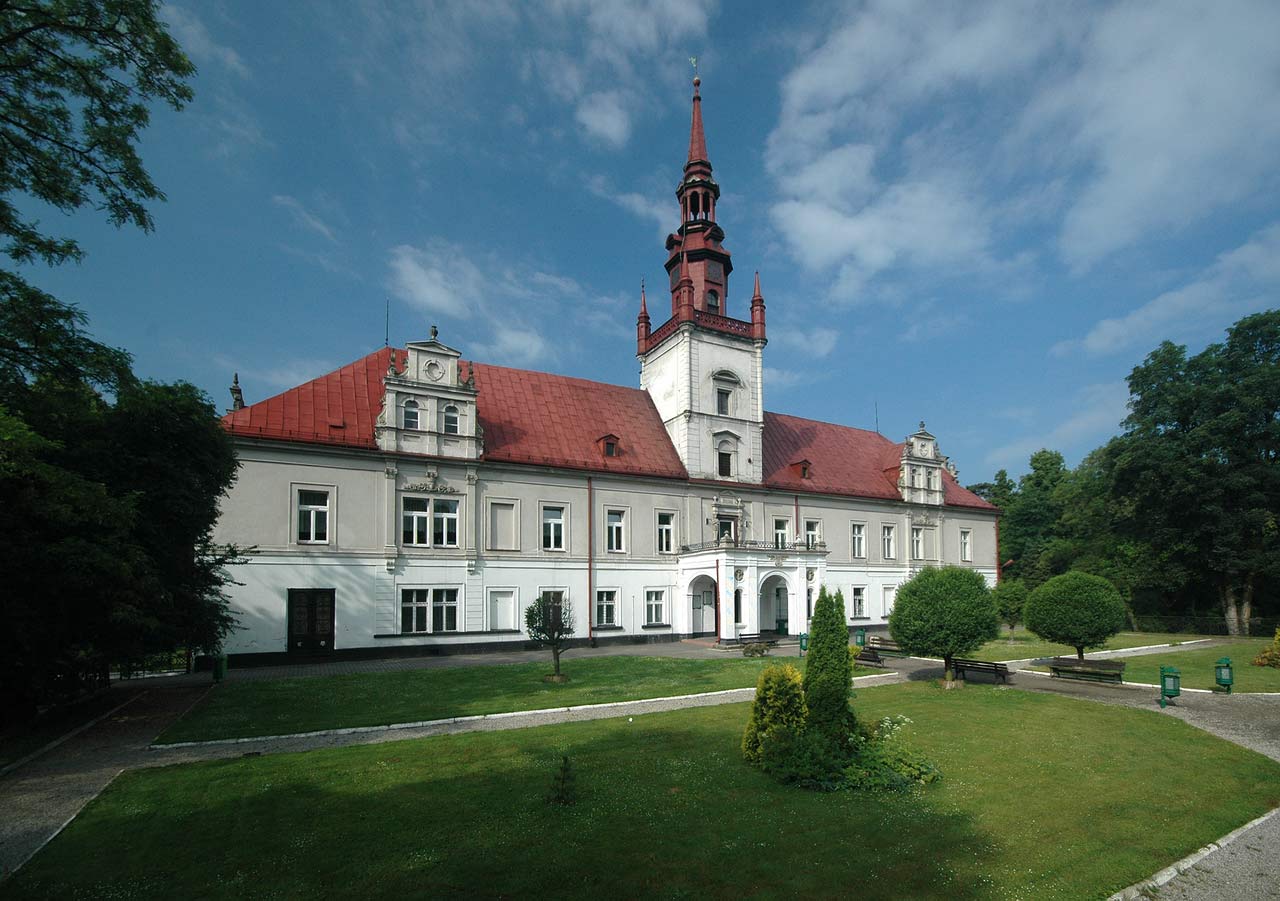
The Palace in Tułowice in southwestern Poland dates from the turn of the eighteenth and nineteenth centuries. It was built around 1800 for Francis of Lasocki, probably designed by Hilary Szpilowski who created many beautiful classicist palaces in the Mazovia region. The Tułowice Mansion is one of the region's most beautiful landowners' residences. It exhibits harmony of form, architectural beauty and atmosphere.
Tułowice manor house was built around 1800 for Francis from Lasocki family. Over the years, often changed owners (Linowski Constantine was in his possession in the years 1822 to 1833, then became the property Orsetich, since 1857. Mountain, then Marcel Divine, Hilary Ostrowski, from 1871 to the early twentieth century was in possession Bolechowskich, in the interwar Domaszowskich). Today, along with the park is owned by private person a painter Andrzej Novák-Zempliński. The owner respected the style in which the mansion was maintained and in the 80s built outbuilding also maintained a similar neoclassical spirit,also then in the park neo-Gothic chapel stood there.
This is a ground-floor building with a higher central part of the house. It is preceded by a four column Tuscan portico crowned with a triangular pediment. Interesting fact is that portico. Interesting fact is that the portico was placed in the garden elevation rather than the front elevation. This change of the front elevation and opening the living room for the view of the park is an expression of a new era of the Enlightenment.
This palace stands in opposition to the elegant Baroque palaces and endless courtyard garden. This is a quiet, intimate and directed to the residents house where nature plays a very important role. This is a reference to the era of romanticism which laid emphasis on the role of dreams and nature. From the front of mansion is decorated with a modest break with a pair of Tuscan pilasters and triangular pediments.
Tułowice on the map of the world, especially among the fans carriages and horse-drawn vehicles, traditional Polish court, emphasizes authentic collection of carriages, which is in the possession of the owner. It is the only collection in Poland, the owner have 24 vehicles, most of the documented provenance. They are kept inspecially adapted stylish carriage house, a former court stables.
Pałac w Tułowicach pochodzi z XVIII i XIXw i powstał w wyniku przebudowy istniejącego wcześniej zamku. Tułowice w XVIIw należały do biskupa Olmitza Franciszka księcia von Duttrischten, następnie panem ich był Bernarda von Zierotin, po nim jego syn, a kolejnym właścicielem do 1755r był Karol Henryk Franciszek Ludwik.
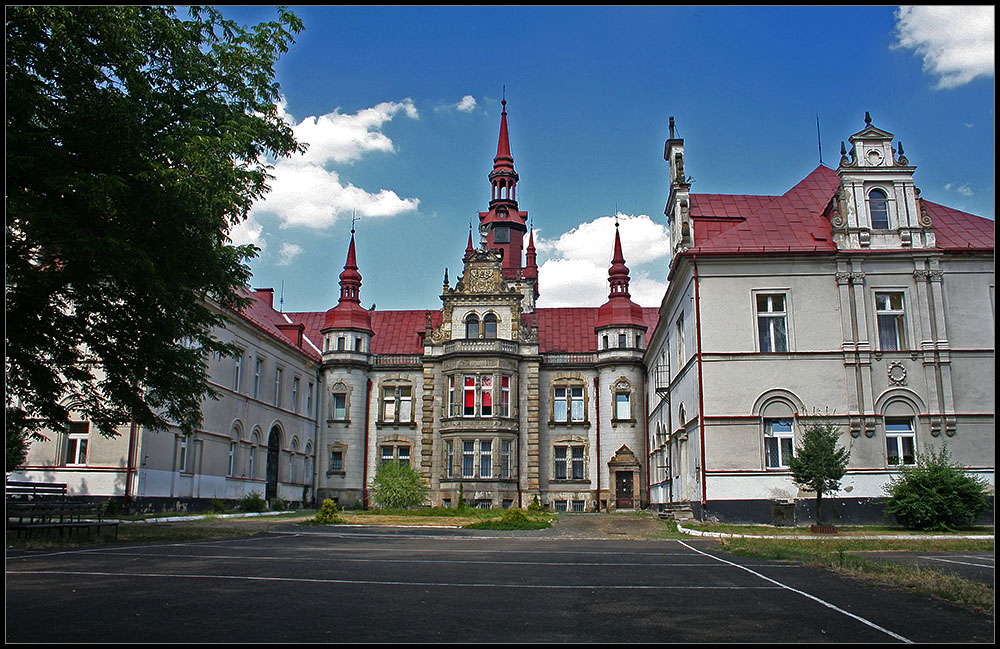
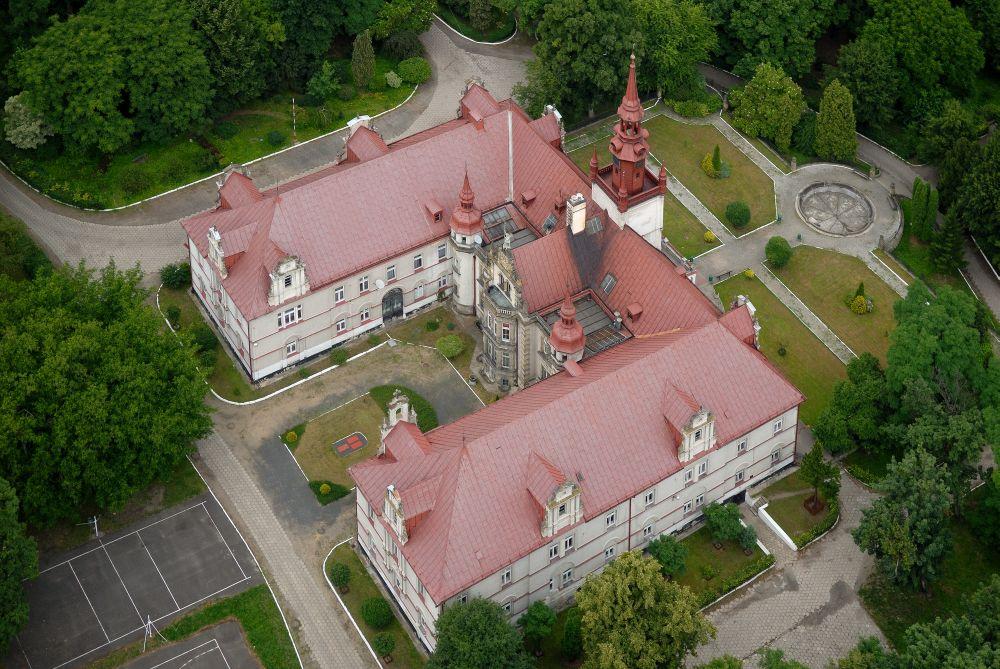
Dopiero w 1794r kiedy majątek odziedziczył Ludwik Praschma pałac został powiększony. Stara, podłużna budowla dzięki dobudowanym bocznym skrzydłom stała się neorenesansową rezydencją, która otrzymała kształt podkowy. Wówczas marmurem wyłożono znajdujące się w pałacu trzy klatki schodowe, korytarze, ganki, kaplica zamkowa łącznie z grobowcem rodzinnym, co było oznaką wielkiego luksusu.
Pałac jednak został zadłużony i stał się własnością Księstwa Raciborskiego i dopiero w 1835r hrabia Ernest von Frankenberg odzyskał majątek i zamieszkał w swej rezydencji z żoną i synem.
Gdy rezydencja została własnością hrabiego Fryderyka Frankenberg – Ludwigsdorf, w 1879r była przebudowana według projektu wrocławskiego architekta Carla Ludeckego. Odnowiono kaplicę oraz wzniesiono nową wieżę, a pałac został powiększony o taras widokowy na park. Wtedy powstała tez marmurowa ławka, a na drzwiach umieszczono herb rodu Frankenberg.
Podczas II wojny światowej tułowicki majątek został przejęty przez Niemców, a w pomieszczeniach pałacowych utworzono mieszkania. Wraz z zakończeniem się wojny pałac został oddany Nadleśnictw i utworzono w nim nie tylko biura, ale również magazyny i stajnie. W 1948r utworzono tam Ośrodek Szkolenia Robotników Leśnych w Tułowicach, a później Technikum Leśne, które mieści się tam do dziś.
Dzięki współfinansowaniu przez Unię Europejską w 2011r zakończono renowację pałacu w Tułowicach. Ten ciekawy budynek warto zobaczyć choćby tylko z zewnątrz, bo robi wrażenie.
Nearby castles