Keppel Castle
Bronckhorst Gelderland Netherlands
castle, chateau
Kasteel Keppel
Bronckhorst Gelderland Netherlands
castle, chateau
Keppel Castle is a castle in the town of Laag-Keppel in the municipality of Bronckhorst, in the Dutch province of Gelderland
Kasteel Keppel is een kasteel in het stadje Laag-Keppel in de gemeente Bronckhorst, in de Nederlandse provincie Gelderland

Previous names
Keppel Castle, Kasteel Keppel
Description
Keppel Castle is a castle in the town of Laag-Keppel in the municipality of Bronckhorst, in the Dutch province of Gelderland. The castle stands on an island between two branches of the Oude IJssel. The current building was rebuilt in the 17th century after it was destroyed in 1582.
History
Construction History
Around the medieval keep (ca. 1300), a castle was created that would not have changed much until the 16th century. After violence, the castle had fallen into a ruin between 1582 and 1609 and rebuilding began in 1609. In 1612 the city architect Willem van Bommel from Emmerik was commissioned to completely rebuild the castle. He used demolition stones on the still standing walls. After 1614, the impressive Renaissance top façade was placed against the side façades of the gate. This work was completed around 1620. Between 1740 and 1750 the complex was expanded at the rear by architect Gerrit Ravenschot. He delivered his work in 1750. In 1780 the gatehouse was radically changed. Finally, in 1850, the rear of the IJssel and the auditorium wings were connected, completing the construction.
War
Keppel Castle experienced many acts of war during the Middle Ages. Especially during the Eighty Years' War. In 1581 the castle was besieged and occupied by the Staatsen. Frederik van Pallandt, son of Johan van Pallandt and Elisabeth van Voorst and Keppel, again launched a counterattack a month later and took the castle again. In September 1582 the States attacked for the second time. That had to be done cautiously because of the large quantities of gunpowder, and they stormed the castle in the old-fashioned style, during which the castle was thoroughly destroyed. In 1665, after the reconstruction, the bishop of Bernhard von Galen (better known as Bommen Berend) took the castle, cleared the castle in 1666 and then had the defenses around the castle dismantled. Louis XIV set up the castle as headquarters in 1672, but much damage was done to the castle by looting French and Münster troops in the same year. After the Dutch War quiet times dawned for the castle.
Present Day
From 1962 the castle has been owned by the Pallandt van Keppel Foundation, which has made it possible to keep the castle, furniture and park together so that it can still be inhabited by the family. The castle was never sold, the current residents are descended from the 14th-century owner. The castle is situated on an estate that was 1600 hectares in the nineteenth century and 560 hectares in the twenty-first century. It consists partly of forest and it includes a number of farms and houses.
The castle is a municipal wedding location.
Every year the Van Lyndens open the grounds to the local community to celebrate the arrival of Sinterklaas, to hold the hexathlon on the occasion of the popular festivals and to experience the annual fireworks.
Since 2008, the Van Lyndens have been organizing an open-air theater performance by Shakespeares in their garden, performed by the English 'British Open Air Theater Company Illyria'. In 2008 A Midsummer Night's Dream was performed, in 2009 The Merry Wives of Windsor and in 2015 As You Like It. Spectators may bring their own picnic and walk around the park before they start.
https://en.wikipedia.org/wiki/Keppel_Castle
Kasteel Keppel is een kasteel in het stadje Laag-Keppel in de gemeente Bronckhorst, in de Nederlandse provincie Gelderland. Het kasteel staat op een eiland tussen twee takken van de Oude IJssel. Op de fundamenten werd het huidige gebouw (nadat het verwoest werd in 1582) in de 17e eeuw weer herbouwd.
Geschiedenis
Bouwgeschiedenis
Rondom de middeleeuwse donjon (ca. 1300), ontstond een kasteel, dat tot de 16e eeuw niet veel veranderd zal zijn geweest. Na krijgsgeweld was het kasteel tussen 1582 en 1609 tot een ruïne vervallen en werd vanaf 1609 aan de herbouw begonnen. In 1612 kreeg de stadsbouwmeester Willem van Bommel uit Emmerik opdracht tot volledige herbouw van het kasteel. Hij gebruikte hierbij afbraakstenen op de nog staande muren. Na 1614 werd de indrukwekkende renaissance topgevel tegen de zijgevels van de poort geplaatst. Deze werkzaamheden waren omstreeks 1620 voltooid. Tussen 1740 en 1750 werd het complex aan de achterzijde uitgebreid door bouwmeester Gerrit Ravenschot. Hij leverde zijn werk op in 1750. In 1780 werd het poortgebouw ingrijpend veranderd. Ten slotte werd in 1850 de achterzijde de IJssel- en de zaalvleugel met elkaar verbonden waarmee de bouw uiteindelijk voltooid was.
Strijd
Kasteel Keppel ondervond tijdens de middeleeuwen veel krijgshandelingen. Vooral tijdens de Tachtigjarige Oorlog. In 1581 werd het kasteel belegerd en ingenomen door de Staatsen. Frederik van Pallandt, zoon van Johan van Pallandt en Elisabeth van Voorst en Keppel, ondernam een maand later weer een tegenaanval en nam het kasteel opnieuw in. In september 1582 vielen de Staatsen voor de tweede keer aan. Dat moest behoedzaam gebeuren vanwege de grote hoeveelheden buskruit, en bestormden zij het kasteel op ouderwetse stijl waarbij het kasteel grondig verwoest werd. In 1665, na de herbouw, nam de Münsterse bisschop Bernhard von Galen (beter bekend als Bommen Berend) het kasteel in, ontruimde het kasteel in 1666 en liet toen de verdedigingswerken rond het kasteel ontmantelen. In 1672 richtte Lodewijk XIV het kasteel nog in als hoofdkwartier, maar er werd in datzelfde jaar veel schade aangebracht aan het kasteel door plunderende Franse en Münsterse troepen. Na de Hollandse Oorlog braken rustige tijden aan voor het kasteel.
Tegenwoordig
Vanaf 1962 is het kasteel bezit van de Pallandt van Keppel Stichting, die het mogelijk heeft gemaakt om kasteel, huisraad en park bij elkaar te houden zodat het nog door de familie kan worden bewoond. Het kasteel is nooit verkocht, de huidige bewoners stammen af van de 14de-eeuwse bouwheer. Het kasteel ligt op een landgoed dat in de negentiende eeuw een omvang had van 1600 hectare en in de eenentwintigste eeuw nog 560 hectare groot is. Het bestaat deels uit bos en het omvat een aantal boerderijen en woonhuizen.
Useful information
Free
Events and festivals
- Private property, open in some cases or by prior arrangement
- Meetings and events arrangement
-
Nearby castles
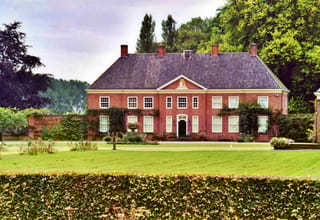
Bingerden
Zevenaar
8.7km
castle, chateau
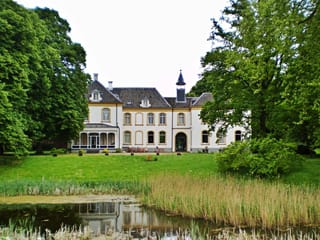
Huize Baak
Bronckhorst
9.4km
castle, chateau
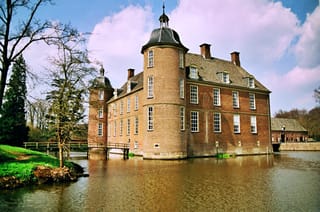
Slangenburg
Doetinchem
9.9km
castle, chateau
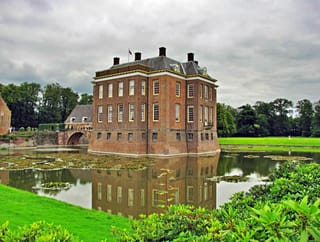
Middachten Castle
Rheden
11.1km
castle, chateau
Huis Kiefskamp
Bronckhorst
12.2km
castle, chateau
Kasteel Wisch
Oude IJsselstreek
12.3km
manor, mansion
Hackfort Castle
Bronckhorst
12.3km
fortress