Bock
Luxembourg Luxembourg Luxemburg
castle, chateau
Rocher du Bock
Luxembourg Luxembourg Luxemburg
castle, chateau
Burg Lucilinburhuc
Luxembourg Luxembourg Luxemburg
castle, chateau
The Bock is a promontory in the north-eastern corner of Luxembourg City's old historical district
Le rocher du Bock ou le Bock est un promontoire situé au nord-est de la Ville-Haute, le centre historique de Luxembourg, offrant une fortification naturelle à la ville, grâce à ses falaises rocheuses surplombant l'Alzette qui l'entoure sur trois côtés
Der Name Lucilinburhuc bezeichnet eine frühmittelalterliche Wehranlage auf dem heutigen Stadtgebiet der Stadt Luxemburg
Previous names
Bock, Rocher du Bock, Burg Lucilinburhuc
Description
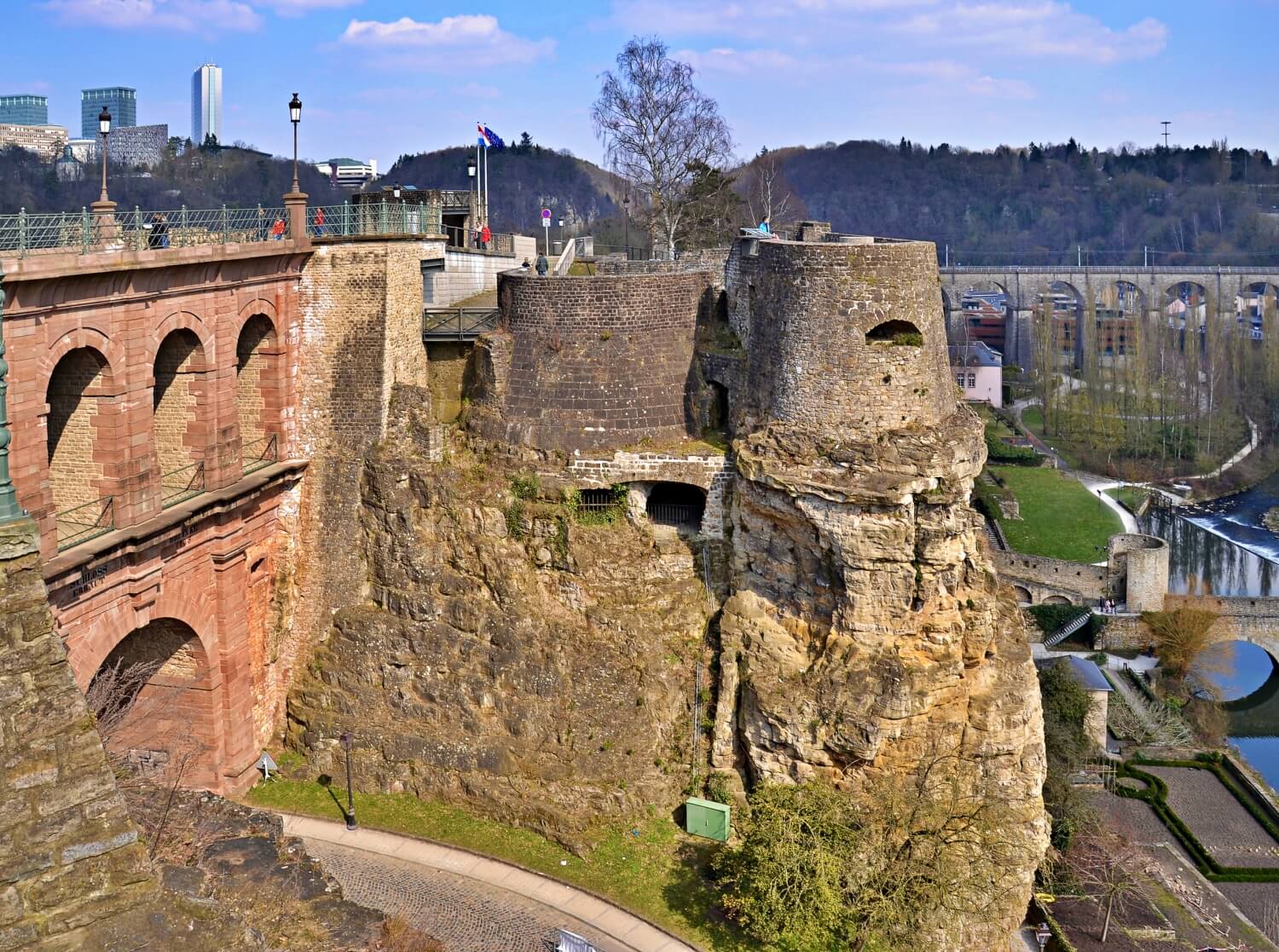
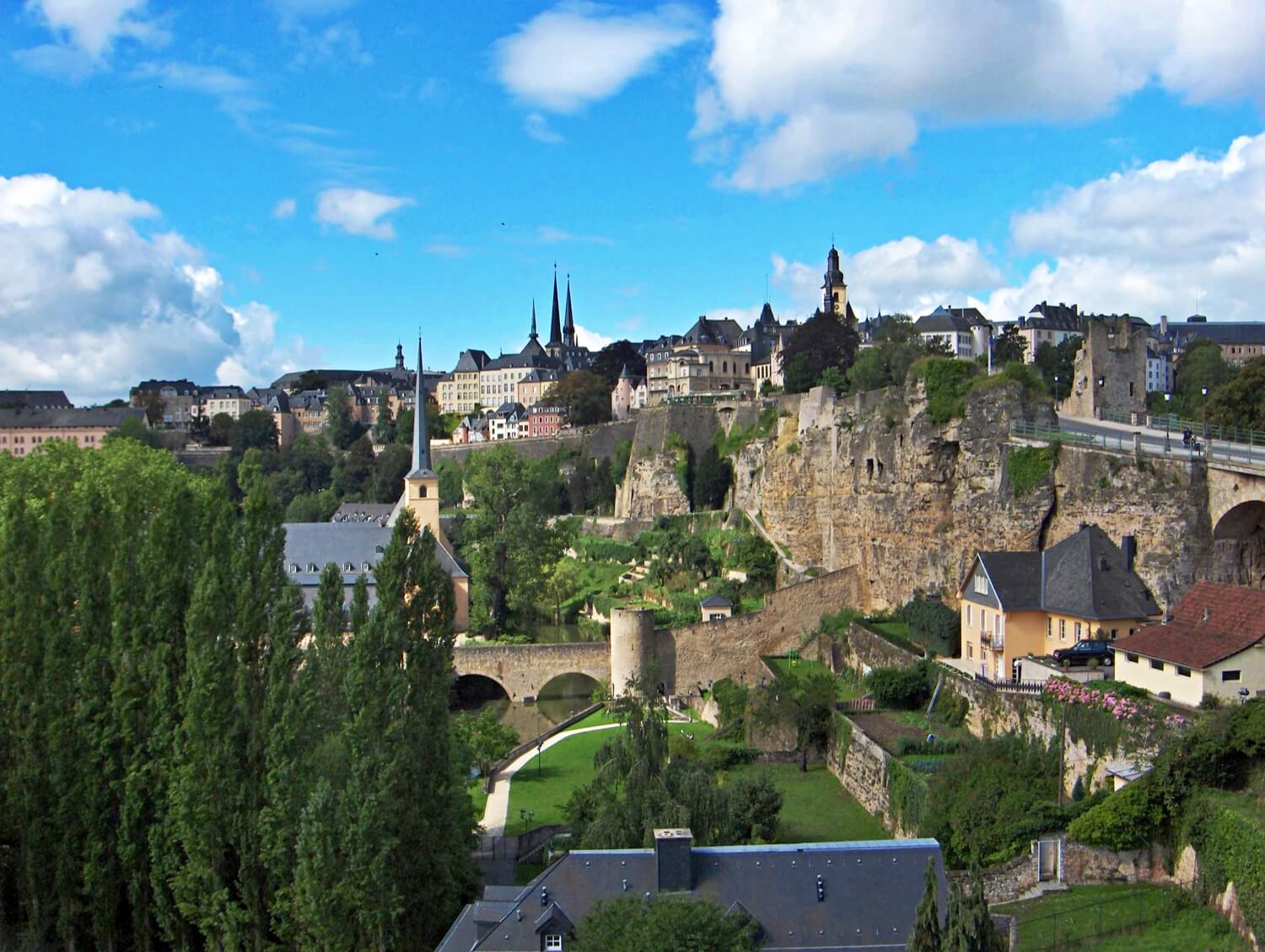
The Bock is a promontory in the north-eastern corner of Luxembourg City's old historical district. Offering a natural fortification, its rocky cliffs tower above the River Alzette which surrounds it on three sides. It was here that Count Siegfried built his Castle of Lucilinburhuc in 963, providing a basis for the development of the town which became Luxembourg. Over the centuries, the Bock and the surrounding defences were reinforced, attacked and rebuilt time and time again as the armies of the Burgundians, Habsburgs, Spaniards, Prussians and French vied for victory over one of Europe's most strategic strongholds, the Fortress of Luxembourg. Warring did not stop until the Treaty of London was signed in 1867, calling for the demolition of the fortifications. Ruins of the old castle and the vast underground system of passages and galleries known as the casemates continue to be a major tourist attraction.
It was in 963 that Count Siegfried, in search of a site from which he could defend his properties, obtained the Bock and its surroundings from St Maximin's Abbey in Trier in exchange for the land he owned at Feulen in the Ardennes to the north. The Romans, then the Franks, had probably already inhabited the Bock although there is only scant archeological evidence of their presence. There are however traces of a 4th-century Roman watchtower close to the point in the Fish Market where two major Roman roads used to cross, one from Reims to Trier and the other from Metz to Liège.
The first historical mention of the Bock is indeed in connection with a watchtower or fortification on the Roman road from Reims to Trier which, in 723, was ceded by Charles Martel, Duke of the Franks, to the Abbey of St Maximin in Trier. Two centuries later, Count Siegfried, who had properties "in Feulen, Hosingen and Monnerich in the Pagus Wabrensis, in Sarreburg, Berncastel and Roussy in the Pagus Mosellanus", was looking for a location for a castle able to withstand any onslaught which would serve as a central point for his holdings. After failing to obtain a site near the Abbey of Stavelot, now in the Belgian province of Liège, he approached the Abbot of St Maximin's for the purchase of the property high up on the Bock cliff above the Alzette River, described as a "castle by name Lucilinburhuc" (castellum quod dicitur Lucilinburhuc). It therefore seems as if there was already a castle on the site before Siegfried became interested in it and that it was not Siegfried who called it Lucilinburhuc. After the consent of Emperor Otto I had been obtained, the deed was signed by Viker, Abbot of St Maximin's, on 7 April 963. Siegfried acquired the site in exchange for some of his properties at Feulen.
Over the centuries, Siegfried's fortified castle on the Bock was considerably enlarged and protected with additional walls and defences. In 987, the castle chapel was built at the nearby Fish Market. Today's St Michael's Church stands on the same site. Under Conrad I, the castle became the residence of the Counts of Luxembourg. It was damaged, destroyed, captured and rebuilt on several occasions as the Burgundians (1473), the Habsburgs (1477), and the Spaniards (1555) attacked and took the fortress.
As time passed, the fortifications needed to be adapted to new methods of war based on increasingly strong firepower. During the 1640s under the Spaniards, the Swiss engineer Isaac von Treybach significantly reworked the defences. The Bock was also strengthened with three forts, the Large Bock, Middle Bock and Small Bock (from west to east), separated from each other by cuts in the rock and linked by bridges. As a result, little remained of the medieval castle.
A little later in 1684, on behalf of Louis XIV, Vauban succeeded in capturing the city of Luxembourg during a month-long siege under which the Bock fortifications were completely flattened. Thereafter Vauban, perhaps the most competent fortification engineer of his day, undertook major additions to the defences, realizing that underground passages and chambers were just as important as the surface installations. The Large Bock, connected to the old town by the Pont du Château, was further reinforced. Enclosed by a wall 12 m (39 ft) high, it was the major component of the new fortress.
In addition to these structures, the Bock also included a system of casemates which originated in the cellars of the medieval castle. In 1744, during the Austrian period, these underground passages were considerably enlarged by General Neipperg. The main passage, which still remains, is 110 m long and up to 7 m wide. Branches leading off on either side were equipped with no less than 25 cannon slots, 12 to the north and 13 to the south, offering considerable firepower. In the event of war, the Bock casemates, covering an area of 1,100 m2, could be used as barracks for several hundred soldiers. Water was supplied from a well 47 m deep.
Thanks to its defences, in 1794 during the French Revolutionary Wars, the city held out against a French siege for seven months. When the garrison finally surrendered, the walls were still unbreached. This led the French politician and engineer Lazare Carnot to call the Luxembourg fortress "the best in the world, apart from Gibraltar". As a result, it has often been called the Gibraltar of the North.
The fortifications were finally demolished under the terms of the Treaty of London in 1867. The demolition took 16 years and cost the enormous sum of 1.5 million gold francs.
The Pont du château
The two-storey bridge connecting the Bock to the old town was an important component of the fortifications. Technically, it is a rather curious structure. Built in 1735 by the Austrians, it provides no less than four ways of crossing between the cliffs: the road over the top, a passage by way of the four upper arches, a spiral staircase up through the main arch and a tunnel under the road at the bottom.
Famous visitors
Over the years, the Bock casemates have received several famous visitors. These include:
Emperor Joseph II of Austria (1781);
Napoleon Bonaparte (1804);
Prince Henry of the Netherlands (1868);
Grand Duchess Charlotte of Luxembourg (1936);
Grand Duke Henri of Luxembourg and his wife Grand Duchess Maria Teresa (2000).
The legend of Melusina
There have reportedly been people that have seen Melusine in the waters nearby.
Le rocher du Bock ou le Bock est un promontoire situé au nord-est de la Ville-Haute, le centre historique de Luxembourg, offrant une fortification naturelle à la ville, grâce à ses falaises rocheuses surplombant l'Alzette qui l'entoure sur trois côtés. Le Bock est l'emplacement où en 963 Sigefroid de Luxembourg établit son château et fonde l'actuelle capitale grand-ducale. Au cours des siècles, les fortifications ont été renforcées, détruites puis reconstruites au fil des attaques des burgondes, des Habsbourg, des espagnols des prussiens et des français qui se disputaient la forteresse de Luxembourg, l'une des plus stratégiques d'Europe. Ces guerres durèrent jusqu'en 1867 quand le traité de Londres est signé et appela à la démolition des fortifications. De nos jours, les ruines du vieux château et les casemates, les galeries souterraines des fortifications, subsistent et constituent un haut lieu touristique de la ville, faisant partie du secteur classé au patrimoine mondial de l'UNESCO.
Histoire
C'est en 963 que le comte Sigefroid de Luxembourg, à la recherche d'un site où il pourrait défendre ses propriétés, obtint le Bock et ses environs de l'abbaye Saint-Maximin à Trèves en échange de la terre qu'il possédait à Feulen dans les Ardennes au nord. Les Romains, puis les Francs, avaient probablement déjà habité le Bock bien qu'il n'y ait que peu de traces archéologiques de leur présence. Il y a cependant des traces d'une tour de guet romaine du ive siècle près du point dans le Marché-aux-Poissons où deux routes romaines principales ont traversé, une de Reims à Trèves et l'autre de Metz à Liège.
La première mention historique du Bock est en effet en rapport avec une tour de guet ou de fortification sur la route romaine de Reims à Trèves qui, en 723, fut cédée par Charles Martel, duc des Francs, à l'abbaye Saint-Maximin à Trèves. Deux siècles plus tard, le comte Sigefroid, qui avait des propriétés « à Feulen, Hosingen et Monnerich dans le Pagus Wabrensis, à Sarreburg, Berncastel et Roussy dans le Pagus Mosellanus », cherchait un emplacement pour un château capable de résister à tout assaut et qui servirait de point central à ses possessions. Après avoir échoué à obtenir un site près de l'abbaye de Stavelot, aujourd'hui dans la province de Liège, il s'est approché de l'abbé de Saint-Maximin pour l'achat de la propriété située en haut de la falaise de Bock au-dessus de la rivière Alzette, décrite comme un « château du nom de Lucilinburhuc » (castellum quod dicitur Lucilinburhuc). Il semble donc déjà y avoir un château sur le site Sigefroid s'y intéressa et ce ne fut donc pas Sigefroid qui l'appela Lucilinburhuc. Après le consentement de l' empereur Otto Ier, l'acte avait été signé par Viker, abbé de Saint-Maximin, le 7 avril 963. Sigefroid acquit le terrain en échange de certaines de ses propriétés à Feulen.
Au cours des siècles, le château fort de Sigefroid sur le Bock fut considérablement agrandi et protégé par des remparts et des défenses supplémentaires. En 987, la chapelle du château a été construite au Marché-aux-Poissons à proximité. L'actuelle église Saint-Michel se trouve sur le même site. Sous Conrad Ier, le château est devenu la résidence des comtes de Luxembourg. Il a été endommagé, détruit, capturé et reconstruit à plusieurs reprises comme avec les burgondes (1473), les Habsbourg (1477) et les espagnols (1555) qui ont attaqué et pris la forteresse3.
Au fil du temps, les fortifications sont adaptées à de nouvelles méthodes de guerre fondées sur une puissance de feu de plus en plus forte. Au cours des années 1640 sous les espagnols, l'ingénieur suisse Isaac von Treybach a considérablement retravaillé les défenses. Le Bock fut également renforcé avec trois forts, le Grand Bock, le Moyen Bock et le Petit Bock (d'ouest en est), séparés les uns des autres par des entailles dans la roche et reliés par des ponts. En conséquence, il ne reste que peu de choses du château médiéval.
Un peu plus tard en 1684, au nom de Louis XIV, Vauban réussit à s'emparer de la ville de Luxembourg après un siège d'un mois sous lequel les fortifications de Bock furent complètement rasées. Par la suite Vauban, peut-être l'ingénieur de fortification le plus compétent de son époque, a entrepris des ajouts importants aux défenses, réalisant que les passages souterrains et les chambres étaient tout aussi importants que les installations de surface. Le Grand Bock, relié à la vieille ville par le pont du Château, a été renforcé. Entouré d'un mur de douze mètres de haut, c'était l'élément majeur de la nouvelle forteresse.
En plus de ces structures, le Bock comprenait également un système de casemates issues des caves du château médiéval. En 1744, pendant la période autrichienne, ces passages souterrains furent considérablement agrandis par le général Neipperg. Le passage principal, qui existe encore, est long de 110 mètres et mesure jusqu'à jusqu'à 7 mètres de large. Les branches partant de chaque côté étaient équipées de pas moins de 25 emplacements de canons, 12 au nord et 13 au sud, offrant une puissance de feu considérable. En cas de guerre, les casemates de Bock, d'une superficie de 1 100 m2, pouvaient être utilisées comme casernes pour plusieurs centaines de soldats. L'eau provenait d'un puits de 47 mètres de profondeur.
Les fortifications permirent à la ville de résister à un siège de sept mois en 1794, durant les Guerres de la Révolution française. Quand la garnison finit par se rendre, les fortifications restèrent inviolées et l'homme politique et ingénieur français Lazare Carnot qualifia la forteresse de « meilleur au monde, à l'exception de Gibraltar », ce qui lui valut le surnom de Gibraltar du Nord.
Les fortifications furent finalement démolies selon les termes du traité de Londres de 1867 et prirent 16 ans et coûtèrent la somme considérable de 1,5 million de francs-or.
Le pont du château.
Construit en 1735 par les autrichiens, ce pont relie le Bock à la vieille ville. Sur deux niveaux, il offre quatre voies de passages : la route supérieure, le passage sous les arches du second niveau, un escalier en colimaçon et une route sous l'arche supportant le premier niveau.
Visiteurs célèbres
Les casemates du Bock ont été visitées par plusieurs personnages célèbres, dont:
L'empereur Joseph II d'Autriche en 1781 ;
Napoléon Bonaparte en 1804 ;
le prince Henri des Pays-Bas en 1868 ;
la grande-duchesse Charlotte en 1936 ;
le grand-duc Henri et son épouse María Teresa en 2000.
La légende de Mélusine
Des personnes auraient vu la fée Mélusine dans les eaux à proximité.
Der Name Lucilinburhuc bezeichnet eine frühmittelalterliche Wehranlage auf dem heutigen Stadtgebiet der Stadt Luxemburg.
Lage
Die Lucilinburhuc befindet sich in einer Höhe von rund 282 m auf dem so genannten „Bockfelsen“, den Graf Siegfried 963 erwarb.
Geschichte
Sie wird in einer Urkunde erwähnt, welche den Tausch zwischen dem Ardennergraf Siegfried und dem Kloster St. Maximin in Trier aus dem Jahre 963 dokumentiert. Aus dem Besitz des Klosters erhält der Graf den Bockfelsen gegen Ländereien in Feulen.
In der historischen Urkunde wird ein castellum (befestigter Turm) erwähnt („...Castellum quod dicitur Lucilinburhuc“), außerdem ist von einem munitio (Erdwall) und einem trunci (Palisade) die Rede. Die luxemburgische Geschichtsschreibung ging daher noch bis in die 1970er Jahre davon aus, dass Siegfried eine mehr oder weniger vollwertige Wehranlage erstanden hätte. Allerdings war man sich weder über deren Aussehen noch über die Erbauer und den Standort im Klaren, was Anlass zu Spekulationen gab. Die populärste Version sah in Lucilinburhuc die Überreste eines römischen Wehrturmes, der zur Überwachung des Römerweges von Reims nach Trier diente und welcher sich auf dem Fischmarkt befand. Dieser wäre später im Auftrag des Klosters ausgebaut worden, um als Wehranlage angesichts der Normannen- und Ungarnüberfälle zu dienen. Archäologische Funde der frühen 1990er Jahre lieferten allerdings den Beweis, dass gegen Ende des dritten Jahrhunderts eine militärische Anlage römischen Ursprungs auf dem Bockfelsen stand, welche zwischen dem vierten und sechsten Jahrhundert ausgebaut wurde und eine, wahrscheinlich von Trier abhängige, Garnison beherbergte.
Die etymologische Bedeutung des Namens Lucilinburhuc könnte möglicherweise auf die Worte Letze (germanisch klein, bzw. etwas Kleines und Synonym für kleine Festungsanlage) und Burgus (germanisch kleine, typischerweise turmartige Kastelle) zurückgehen, was demnach als kleine Burg zu deuten wäre. Eine andere Erklärung wäre "Sperrwerk" im Sinn einer Burganlage, die eine Sperre zum militärischen Schutz einer Siedlung, eines Verkehrsweges oder eines ganzen Tales darstellt, siehe dazu Talsperre_(Burg) und ihre schweizerische Bezeichnung Letzi mit dem Plural Letzinen. Im Jahre 1225 wird zum ersten Mal die Bezeichnung burgus Lucelenburgensis, bzw. opidum et castrum Luxelenburgensis erwähnt.
Useful information
No
7.00 EUR
Students, seniors: 6.00 EUR
4 - 12 years: 3.50 EUR
0 - 3 years: free
- Information tables
- WC
touristinfo@lcto.lu
-
-
External links
Nearby castles
Grand Ducal Palace
Luxemburg
0.3km
manor, mansion
La Fontaine Castle
Luxembourg
0.6km
castle, chateau
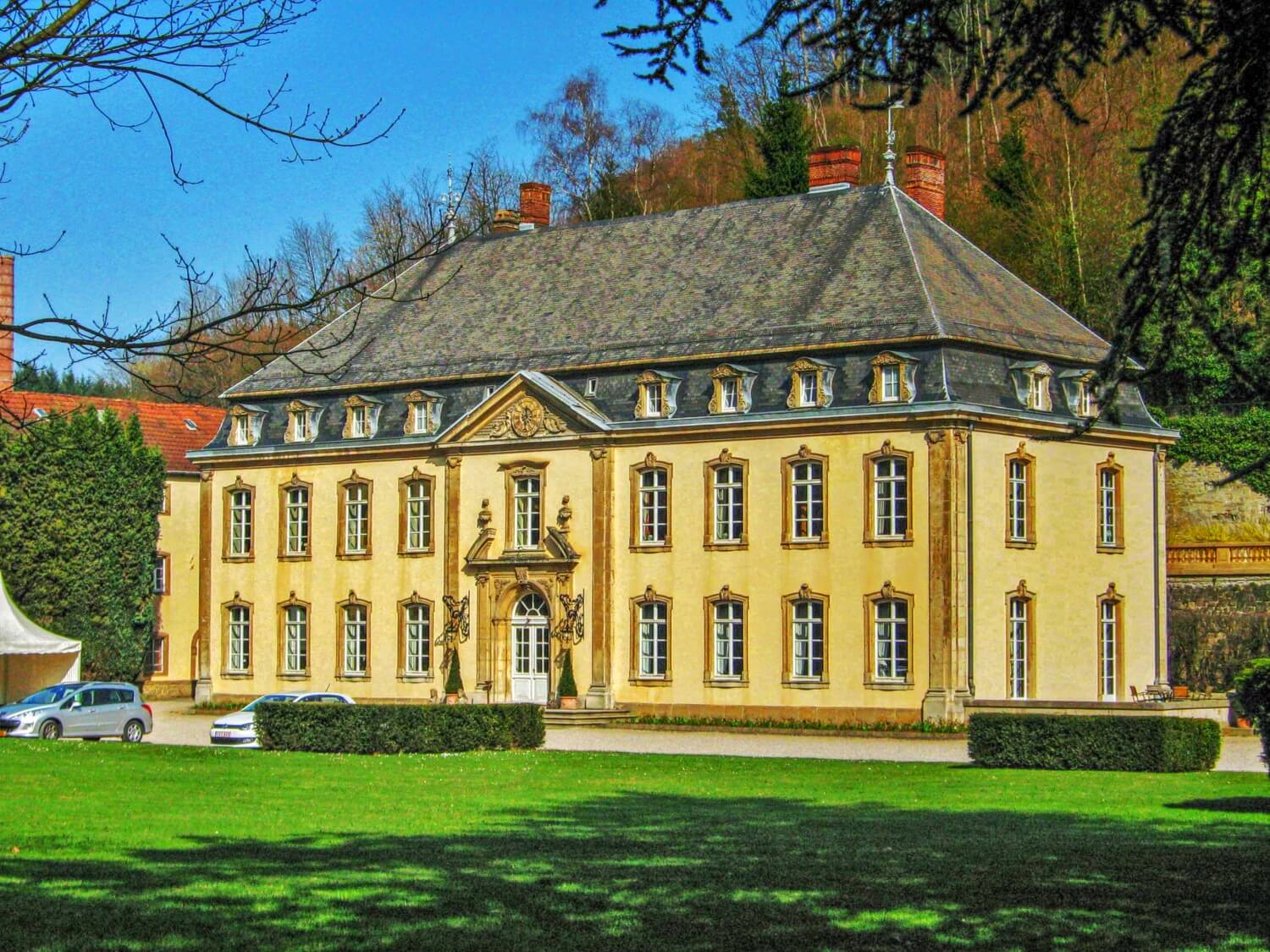
Château de Septfontaines
Luxembourg
2.8km
castle, chateau
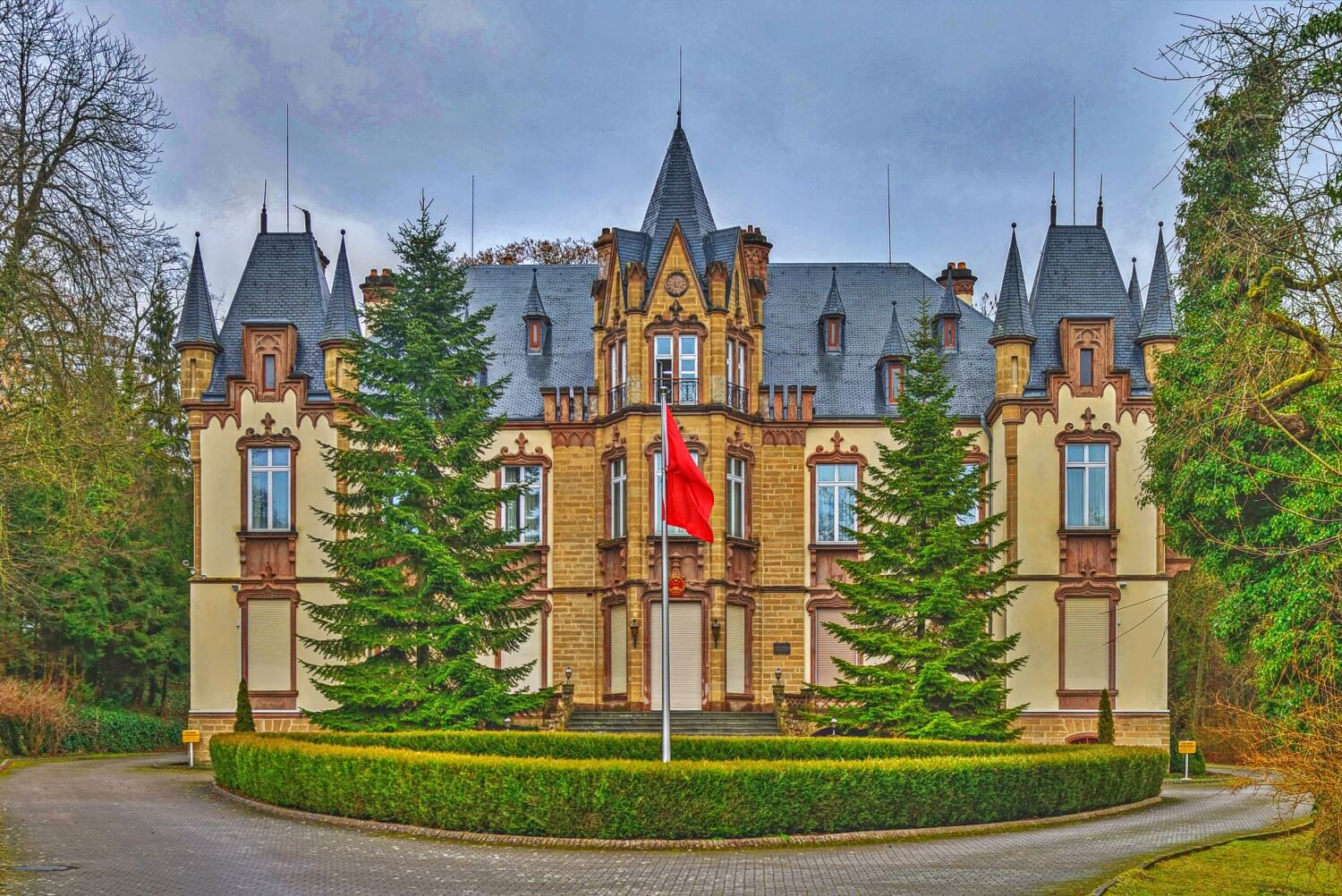
Dommeldange Castle
Luxembourg
2.9km
castle, chateau
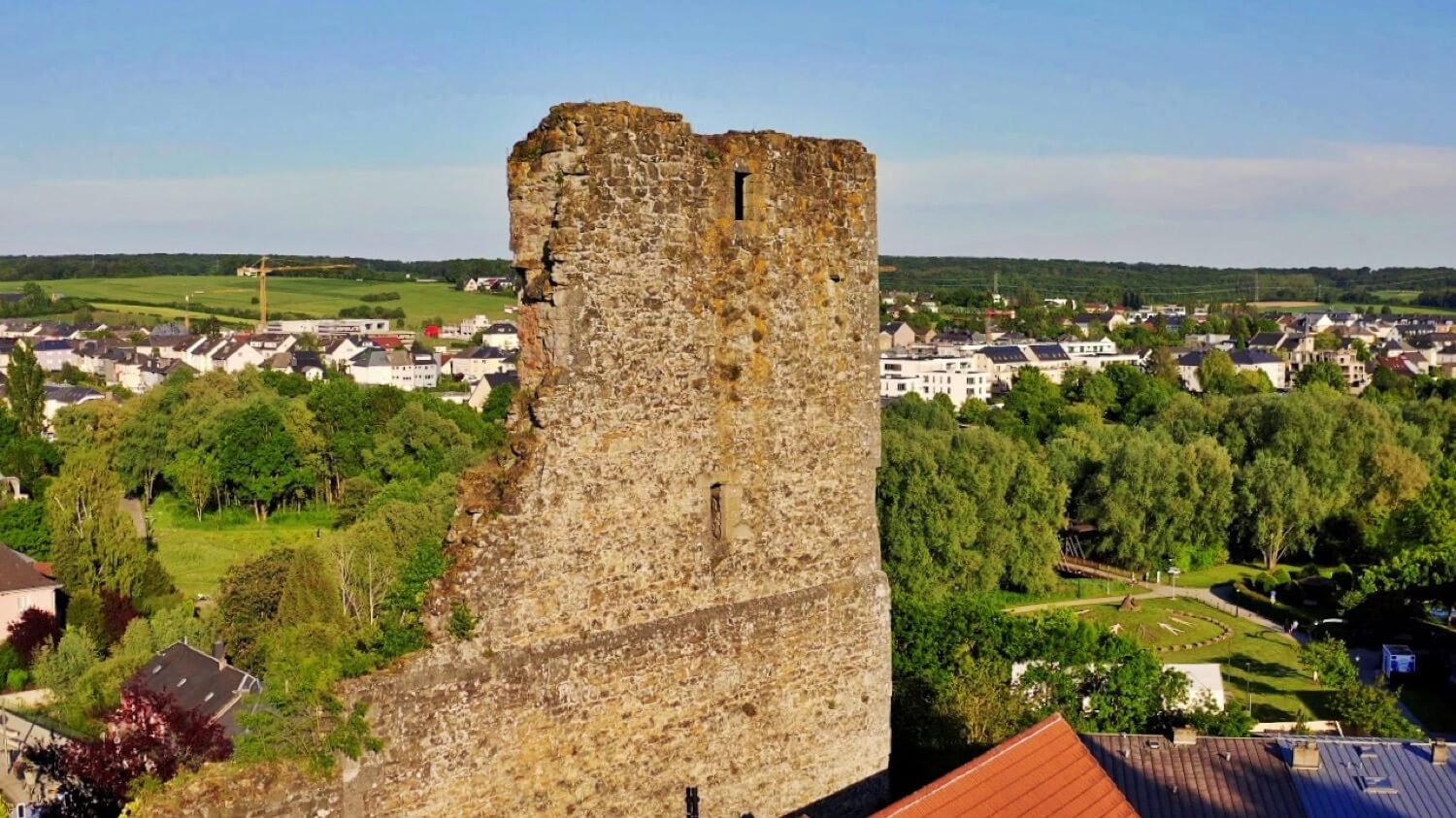
Hesperange Castle
Hesperange
4.5km
castle, chateau
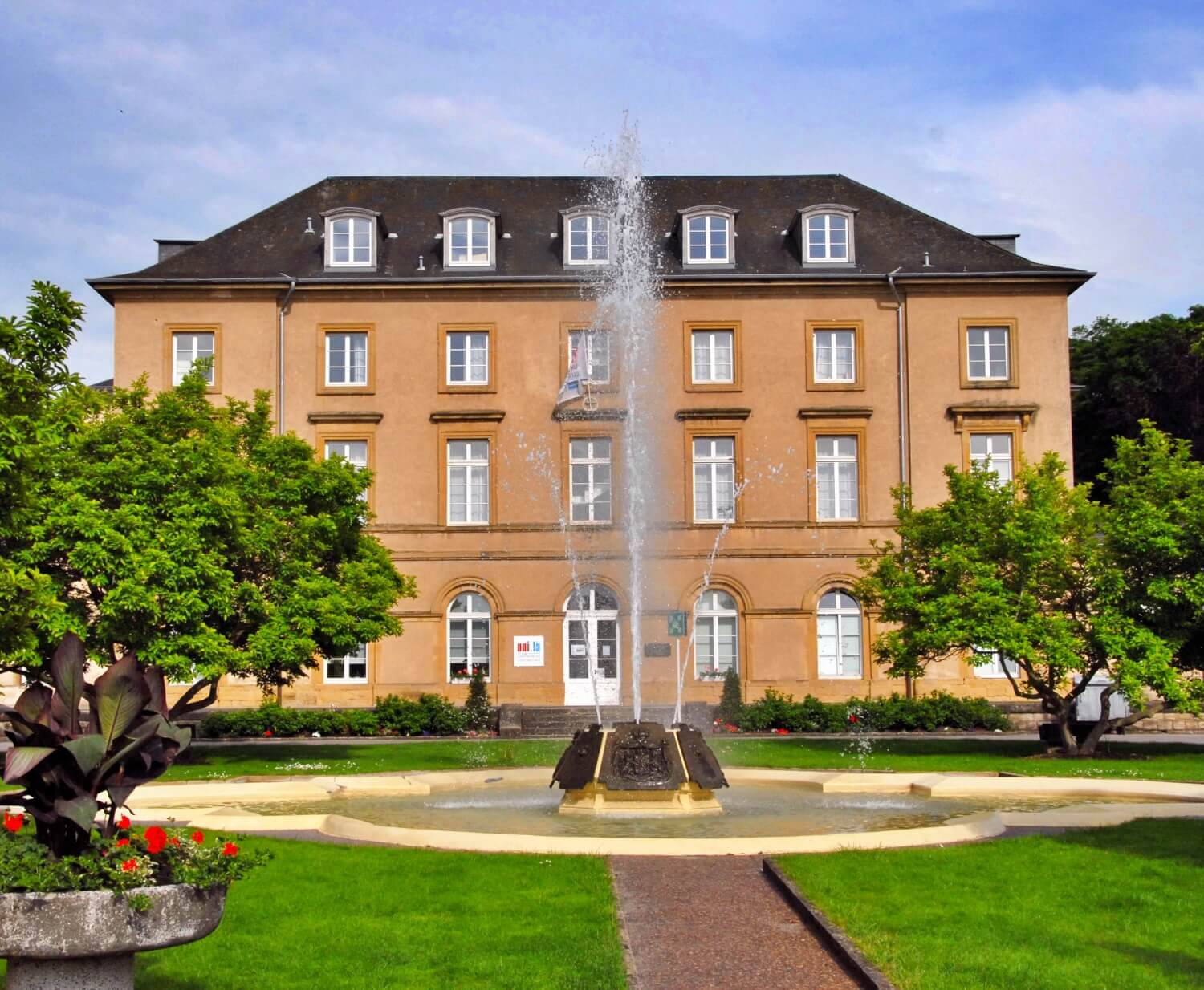
Walferdange Castle
Walferdange
5.4km
castle, chateau
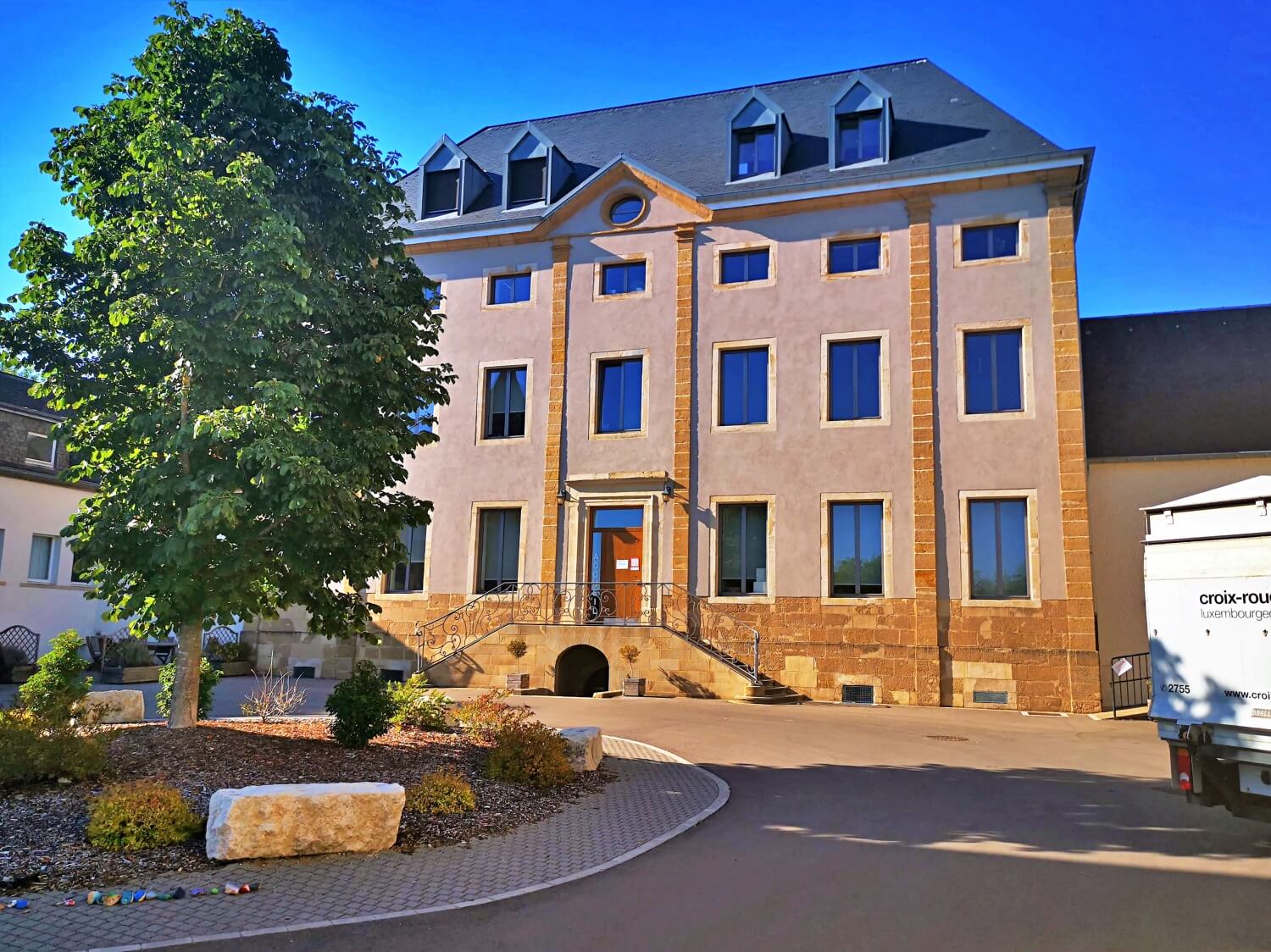
Colnet d'Huart Castle
Bertrange
6.2km
castle, chateau