Savoy Castle
Valle d'Aosta Valle d'Aosta Italy
castle, chateau
Castel Savoia
Valle d'Aosta Valle d'Aosta Italy
castle, chateau
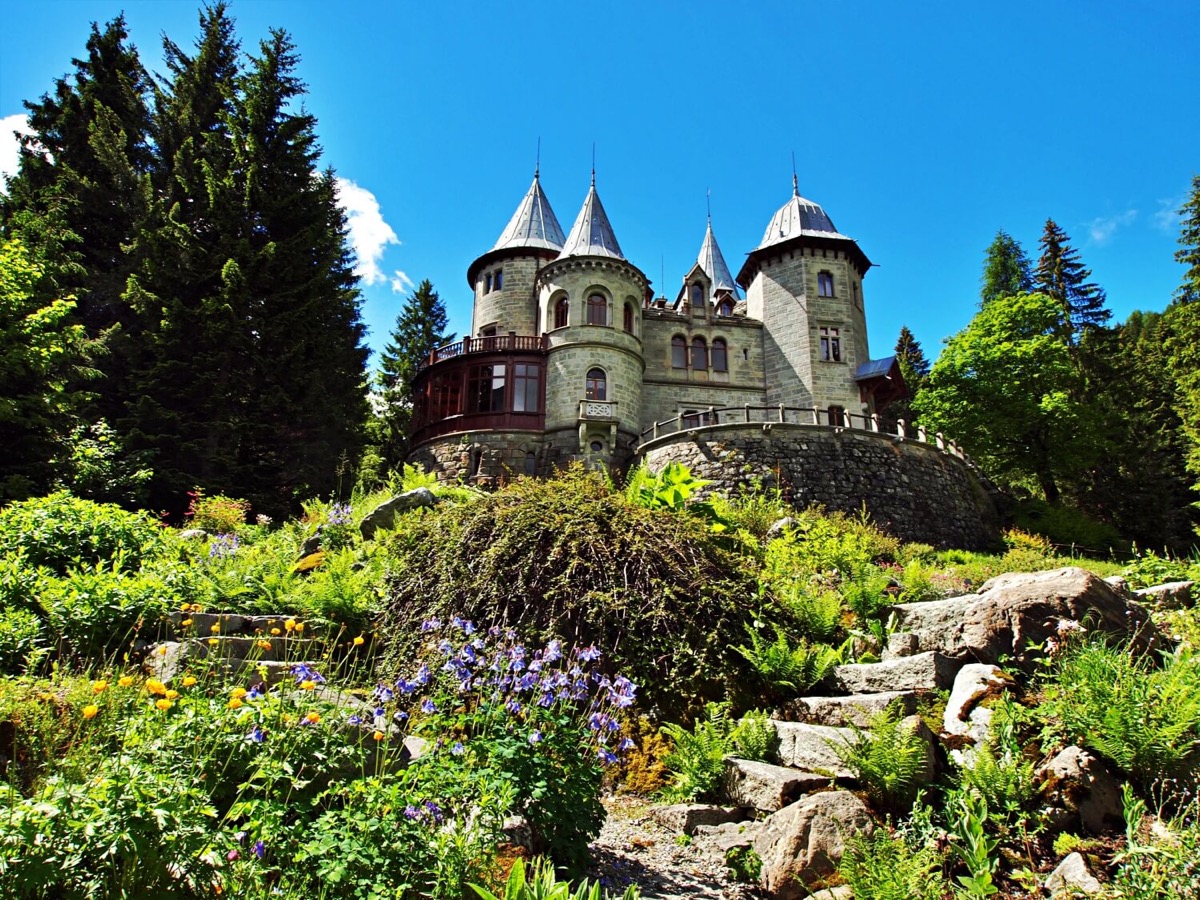
Queen Margaret Castle stands at the foot of Ranzola hill, in the place known as “Belvedere”, as it dominates the whole of the valley as far as the Lyskamm glacier
Il Castel Savoia (in francese Château Savoie) è una villa ottocentesca in stile eclettico situata a Gressoney-Saint-Jean, in Valle d'Aosta
Previous names
Savoy Castle, Castel Savoia
Description
Queen Margaret Castle stands at the foot of Ranzola hill, in the place known as “Belvedere”, as it dominates the whole of the valley as far as the Lyskamm glacier.
The building was erected between 1899 (the first stone was laid on 24 August) and 1904. In 1981 it was purchased by Val d’Aosta Regional Council.
The architect Emilio Stramucci, who designed the neo-Baroque decorations for Palazzo Reale in Turin and for the Quirinale in Rome, designed the mediaeval-style castle, described as “15th-century Lombard style”, quite frequent in France and Savoy, the homelands of the reigning sovereigns. It consists of a central rectangular body, with four cusp-roofed towers, each different from the others. The exteriors is covered in grey stone from the quarries of Chiappey in Gressoney, Gaby and Vert. The castle is on three floors: the ground floor, with living quarters, the noble floor, with the royal apartments and the second floor (not open to visitors), reserved for gentlemen of the court; the cellars are located underground. Only a few pieces of the original furniture remain; the other furniture on show comes from Villa Margherita, property of the Beck Peccoz Barons, in which the Queen stayed before the manor’s construction; the original pieces include the tapestries in linen and cotton, decorated with a chiné effect. The ornamental pictures are the work of the young painter and restorer Carlo Cussetti, who later worked on the new wing of Palazzo Reale in Turin. The mediaeval-inspired coffered ceilings, wooden panels and furniture are by the Turin wood carver Dellera, who supplied the Royal House.
On the ground floor, the main entrance leads to a vast hall with columns and a painted coffered ceiling, which leads in turn onto other rooms. On one side are the gaming rooms and the sitting rooms, connected to the semi-circular veranda looking over the valley. On the opposite side are the dining room, with its richly painted decorations on the walls, fireplace and ceiling coffers, and parchment-carved boiserie. Neogothic is also the style used in the so-called “staff-bearer’s entrance” in the octagonal tower situated in the north-west corner.
An elegant wooden staircase with griffins and eagles leads to the royal apartments, preceded by a hall whose ceiling bears the inscription “Hic manebimus optime”. The Queen’s apartment occupies the best position: from the windows of the delightful sitting room in the northern tower, you can enjoy the view of Mount Rosa and the entire valley. The false fabrics painted between the windows are reminiscent of the decoration in the baronial hall of Issogne castle. The adjacent apartment was occupied by the Hereditary Prince Humbert. On the opposite side of the hall are situated the apartments of the King and of the Marchioness Pes of Villamarina, lady-in-waiting to the Queen.
The kitchens were located in a building a short distance away and were connected to the castle by an underground Decauville track.
Other annexes include Villa Belvedere, originally used for guests and the royal gendarmerie, and the little house known as Romitaggio Carducci, dedicated to the poet who was a devoted admirer and singer to the queen.
The foot of the manor hosts a rocky garden full of Alpine, botanical species.
http://www.lovevda.it
Il Castel Savoia (in francese Château Savoie) è una villa ottocentesca in stile eclettico situata a Gressoney-Saint-Jean, in Valle d'Aosta.
A seguito di alcuni soggiorni di villeggiatura trascorsi a partire dal 1889 dalla regina Margherita e dal consorte Umberto I presso la residenza del barone Beck Peccoz, la regina volle far costruire una residenza per sé sul versante della valle al di sotto del Col Ranzola, da cui si gode un ampio panorama sulla valle e sulle cime del Monte Rosa.
Dopo alcune resistenze di Umberto I, che preferiva soggiornare nel Castello di Sarre per lunghe battute di caccia, la regina Margherita ottenne il permesso per realizzare la sua dimora di villeggiatura che fece progettare all'architetto Emilio Stramucci, già adoperatosi per i rimaneggiamenti di Palazzo Reale e di altre dimore sabaude.
La posa della prima pietra avvenne nell'estate del 1899 ma re Umberto I nel castello non vi soggiornò mai poiché venne assassinato a Monza nel 1900 dall'anarchico Gaetano Bresci, prima del completamento dei lavori nel 1904.
La regina Margherita, vedova e ormai relegata alla sola funzione di regina madre, vi trascorse lunghi periodi di villeggiatura fino al 1925, ospitando illustri membri della letteratura di cui amava circondarsi, tra cui il poeta Giosuè Carducci e l'affezionato nipote, il giovane principe di Piemonte Umberto II.
Dopo la morte della regina Margherita avvenuta a Bordighera nel 1926, durante il suo soggiorno invernale a Villa Margherita, il castello rimase chiuso per alcuni anni e venne venduto nel 1936 all'industriale milanese Ettore Moretti che lo mantenne quasi intatto. I suoi eredi vendettero il castello alla regione autonoma Valle d'Aosta nel 1981.
A seguito di alcuni soggiorni di villeggiatura trascorsi a partire dal 1889[1] dalla regina Margherita e dal consorte Umberto I presso la residenza del barone Beck Peccoz, la regina volle far costruire una residenza per sé sul versante della valle al di sotto del Col Ranzola, da cui si gode un ampio panorama sulla valle e sulle cime del Monte Rosa.
Dopo alcune resistenze di Umberto I, che preferiva soggiornare nel Castello di Sarre per lunghe battute di caccia, la regina Margherita ottenne il permesso per realizzare la sua dimora di villeggiatura che fece progettare all'architetto Emilio Stramucci, già adoperatosi per i rimaneggiamenti di Palazzo Reale e di altre dimore sabaude.
La posa della prima pietra avvenne nell'estate del 1899 ma re Umberto I nel castello non vi soggiornò mai poiché venne assassinato a Monza nel 1900 dall'anarchico Gaetano Bresci, prima del completamento dei lavori nel 1904.
La regina Margherita, vedova e ormai relegata alla sola funzione di regina madre, vi trascorse lunghi periodi di villeggiatura fino al 1925, ospitando illustri membri della letteratura di cui amava circondarsi, tra cui il poeta Giosuè Carducci e l'affezionato nipote, il giovane principe di Piemonte Umberto II.
Dopo la morte della regina Margherita avvenuta a Bordighera nel 1926, durante il suo soggiorno invernale a Villa Margherita, il castello rimase chiuso per alcuni anni e venne venduto nel 1936 all'industriale milanese Ettore Moretti che lo mantenne quasi intatto. I suoi eredi vendettero il castello alla regione autonoma Valle d'Aosta nel 1981.
Useful information
GRATUITO
5.00 EUR
6 - 18 anni: 2.00 EUR
0 - 5 anni: gratuito
25+ persone: 3.50 EUR
- Il giardino botanico
- Visite guidate
Proprietà privata, visitabile in parte
-
External links
Nearby castles
Verrès Castle
Valle d'Aosta
14.6km
castle, chateau
Castello superiore di Arnad
Aosta Valley
15.4km
castle, chateau
Issogne Castle
Valle d'Aosta
16.4km
castle, chateau
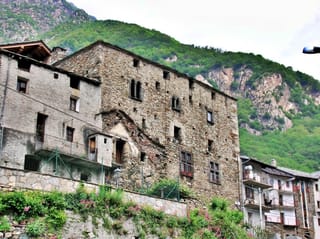
Vallaise Castle
Valle d'Aosta
16.8km
castle, chateau
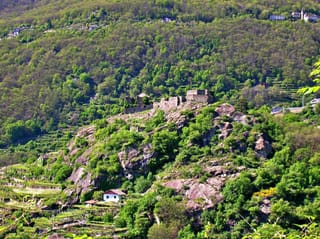
Castello di Pont-Saint-Martin
Valle d'Aosta
18.2km
castle, chateau
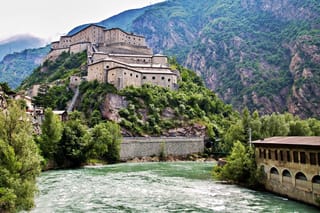
Fort Bard
Valle d'Aosta
18.5km
fortress
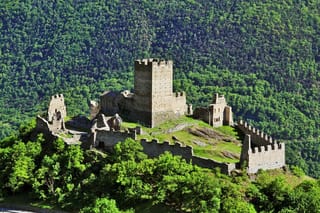
Cly castle
Valle d'Aosta
20.7km
castle, chateau