Castel Sant'Angelo
Città metropolitana di Roma Capitale Lazio Italy
castle, chateau
Castel Sant'Angelo
Città metropolitana di Roma Capitale Lazio Italy
castle, chateau
The Mausoleum of Hadrian, usually known as Castel Sant'Angelo (Italian pronunciation: English: Castle of the Holy Angel), is a towering cylindrical building in Parco Adriano, Rome, Italy
Castel Sant'Angelo (o Mole Adrianorum o Castellum Crescentii nel X-XII sec
Previous names
Castel Sant'Angelo, Castel Sant'Angelo
Description
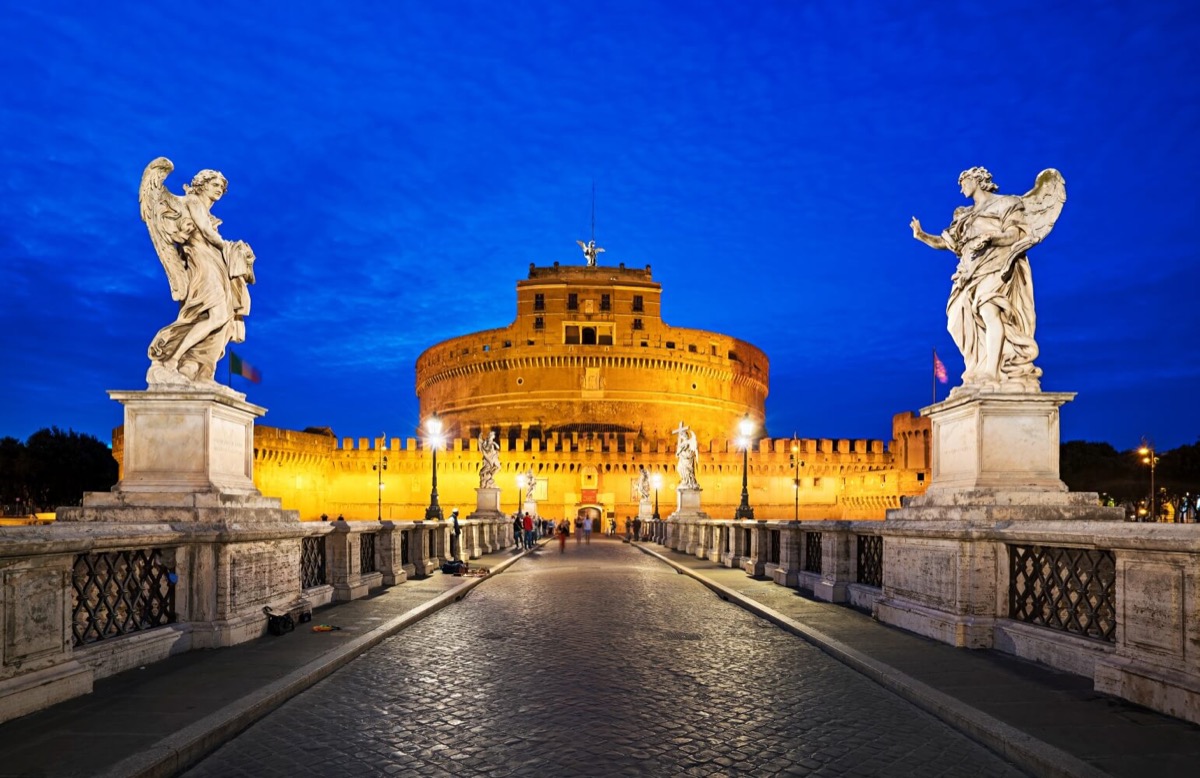
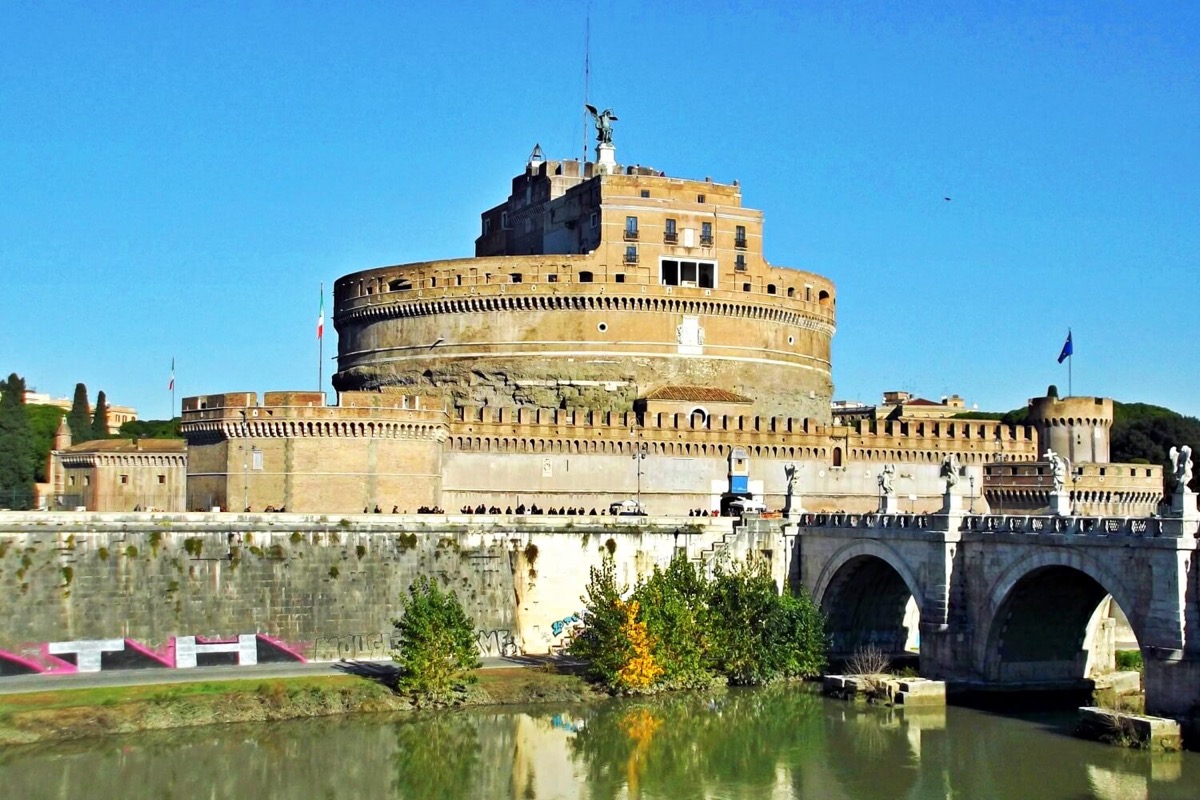
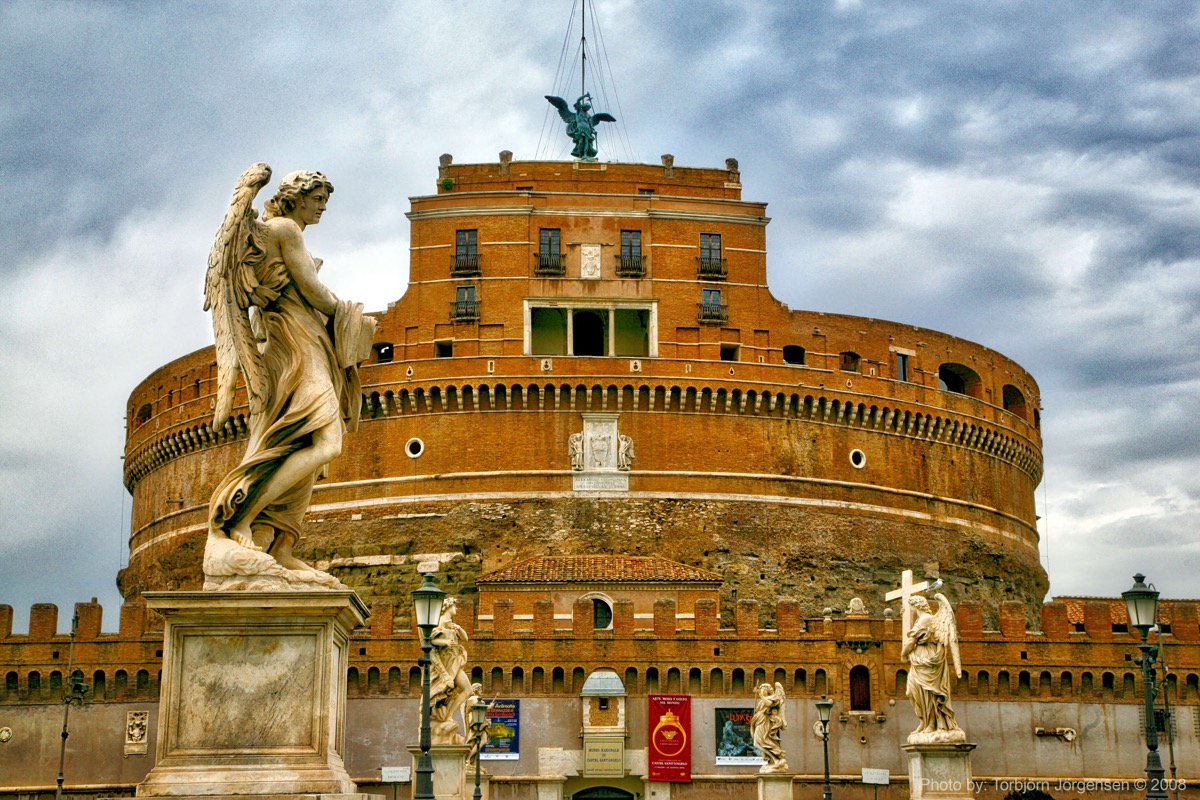
The Mausoleum of Hadrian, usually known as Castel Sant'Angelo (Italian pronunciation: English: Castle of the Holy Angel), is a towering cylindrical building in Parco Adriano, Rome, Italy. It was initially commissioned by the Roman Emperor Hadrian as a mausoleum for himself and his family. The building was later used by the popes as a fortress and castle, and is now a museum. The structure was once the tallest building in Rome.
The tomb of the Roman emperor Hadrian, also called Hadrian's mole, was erected on the right bank of the Tiber, between AD 134 and 139. Originally the mausoleum was a decorated cylinder, with a garden top and golden quadriga. Hadrian's ashes were placed here a year after his death in Baiae in 138, together with those of his wife Sabina, and his first adopted son, Lucius Aelius, who died in 138. Following this, the remains of succeeding emperors were also placed here, the last recorded deposition being Caracalla in 217. The urns containing these ashes were probably placed in what is now known as the Treasury room deep within the building. Hadrian also built the Pons Aelius facing straight onto the mausoleum – it still provides a scenic approach from the center of Rome and the left bank of the Tiber, and is renowned for the Baroque additions of statues of angels holding aloft instruments of the Passion of Christ.
Decline
Much of the tomb contents and decorations have been lost since the building's conversion to a military fortress in 401 and its subsequent inclusion in the Aurelian Walls by Flavius Honorius Augustus. The urns and ashes were scattered by Visigoth looters during Alaric's sacking of Rome in 410, and the original decorative bronze and stone statuary were thrown down upon the attacking Goths when they besieged Rome in 537, as recounted by Procopius. An unusual survivor, however, is the capstone of a funerary urn (probably that of Hadrian), which made its way to Saint Peter's Basilica, covered the tomb of Otto II and later was incorporated into a massive Renaissance baptistery. The use of spolia from the tomb in the post-Roman period was noted in the 16th century – Giorgio Vasari writes:
...in order to build churches for the use of the Christians, not only were the most honoured temples of the idols [pagan Roman gods] destroyed, but in order to ennoble and decorate Saint Peter's with more ornaments than it then possessed, they took away the stone columns from the tomb of Hadrian, now the castle of Sant'Angelo, as well as many other things which we now see in ruins.
Legend holds that the Archangel Michael appeared atop the mausoleum, sheathing his sword as a sign of the end of the plague of 590, thus lending the castle its present name. A less charitable yet more apt elaboration of the legend, given the militant disposition of this archangel, was heard by the 15th-century traveler who saw an angel statue on the castle roof. He recounts that during a prolonged season of the plague, Pope Gregory I heard that the populace, even Christians, had begun revering a pagan idol at the church of Santa Agata in Suburra. A vision urged the pope to lead a procession to the church. Upon arriving, the idol miraculously fell apart with a clap of thunder. Returning to St Peter's by the Aelian Bridge, the pope had another vision of an angel atop the castle, wiping the blood from his sword on his mantle, and then sheathing it. While the pope interpreted this as a sign that God was appeased, this did not prevent Gregory from destroying more sites of pagan worship in Rome.
Castel Sant'Angelo (o Mole Adrianorum o Castellum Crescentii nel X-XII sec.), detto anche Mausoleo di Adriano, è un monumento di Roma, situato sulla sponda destra del Tevere di fronte al pons Aelius (attuale ponte Sant'Angelo), a poca distanza dal Vaticano, tra il rione di Borgo e quello di Prati; è collegato allo Stato del Vaticano attraverso il corridoio fortificato del "passetto". Il castello è stato radicalmente modificato più volte in epoca medievale e rinascimentale. Proprietà del MiBAC, il Museo nel dicembre 2014 è entrato a far parte del Polo Museale del Lazio.
Tutto ha inizio nel 130 quando l'imperatore Adriano chiede all'architetto Demetriano di costruire un mausoleo funebre per se e i suoi familiari, ispirandosi al modello del mausoleo di Augusto, ma con dimensioni gigantesche. I lavori durarono diversi anni e furono ultimati da Antonino Pio nel 139. Venne costruito di fronte al Campo Marzio, al quale fu unito da un ponte appositamente costruito, il Ponte Elio. Il mausoleo era composto da una base cubica, rivestita in marmo lunense, avente un fregio decorativo a teste di buoi (Bucrani) e lesene angolari. Nel fregio prospiciente il fiume si leggevano i nomi degli imperatori sepolti all'interno. Sempre su questo lato si presentava l'arco d'ingresso intitolato ad Adriano; il dromos (passaggio d'accesso) era interamente rivestito di marmo giallo antico.
Al di sopra del cubo di base era posato un tamburo realizzato in peperino e in opera cementizia (opus caementicium) tutto rivestito di travertino e lesene scanalate. Al di sopra di esso sorgeva un tumulo di terra alberato circondato da statue marmoree, che ornavano il perimetro del monumento; di esse si conservano dei frammenti rinvenuti in loco. La statua rinvenuta più integra è il famoso Fauno Barberini. Il tumulo era infine sormontato da una quadriga in bronzo guidata dall'imperatore Adriano, raffigurato come il sole posto su un alto basamento o, secondo altri, su una tholos circolare. Attorno al mausoleo correva un muro di cinta con cancellata in bronzo decorata da pavoni di bronzo dorato, due dei quali sono conservati al Vaticano.
All'interno, pozzi di luce illuminavano la rampa elicoidale in laterizio rivestita in marmo che con una lenta salita collegava l'ingresso o dromos alla cella funeraria, posta al centro del tumulo. Quest'ultima, quadrata e interamente rivestita di marmi policromi, era sormontata da altre due sale, forse anch'esse utilizzate come celle sepolcrali.
Il Mausoleo ospitò i resti dell'imperatore Adriano e di sua moglie Vibia Sabina, dell'imperatore Antonino Pio, di sua moglie Faustina maggiore e di tre dei loro figli, di Lucio Elio Cesare, di Commodo, dell'imperatore Marco Aurelio e di altri tre dei suoi figli, dell'imperatore Settimio Severo, di sua moglie Giulia Domna e dei loro figli e imperatori Geta e Caracalla.
Il mausoleo perse in parte la sua funzione quando fu collegato alle Mura Aureliane, diventando parte del sistema difensivo cittadino. Il monumento ha preso il suo nome attuale nel 590. In quell'anno Roma era afflitta da una grave pestilenza, per allontanare la quale venne organizzata una solenne processione penitenziale cui partecipò lo stesso papa Gregorio I. Quando la processione giunse in prossimità della Mole Adriana, il papa ebbe la visione dell'arcangelo Michele che rinfoderava la sua spada. La visione venne interpretata come un segno celeste preannunciante l'imminente fine dell'epidemia, cosa che effettivamente avvenne. Da allora i romani cominciarono a chiamare Castel S. Angelo la Mole Adriana e, a ricordo del prodigio nel XIII secolo, posero sullo spalto più alto del Castello un angelo in atto di rinfoderare la spada. Ancora oggi nel Museo Capitolino è conservata una pietra circolare con impronte dei piedi che secondo la tradizione sarebbero quelle lasciate dall'Arcangelo quando si fermò per annunciare la fine della peste.
Useful information
GRATUITO
15.00 EUR
18 - 24 anni: 7.00 EUR
GRATUITO
- Il parco
- Un'App gratuita
- WiFi
info@tosc.it
- Sede del Polo Museale del Lazio
- Visita guidata: 50.00 EUR
-
External links
Nearby castles
Tempio di Ercole (Appia)
Città metropolitana di Roma Capitale
2.0km
castle, chateau
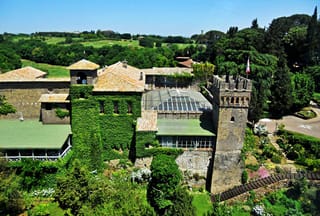
Castello di Torcrescenza
Città metropolitana di Roma Capitale
7.2km
castle, chateau
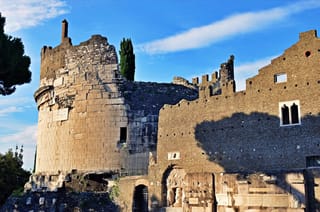
Tomb of Caecilia Metella
Città metropolitana di Roma Capitale
7.2km
castle, chateau
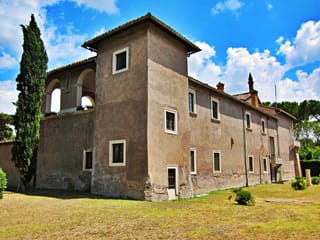
Castello della Magliana
Città metropolitana di Roma Capitale
9.3km
castle, chateau
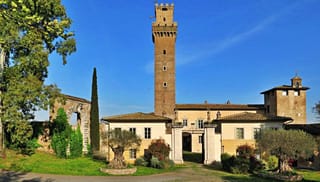
Castello della Cecchignola
Città metropolitana di Roma Capitale
10.1km
castle, chateau
Castello di Lunghezza
Città metropolitana di Roma Capitale
16.8km
castle, chateau
Castello di Torre In Pietra
Città metropolitana di Roma Capitale
20.3km
castle, chateau