Palazzo Madama (Turin)
Città Metropolitana di Torino Piemonte Italy
castle, chateau
Palazzo Madama e Casaforte degli Acaja
Città Metropolitana di Torino Piemonte Italy
castle, chateau
Palazzo Madama e Casaforte degli Acaja is a palace in Turin, northern Italy
Palazzo Madama e Casaforte degli Acaja è un complesso architettonico e storico situato nella centrale piazza Castello a Torino
Previous names
Palazzo Madama (Turin), Palazzo Madama e Casaforte degli Acaja
Description
Palazzo Madama e Casaforte degli Acaja is a palace in Turin, northern Italy. It was the first Senate of the Italian Kingdom, and takes its traditional name from the embellishments it received under two queens (madama) of the House of Savoy.
At the beginning of the first century BC, the site of the palace was occupied by a gate in the Roman walls from which the decumanus maximus of Augusta Taurinorum (the ancient name of Turin) departed. Two of the towers, although restored, still testify to this original nucleus. After the fall of the Western Roman Empire, the gate was used as a fortified stronghold in the defences of the city.
Later the building became a possession of the Savoia-Acaja, a secondary branch of the House of Savoy; in the early 14th century, they enlarged it into a castle. A century later Ludovico of Acaja rebuilt it in square shape, with an inner court and a portico, and four cylindrical towers at each corner. The form of this edifice is still clearly recognizable from the back section of the palace. After the extinction of the Acajas, the edifice became a residence for guests of the house of Savoy.
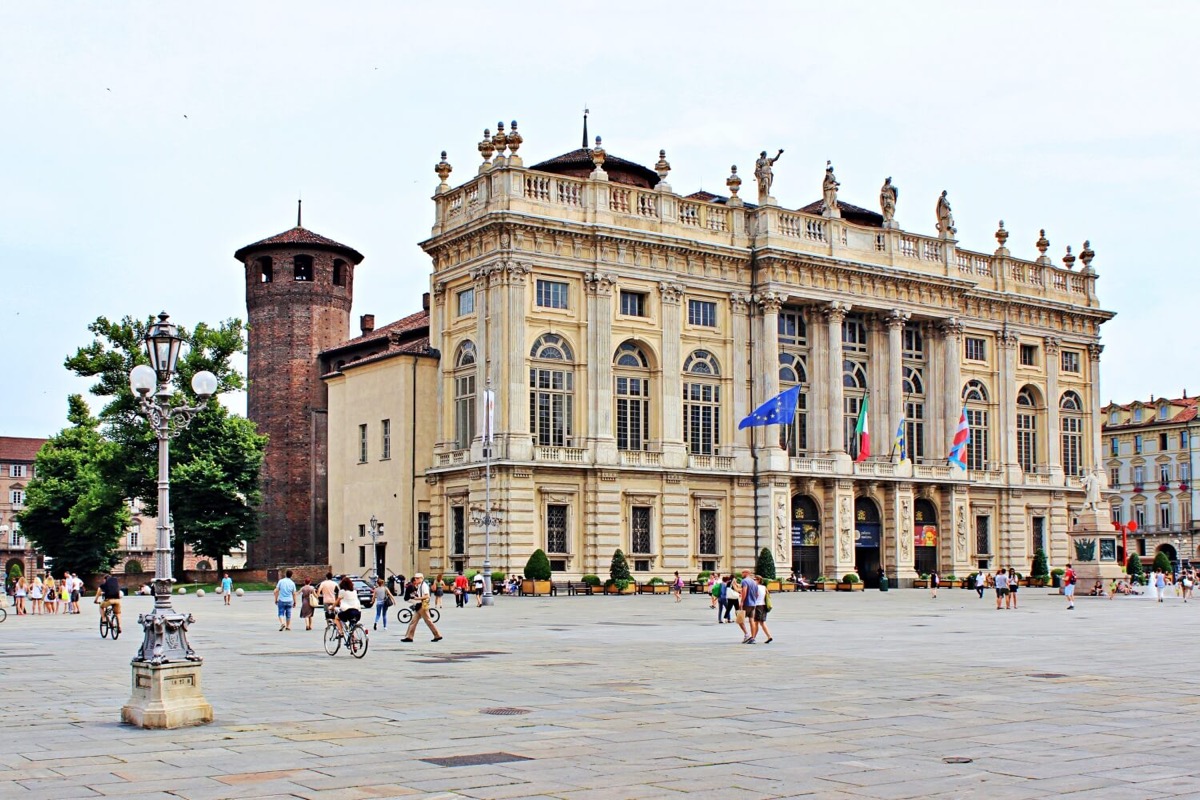
In 1637 the regent for Duke Charles Emmanuel II, Christine Marie of France, chose it as her personal residence. She commissioned the covering of the court and a revamping of the inner apartments. Sixty years later another regent, Marie Jeanne of Savoy, who was known as 'Madama Reale', lived in the palace. She conferred upon it definitively the nickname of Madama (Italian for Madame). She invited many artists to renovate the building which the duchess wanted to turn into a sumptuous royal palace. The artist Domenico Guidobono became the undisputed protagonist of the decorations of the halls on the first floor of Palazzo Madama, known as the Guidobono halls – the Madama Reale’s Chamber, the Chinese Cabinet, and the Southern Veranda. The duchess also asked architect Filippo Juvarra to design a new Baroque palace in white stone, but the works halted in 1721 after only the front section had been completed.
Later the palace had various uses, and housed the headquarters of the provisional French government during the Napoleonic Wars. In the 19th century King Charles Albert selected it as seat of the Pinacoteca Regia, the royal art gallery, and, later, of the Subalpine Senate (the Parliament of the Kingdom of Sardinia) and of the High Court. Since 1934 it has housed to the City Museum of Ancient Art.
A defiant monument to the Sardinian troops, erected by Milanese exiles during the triumphant visit to Milan of Austrian Emperor Franz Joseph, 15 January 1857, stands before the Palazzo Madama.
Overlooking Piazza Castello, the section built by Juvarra (illustration, right) constitutes today a scenographic façade a single bay deep, screening the rear part of the edifice, which has remained unchanged (illustration, above right). On the exterior, Juvarra expressed what was intended as a magnificent architectural preamble to an edifice that was never built, as a high-ceilinged piano nobile with arch-headed windows, which is linked to a mezzanine above it by a colossal order of pilasters of a Composite order. Each pilaster stands on a sturdy and formal fielded channel-rusticated base against the ashlar masonry of the ground floor. The central three bays are emphasised by the bolder relief offered by full columns attached to the façade, which is returned inward behind them to afford a vast glass-fronted central interior space like a glazed loggia. Their prominence is emphasised by the tall socles on which they stand, carved with trophies of arms in relief. In the flanking triple bays, each central bay is broken slightly forwards, given its window a deeper, more shadowed reveal within the depth of the wall; its two outer giant pilasters overlap the main order as if that continued behind them. On either side the bays' windows are set together within a slightly recessed panel, thus there are three layered planes to the façade. The dentiled cornice supported on bold consoles in the frieze breaks forward over the central columns and subtly over the central bays of the flanking sections as well. A conforming balustrade decorated with vases and statues in white marble surmounts the façade.
Palazzo Madama e Casaforte degli Acaja è un complesso architettonico e storico situato nella centrale piazza Castello a Torino. È patrimonio mondiale dell'umanità UNESCO, come parte del sito seriale Residenze Sabaude. Nel palazzo ha sede il Museo civico d'arte antica.
Si tratta di un connubio di duemila anni di Storia di Torino, da antichissima porta orientale della colonia romana di Julia Augusta Taurinorum a casaforte difensiva, quindi a Castello vero e proprio, simbolo del potere sabaudo fino almeno al XVI secolo, quando venne preferito l'attuale Palazzo Reale, come sede dei duca di Savoia.
La parte occidentale del primo complesso medioevale, fu poi chiamato Palazzo Madama perché fu dapprima abitato da Madama Cristina di Borbone-Francia, detta la "prima Madama Reale", nel periodo 1620-1663 circa, quindi da Maria Giovanna Battista di Savoia-Nemours, detta la "seconda Madama Reale", nel periodo 1666-1724. Fu per quest'ultima che l'attuale facciata fu disegnata, nel 1716-1718, dall'architetto di corte Filippo Juvarra.
Sito nel cuore di Torino, in quello che doveva essere il castrum Quadrilatero Romano, il complesso sorge su quella che, al tempo dell'antica colonia romana di Julia Augusta Taurinorum, era chiamata la Porta Praetoria (per altri storici era invece la Porta Decumana), dalla quale si accedeva al Decumano Maximo entrando dalla parte orientale. Qui infatti si aveva accesso alla città dal lato del Po, che andava, per la sua strategica posizione, difeso accuratamente; dopo la caduta dell'Impero romano d'Occidente, la porta venne trasformata in una fortezza, atta alla difesa cittadina, vista l'ovvia importanza di tale via di comunicazione, anche se mantenne l'originaria funzione di varco con l'apertura nell'antico muro romano. Già nel IX secolo si attesta il nome di un secondo varco, chiamato Fibellona, di etimo incerto.
La primitiva fortificazione passò quindi ai marchesi di Monferrato nel XIII secolo, e questo fu il luogo dove, con buona probabilità, venne siglato il trattato tra Guglielmo VII del Monferrato e Tommaso III di Savoia che prevedeva la liberazione del primo e la cessione di Torino dagli Aleramici ai Savoia. Era il 1280.
Passarono i secoli e la fortificazione di Porta Decumana passò in proprietà dei Savoia-Acaja (ramo cadetto dei Savoia) che nella prima metà del XIV secolo lo ingrandirono a castello: ciò avvenne per naturale discendenza dinastica, da Tommaso III a Filippo I, principe di Savoia e signore di Acaja, che da allora esercitò su Torino potere effettivo, facendo di questa casaforte il suo centro del potere.
Un secolo dopo è sempre un Acaja, Lodovico, a rimaneggiare il castello[1], facendogli assumere la forma quadrata con corte e portico, quattro torri cilindriche angolari, ancora oggi in parte riconoscibile su tre lati. L'estinzione del ramo d'Acaja vide il castello diventare una residenza per gli ospiti dei Savoia.
Useful information
10.00 EUR
8.00 EUR
20 - 25 persone: 6.00 EUR
- Il primo mercoledì del mese, non festivo, l'ingresso è gratuito per le collezioni permanenti
- La sala relax
gruppiescuole@tosc.it
- Audioguida: 4.00 EUR
- Bookshop
-
External links
Nearby castles
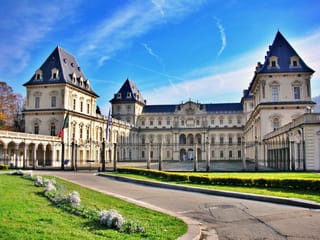
Castello del Valentino
Città Metropolitana di Torino
1.8km
castle, chateau
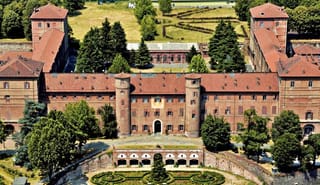
Moncalieri Castle
Città Metropolitana di Torino
7.7km
castle, chateau
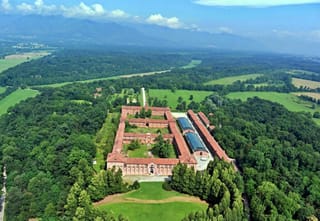
Castello della Mandria
Città Metropolitana di Torino
10.8km
castle, chateau
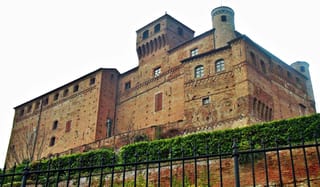
Castello di Bardassano
Città Metropolitana di Torino
12.6km
castle, chateau

Castello di Rivalta di Torino
Città Metropolitana di Torino
13.6km
castle, chateau
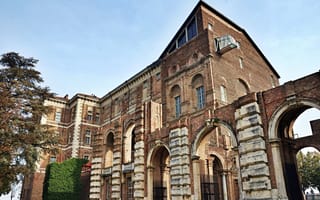
Castle of Rivoli
Città Metropolitana di Torino
13.8km
castle, chateau
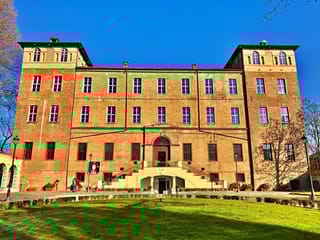
Castello Della Rovere (Vinovo)
Città Metropolitana di Torino
14.1km
castle, chateau