Strozzavolpe Castle
Provincia di Siena Toscana Italy
castle, chateau
Castello di Strozzavolpe
Provincia di Siena Toscana Italy
castle, chateau
Strozzavolpe Castle provides the classic backdrop for a classic legend
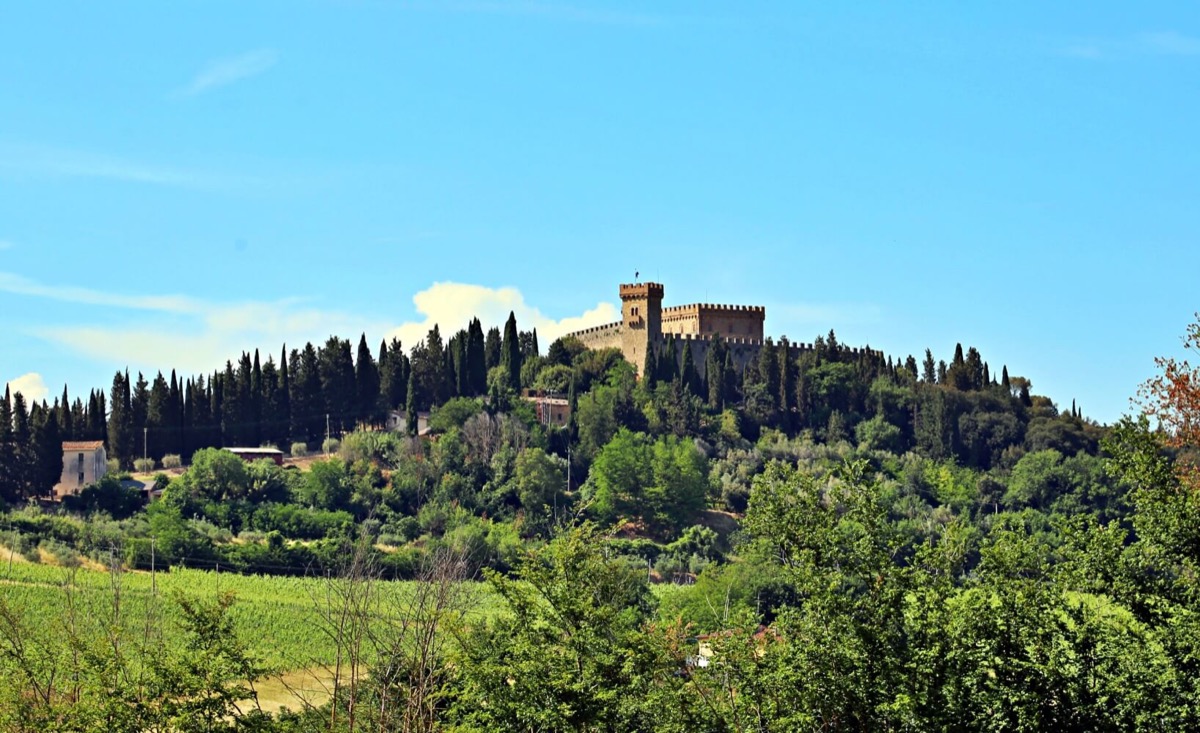
Il castello di Strozzavolpe si trova su un colle nei pressi di Luco, nel comune di Poggibonsi, in provincia di Siena
Previous names
Strozzavolpe Castle, Castello di Strozzavolpe
Description
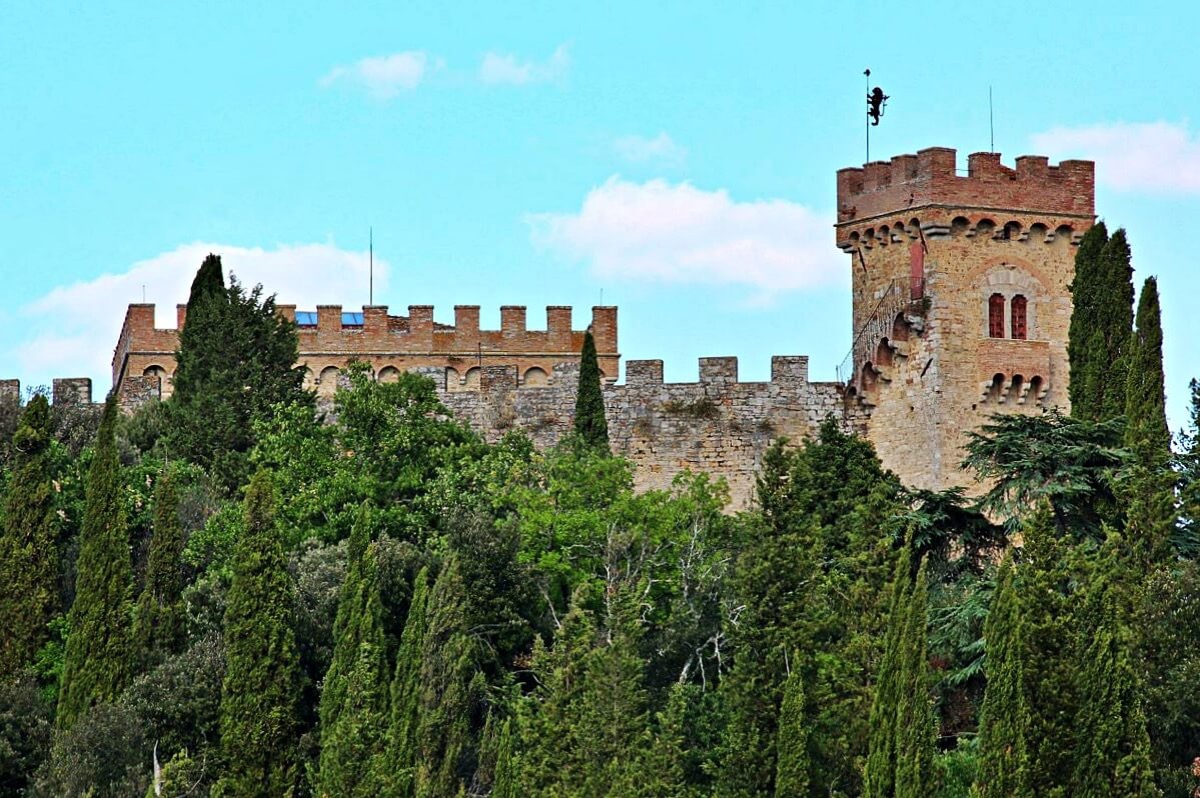
Strozzavolpe Castle provides the classic backdrop for a classic legend. The castle was owned by generations and generations of the same family until it ended up in the hands of a famous Florentine lawyer. The castle was built in 1154 and its name ‘Strozzavolpe’ most probably comes from ‘Scoriavolpe’. It was built by Benuccio da Salimbeni and then sold to the Florentine Adimari family.
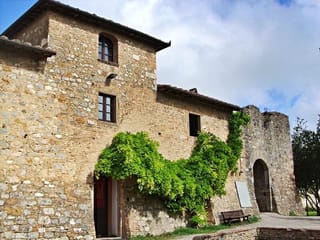
The present owner has carried out some important restoration work in order to bring the castle back to its original splendour. Anyone driving past, either on the Cassia road or the motorway, can’t help but notice and admire its authentic protective walls, classic drawbridge and majestic stone arch. This is a castle straight out of the pages of a fairy tale. Around the edge of the castle are several ancient buildings which, while they are not as old as the castle itself, are nonetheless of historical importance. Many myths and legends surround Strozzavolpe Castle, including stories of romance and bloody battles. The owners won’t confirm the suggestion that the castle might be haunted, although they certainly don’t deny the strange legends which have grown up around the it. One such tale tells of the ghost of a wolf which roams around the castle when there is a full moon.
It is said that when Bonifazio, Duke and Marquis of Tuscany, decided to construct the castle here, he didn’t care about the fact that there was a strange wolf which lived in the area and which even the most courageous knights were afraid of going near. He and his men hunted the wolf, although not even the most skilled huntsmen were able to get near the animal. The oddest part of the story is that the huntsmen claimed that the wolf kept its distance from the men by spitting flames from it mouth. The prince finally managed to catch the wolf by setting a trap hidden in the woods and then strangling it. The prince’s satisfaction didn’t last long as the court wizard told him that the castle would only survive as long as the wolf’s body. Thinking he could find a way to survive this curse, he had the wolf’s body embalmed and filled with liquid gold. He then had the body hidden in a secret place in the castle’s foundations and charged three knights with the duty of guarding the spot for the rest of their lives. Centuries later, the tale continues, a builder was working in the depths of the castle when he came across the treasure that was the gold-filled body of the wolf. No sooner had he laid his hands on it though, the three knights burst out and stole away with the wolf – hiding it in another secret place. Even today, when the moon is full, people claim to have spotted a large wolf prowling round the area and diving into the dry ditch that circles the castle.
‘Strozzavolpe’ means ‘fox strangler’ and it would seem that the wolf at Strozzavolpe Castle personifies the constant need to defend the castle. The central part of the castle and its vast rooms are decorated with ancient carvings. One of these rooms is the ‘Camera Rossa’ (Red Room), where Cassandra Franceschi was found in a compromising position with one of her husband’s (Giannozzo da Capparello) pageboys. Capparello pretended to turn a blind eye and then had the room sealed and left them to die there in each other’s company. Their cries can still be heard all over the castle, but especially in the room itself. An agitated ghost is often said to be the result a terrible crime, such as this, committed in the past. The spirit of the unfaithful Cassandra has not been soothed by the passage of time and still roams the castle today.
The land around Strozzavolpe Castle is equally rich in legend, such as the ‘casa delle suore e dei frati’, or the ‘house of the nuns and the monks’, where rattling chains and banging on the walls can be heard. It seems as if the wandering spirits are possessed and are filled with an urgent need to make themselves heard – perhaps in order to tell their stories. In 1970, while a team of builders were working in the castle, two interesting things took place. First, one of the battlements seemed to have been freshly rebuilt and the builder who had been working in that area disappeared. They took the battlement apart and discovered a tube inside containing a burnt parchment with an inscription in Gothic characters. The inscription described the story of a buried treasure. It was then discovered that the builder who had disappeared had in fact left town for an unknown destination with his whole family. Had he found a treasure in the castle? We may never know. The legends that surround Strozzavolpe Castle and the tales of ghosts and haunted rooms bring up a fundamental question: are there really troubled spirits who are anxious to contact us or, is it simply us human beings who are anxious to try to forge some link to the past and the dead?
https://viafrancigena.visittuscany.com
Il castello di Strozzavolpe si trova su un colle nei pressi di Luco, nel comune di Poggibonsi, in provincia di Siena.
Le origini del castello risalgono alla prima metà dell'XI secolo. Interventi successivi furono eseguiti nel corso del XV, del XVI e del XVIII secolo; gli ultimi restauri risalgono all'Ottocento.
Il castello fu costruito da Benuccio da Salimbeni durante la prima metà dell'XI secolo su una collina, in posizione strategica, all'incrocio tra la Cassia e la via Francigena.
Venne nominato per la prima volta nel 1154 in un documento di Abbadia a Isola, una frazione del comune di Monteriggioni in provincia di Siena, nel quale si parlava del castello di Scoriavolpe, di proprietà del feudatario Guido Guerra II, gestito però da alcuni vassalli il cui nome di famiglia era proprio Scoriavolpe. Si dice che Guido Guerra II sia stato il primo proprietario, tant’è che fu lui a munire il castello di fortificazioni e a costruire un corridoio sotterraneo, il quale, passando sotto la via Romana ed il torrente Staggia, univa il castello con Poggio Marturi, un colle che si trova sulla sponde dell'Elsa.
Nel 1240, il corpo centrale del castello venne circondato da un cinta muraria con merlatura guelfa, ed assunse una forma irregolare, tipicamente medievale, che ancora oggi mantiene. Le mura erano circondate da un fossato contenente acqua piovana stagnante, valicabile solo per mezzo del ponte levatoio del castello. L’altura ed il fossato attorno alla fortezza erano gli elementi di difesa che rendevano difficile l’accesso.
Nel 1313 Arrigo VII di Lussemburgo si impadronì del castello, utilizzandolo come roccaforte per difendersi dal contado senese. Se fino ad allora l’edificio aveva una funzione prettamente militare, alla fine del XIV secolo, quando la fortezza venne venduta agli Adimari di Firenze, venne trasformato in abitazione padronale. Come era di tradizione delle case fiorentine, vennero ricavati due piani con una scala interna: al piano superiore si trovava l’abitazione delle donne, mentre al piano terra vi erano una sala per le armi, la sala da pranzo ed altri vani di uso comune. Lo stemma della famiglia, costituito da due strisce gialle e blu orizzontali, si trova scolpito su un caminetto all'interno dei locali adibiti a fattoria fino al 1960.
Nel 1479 ci fu la presa di Poggibonsi da parte del Duca di Calabria in guerra con i fiorentini, e il Castello di Strozzavolpe subì l’assedio, ma non cadde. Questa vicenda viene raffigurata nel dipinto realizzato nel 1480 da Giovanni di Cristoforo Ghini e Francesco D’Andrea, nel quale si vede il castello sul quale sventola la bandiera bianca con la croce rossa, simbolo degli artigiani fiorentini. Questa rappresentazione si trova oggi nel Palazzo Comunale di Siena.
Nel 1590 il castello divenne di proprietà dei Rinuccini, i quali fecero costruire una cappella gentilizia sotto la torre est del castello. Quest’ultima fu tuttavia abbattuta nel 1722 ad opera dei Ricciardi, i proprietari successivi, perché pericolante.
Nel 1730 il castello passò ai Franceschi, e nel 1777 ai Da Cepparello, i quali incaricarono l’architetto De Fabbris di innalzare all’interno del palazzo una grande scala in pietra serena. Ma gli interventi di maggior rilevanza furono realizzati a partire dalla fine del XIX secolo, quando il castello passò sotto la proprietà di Alessandro Bizzarri. Quest’ultimo, dopo il crollo del tetto causato da un’intensa nevicata, incaricò un ingegnere di dirigere i lavori di restauro integrale del Castello in stile romantico tedesco: i merli di pietra originali vennero incorporati nell’innalzamento delle mura esterne. Fu necessario innalzare anche il corpo centrale e la torre d’ingresso altrimenti sarebbe risultato sproporzionato, in più venne costruito un balcone con loggia e venne prosciugato il fossato.
Durante la Seconda guerra mondiale il castello divenne sede di un comando militare, con una conseguente dispersione delle armature conservate ora nella sala delle armi. Attualmente la struttura appartiene alla famiglia Banchi-Arcangeli.
Oggi il castello ospita una collezione di armi antiche visitabile su richiesta e mantiene una buona parte delle mura originali. Lo si può raggiungere percorrendo un viale di cipressi ed una rampa a gradoni. Un ponte di legno conduce al portale d’ingresso; all’interno, in posizione centrale si trova il palazzo (che dell’antico cassero mantiene solo la posizione), vari edifici di servizio con sotterranei disposti lungo le mura.
Useful information
No
- Collezione di armi antiche
- Un viale di cipressi ed una rampa a gradoni
- La cappella gentilizia
Proprietà privata, visitabile solo su richiesta
-
Nearby castles
Fortezza di Poggio Imperiale
Provincia di Siena
1.8km
fortress
Castello della Badia
Provincia di Siena
2.6km
castle, chateau
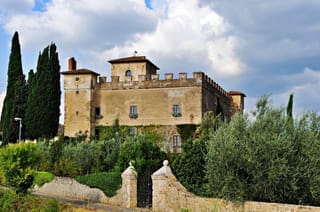
Castello della Paneretta
Città Metropolitana di Firenze
4.2km
castle, chateau
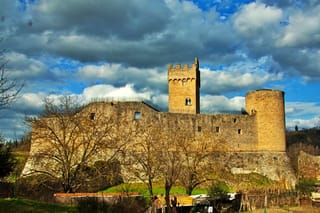
Castello di Staggia Senese
Provincia di Siena
4.4km
castle, chateau
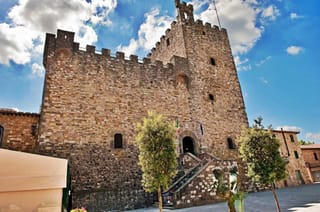
Rocca di Castellina in Chianti
Provincia di Siena
8.9km
castle, chateau
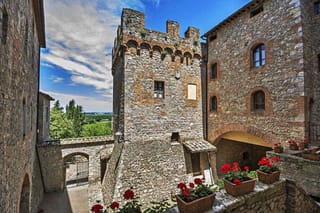
Castel Pietraio
Provincia di Siena
9.5km
castle, chateau
Rocca di Montestaffoli
Provincia di Siena
10.9km
castle, chateau