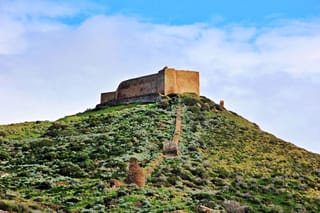
Castello di Las Plassas
Sud Sardegna Sardegna Italy
castle, chateau
Castello di Las Plassas
Sud Sardegna Sardegna Italy
castle, chateau
The town came into being during the Middle Ages at the feet of a castle as the groups of structures around it, sas plassas, came together to form a village
Il castello di Las Plassas o di Marmilla è un edificio fortificato militare di età giudicale (X-XV secolo)
Previous names
Castello di Las Plassas , Castello di Las Plassas
Description
The town came into being during the Middle Ages at the feet of a castle as the groups of structures around it, sas plassas, came together to form a village. Las Plassas is one of the island’s smallest villages, with only 250 inhabitants. It rises in the fertile valley of the Flumini Mannu, its characteristic low houses graced with expansive courtyards nestled around the parish church of San Sebastiano, the patron saint whose feast day is celebrated in January with a huge bonfire. The church dates to the middle of the XVII century and has since been renovated. The town’s main church is Santa Maria Maddalena, a renaissance building constructed at the feet of the castle between the XVII and XVIII century over the ruins of a Byzantine structure. It had a Greek cross floor plan that was then changed into a Latin cross. The octagonal dome and bell-gable with a XVI century bell are all that remain of the original structure. On the outskirts is Santa Maria di Monserrato (late XIV century), home to a Nuragic Age sacred well. It was built in an historically frequented area, nearby is a Punic-Roman oven. Three cross arches divide the hall into four sections. The most heartfelt celebrations here take place on 8 September, while a yearly legume festival is held in late September.
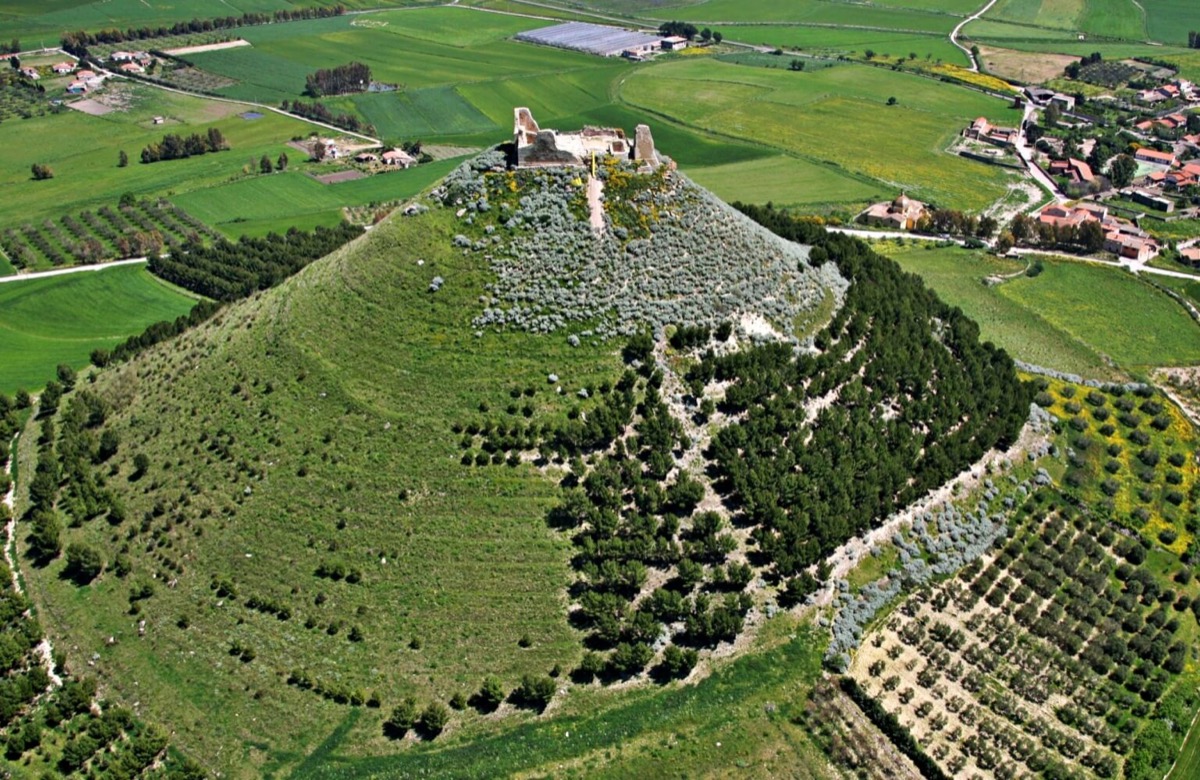
The first outpost of the Arborea Guidicato, Las Plassas became the seat of the powerful Aragonese family, Zapata, its liege, who lived there until the late XX century. An example of the flourishing economy of the Middle Ages, the remains of the Marmilla Castle (or Castello di Las Plassas) are among Sardinia’s most picturesque, isolated on a lone and perfectly conical hilltop that looks out over the plains below. Built in the XII century, it was of military importance, the fortress of the Arborea Guidicato and a mainstay in the war against the Crown of Aragon, under which it fell after the sa Batalla at Sanluri (1409). Some of its rooms served as prison cells until the 1800s. The main tower, walls, perimeters and interior can still be seen today, as can the large well hewn into the rock. The connections between the rooms are worth noting. During archaeological digs some of the furniture, ceramics (XII-XVI centuries) and other relics were discovered, now on display at the MudA museum, located in an XVIII century residence. A multi-media route ends with a film about the visit to the castle by Mariano IV, the ruler, and will take you into medieval Sardinia. A part of the museum is archaeological. Of interest is an epigraph from the 1st century CE, when the local Uneritani population dedicated a temple to Jove. The village was then part of a Uselis colony. Many Nuragic monuments were reused in the Punic-Roman era. The most important of them are the single towered Perdedu and Bruncu e Forru, the five-lobed s’Uraxi and the XIX century BCE giant tomb of Mesedas. The area has been populated since the Neolithic Age, as proven by the Pranu Sonàllas site.
https://www.sardegnaturismo.it
Il castello di Las Plassas o di Marmilla è un edificio fortificato militare di età giudicale (X-XV secolo). Il suo stato di conservazione è basso, ma riveste un'importante rilevanza storica in quanto era una delle roccaforti di controllo del confine del Regno di Arborea. Sorge nel comune di Las Plassas, poco distante dal centro abitato. La collina conica su cui poggia, a forma di mammella, ha dato il nome Marmilla prima alla circoscrizione amministrativa arborense, poi al territorio circostante e infine alla subregione geografica.
Storia
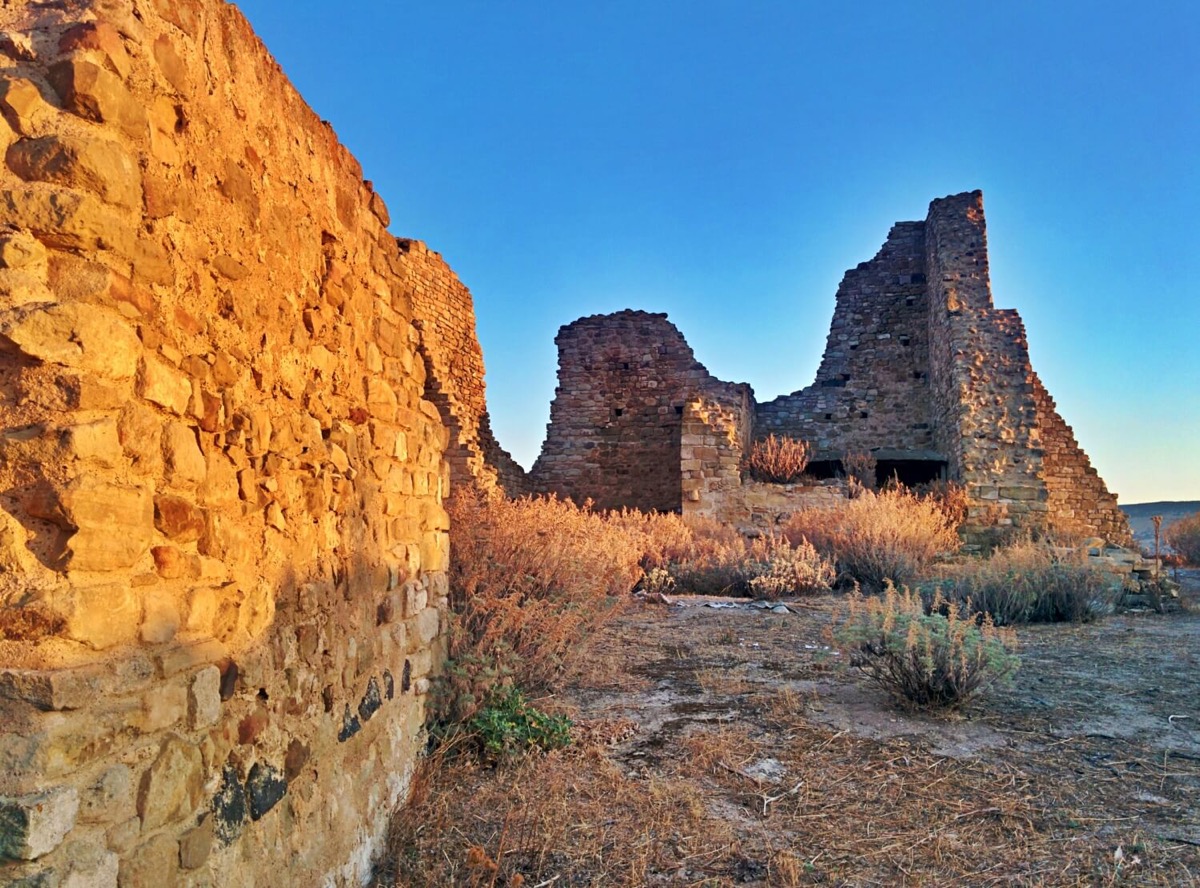
Dettaglio mura del castello di Las Plassas
Costruito prima del 1172 (anno a cui risale il primo documento diretto in cui viene citato) il castello di Marmilla a Las Plassas apparteneva al Regno di Arborea, per il quale svolgeva l'importante funzione di roccaforte di confine. Proprio nel 1172 venne ceduto in pegno alla repubblica di Genova.
Dettaglio all'interno delle mura del castello di Las Plassas
Venne più volte ristrutturato e l'intervento più significativo risale all'epoca del re Mariano II di Arborea, alla fine del Duecento. Durante tutta la guerra tra il Regno di Arborea, a cui apparteneva, e il Regno di Sardegna della Corona d'Aragona, assunse un ruolo strategico di primaria importanza. A seguito della battaglia di Sanluri nel 1409, entrò a far parte definitivamente nei domini aragonesi del Regno di Sardegna. Mantenne la sua funzionalità ancora per poco più di un secolo fino a venire definitivamente abbandonato.
Stato attuale
Visuale panoramica
Oggi è allo stato di rudere, ma è stato recentemente oggetto un consistente consolidamento (nel 2000) e di alcune campagne di scavo (per la Soprintendenza archeologica delle provincie di Cagliari e Oristano) durante le quali sono stati portati alla luce degli straordinari reperti materiali e parti dell'arredo architettonico. I reperti sono esposti nelle sale del museo comunale multimediale denominato MudA. I ruderi del maniero sono attualmente visitabili con l'ausilio di una audioguida partendo dal museo MudA. Essi sono visitabili grazie anche alla stradina costruita dall'ex sindaco Alessandro Melis, architetto e insegnante di storia dell'arte al liceo Marconi-Lussu di San Gavino Monreale.
Useful information
No
5.00 EUR
0 - 12 anni: 3.00 EUR
18+ persone: 3.00 EUR
Un'audioguida interattiva
muda.lasplassas@gmail.com
- Sede del museo multimediale
- Bookshop sul territorio
- Visite guidate nel territorio
- Il museum shop
-
External links
Nearby castles