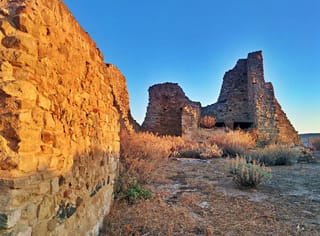
The Castle of Monreale
South Sardinia Sardinia Italy
castle, chateau
Castello di Monreale (Sardara)
South Sardinia Sardinia Italy
castle, chateau
In the middle of the Campidano area, there is a famous wellness centre, honoured with the Bandiera Arancione (Orange Flag) in 2005 of the Touring Club Italiano
Il castello di Monreale sorge nel territorio del comune di Sardara, nella provincia del Sud Sardegna
Previous names
The Castle of Monreale, Castello di Monreale (Sardara)
Description
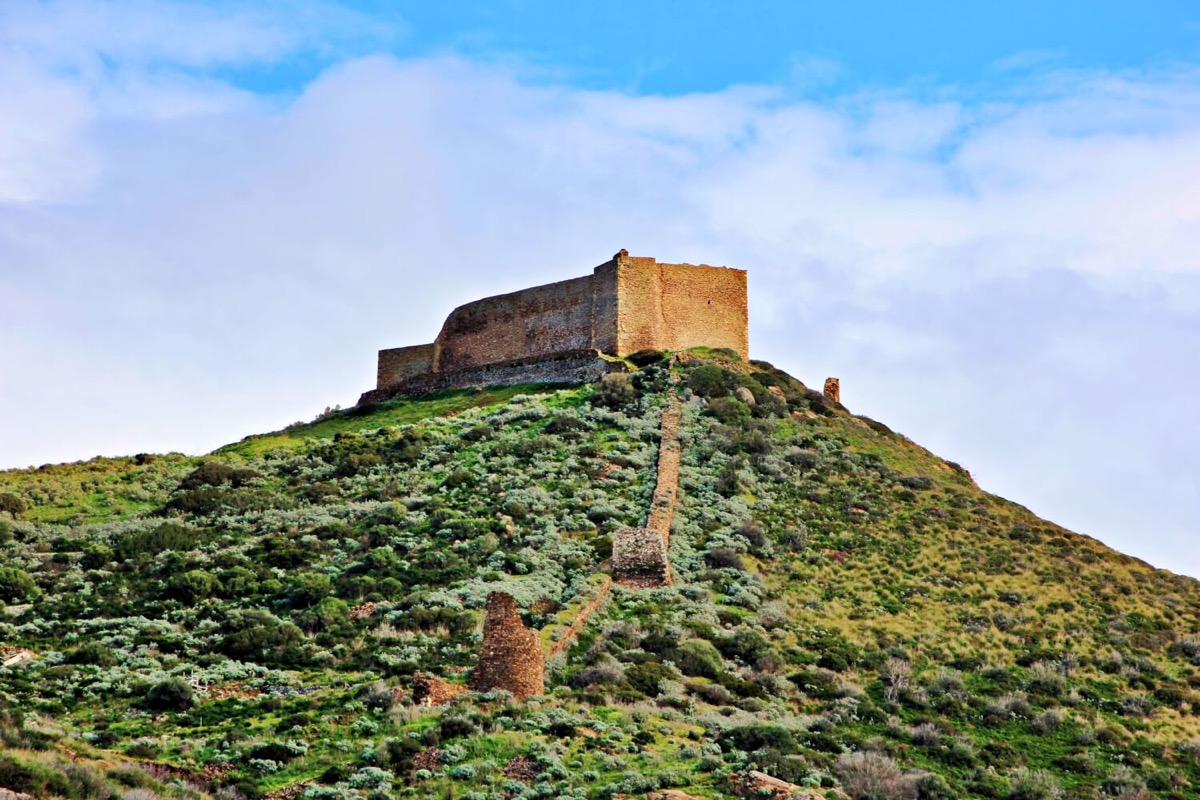
In the middle of the Campidano area, there is a famous wellness centre, honoured with the Bandiera Arancione (Orange Flag) in 2005 of the Touring Club Italiano. Sardara, a village with four thousand inhabitants, has always been a strategic junction and was once the border between the Giudicati of Arborea and of Calari. The Castle of Monreale, towering over the hills in the south of the village, symbolizes the Giudicati period. It originally consisted of a keep, eight towers and town walls and today you can admire the powerful walls and, inside, the remains of the medieval village. Possibly built around the year 1000 and documented in 1309, it was crucial in the wars against the Catalan-Aragonese. The Giudici (judges) of Arborea Mariano IV and Eleonora stayed here.
Sardara's history is linked, today as in Antiquity, to the thermal springs: the Aquae Neapolitanae led to the establishment of a densely populated Roman residential area (2nd-1st century BC). At the end of the 19th century, they were incorporated into the modern Sardara thermal baths. Two kilometres from the village, your stay will be an experience of well-being in an establishment surrounded by greenery. The waters gush out at a temperature of between 50 and 68 degrees C and are beneficial and therapeutic. There is abundant evidence of prehistoric times here. The most important is the sanctuary of Sant'Anastasia, a Nuragic place of worship active between the 16th and 7th centuries BC, featuring a sacred well made of basalt and limestone. You can enter the room via a flight of steps protected by a covered corridor and you can admire the solid architecture as you descend down to the bottom. Its use as a place worship was not exhausted: this is documented by Punic ceramics and the remains of a Byzantine building beneath the church of Sant'Anastasia (rebuilt in the 15th century), giving the sanctuary its name. As well as a sixteenth-century baptismal font, inside the church there is another smaller Nuragic well, where pots dating back to the 8th century BC were found. All around, there is a fence enclosing a village that extends mostly below the houses of Sardara: it was the largest of the thirty Nuragic settlements scattered over the hills and plains. Furniture was found in a hut, among which an altar shaped like a Nuraghe and artefacts made of terracotta, lead and bronze. You will see them in the Villa Abbas Museum. Not far from the site, there is Casa Pilloni a 17th century dwelling, now a services centre for the archaeological area.
The old town centre is picturesque: cobbled roads and stone houses with exquisite portals. Historical manor houses and ancient churches stand out. The parish church of the Beata Vergine Assunta, dating back to the early 17th century, has sculpted reliefs, a pipe organ (1758), a marble altar and a retable of the Madonna of Itria. The church of San Gregorio Magno, dating back to the beginning of the 14th century, bears witness to the transition from Romanesque to Gothic. Near the thermal baths, stands the sanctuary of Maria de is Acuas, (of the Waters), a destination for pilgrimages. On the altar, a statue of the Virgin Mary stands out and dates back to the end of the 16th and the beginning of the 17th century. The church is where the most heartfelt celebration is held, in mid-September.
https://www.sardegnaturismo.it
Il castello di Monreale sorge nel territorio del comune di Sardara, nella provincia del Sud Sardegna.
Ubicazione
È situato in cima ad una collina, ad un'altezza di circa 280 metri sul livello del mare. La sua posizione permette di ammirare l'intera piana del Campidano fino a Cagliari. Insieme ai castelli di Marmilla e di Arcuentu, nel 1309 segnava il confine tra il giudicato di Cagliari e quello di Arborea.
a sua datazione resta incerta e differenti sono le testimonianze che parlano del Castrum de Monte di Sardara, fregiato della qualifica di "reale" sin dal 1309, quando risulta concesso dal re Giacomo II di Aragona a Mariano e ad Andreotto de Bas, giudici di Arborea, e per conto di questi amministrato dal Comune di Pisa.
Nel 1324 si ha la prima attestazione dell'uso di Monreale come residenza regale, anno in cui Ugone II di Arborea, accampato nei pressi di Pabillonis affrontò e sconfisse in battaglia i pisani nel territorio di Sardara e Sanluri.
La fortezza raggiunse il massimo del suo splendore con Eleonora d'Arborea, che succedette a suo fratello Ugone III.
Dopo la disfatta nella battaglia di Sanluri (30 giugno 1409), trovò qui rifugio l'ultimo giudice arborense Guglielmo III di Narbona.
Il castello di Monreale ad oggi verte in uno stato di abbandono totale. Dal 1987 al 2011 si sono susseguite nove campagne di restauro e di consolidamento che nel tempo hanno permesso di conservare meglio il monumento e di portare alla luce il villaggio sottostante la collina.
Useful information
No
GRATUITO
GRATUITO
GRATUITO
sardegnacultura@regione.sardegna.it
Proprietà del Comune
-
External links
Nearby castles