The Castle of Spezzano
Provincia di Modena Emilia-Romagna Italy
castle, chateau
Castello di Spezzano
Provincia di Modena Emilia-Romagna Italy
castle, chateau
The castle, probably dating back to before the 11th century, formed part of a vast fortified system made up of the forts of Rocca S
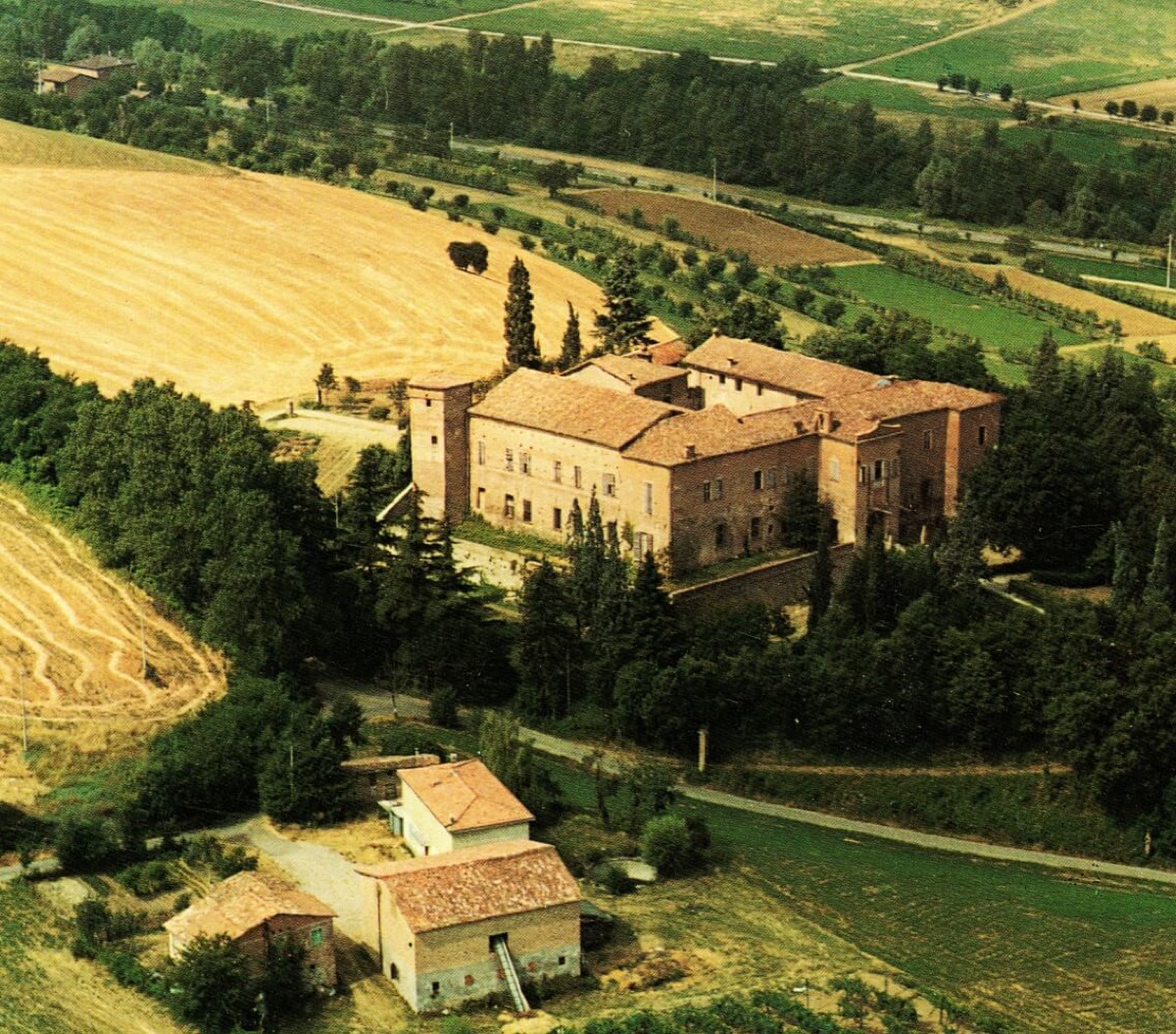
Il castello di Spezzano, detto anche rocca Coccapani, è la struttura militare più importante del territorio di Fiorano Modenese, sede, inoltre, del Museo della ceramica e dell'acetaia comunale
Previous names
The Castle of Spezzano, Castello di Spezzano
Description
The castle, probably dating back to before the 11th century, formed part of a vast fortified system made up of the forts of Rocca S. Maria, Fogliano, Nirano, Torre delle Oche and Fiorano.
In the late Middle Ages, under the rule of the Da Spezzano and Da Castello Signoria, or Lordship, the castle was made up of simple, functional forms: first, a boundary wall, initially in perishable material, the keep, one or two towers, a few houses, the well and particularly the granaries and storage houses for the harvests from the introduction of the moat in the 14th century, the castle was accessed by way of a drawbridge to the north.
Until the 15th century, the castle acted as a place of defence and refuge for the people, having watchtowers and pentagonal towers for visual communication, and succeeding, particularly during the wars of the 14th century, in resisting against attacks and sieges, like the one in 1355, during which the Este troops failed to storm the castle and take it by force from the ruling Visconti family. In 1395, marquis Alberto d’Este granted the castle in fief to Marco Pio, earl of Carpi. In the early years of the 16th century, Alessandro Pio of Savoia reorganised the State of Sassuolo, establishing Spezzano Castle as one of the five seats of the Podesta’. With the Signoria of the Pio di Savoia, the castle began to act as a residence of the lord, or ‘signore’ as well as a political, administrative and legal centre, leaving behind its function as a medieval fort.
In the last room on the ground floor of the west wing, restoration work brought to light a wooden ceiling decorated with polychrome panels bearing heraldic coat-of-arms (Pio and Bentivoglio), the initials of Enea Pio and the date 1531, which can be considered the end of the first phase of construction of the palazzo, which also includes, on the first floor of the castle, the Gallery of Battles e and its pictorial cycle and, in the Old apartment, known as Clelia and Marco’s, the bedroom with the marital coat-of-arms. The second phase, destined to complete the western and northern façades and mainly focused on decorative work, began in 1587, when Marco III Pio acquired the state of Sassuolo. Surviving of these works are painted architraves on the main floor, or piano nobile and the extraordinary Hall of Views on the ground floor.
At the end of the sixteenth century, presumably between 1595 and 1596, Marco III Pio (1567-1599) had painted, in the main room of Spezzano castle, the principal sites of his dominion: a sequence of no fewer than 56 views which featured even the smallest corners of his fief, made up of property in Modena and more in Sabina, received, in 1595, as a dowry from his wife Clelia Farnese, whom he married in Palazzo Farnese in Caprarola (Viterbo) on 2 August 1587.
The main room was thus decorated by Cesare Baglione with a cycle of paintings aiming to celebrate the power of the Pio di Savoia through the depiction of castles, towns and villages, from the plains to the mountains, belonging to the State of the Pio family, divided into five districts of the podesta’: Sassuolo, Spezzano, Formigine, Brandola and Soliera.
The fresco cycle, geo-iconographic and landscape in nature, finished in the vault of the room with the depiction of a crowned woman, the personification of Pietas, bearing the quartered Pio shield and the motto "Pia Soboles", the Pio dynasty.
The substantial restoration work, carried out in the mid nineteenth century, led to the cancellation of the paintings on the vault, as well as of the Pio shield, which can still be made out beneath the depiction of Spezzano dating back to that time. Painted in the Gallery of Battles, on the piano nobile of the castle, are epic feats that featured (from 1509 to 1512) Alfonso I d'Este, Duke of Ferrara, Modena and Reggio as the protagonist.
Meanwhile, around 1735, the Marquis Luigi Coccapani saw to the first restoration of the frescoes in the Hall of Views, while the cycle of paintings in the gallery were (or perhaps already in the previous period) completely cancelled.
Their rediscovery occurred following the disclosure and restoration work concluded in 1992.
The lower floors of the pentagonal tower at the south/east corner, inside the castle boundary wall, are home to suggestive dungeons bearing prisoner’s etchings and graffiti, while the second and third floor hosts the Municipal Vinegar Factory made up of three vats of Traditional Balsamic Vinegar, complete with information panels and original furnishings. Marco Pio di Savoia died in 1599 and after a brief period of government led by the Este family, in 1629 the fief and Spezzano castle was transferred to the Marquis Guido Coccapani, whose family ruled until 1796.
During this period, besides its fundamental role as a residence and centre of the Signoria, the castle was also used for meetings of the Municipal council. In the Chamber called “della Ragione”, the Council met in the presence of the Podestà to elect the regents and officials of the Municipality and to deal with local affairs. Inside the castle was a court, known as the Pretorio, where the Podestà sat to serve justice and, next to it, rooms used as the judge’s residence. There were also four prison cells, located at the base of the two towers, on the south side and inside the home of the Podestà.
In the years that followed, the abolition of the court, the final dissolution in 1809 of the Municipality of Spezzano and the change in the castle’s judicial status definitively sealed the transformation of the building into a sumptuous manor house. In fact, in 1810, the Spezzano castle went back to being a private residence, for the Coccapani Imperiali family, which carried out various extension and restoration work, particularly in the years between 1862 and 1890; the castle was also given a new façade on the south side, by building a castle-style boundary wall with rectangular or Guelph battlements and large servants quarters, today used as a restaurant and caretaker’s house. Spezzano castle belonged to the Coccapani Imperiali family until the end of the nineteenth century, when it was inherited by Counts Pignatti Morano.
The Municipality of Fiorano then purchased the building in 1982, launching at that time both its restoration as well as historical–cognitive research into the castle.
https://www.visitmodena.it
Il castello di Spezzano, detto anche rocca Coccapani, è la struttura militare più importante del territorio di Fiorano Modenese, sede, inoltre, del Museo della ceramica e dell'acetaia comunale.
L'edificio esiste, probabilmente, dall'XI secolo anche se i primi documenti che ufficialmente ne parlano sono più recenti. Il più antico è in Sacramentum Extimatoris, una rubrica degli statuti del comune di Modena del 1225, in cui viene chiamato Castro Spezani. In epoca medioevale il complesso si presentava con un mastio, le torri, la cinta muraria, qualche casa, il pozzo interno alle mura, granai, fienili, magazzini ed una cappella dedicata a Sant'Agata. Nel 300 venne scavato il fossato e l'ingresso era sovrastato da una torre con ponte levatoio. Il ponte levatoio fu demolito e ricostruito nel 1795 per via del suo grave stato di degrado.
Il castello svolse, almeno fino al XV secolo, la funzione di difendere e proteggere la popolazione oltre che costituire un ottimo luogo d'osservazione per l'arrivo dei nemici grazie alla sua collocazione geografica. La sua capacità di difesa militare venne messa sicuramente alla prova il 19 maggio 1355 quando resistette per quindici giorni ad un assedio di duemila cavalli e mille fanti degli estensi senza che gli invasori riuscissero ad espugnarlo.
Nel 1393 il marchese di Ferrara Alberto V d'Este concesse in feudo il castello a Marco I Pio, signore di Carpi. Nello stesso anno Alberto venne a mancare e Niccolò III d'Este, succeduto al padre Alberto, riconfermò il feudo a Marco I Pio nel 1405.
Nei primi anni del 1500 Alessandro Pio di Savoia ereditò dal padre Giberto II il castello di Spezzano e decise di renderlo una delle cinque sedi podestarili. Da questo momento in avanti il maniero iniziò il suo percorso che lo porterà ad essere sempre meno utilizzato per scopi militari e sempre più come residenza politico-amministrativa del signore. Marco Pio decise di fare costruire il suo palazzo sulle mura ed i lavori iniziarono nel 1529.
Sul finire del XVI secolo, Marco III Pio di Savoia era signore di Sassuolo e quindi anche di Fiorano e Spezzano, nell'esercizio del suo potere decise di fare demolire la cappella dedicata a Sant'Agata e di utilizzare il materiale così prodotto per la costruzione del palazzo nel castello di Spezzano.
Alla morte di Marco III Pio di Savoia, nel 1599, il castello passò al duca di Modena e Reggio Cesare d'Este, alla cui casata rimase per trent'anni fino a che, nel 1629, l'intero feudo e la rocca passarono al marchese Guido Coccapani. Alfonso Coccapani, figlio di Guido, prese formalmente possesso di Fiorano all'inizio di giugno 1651. Spezzano rimase il capoluogo del marchesato, ed in particolare il Castello di Spezzano fu residenza del governatore o podestà o commissario agli ordini del marchese e che lo rappresentava tanto nell'amministrazione civile che in quella giudiziale. Dopo di lui lo ereditò Filippo Antonio Coccapani (1660 - 1723). Coccapani decise di fare costruire una cappella dedicata a Maria Vergine, fece costruire nel 1699 un altare con paliotto dell'artista carpigiano Giammarco Mazzelli.
Quando Filippo Antonio Coccapani morì il 5 marzo 1723 il castello passò quindi al figlio Luigi che lo mantenne fino alla sua morte nel 1755. A Luigi succedette il figlio Ludovico Coccapani, ultimo feudatario di Spezzano.
Nel 1797 il castello ottenne il titolo di Rocca o palazzo nazionale.
A partire dal 1809 cessa l'autonomia di Spezzano che viene accorpata al Comune di Sassuolo e di conseguenza ha fine ogni funzione pubblica ancora in essere del castello che diventa esclusivamente residenza della famiglia Coccapani in affitto dal regio demanio. Nel 1811 Luigi Maria Coccapani riottenne la proprietà del castello per decreto reale. Nel periodo che va dal 1862 al 1890, i Coccapani effettuarono consistenti restauri ed ampliamenti della struttura.
Nei primi del 1900 la proprietà del castello passò ai conti Pignatti Morano.
Nel 1982 il comune di Fiorano Modenese lo acquistò rendendolo di proprietà pubblica.
Useful information
GRATUITO
GRATUITO
GRATUITO
GRATUITO
- La cappella
- Audioguida
- Visita guidata gratuita ultima domenica del mese
- Punto Informativo Turistico
- Area picnic nel parco del Castello
- Ascensore
- WC
- WiFi
cultura@fiorano.it
- Visite guidate: 5.00 EUR
- Sede del Museo della ceramica
-
External links
Nearby castles
Castello di Sarzano
Province of Modena
2.3km
castle, chateau
The castle of Formigine
Provincia di Modena
6.0km
castle, chateau
Castello di Dinazzano
Provincia di Reggio Emilia
9.3km
castle, chateau
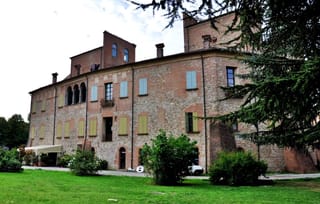
Castello di Arceto
Provincia di Reggio Emilia
14.7km
castle, chateau
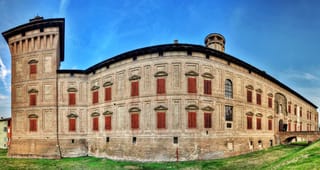
Boiardo Fortress
Provincia di Reggio Emilia
15.2km
fortress
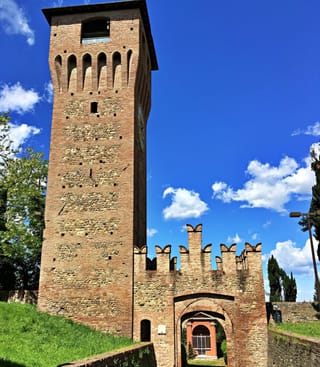
Rocca dei Bentivoglio
Città Metropolitana di Bologna
18.9km
castle, chateau
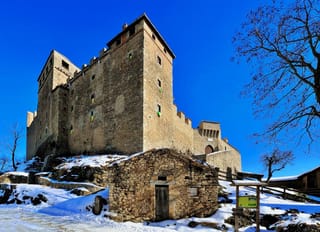
Castello di Montecuccolo
Provincia di Modena
23.3km
castle, chateau