Castello di Illasi
Provincia di Verona Veneto Italy
castle, chateau
Castello Scaligero (Illasi)
Provincia di Verona Veneto Italy
castle, chateau
The first news dates back to the year 1000 when the castle was owned by a deacon, a certain Moise
Il castello scaligero d'Illasi è un edificio medievale posto a difesa dell'antico borgo di Illasi, in provincia di Verona
Previous names
Castello di Illasi, Castello Scaligero (Illasi)
Description
The first news dates back to the year 1000 when the castle was owned by a deacon, a certain Moise. In 1243 it was occupied by Ezzelino III da Romano, the latter indicated by a bull of Pope Nicolò IV as rebuilder of the complex, which then was in a not happy state of conservation.
Dated June 27, 1289, a document attests to a donation to Alberto I della Scala and his descendants by the pontiff, grateful to the Scaligero for the capture by them, in Sirmione, a large group of heretics "patarini". The object of the donation was "the tower with the palace and the rubble that from the said castle are said to remain, with all the rights and its appurtenances as they are known to belong to the Roman Church".
Private property of the Della Tavola during the thirteenth century, in 1269 the castle was occupied by Pulcinella delle Carceri, in struggle with Mastino I della Scala, who used it as his refuge. The following year the statute called Albertino records the deed of transfer of the complex by Umberto della Tavola to Alberto I della Scala together with the castle of Soave and other fortresses. From the Scaligeri the complex received new vigor and various consolidation operations. In 1280 a Paduan incursion left him the signs of his passage.
More serious, however, were the damage caused by the return of the Venetian troops (1405) sent to tear the castle from the Carrara, Allied with William, last of the illegitimate children of Cangrande della Scala. The captain of the Carrara troops, realizing that the Illasians proved to be favorable to the return of the fortress to Dominanate, set fire to the manor that reported serious injuries.
The castle returned to be a theater of war in 1439. On March 28th of that year Nicolò Piccinino, the famous captain of fortune at the service of Filippo Maria Visconti, set the tents to Illasi, after inflicting a severe defeat on the Venetian troops and occupying the Soave castle.
When the Visconti star was extinguished and the banner of St. Mark returned, the castle gradually lost importance in the military field, also as a result of the peace policy pursued by Venice. In 1509 this decided to grant it as a feud to a valiant condottiere Girolamo Pompei, called "Malanchino", whose family boasted for centuries rights in that of Illasi. The investiture represented for the Pompeii not only an act of splendid and dutiful generosity but also constituted their reintegration into a possession enjoyed for centuries and which, through a series of historical-military events, had ended up in "foreign" hands. In reality, in the possession of their fiefdom, the Pompeii really entered only ten years later, when the war between the Emperor Maximilian of Austria and Venice ended.
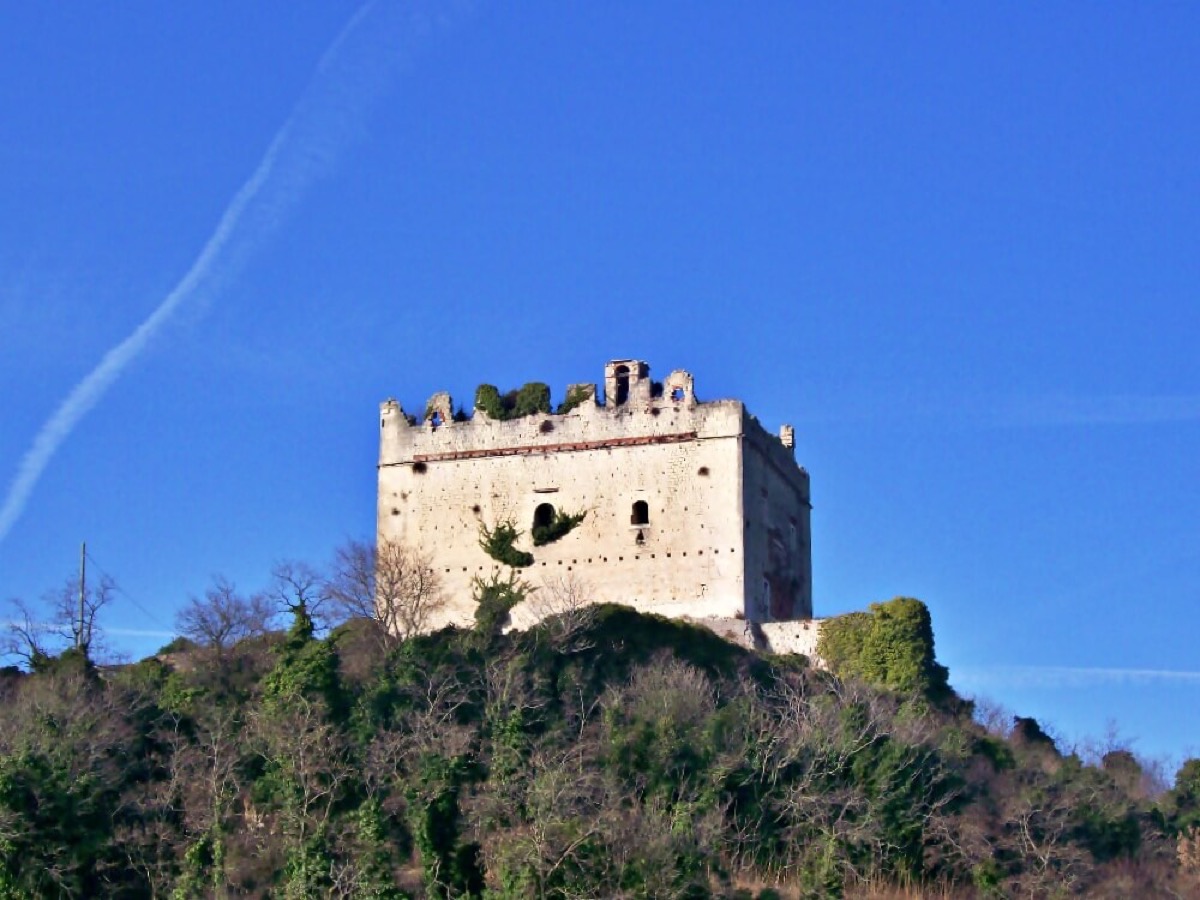
From an architectural point of view the castle is divided into two buildings, according to the typical model of the Scaliger fortifications of the province of Verona: the keep, or the residence of the lord, flanked by the cassero, ie the dormitory of the militias. The boundary has an elliptical course, to circumscribe the underlying hill; everything was made with large rectangular blocks of hard tuff. The keep is 32 meters high, with a square plan with 10 meters of side, and is connected to the keep, about ten meters away, through a narrow passage. The formwork has a high access on a base, about 8 meters high, of rectangular base with a total height of 26 meters, divided on two floors. It is crowned with crenellations placed on a practicable terrace, the walls are distinguished by a single access door on the southern side.
https://www.histouring.com
Il castello scaligero d'Illasi è un edificio medievale posto a difesa dell'antico borgo di Illasi, in provincia di Verona.
Storia
Edificato nel X secolo, divenne di proprietà, nel XIII secolo, della potente famiglia dei Montecchi. Il castello venne ricostruito e potenziato da Ezzelino III da Romano nel 1243. Nel 1269 l'edificio venne occupato da Pulcinella delle Carceri e da alcuni fuorusciti di Verona, in lotta con Mastino I della Scala, che lo adibì a proprio rifugio.
Nel 1279 venne donato a Niccolò della Scala, figlio di Mastino I, da parte del pontefice papa Niccolò III, riconoscente verso gli Scaligeri per la cattura da parte di questi, a Sirmione, di un gruppo di eretici Albigesi (Catari).
Agli inizi del XV secolo venne occupato dalla Repubblica di Venezia, dopo averlo strappato ai Carraresi, alleati a quel tempo con Guglielmo della Scala, figlio illegittimo di Cangrande II della Scala, eletto da loro a signore di Verona nel 1404.
Per i suo meriti militari, i veneziani nel 1509 concedettero Illasi in feudo al loro valoroso condottiero conte Girolamo Pompei, detto "Malanchino", la cui famiglia vantava da secoli diritti in quei luoghi. Al condottiero andò il merito di aver catturato e tradotto nelle carceri veneziane l'8 agosto dello stesso anno, il marchese di Mantova Francesco II Gonzaga, partito alla conquista di Legnago.
Descrizione
Il castello, a pianta quadrata di 10 metri di lato, è affiancato dal cassero, utilizzato dal corpo di guardia. Una cinta muraria delimita tutta la collina ed è caratterizzata da una sola apertura a meridione.
Useful information
No
Una passeggiata tra i vigneti
- Il castello è abbandonato
- Chiuso al pubblico
-
External links
Nearby castles
Castello Scaligero (Soave)
Provincia di Verona
7.2km
castle, chateau
Castello di Montorio Veronese
Provincia di Verona
10.2km
castle, chateau
Castel San Felice
Provincia di Verona
13.7km
castle, chateau
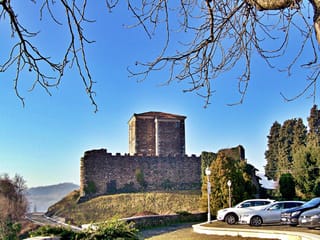
Castello di Arzignano
Provincia di Vicenza
13.9km
castle, chateau
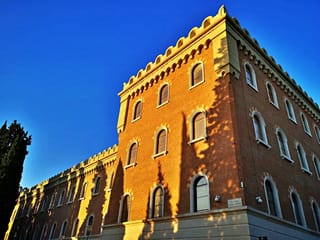
Castel San Pietro (Saint Peter’s Castle)
Provincia di Verona
14.2km
castle, chateau
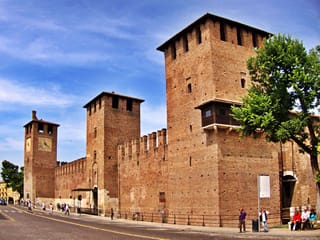
Castelvecchio (Verona)
Provincia di Verona
15.6km
castle, chateau
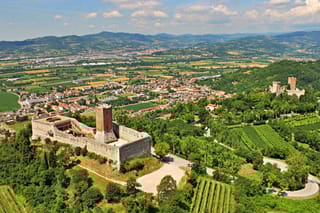
Castelli di Romeo e Giulietta
Provincia di Vicenza
18.4km
castle, chateau