Castello di Grinzane Cavour
Provincia di Cuneo Piemonte Italy
castle, chateau
Castello di Grinzane Cavour
Provincia di Cuneo Piemonte Italy
castle, chateau
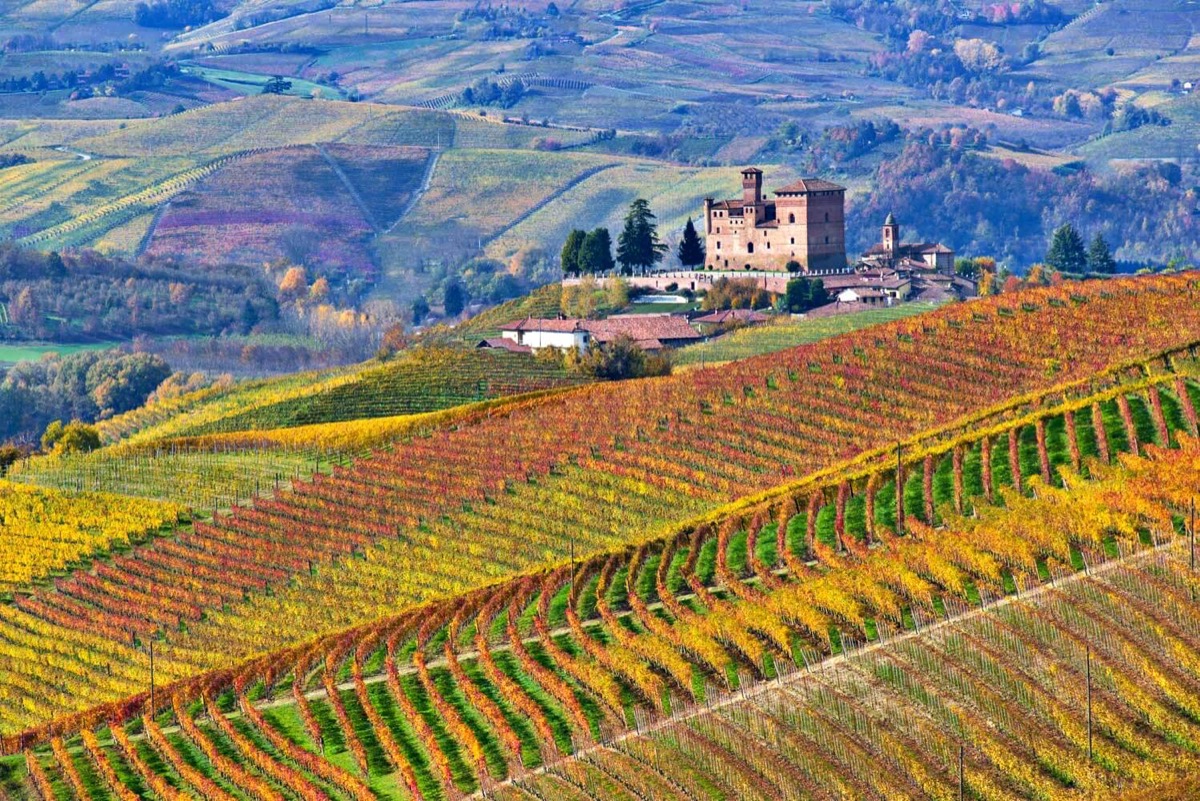
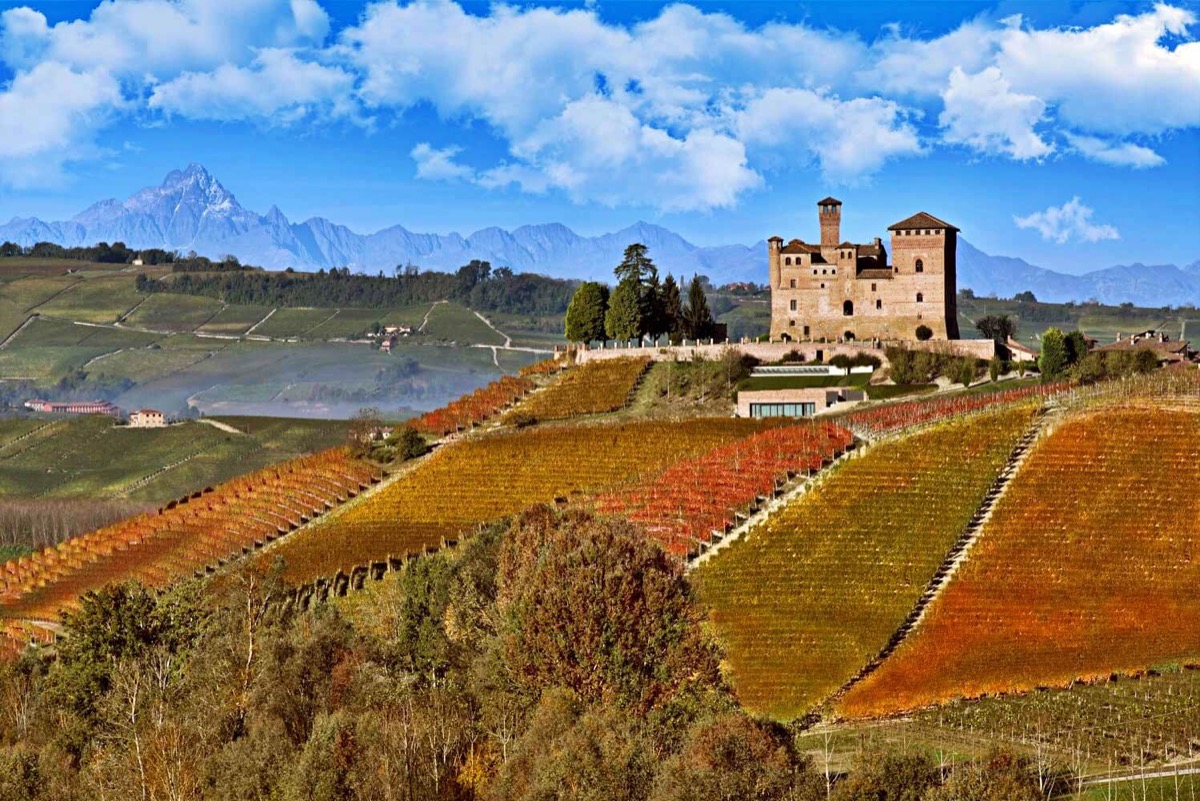
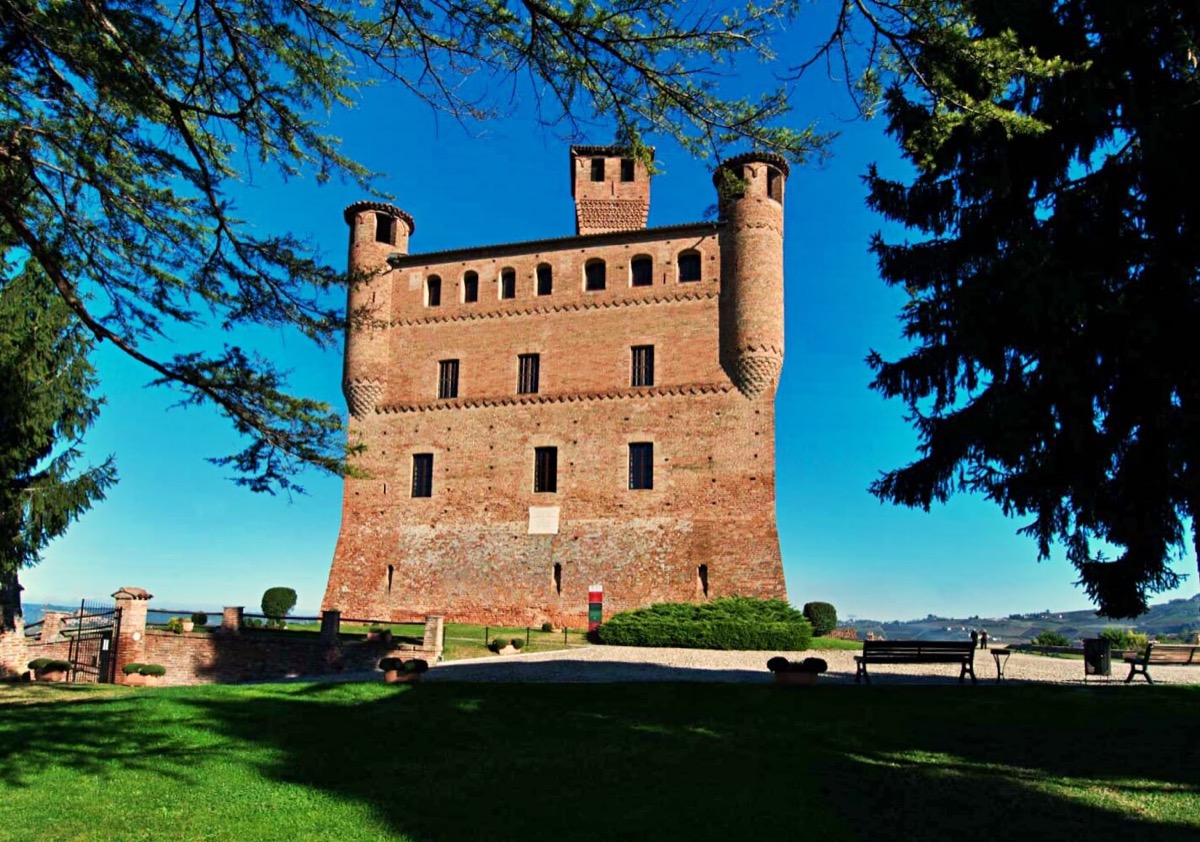
The Castle of Grinzane Cavour is a fortification in Grinzane Cavour, Piedmont, northern Italy
Il castello di Grinzane Cavour è una fortificazione situata a Grinzane Cavour in provincia di Cuneo
Previous names
Castello di Grinzane Cavour, Castello di Grinzane Cavour
Description
The Castle of Grinzane Cavour is a fortification in Grinzane Cavour, Piedmont, northern Italy.
On 22 June 2014, the castle of Grinzane Cavour was inscribed on UNESCO World Heritage list.
History
Mentions of the castle's early history are extremely scarce, and its origins have been variously assigned to the 13th century or to around 1350. The castle includes a large tower, which is thought to be the most ancient part of the construction; the rest of the body has similar features, and therefore it is likely that it was built in the same age.[2]
In the 15th century, the castle and the surrounding were owned by the marquis of Busca, whose heraldic symbols have been found in some rooms, under later plasterings. It was later under several lords, the most famous of which was, in the mid-19th century, Camillo Benso, Conte di Cavour, who resided here starting from 1830. Cavour restored the construction and improved the vine cultivations in the area. In 1832 he became mayor of Grinzane, a position he held until 1849. Cavour was also known as the architect of the Unification of Italy.
The castle currently houses an ethnological museum with original furniture items from the 19th century, and rooms dedicated to Cavour's stay and to Italian wine production. The castle also contains the Cavour Regional Enoteca, created in 1967 to showcase the wines of the famous Langhe region of Piedmont - in particular the Barbaresco and Barolo wines, as well as the Michelin Star restaurant, Marc Lanteri Al Castello.
Description
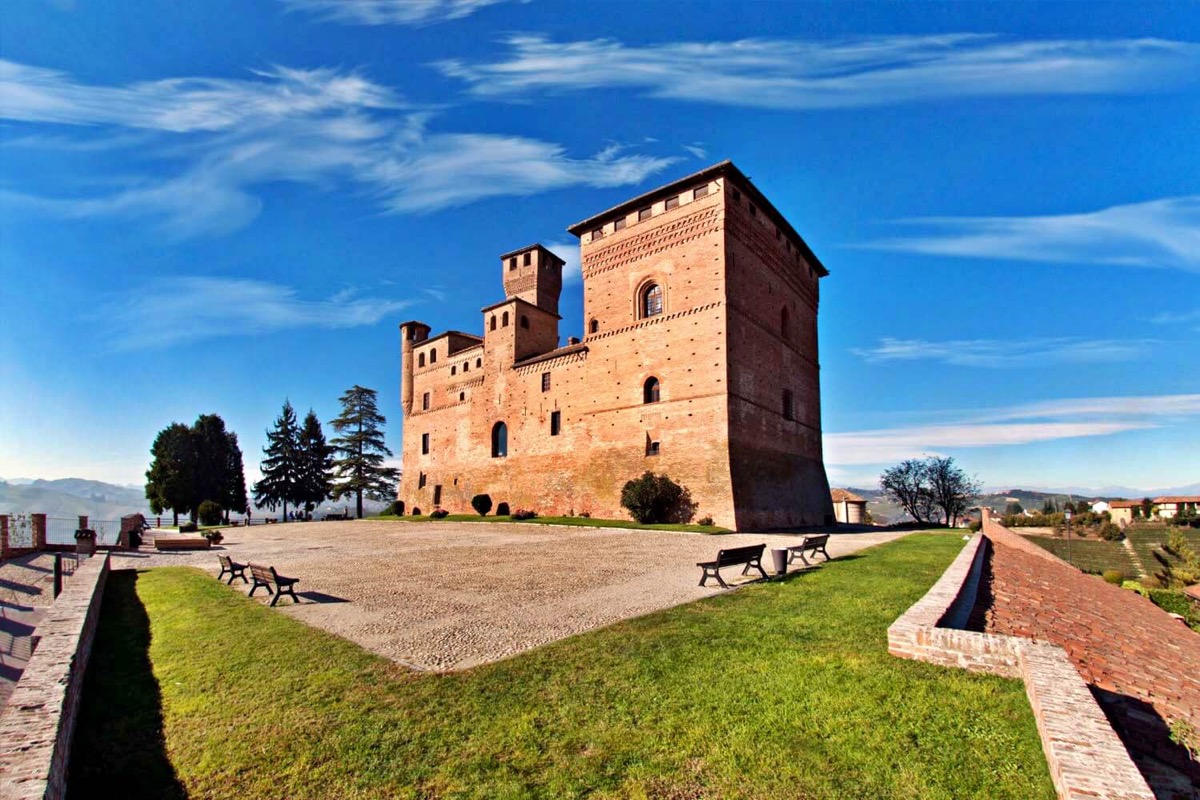
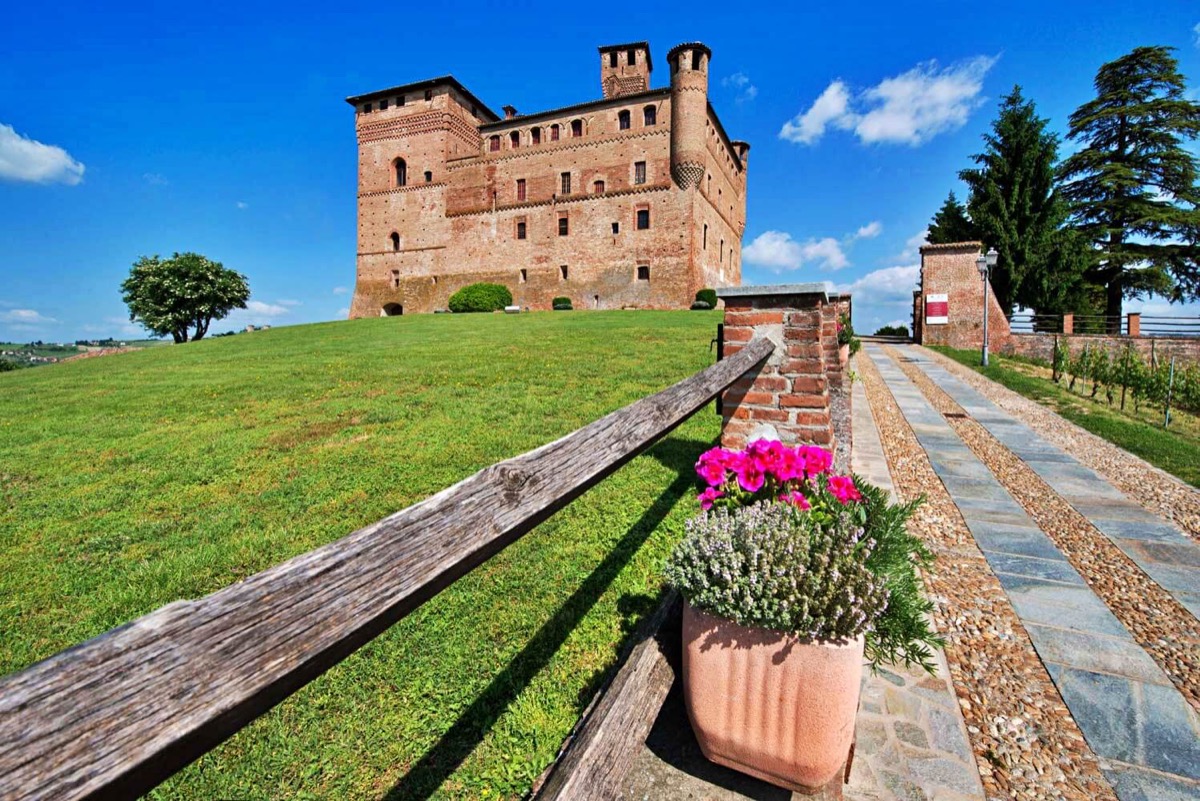
The castle has a rectangular plan and a massive appearance, with a large keep, occupying a whole wing, and a U-shaped structure with a series of turrets: two square and two rounded, the latter, added in the 16th century, being pensile.
There are a series of rooms, one of which, called Sala delle Maschere ("Masques Hall"), has a ceiling decorated with 157 panels featuring coat of arms, animals and allegory images celebrating the marriage of Pietrino Falletti, who owned the castle in 1517.
In 2010 a new building was inaugurated. It houses educational rooms and a hall used for meetings.
In addition the castle contains an enoteca (wine cellar), a cafe and a restaurant.
Il castello di Grinzane Cavour è una fortificazione situata a Grinzane Cavour in provincia di Cuneo.
Estremamente scarse sono le notizie storiche sulle sue origini e vi sono non pochi dubbi sulla sua data di costruzione: c'è chi lo colloca nel XIII secolo e chi sostiene invece che la costruzione della torre risalga al 1350 e il resto ad epoca successiva. È effettivamente probabile che la grossa torre costituisse il primitivo nucleo della costruzione e i successivi corpi l'abbiano quindi completata.
Attorno al Quattrocento il castello e i circostanti terreni appartenevano al marchese di Busca, i cui stemmi nobiliari furono infatti scoperti sotto gli intonaci di alcune stanze.
Il castello passò poi numerosi proprietari dei quali non restano che poche notizie finché, nell'Ottocento il castello non ospitò per quasi vent'anni un personaggio del Risorgimento: Camillo Benso Conte di Cavour. Lo statista vi giunse nel 1830, ospite degli zii, la famiglia De Tonnerre.
Incaricato di amministrare questi beni di famiglia, dimostrò capacità organizzativa e apertura verso le nuove acquisizioni scientifiche. Conferì una nuova impronta all'agricoltura locale: tracciò canali, adottò nuovi sistemi razionali di coltivazione, fece piantare duecentomila nuove viti e tentò la coltivazione delle barbabietole. Fu nominato sindaco del piccolo comune nel maggio 1832 a ventidue anni e tale carica mantenne fino al febbraio 1849.
Dal 2014 è patrimonio mondiale dell'umanità UNESCO.
Struttura
Il castello è ben conservato, si presenta come un imponente edificio a pianta rettangolare con un mastio che occupa tutta un'ala, ed una fabbrica a "U" ornata da una serie di torrette: due quadrate e due, esterne e pensili, a pianta rotonda. Molte finestre si aprono sulle facciate principali ad est e ad ovest, due sole sulla facciata a nord, mentre nel versante a sud sono numerose e ordinatamente allineate su tre piani.
Il 23 ottobre 2010 è stato inaugurato un nuovo edificio, progettato dall'architetto Giorgio Teggi. La nuova ala è costruita all'interno della collina sulla quale si erge l'antico maniero e include uffici ed ambienti polifunzionali: una Sala Didattica da 60 posti ed una Sala Congressi con oltre 250 posti a sedere e attrezzature audio e video.
In occasione dell'inaugurazione è stata allestita la mostra Brume di Langa: paesaggi, oggetti, pensieri, a cura dell’interior designer Letizia Rivetti e dello scrittore Giordano Berti.
Useful information
GRATUITO
7.00 EUR
0 - 6 anni: gratuito
25+ persone: 5.00 EUR
info@castellogrinzane.com
- Museo Etnografico
- Enoteca Regionale Piemontese Cavour
-
External links
Nearby castles
Castle of Serralunga d'Alba
Provincia di Cuneo
4.7km
castle, chateau
Castello di Pollenzo
Provincia di Cuneo
8.6km
castle, chateau
Castello di Govone
Provincia di Cuneo
18.8km
castle, chateau
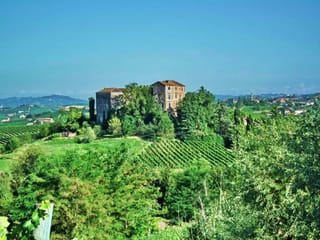
The Burio Castle
Provincia di Asti
20.6km
castle, chateau
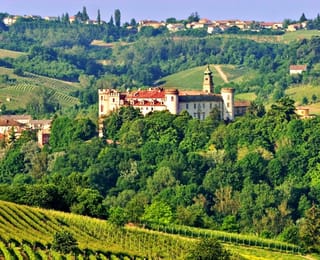
The Costigliole Castle (Castello di Costigliole d’Asti)
Provincia di Asti
21.0km
castle, chateau
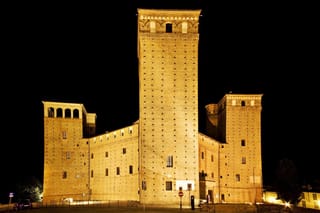
Castello dei Principi d'Acaja
Provincia di Cuneo
24.5km
castle, chateau