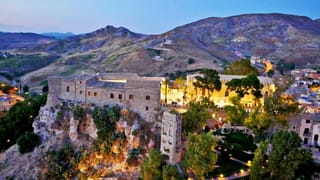
The castello di Favara
Libero consorzio comunale di Agrigento Sicilia Italy
castle, chateau
Castello di Favara
Libero consorzio comunale di Agrigento Sicilia Italy
castle, chateau
The charm of an ancient building meets the legend of a fabulous treasure: this is the best introduction for the castello di Favara, new stage of the tour to discover the castles of Sicily
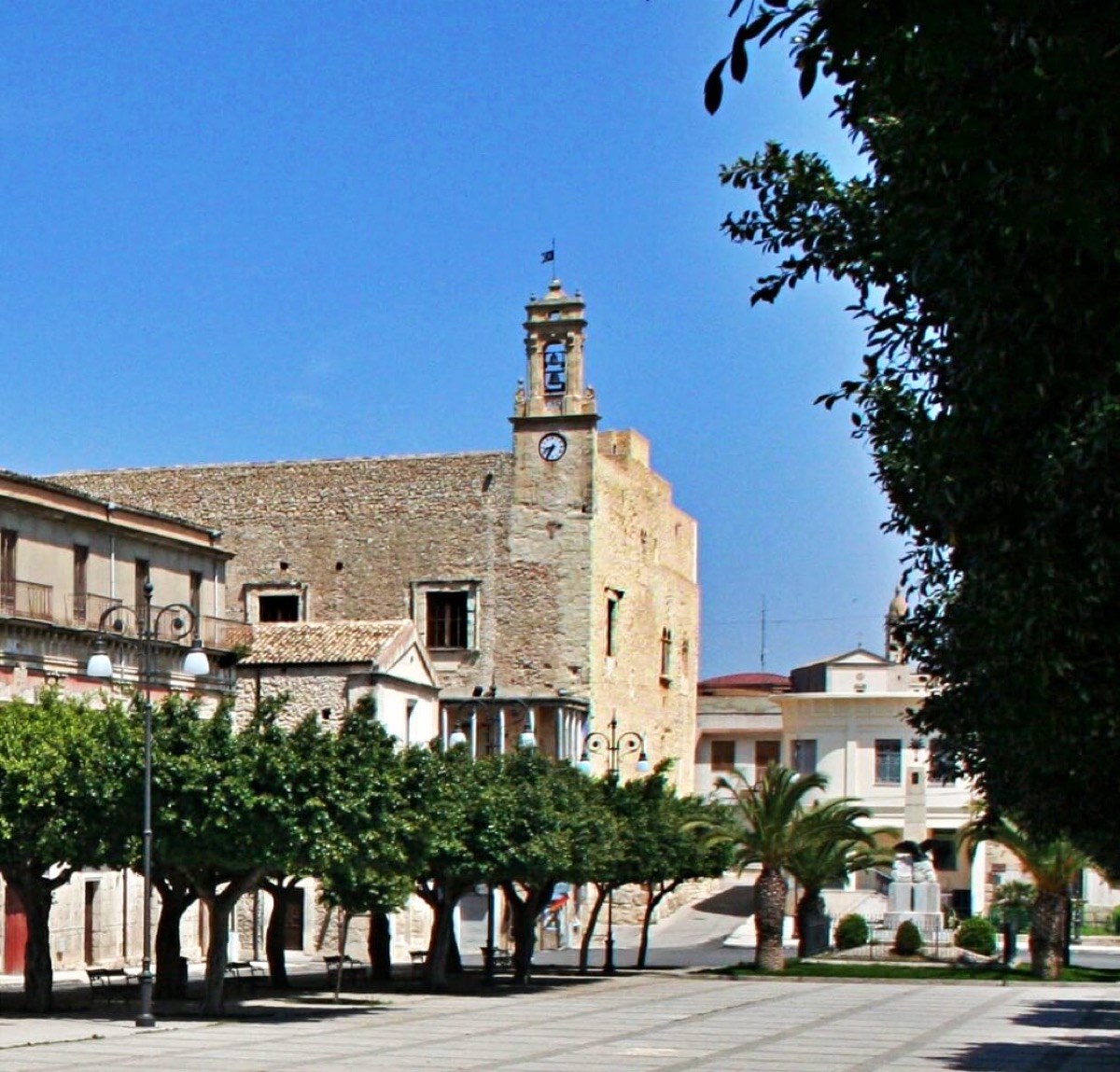
Il castello chiaramontano di Favara è un castello della seconda metà del Duecento costruito attorno al 1280 da Federico II della nobile famiglia dei Chiaramonte
Previous names
The castello di Favara , Castello di Favara
Description
The charm of an ancient building meets the legend of a fabulous treasure: this is the best introduction for the castello di Favara, new stage of the tour to discover the castles of Sicily.
The history
Built in the late Thirteenth century by Chiaramonte family, the castle is the “point of passage” from the type of the castle to the type of the building (in fact, it is known as “palace”).
In the Seventeenth century, the castle of Favara was used as a stately home.
From the early Eighteenth century, the kitchens at the two sides of the large portal were used as prisons: to be precise, the rooms on the left as a criminal prison and the rooms on the right as a civil prison.
In the Seventies of the Twentieth century, part of the stone fence was removed.
The castle
The disposition of the parts of the castle has the shape of a square: this characteristic is typical of Sicilian Swabian castles, particularly of the “palacia” (or “solacia”) built by King Frederick II of Swabia. Since it is located in a slightly elevated position, it was used almost exclusively as a residence.
The facade can be divided into two parts: the first is compact, the second pierced by mullioned windows.
The ground floor rooms have vaulted ceilings.
There is a commemorative plaque in the entrance hall: on that plaque, there is an indecipherable inscription that, according to a popular legend, indicates the location of a fabulous treasure.
The chapel and the portal are the two most characteristic elements of the castle: in particular, the columns at the sides of the portal are typically Norman style.
How to get there
Favara is a small town in the province of Agrigento. To get there from Agrigento, just take the county road 80 and follow the road sogns Favara. The journey by car takes about 20 minutes.
https://www.traghettiper-sicilia.it
Il castello chiaramontano di Favara è un castello della seconda metà del Duecento costruito attorno al 1280 da Federico II della nobile famiglia dei Chiaramonte.
Storia
Costruito verso la fine del Duecento, forse su una costruzione incompiuta di origine sveva,[2] le sue forme riprendono modelli federiciani.
Il palazzo venne abitato fino agli inizi del Seicento, mentre nel Settecento vennero adibite a carcere gli ambienti delle cucine ai lati del portale ogivale (nel corso dell'Ottocento quelli a sinistra erano utilizzati come carcere criminale e quelli di destra come carcere civile. I prigionieri hanno lasciato numerosi graffiti sulle pareti.
Una torre merlata che si trovava nell'angolo sud-ovest del recinto esterno, citata nel 1611, venne ristrutturata intorno al 1820 e fu abbattuta per l'edificazione del palazzo di Giuseppe Cafisi negli anni 1840, insieme ad un grande portale gotico ("portale maggiore"); contemporaneamente la grande cisterna al centro del recinto venne ricoperta dal selciato.
Negli anni sessanta del Novecento il recinto venne privato del tratto occidentale, dalla parete meridionale del castello al nuovo ufficio postale (1963).
Descrizione
Esterno
Nella parte sud l'edificio del castello è circondato da un recinto fortificato che risulta formato da un quadrilatero regolare contiguo, ma soltanto in parte alla parete sud dell'attuale palazzo, formando con quest'ultimo una figura irregolarmente ottagonale. Nella parete esterna del lato ovest del recinto, in prossimità dell'angolo sud-ovest, vi era una torre merlata che si affacciava sulla piazza antistante il castello. Dal recinto il "portale maggiore" gotico, anch'esso perduto, permetteva di accedere alla piazza.
Il recinto è rintracciabile sul lato ovest nel muro perimetrale est dell'attuale biblioteca del barone Antonio Mendola. La presenza di due porte nel recinto fortificato, suggerisce che il castello dovesse trovarsi a cavallo della cinta muraria cittadina.
Il nucleo centrale si presenta con caratteristiche residenziali più che militari, con pianta regolare quadrata.
Useful information
GRATUITO
5.00 EUR
0 - 18 anni: 2.00 EUR
10+ persone: 2.00 EUR
- Eventi e mostre
- La biblioteca
- Il giardino
prolocofavara@hotmail.com
-
Nearby castles
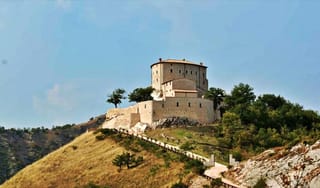
Castello di Naro
Libero consorzio comunale di Agrigento
11.9km
castle, chateau
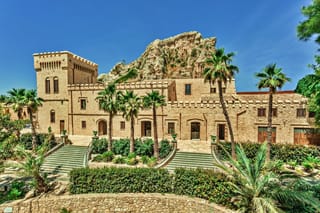
Castello ducale di Joppolo
Libero consorzio comunale di Agrigento
12.4km
castle, chateau
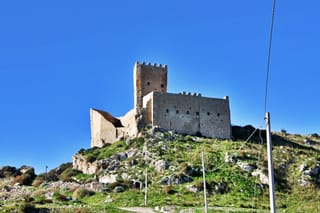
Montechiaro Castle
Libero consorzio comunale di Agrigento
14.9km
castle, chateau
Castello di Siculiana
Libero consorzio comunale di Agrigento
21.5km
castle, chateau