Euryalus fortress
Free municipal consortium of Syracuse Sicily Italy
fortress
Castello Eurialo
Free municipal consortium of Syracuse Sicily Italy
fortress
The Euryalus Fortress located in the frazione of Belvedere, was the key point in the fortifications of the ancient Greek city of Syracuse
Il castello Eurialo, situato nei pressi della frazione di Belvedere rappresenta il culmine della fortificazione della città di Siracusa il cui nome pare alluda a quello greco di Euryelo (testa di chiodo)
Previous names
Euryalus fortress, Castello Eurialo
Description
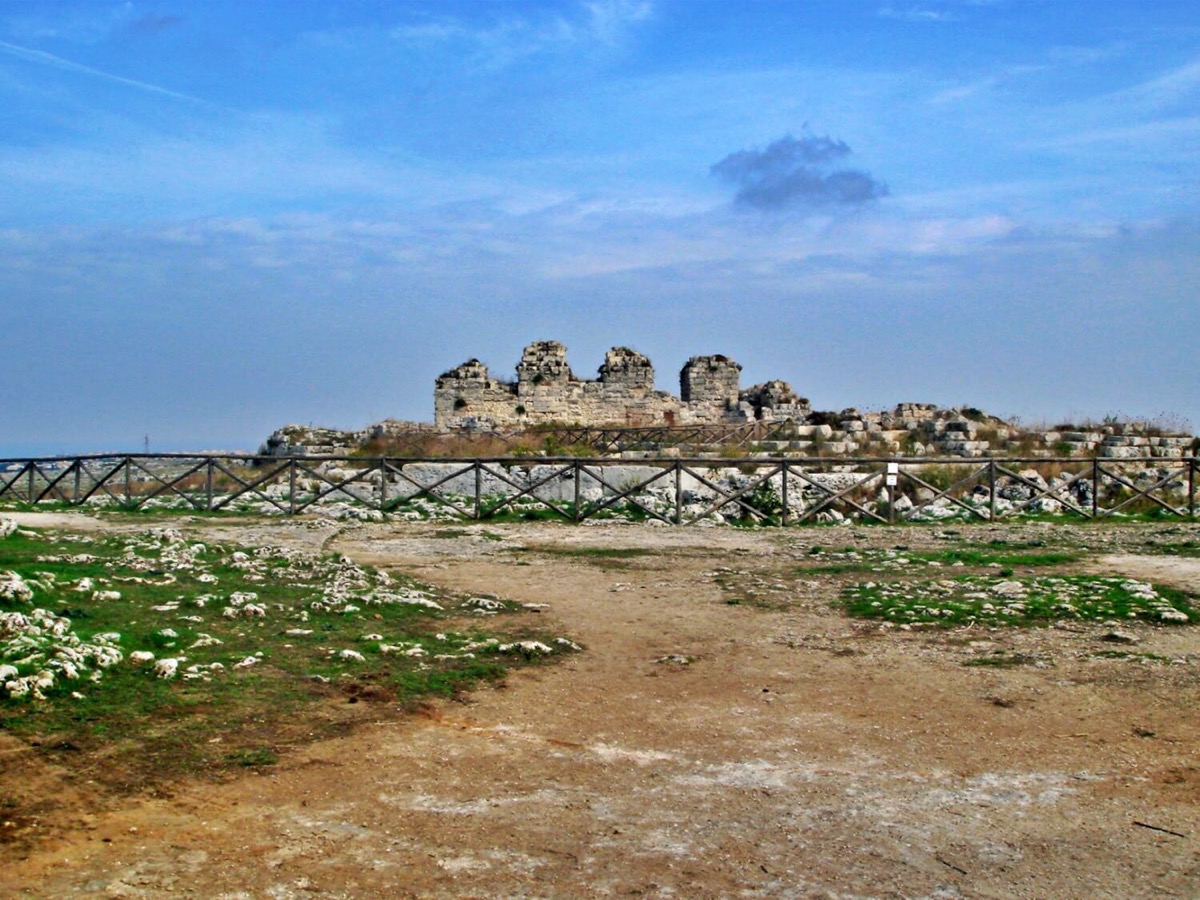
The Euryalus Fortress located in the frazione of Belvedere, was the key point in the fortifications of the ancient Greek city of Syracuse. It is located on the highest point of the hill of Epipolae (about 120 metres above sea level), around 7 km northwest of Syracuse.
During the Athenian invasion of Sicily (415-413 BC), the fortress did not yet exist, but the strategic importance of the area was clear; the Athenians initially captured the hill, but their failure to retain it prevented them from effectively besieging the city. The name Euryalus is mentioned by Thucydides in the course of the first Athenian attack on the city. Later in his account, after the reconquest of Epipolae from the Athenians by the Syracusans, a Syracusan garrison on the site is mentioned.
In light of this experience, the fortress was first established by Dionysius I, tyrant of Syracuse. Construction took place between 402 and 397 BC, with the intention that the fortress would protect the city from siege and attack by the Carthaginians. Various renovations were subsequently undertaken in response to developments in siege weaponry, under Agathocles and Hiero II.
After the Roman conquest of the city in 212 BC by Marcus Claudius Marcellus, the fortress continued to be modified until the Byzantine period when parts of it were torn apart in order to repair the rest in light of Muslim invasion.
In 1939, King Victor Emmanuel III visited the monument in an official capacity. In 1941, during the Second World War, the artefacts in the Syracuse archaeological museum were carried by mule to the fortress and hidden in its subterranean tunnels, so that they would be safe from aerial bombardment.
On 30 September 2016, an antiquarium was opened on the site, after a long closure resulting from the Santa Lucia earthquake of 1990. This building contains some of the discoveries from the site, including a sword, a helmet, and the missiles from a stone-throwing catapult.
Description
Moats
The entrance to the fortress is protected by three ditches and one lateral ditch. The first and smallest ditch is 6 metres long and 4 metres deep (see A on the map below). The second is 86 metres away from the first and is around 50 metres long (B). It defends a forward bastion, behind which is a third ditch which is 17 metres long and 9 metres deep (D) which links the defensive system with the subterranean tunnels. In the south part of this ditch, there is a draw bridge which allows one to cross the ditch from one set of fortifications to the other (C and E). There was also an internal staircase which allowed access to C from ditch D. Finally, on the south side, there was a fourth ditch (H), which protected the shallowest part of the lateral slope of Epipolae. Tunnels link this ditch with ditch D.
Fortifications
Between the ditches is the central fortress which has a rectangular shape (G, erroneously listed as "C" on the map). Beyond ditch D, the central fortress which was open in the Greek period, is closed by five square towers (pentapylon), which were probably about 15 metres high with crenellations on top as well as 4th century BC rainwater spouts in the shape of lions' heads, now kept in the Museo Paulo Orsi. The towers were probably platforms for catapults. Near the central fortress there are three large cisterns which could provide water in the event of a siege.
Il castello Eurialo, situato nei pressi della frazione di Belvedere rappresenta il culmine della fortificazione della città di Siracusa il cui nome pare alluda a quello greco di Euryelo (testa di chiodo).
Voluto da Dionisio I, tiranno di Siracusa, sorge sul punto più alto (120 m s.l.m.) della terrazza del quartiere Epipoli a circa 7 km da Siracusa, in direzione della frazione di Belvedere. Questa imponente opera militare fu costruita tra il 402 e il 397 a.C. con lo scopo di proteggere la città da eventuali operazioni militari di assedio o attacco. Subì diverse modifiche anche a causa delle nuove tecniche di guerra come quella dell'assedio introdotta da Demetrio I Poliorcete nell'assedio di Rodi del 305 a.C.
Durante la spedizione ateniese in Sicilia (415-413 a.C.) il castello di Dionisio non esisteva ancora, ma i nomi delle località sulle quali esso sorge sono già menzionati da Tucidide nel corso di un primo attacco ateniese:
«La fanteria invece non perse tempo e si gettò di corsa verso le Epipole iniziando, nella direzione di Eurialo, la salita prima che i Siracusani, notandoli, accorressero dalla prateria...»
(Tucidide, VI 97)
Poi, dopo la riconquista dell'Epipoli da parte dei Siracusani, durante un'azione del generale ateniese Demostene viene citato anche un fortino siracusano:
«Quando si trovarono alle prime balze delle Epipole, all'inizio di quel sentiero dell'Eurialo che anche l'offensiva precedente aveva percorso nella sua prima salita, eludendo la vigilanza del presidio siracusano e portandosi sotto al forte nemico che in quel punto si ergeva lo occuparono abbattendo alcuni del corpo di guardia.»
(Tucidide, VII, 43)
Dopo la conquista romana della città nel 212 a.C. ad opera del console Marcello, il grande complesso militare dell'Eurialo fu modificato fino all'età bizantina a causa della minacciata invasione arabo-maghrebina, venne ricostruita una parte usando del materiale di spoglio proveniente da altre parti distrutte.
Nel 1939 il Re d'Italia Vittorio Emanuele III visitò il monumento in visita ufficiale.
Nel 1941 durante il periodo della seconda guerra mondiale a causa dei bombardamenti, i reperti del museo archeologico vennero caricati a dorso di mulo e nascosti presso i tunnel del castello.
Il 30 settembre 2016 è stato inaugurato, dopo una lunga chiusura in seguito al terremoto del 1990, l'antiquarium in cui sono esposti alcuni reperti del sito come: una spada, un elmo e delle palle di catapulta litiche. Inoltre vi è anche un supporto multimediale gratuito che spiega la funzione e la storia del castello sulla piattaforma Izi.Travel.
Useful information
No
4.00 EUR
18 - 25 anni: 2.00 EUR
0 - 18 anni: gratuito
4.00 EUR
- L'antiquarium
- Un supporto multimediale
soprisr.area@regione.sicilia.it
- I ruderi del castello
- Accesso parziale ai tunnel sotterranei
-
Nearby castles