Buccione Tower
Province of Novara Piedmont Italy
castle, chateau
Castello di Buccione
Province of Novara Piedmont Italy
castle, chateau
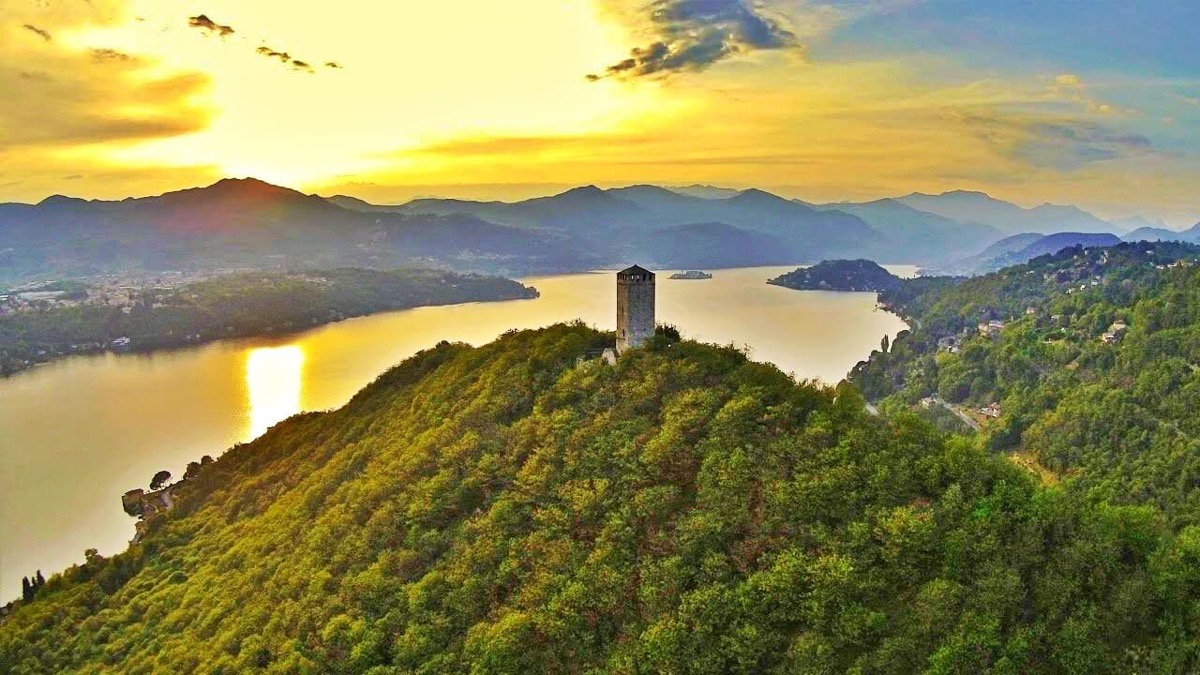
Twenty three metres high, slightly eerie but nonetheless reassuring, the ancient Buccione Tower represents the lake's oldest surviving sentinel
Il castello di Buccione noto anche come torre di Buccione sorge alla sommità di un colle, al confine fra i territori di Orta San Giulio e di Gozzano, all'estremità sud orientale del lago d'Orta
Previous names
Buccione Tower, Castello di Buccione
Description
Twenty three metres high, slightly eerie but nonetheless reassuring, the ancient Buccione Tower represents the lake's oldest surviving sentinel. No doubt you have noticed this sort of "elderly lady" that arouses a feeling of uneasiness and respect…
It has towered over the surrounding territory since it was built in the XII century, during the Middle Ages, in order to check the numbers of people passing through and to exact the due toll for the right of access to the Orta riviera. It has long been thought that the tower may have been of Roman or Longobard origins, though it was actually probably built by the Da Castello counts and served as an invaluable lookout to survey the lake and its surrounding plains.
In fact, people say that on a perfectly clear day its outline may be perceived in the distance from atop the cupola of the church of Saint Gaudenzio in Novara.
If you wish to inaugurate the spring season with a nice walk or cycle on a mountain bike, you can get to the tower along an unpaved trail, which begins at the little car park close to the Corconio quarry, not far from La Darbia. Go through the wood, which belongs to a natural protected area, then climb uphill for about 15 minutes till you reach the top: you will be struck by the most wonderful scenery which embraces the entire coast surrounding Lake Orta with the island of Saint Giulio right there in the middle and majestic Mount Rosain the background.
There are a couple of things I would like to tell you about this ancient tower. There used to be a huge bell situated on the top of the tower which would ring when danger was nigh and all the men in good shape would pick up their arms and come running to the scene. The bell also signalled important moments in the history of Italy: it cheerfully rang, despite being broken, in November of the year 1918 to herald the end of the First World War. After several years and substantial repairs and renovations, the clock, a fine example of 1600s wrought iron, was returned to its place of honour at the top of the tower.
A popular, old legend also tells a tragic story: at the beginning of the fifteen hundreds, Maria Canavesa, a widow, is alleged to have been killed with her son while striking the bell using a hammer to warn the riviera militia of the arrival of Carlo the Fifth's soldiers.
Arrow slits, crossbows and horse-shoes (brought to light during the most recent archeological excavations) remind us of our distant past still full of enchantment.
https://www.ladarbia.com
Il castello di Buccione noto anche come torre di Buccione sorge alla sommità di un colle, al confine fra i territori di Orta San Giulio e di Gozzano, all'estremità sud orientale del lago d'Orta. La fortezza, come il colle sul quale sorge, prende il nome da Buccione, la vicina frazione di Gozzano, situata all'estremità meridionale del lago.
Storia e descrizione
Il castello, simbolo della fiera indipendenza della Riviera di San Giulio, sorge in una posizione molto forte, che permette di dominare il lago e tutta la pianura novarese (è visibile la chiesa di San Gaudenzio della stessa Novara). La sommità della collina era già occupata nell'età del ferro, come indicano i frammenti ceramici attribuibili alle prime fasi della Cultura di Golasecca.
Comunemente noto col nome di "torre di Buccione", dal suo elemento maggiormente visibile, era in origine un vero e proprio castrum e come tale è citato in vari documenti a partire dal Duecento. Si tratta di una torre centrale (mastio) alta 23,20 m, realizzata in conci squadrati di varie dimensioni, circondata da una cortina muraria a pianta rettangolare. Alla fortificazione si accede tramite una spianata che il Cotta descrive come una "piazza muragliata", capace di cinquecento uomini.
La fortificazione era stata attribuita all'epoca longobarda e ritenuta costruita su resti romani più antichi, di cui tuttavia non è emerso alcun elemento concreto. Nella sua veste attuale il complesso fu probabilmente costruito nel terzo quarto del XII secolo, secondo una datazione avanzata sulla base di confronti tipologici. L'ipotesi che attualmente gode di maggior credito è quella che vuole il castello edificato dai conti Da Castello. Non è probabilmente casuale, infatti, che il primo documento in cui il castello è citato (1200) sia relativo proprio ad un accordo tra i Da Castello e il Comune di Novara. In quell'occasione era presente anche il vescovo della città, che dal 1235 appare saldamente in possesso della fortezza, usata in seguito principalmente, con funzione di segnalazione.
Gli statuti della comunità della Riviera di San Giulio ordinavano che tutti gli uomini validi accorressero in armi al suono della campana della torre. Essa venne comunque aggiunta in un secondo momento, forse poco dopo la costruzione del tetto (che dovette avvenire nel XIV-XV secolo). Essa, benché rotta, tornò a suonare con gioia il 4 novembre 1918 per annunciare la fine della prima guerra mondiale. Da allora venne fatta suonare ogni anno, in occasione della ricorrenza, fino allo scoppio della Seconda guerra mondiale, quando venne spostata nel giardino di villa Bossi, municipio di Orta, per timore di eventuali furti. La campana è stata riposizionata sulla torre nel 2005, al termine di importanti lavori di restauro.
Useful information
No
GRATUITO
GRATUITO
GRATUITO
- La panorama spaziale
- Punto panoramico
Il tutto è liberamente visitabile dall'esterno
-
Nearby castles