Massa Marittima
Provincia di Grosseto Toscana Italy
castle, chateau
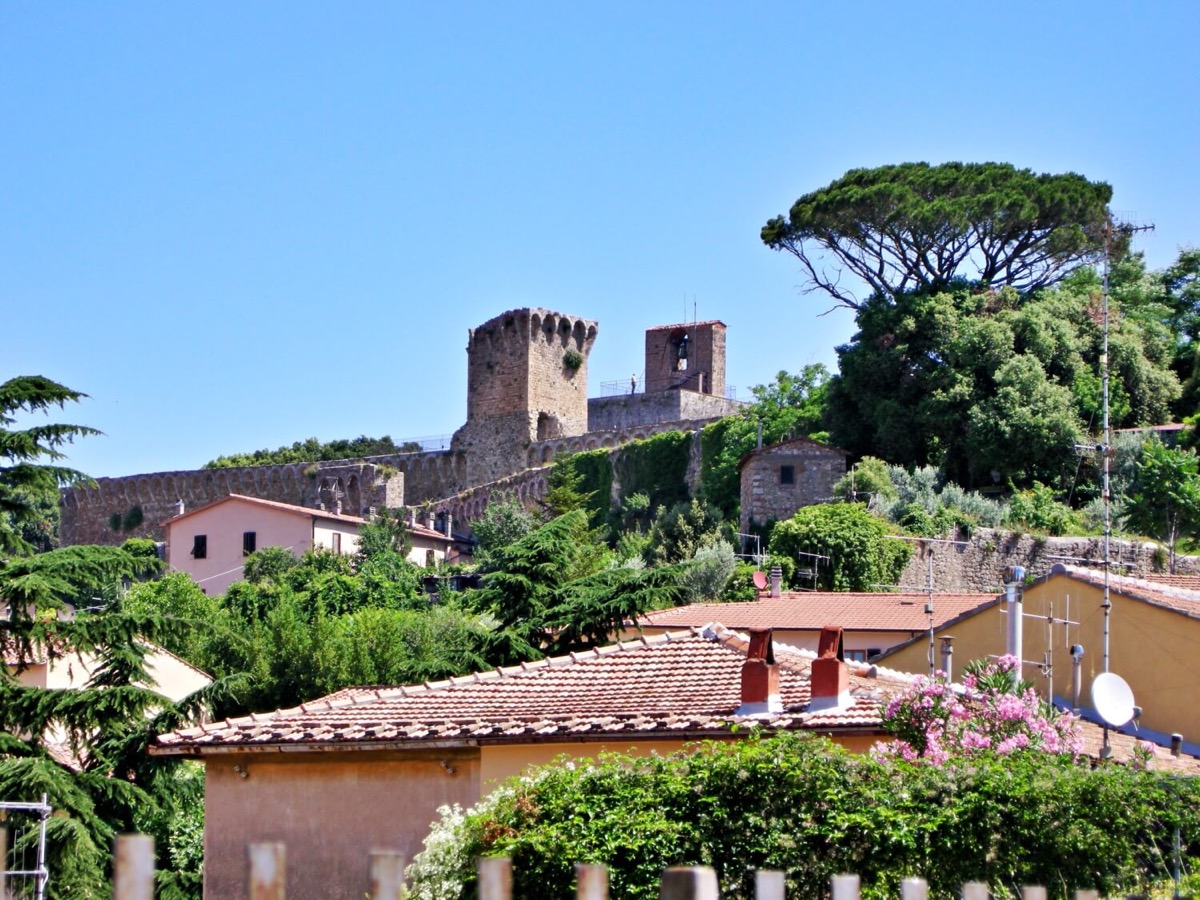
Cassero Senese (Massa Marittima)
Provincia di Grosseto Toscana Italy
castle, chateau
Massa Marittima is a town and comune of the province of Grosseto, southern Tuscany, Italy, 49 km NNW of Grosseto
Il Cassero Senese di Massa Marittima è una struttura fortificata situata nella parte alta del centro storico dell'omonima località
Previous names
Massa Marittima , Cassero Senese (Massa Marittima)
Description
Massa Marittima is a town and comune of the province of Grosseto, southern Tuscany, Italy, 49 km NNW of Grosseto.
There are mineral springs, mines of iron, mercury, lignite and copper, with foundries, ironworks and olive-oil mills. At Follonica, on the coast, are the furnaces in which are smelted the iron ore of Elba.
The territory around Massa Marittima was inhabited since prehistoric and proto-historical times, as evidenced by numerous finds dating from the Paleolithic to the Bronze Age. Etruscan settlements have been found in the area of Lake of Accesa and others dating from the 9th to the 5th century BC. Further proof of the existence of a settlement in the place where Massa Marittima is now comes from the Res Gestae by Ammianus Marcellinus, where a Massa Veternensis is cited as the birthplace of Constantius Gallus, nephew of Constantine; this town can be identified with the village of Massa Vecchia.
The name Massa appears for the first time in a document of the 10th century AD on a list of castles and courts sold to the cleric Ropprando by Lambert, Margrave of Tuscany, on April 18, 973 and subsequently repaired by Ermengarda, widow of Lambert, on February 15, 986. In the 11th century began the gradual transfer to Massa Marittima of the episcopal seat of Populonia, which had been looted by pirates and destroyed by the fleet of Nicetas, Prefect of Constantinople: a letter from Pope Alexander II to Bishop Tegrin of 1062 testifies the transfer of the bishopric to Massa. The city reached the peak of its splendor in the years when it became free commune (1255-1337), with a great urban expansion including buildings still visible today. From May 1, 1317, for a period of at least a year, the city also had its own currency. Massa fought alongside Siena in the battle of Montaperti (1260), and in three leagues (1276, 1307, 1319), after being subjugated by it in 1335.
The Sienese exploited the economic potential of the city, weakening it substantially. Plagues (the most severe in 1348 and 1400) and demographic downturn brought the city to a deep decadence, as well as the insalubriety of the place, since Siena did not perform any reclamation works in the whole Maremma. In 1554, during the war between the Republic of Siena and Duke Cosimo de' Medici, the Massa fortress capitulated, besieged by the Spaniards led by Carlo Gonzaga. On February 3, 1555 the city was incorporated into the Grand Duchy of Tuscany.
During the Medici rule, the city experienced an initial attempt of recovery by Grand Duke Ferdinando I, but none of its successors whoed interest in the fate of Massa and Maremma: the only interventions were related to Valpiana's ironworks. Malaria hit the city and in 1737, when the Medici family disappeared, Massa counted only 527 inhabitants. In the 18th century, under the Lorraine dynasty, the city recovered. On March 18, 1766 Grand Duke Peter Leopold divided the Sienese state into two provinces: the upper province and the lower province. The lower province was divided into four captaincies: Grosseto, Arcidosso, Sovana and Massa. In the years between 1770 and 1790, several areas around the city were reclaimed. Leopold II, in the 19th century, continued the works of environmental and economic improvement: the Montebamboli lignite mine and that of alum in Montioni, were reopened and Massa returned to be a mining town.
Massa actively participated in the Risorgimento movements that led to the unification of Italy. Giuseppe Garibaldi himself went to Massa Marittima, and later became an honorary citizen; some young Massetans helped him to reach Cala Martina to embark at Porto Venere in September 1849. In 1923 Follonica, which had always been a hamlet of Massa Marittima, became an autonomous municipality. During World War II, Massa was a centre of partisan activities, and several of its citizens were killed by German and Italian troops in retaliation.
In the post-war period, Massa Marittima consolidated as a mining center until the last mine closed in 1994. Today, the city mainly lives in tourism, thanks to the presence of numerous works of art and the valorization of ancient crafts, mainly linked to its minerary past.
Il Cassero Senese di Massa Marittima è una struttura fortificata situata nella parte alta del centro storico dell'omonima località.
I lavori ebbero inizio nel 1228, per delibera del Comune di Massa Marittima, con la realizzazione della Torre dell'Orologio e proseguirono, durante il secolo successivo, con la costruzione della Porta delle Silici e del rimanente complesso fortificato.
Il luogo assunse una rilevanza strategica, dopo che il vicino Castello di Monteregio venne venduto ad alcune locali famiglie; l'intera struttura svolgeva, infatti, funzioni di avvistamento ma anche di difesa ed offesa.
Tuttavia, dal XV secolo in poi, Massa Marittima andò incontro ad una gravissima crisi demografica, protrattasi per alcuni secoli fino all'Ottocento. Tutto ciò, determinò un lento declino del complesso fortificato che, in alcuni punti, mostra ancora i segni del lunghissimo degrado, nonostante i restauri condotti durante il secolo scorso che hanno comunque permesso di riportare l'intera struttura agli antichi splendori.
La Torre del Candeliere, nota anche come Torre dell'Orologio, si trova in Piazza Matteotti all'inizio della Città Nuova di Massa Marittima.
Fu edificata nei primi decenni del Duecento, parzialmente distrutta dai Senesi durante il secolo successivo, ed è ciò che resta di una preesistente fortezza, oltre ad essere parte integrante delle mura.
La torre si presenta a sezione quadrangolare con basamento a scarpa e pareti rivestite in travertino; l'accesso alla struttura, rientrante nella "Rete museale della Maremma", avviene attraverso una porta al piano rialzato, raggiungibile attraverso una scala che ha sostituito l'originaria rampa esterna. La parete che guarda verso la piazza presenta un orologio a metà altezza, ove è presente anche una serie di piccole caditoie che si trovano anche nella parete dell'ingresso. La parte sommitale culmina con una grossolana e stretta struttura a vela a sezione rettangolare, che si eleva ben oltre l'altezza della torre sullo stesso lato dell'orologio.
La Porta delle Silici fu realizzata dai Senesi tra il 1335 e il 1337, dopo la conquista del Comune di Massa Marittima.
La struttura è perfettamente inserita lungo le mura ed è completamente rivestita in filaretto di pietra. La parte alta si eleva oltre l'altezza della cortina muraria e presenta una serie di coronamenti ad archetti ciechi poggianti su mensole sporgenti; sopra di essa si elevava una torre, i cui resti sono ben visibili sulla parte sommitale.
Un sistema di doppia porta permette di accedere dalla Città Vecchia verso la Città Nuova. Entrambe le porte sono sormontate da un doppio arco, con quello a tutto sesto posto al di sopra di quello ribassato; tra i due archi è collocato lo stemma bianco e nero di Siena.
Useful information
No
GRATUITO
GRATUITO
GRATUITO
Un parco nel Castello
C`e la Torre del Candeliere
-
External links
Nearby castles