CastelBrando
Provincia di Treviso Veneto Italy
castle, chateau
Castelbrando
Provincia di Treviso Veneto Italy
castle, chateau
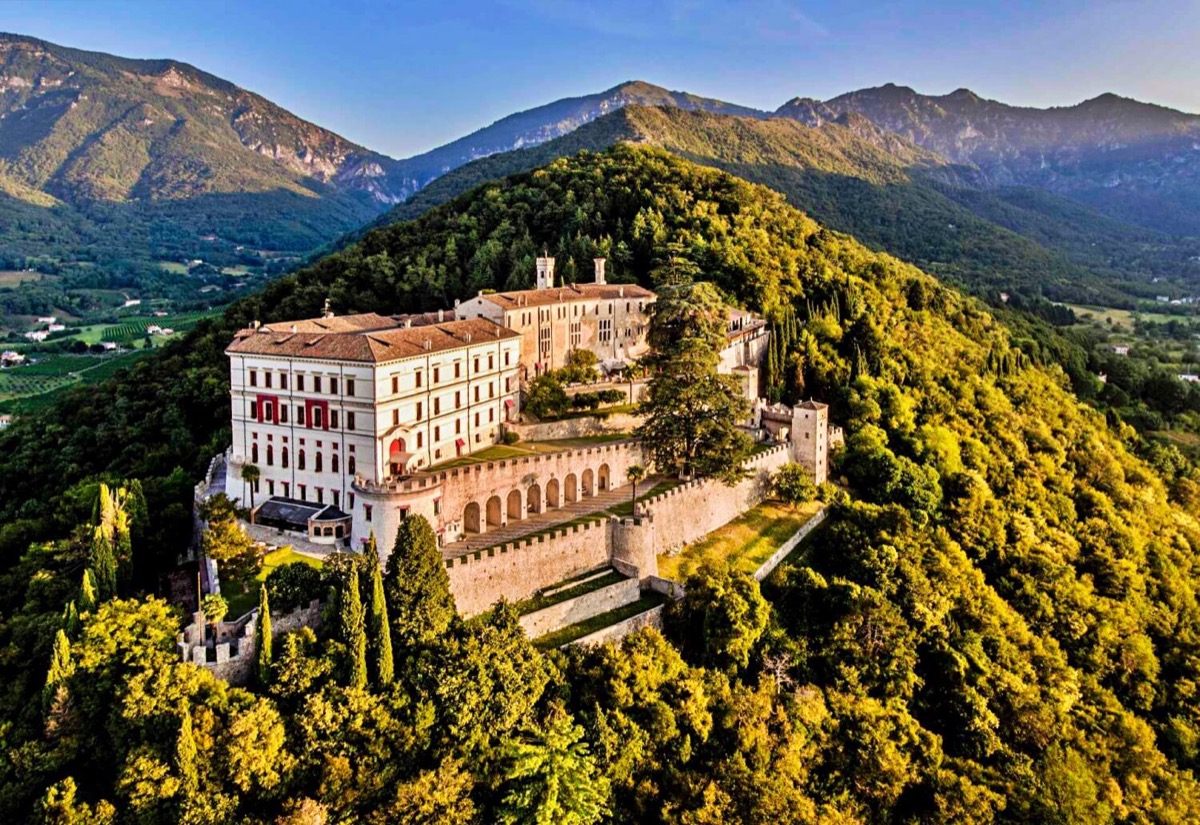
CastelBrando, former Castrum Costae, is a medieval castle situated on a dolomite limestone rock at an elevation of 370 m (1,210 ft) above sea level, overlooking the villages of Cison di Valmarino and Valmareno, Northern Italy
Castelbrando (nel medioevo detto Castello della Costa, Castrum Costae) è un castello situato nel comune italiano di Cison di Valmarino (TV)
Previous names
CastelBrando, Castelbrando
Description
CastelBrando, former Castrum Costae, is a medieval castle situated on a dolomite limestone rock at an elevation of 370 m (1,210 ft) above sea level, overlooking the villages of Cison di Valmarino and Valmareno, Northern Italy. The name CastelBrando is due to the name Brandolini, the ancient family from Forlì, who were the Lords of the castle.
CastelBrando was originally built in the Roman age as a defensive fortress in order to protect the important lines of communication which connected Northern Italy to the countries on the other side of the Alps. Originally there was a garrison here protecting the territory between the Piave and the Livenza rivers in order to facilitate the safe construction of the pre-alpine part of the Via Claudia Augusta, an important Roman road, which linked the valley of the Po River with Rhaetia (modern Austria). The original castrum, dating from 46 AD is still visible today. A recent archaeological excavation has uncovered a 3 m (9.8 ft) diameter bread-oven within the castrum, dating from the same period. The original Roman baths have also been excavated, as have the original pipes of the aqueduct which supplied water from three nearby natural springs. These springs still provide water for the castle today. During the European Migration Period the fortress became an important defensive position against barbarian invasions. Over the centuries the castle has been subject to numerous enlargements and renovations. During the 13th century the castle was substantially enlarged while under the ownership of the Da Camino family, who lived there from 1233 to 1335. Their architectural additions included surrounding the castle with imposing Guelph-Ghibelline style battlements and building a central tower. Gherardo III da Camino, the great Italian feudal lord and military leader was born in the castle in 1240.
The Castle's ownership then passed over to the Republic of Venice, which awarded the Castle's fiefdom first to Marin Faliero and then to the condottieri Giovanni Brandolino and Erasmo da Narni, better known as "Gattamelata". After the fall of Venetian Republic in 1797, it was passed down through the family of Giovanni Brandolino and became the property of the Brandolini Counts, an ancient family from Forlì. In the first half of the 16th century Antonio Maria Brandolini (1476–1522), commissioned skilled engineers to enlarge the central part of the castle in Sansovino style, adding Venetian Gothic double and triple mullioned windows. In 1700 the Brandolini family commissioned Ottavio Scotti, architect and Count of Treviso, to design and build an extension to the southern part of the castle. Part of these works included the building of a castle chapel, the Church of San Martino.
During World War I, the castle was invaded by Imperial Austrian forces and used as a military hospital.The Brandolini family abandoned their home and escaped to their Solighetto villa near Pieve di Soligo. After 10 years of restoration work, financed by Count Girolamo IV Brandolini (1870–1935), the castle was re-opened as a place of residence in 1929. In 1959 the castle was sold by the Brandolini family to the Salesian fathers,who altered its structure to use it as a monastery and as a centre for spiritual studies. In 1997 CastelBrando was purchased by Quaternary Investments SpA, who started an expansive renovation program in order to convert it into a hotel and museum
Castelbrando (nel medioevo detto Castello della Costa, Castrum Costae) è un castello situato nel comune italiano di Cison di Valmarino (TV). Sorge alle pendici del monte Castello, da cui domina i borghi di Valmareno e di Cison. Deve l'attuale nome all'antica famiglia forlivese dei Brandolini, che ne ebbe per secoli la signoria.
Il luogo su cui si trova Castelbrando era frequentato sin dal periodo paleoveneto e continuò ad ospitare insediamenti anche in epoca romana e ostrogota. Si ritiene che in questi secoli la popolazione fosse costretta a stabilirsi lungo le alture di "mezza costa" in quanto il fondovalle era occupato da un ambiente acquitrinoso; lo stesso toponimo Valmareno ne sarebbe un indizio: vi si riconosce una radice indoeuropea che significa "palude, stagno" (cfr. il franco marés, il francese marais, il veneto mara, il longobardo mar)[1].
La costruzione di una vera e propria fortificazione si ebbe durante l'alto medioevo; si potrebbe collocare, più precisamente, nella prima metà del X secolo, durante le invasioni degli Ungari[1].
Nel 962 l'imperatore Ottone I concesse al vescovo di Ceneda Sicardo le prerogative di conte, assegnandogli la giurisdizione della Valmareno e di Castelbrando. Da questo momento la fortezza diventa sede di un piccolo feudo che i presuli cenedesi concessero a vari vassalli: secondo una notizia non confermata dalle fonti, verso l'anno Mille lo avrebbero concesso ai da Porcia, loro avogadori, e da questi pervenne ai Colfosco. Di certo, fece parte della dote matrimoniale che nel 1154 Sofia di Colfosco portò al consorte Guecellone III da Camino; ai suoi discendenti rimase ininterrottamente sino al 1335, quando la casata si estinse in Rizzardo III[1].
Per alcuni anni fu per un periodo al centro di una disputa che oppose il vescovo Francesco Ramponi a Gherardo V e Rizzardo IV da Camino (lontani parenti di Rizzardo III). Successivamente, grazie alla mediazione della Serenissima, fu assegnato ai Caminesi; ma già nel 1349 Rizzardo IV, pur di ottenere un prestito dalla Repubblica, lo cedeva a Marino Falier, futuro doge[1].
Dopo l'esecuzione di quest'ultimo, nel 1355, il castello divenne sede di un podestà veneziano sino al 1436, seppure con alterne vicende. Durante questi anni, infatti, subì l'urto di diversi eserciti invasori: ora i Carraresi, ora il patriarcato di Aquileia, ora nuovamente Venezia. Memorabile l'attacco sferrato nel 1411 da una lega formata da Carraresi, Scaligeri, Caminesi (che non avevano mai rinunciato ai loro diritti sulla fortezza) e Ungheresi sotto la guida di Pippo Spano; dopo questo evento fu assoggettato a Ercole da Camino e Venezia, grazie a un accordo, ne confermò la sovranità. Alla sua morte la Serenissima ne riprese il pieno possesso[1]
Nel 1436 quest'ultima lo donò a Brandolino IV Brandolini, da Forlì, e al Gattamelata, condottieri di ventura al servizio della Repubblica. In seguito, a causa di una promozione militare del Gattamelata, egli lo cedette totalmente al primo.
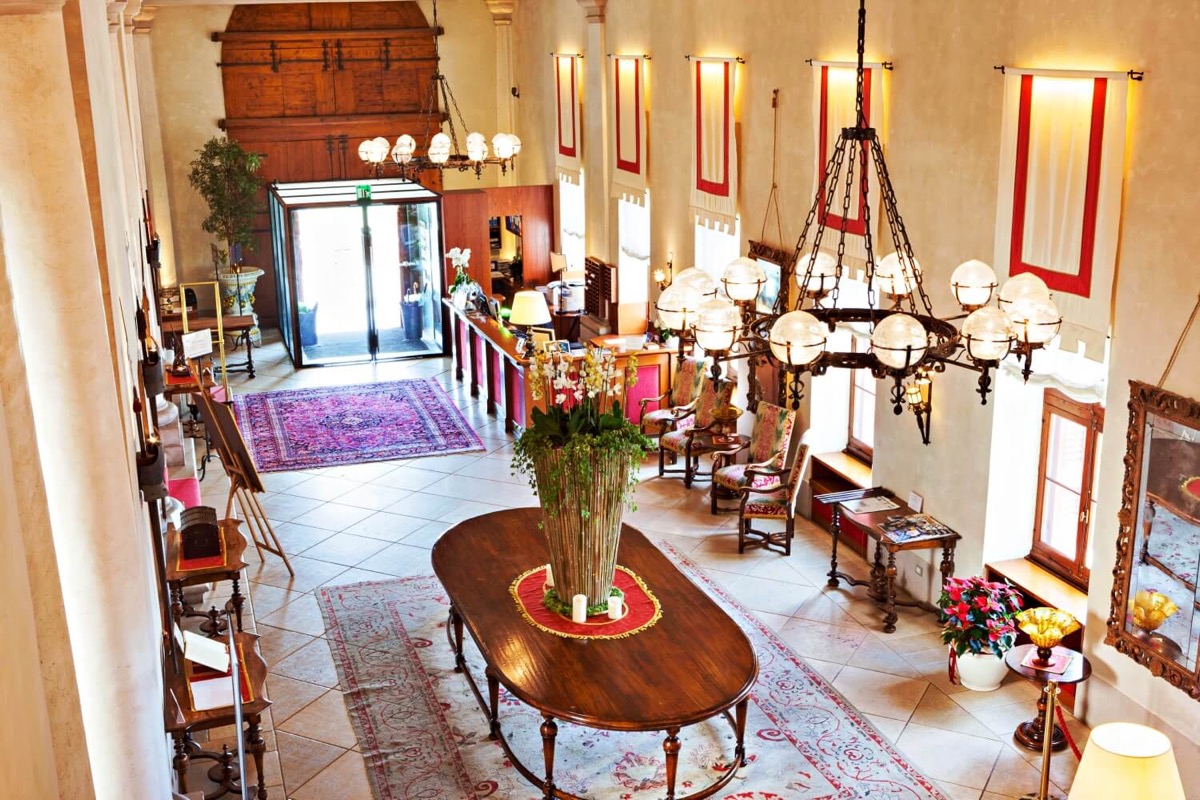
La dominazione veneziana portò un lungo periodo di pace e Castelbrando, cessate le funzioni militari, fu adattato tra il XVI e il XVIII secolo alle esigenze dei Brandolini che lo trasformarono in un palazzo signorile applicandovi lo stile delle ville venete e creando un interessante nonché innovativo per l'epoca sistema di "riscaldamento". I conti tennero il castello sino al 1959, quando lo vendettero ai Salesiani che lo utilizzarono come seminario e luogo di ritiro. Rivenduto da questi nel 1997 all'imprenditore Massimo Colomban, è stato restaurato di recente e ospita oggi un albergo.
Useful information
GRATUITO
10.00 EUR
- Il presepe di ghiaccio
- La mostra di quadri e sculture
- Vista sul Cison di Valmarino
hotel@castelbrando.it
- Il centro benessere
- I musei diversi
- Il villaggio storico
- La funicolare
- Il parcheggio con plugin per macchine elettriche
-
External links
Nearby castles
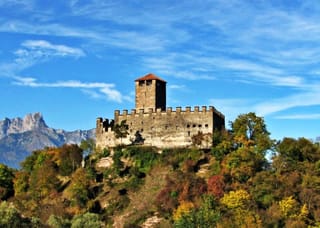
Zumelle Castle
Provincia di Belluno
8.6km
castle, chateau
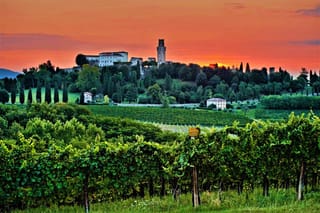
Castello San Salvatore
Provincia di Treviso
15.1km
castle, chateau
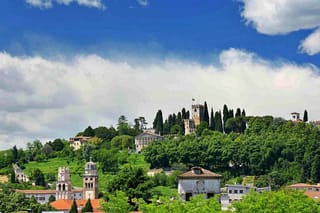
Castello di Conegliano
Provincia di Treviso
15.1km
castle, chateau
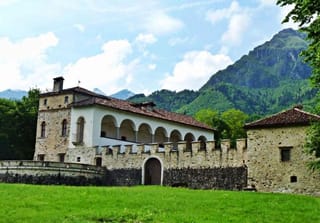
Castel Lusa
Provincia di Belluno
19.5km
castle, chateau
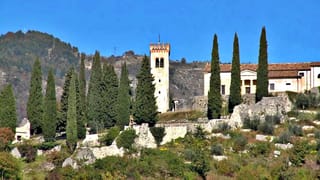
Castello di Caneva
Province of Pordenone
24.3km
castle, chateau
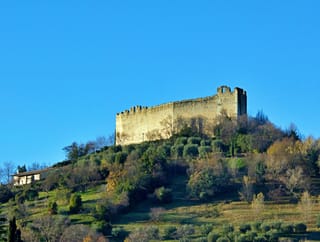
Rocca di Asolo
Provincia di Treviso
24.9km
castle, chateau