Château de Lavardin
Loir-et-Cher Centre-Val de Loire France
castle, chateau
Château de Lavardin
Loir-et-Cher Centre-Val de Loire France
castle, chateau
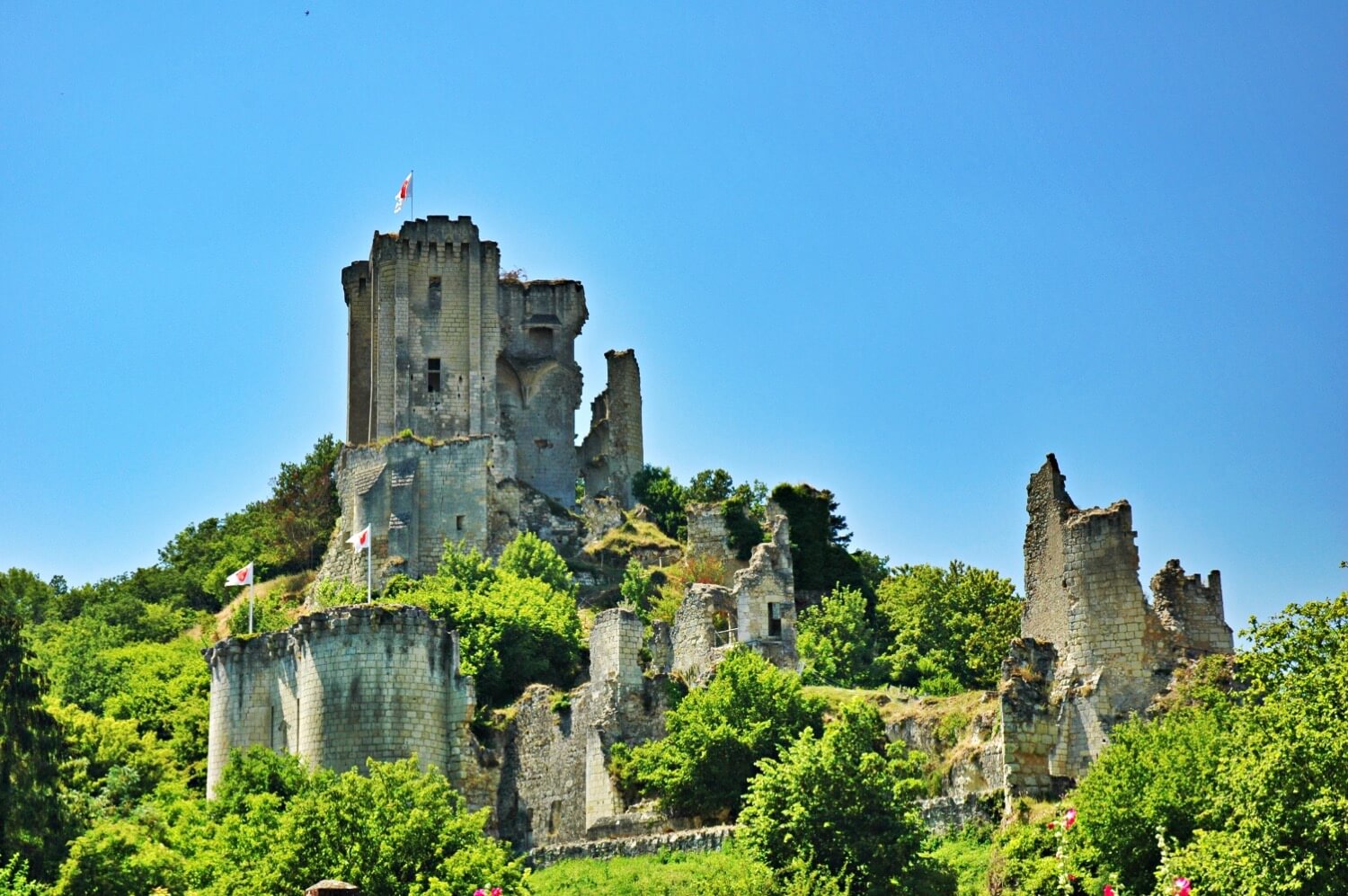
The Château de Lavardin is a ruined castle in the village and commune of Lavardin in the Loir-et-Cher département of France
Le château de Lavardin est un château médiéval situé sur la commune de Lavardin
Previous names
Château de Lavardin, Château de Lavardin
Description
The Château de Lavardin is a ruined castle in the village and commune of Lavardin in the Loir-et-Cher département of France. The property of the commune, it has been classified since 1945 as a monument historique by the French Ministry of Culture.
The remains of the Château de Lavardin stand on a rocky promontory, above the village and the Loir. Built starting from the beginning of the 11th century by the first lords of Lavardin, the castle was sold to the count of Vendôme around 1130, becoming his principal fortress from the end of the 12th century. Completely altered in the 14th and 15th centuries, it was taken by the members of the Catholic League in 1589, then dismantled the following year on the orders of Henri IV, duke of Vendôme and king of France.
Description
The first castle, that of Solomon de Lavardin, constructed at the beginning of the 11th century, appears to have consisted of a wooden keep on a motte, protecting a manor house on the summit of the promontory. The fortress of the counts de Vendôme from the 12th to the 15th century was composed of three or four enclosures surrounding a quadrangular keep, the whole built on three rock platforms excavated in the Middle Ages to increase height. At the foot of the castle, between the promontory and the Loir, a further enclosure protected the priory of Saint Martin (Saint-Gildéric), founded about 1040 by the first lord of Lavardin in an external bailey. During the early Middle Ages, the castle promontory was occupied by a cemetery, of which several ditches cut in the rock have been found.
Of the first enclosure there remains a large gatehouse or "châtelet" (12th, 14th and 15th centuries), with machicolations and embrasures for cannons (about 1400). This gateway gave access to the first level of the promontory, dedicated to the activities of the garrison and the servants. Opposite this door is the entry to the galleries and a large underground storeroom; to the north of the level is a troglodytic kitchen built into the rockface with a baker's oven.
On the second level, accessible by a staircase whose ruins are opposite the châtelet, were several residential buildings.
In the east, is the residence (12th, 14th, 15th centuries) which was occupied by the lord of the manor; to the north, what could be the crypt of the castle chapel (15th century); in the centre, a large ceremonial building built in the last years of the 15th century, starting from an older structure (12th century). It still has remarkable vaults with the arms of the Bourbon-Vendôme family and a niche for oil lamps decorated with three masks. A guard room (end 15th century) is installed under this staircase in order to control movement in the underground galleries.
On the final level, protected by a strong curtain wall (around 1200 - 15th century) with cannon embrasures (15th century), stands an imposing rectangular keep built in the 12th century. This construction is partly founded on the walls of the residence, or "domicilium", built by the lord of Lavardin, probably in the 1070s. Reinforced by three strong towers between the end of the 12th century and the 13th century, it was rebuilt by the counts de Vendôme, between the end of the 14th and the middle of the 15th centuries. The bulk of this work is attributed to Louis I, count de Vendôme from 1393 to 1446.
With a height of 26 metres (~85 feet), the keep dominates the village and the valley.
Above the door can be seen the arms of Jean VII of Bourbon-La Marche, count de Vendôme from 1372 to 1393. Higher, one can still see the remains of the door giving access to the first floor of the keep from the top of the curtain wall. Inside, the overall picture is impressive. On the first floor are a chimney with the arms of Charles VII supported by two angels (about 1420) and a multi-bayed window (14th century). Especially noteworthy are the remains of the staircase, installed about 1400 in one of the keep's 12th century corner towers and the vaulted arches of the second floor (about 1400-1415).
On the arch supports can be seen the armorial bearings of Louis II d'Anjou (1384–1417) and the countess of Vendôme, Alix de Bretagne (deceased in 1377). In the south-west tower is a narrow dungeon, accessible only by a well (15th century?).
On the second and third levels of the promontory a network of galleries and underground staircases was dug, allowing access to the castle and to reach the keep and its moat (14th - 15th centuries). In the west are remains of advanced defences and, probably, the motte protecting the home from the first lords up to the 11th century. However, excavations have shown that this part of the site was occupied since protohistory, if not the Neolithic era.
Le château de Lavardin est un château médiéval situé sur la commune de Lavardin. Il fait l’objet d’un classement au titre des monuments historiques depuis le 21 novembre 1945.
Situation géographique
Les vestiges du château de Lavardin s’étagent sur un promontoire rocheux, au-dessus du village et du Loir.
Histoire
Construit à partir du début du xie siècle par les premiers seigneurs de Lavardin, le château fut vendu au comte de Vendôme vers 1130, dont il devint la principale forteresse à partir de la fin du xiie siècle. Complètement remanié aux xiie et xve siècles, il fut enlevé aux Ligueurs en 1589, puis démantelé l'année suivante sur ordre d'Henri IV, duc de Vendôme et roi de France.
Description
Le premier château, celui de Salomon de Lavardin, au début du xie siècle, paraît avoir été constitué d’un donjon de bois sur motte, protégeant un logis seigneurial établi au sommet du promontoire. La forteresse des comtes de Vendôme (xiie-xve siècles) se composait de trois ou quatre enceintes entourant un donjon quadrangulaire, le tout bâti sur trois paliers rocheux retaillés au Moyen Âge pour en accroître la verticalité. Au pied du château, entre le promontoire et le Loir, une dernière enceinte protégeait le prieuré Saint-Martin (Saint-Gildéric), fondé vers 1040 par le premier seigneur de Lavardin dans un « bayle » extérieur. Durant le haut Moyen Âge, le promontoire qui portera le château a été occupé par un cimetière, dont on a retrouvé plusieurs fosses taillées dans le rocher.
De la première enceinte subsiste une grande porte ou « châtelet » (xiie-xive-xve siècles), dont on remarque les mâchicoulis de tradition bretonne et les embrasures pour le canon (vers 1400). Cette porte donnait accès au premier palier du promontoire affecté aux activités de la garnison et des serviteurs. Face à cette porte se trouvait notamment l’entrée des galeries et d’un grand cellier souterrain ; au nord du palier une cuisine troglodytique avec un four à pain.
Sur le second palier, accessible par un escalier dont on voit les ruines face au châtelet, étaient aménagés plusieurs logis.
À l'Est, on trouve le logis (xiie-xive-xve siècles) qui est attribué au capitaine-châtelain ; au nord, ce qui pourrait être la crypte de la chapelle castrale (xve siècle) ; au centre, un grand logis d'apparat bâti dans les dernières années du xve siècle, à partir d’un logis plus ancien (xiie siècle). Il en reste de remarquables voûtes aux armes des Bourbons-Vendôme, une niche de lampe à huile ornée de trois masques. Une salle de garde (fin xve siècle) est installée sous cet escalier afin de contrôler le passage dans les galeries souterraines.
Sur le dernier palier, protégé par une forte chemise (vers 1200-xve siècle), percée d'embrasures pour le canon (xve siècle), s'élève un imposant donjon rectangulaire édifié au xiie siècle. Cette construction est en partie fondée sur les murs du logis, ou domicilium, élevé par le seigneur de Lavardin, probablement dans les années 1070. Renforcé de trois fortes tours entre la fin du xiie siècle et les années 1200, il a été reconstruit par les comtes de Vendôme, entre la fin du xive siècle et le milieu du xve siècle. L'essentiel de ces travaux est attribué à Louis Ier, comte de Vendôme de 1393 à 1446.
Du haut de ses 26 mètres, le donjon domine le village et la vallée.
Au-dessus de la porte, on remarque les armes de Jean VII de Bourbon-La Marche, comte de Vendôme de 1372 à 1393. Plus haut, on peut encore voir les restes de la porte donnant accès au premier étage du donjon depuis le sommet de la chemise. De l'intérieur, la vue d'ensemble est impressionnante. On note, au rez-de-chaussée, l’appareil très allongé du premier logis seigneurial, dans les étage une cheminée aux armes de Charles VII portées par deux anges (vers 1420), une fenêtre polylobée (xive siècle). On admire surtout les vestiges de l'escalier, installé vers 1400 dans une tour pleine cantonnant l’angle du donjon depuis la fin du xiie siècle, et les voûtes du second étage (vers 1400-1415).
Sur les retombées des voûtes, on observe les armoiries de Louis II d'Anjou (1384-1417) et de la comtesse de Vendôme, Alix de Bretagne (décédée en 1377). Dans la tour cantonnant le donjon au sud-ouest est aménagé un étroit cachot, uniquement accessible par un puits (xve siècle ?).
Les second et troisième paliers du promontoire sont creusés d'un réseau de galeries et d'escaliers souterrains permettant de circuler dans le château et d'atteindre le donjon et son fossé (xive-xve siècles). À l'ouest subsistent également des défenses avancées et, vraisemblablement, la motte protégeant le logis des premiers seigneurs au xie siècle. Mais des fouilles ont montré que cette partie du site est occupée depuis la Protohistoire, si ce n’est le Néolithique.
Useful information
Parking GRATUIT (à proximité)
Adulte: 4 €
Enfant (moins de 14 ans): 1,50 €
Groupe (20 personnes minimum): 3 €
Forfait hors saison: 20 €
http://www.lavardin.net/contact/formulaire.html
-
External links
Nearby castles