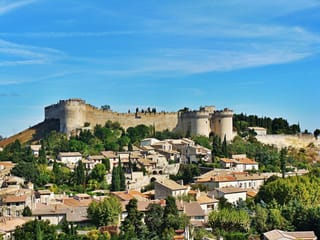
Château de Tarascon
Bouches-du-Rhône Provence-Alpes-Côte d'Azur France
castle, chateau
Château de Tarascon
Bouches-du-Rhône Provence-Alpes-Côte d'Azur France
castle, chateau
Chateau de Tarascon date of construction: 15th century
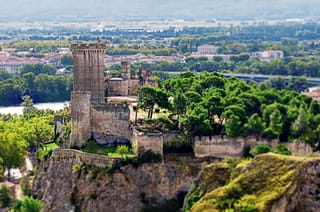
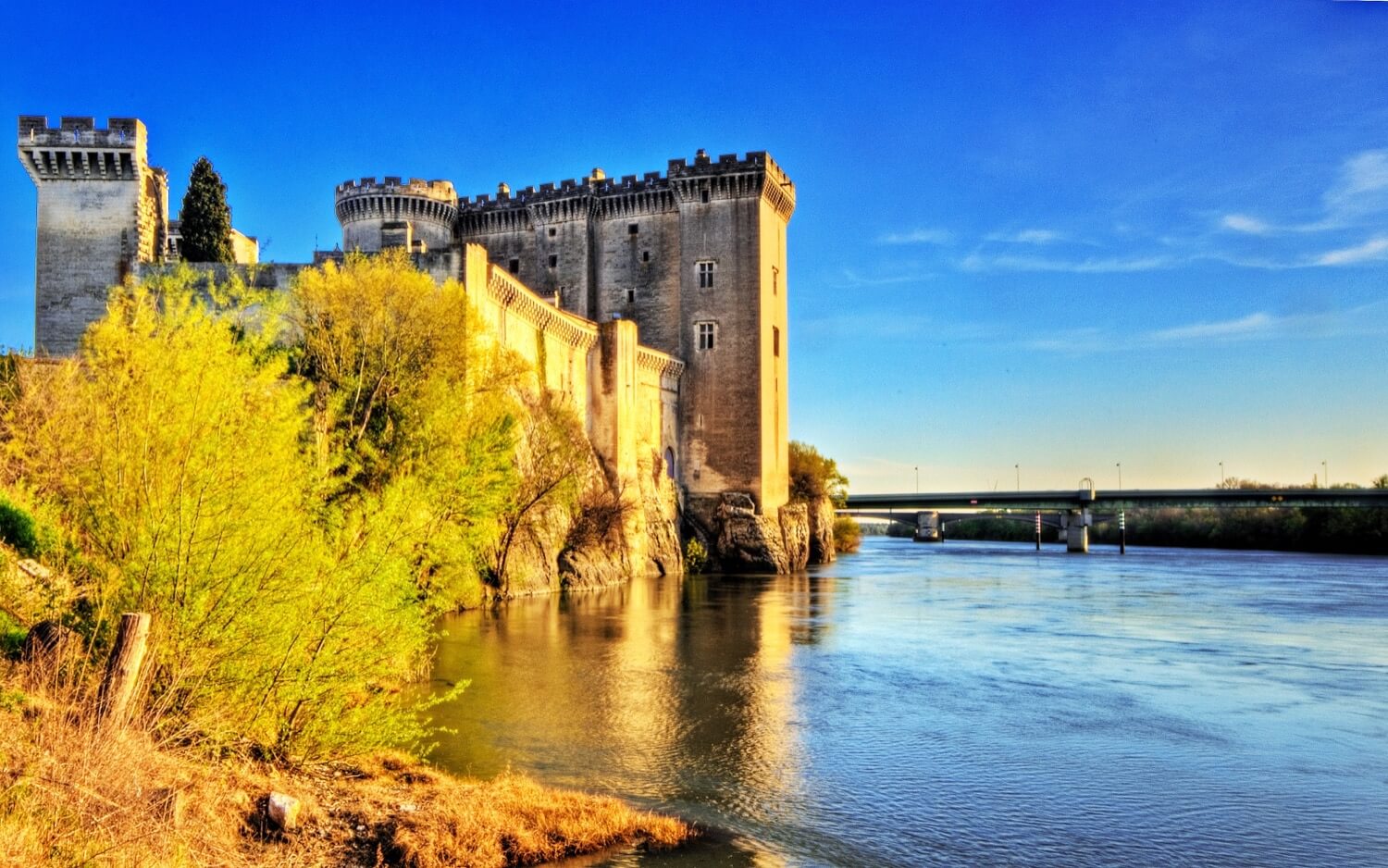
On the banks of the Rhone River, Tarascon is quite a foreboding sight, with strong walls barely pierced to let the light in
Le château de Tarascon - Centre d'art René d'Anjou - est situé en bordure du Rhône dans le département des Bouches-du-Rhône en France
Previous names
Château de Tarascon, Château de Tarascon
Description
Chateau de Tarascon date of construction: 15th century
On the banks of the Rhone River, Tarascon is quite a foreboding sight, with strong walls barely pierced to let the light in. The wall and towers are the same height ading further to the solid appearance.
Built during the first half of the 15th century by Louis II of Anjou and his son Roi René, on the site of an earlier defensive structure, the castle was designed to protect the Provence region from attack. It was an important strategic location due to its position at the bottom of the Rhone Valley and on several important trade routes.
Despite the austere outside, the castle has a certain impressive beuaty. The interior of the castle was finely and richly furnished and decorated, although little now remains of this fine decoration.
After the 15th century the region became part of France and Tarascon was no longer strategically important, although it still served as a castle during the Wars of Religion, playing a role in confronting the protestants of the Languedoc region to the east.
By the middle of the 17th century Tarascon had been pressed into service as a prison, a role it was to hold until almost the end of the 18th century, and sporadically into the 19th century.
The deterioration of the condition of the castle was made worse by the damage done as a result of the Revolution, and the castle entered the 19th century in very poor condition. Numerous decisions to demolish the castle were passed, even as late as the 20th century, but each time circumstances or opposition prevented it taking place. It was only in 1932 that the future of the chateau was assured and restoration work began.
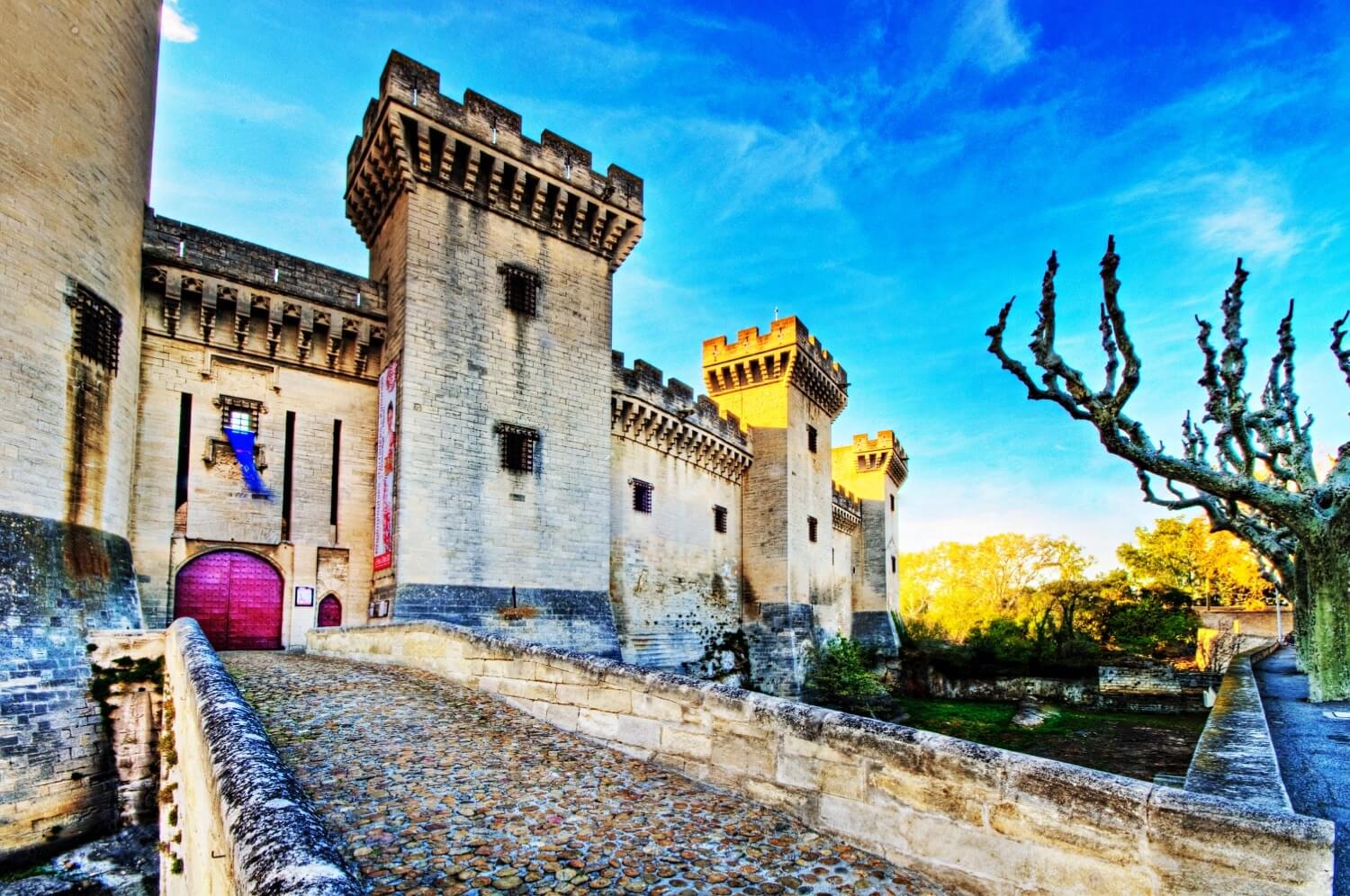
The castle is now entered by a small bridge (part of this bridge was originally a drawbridge) which passes into the 'lower courtyard', from which the main castle can be accessed. The interior courtyard stands in stark contrast to the exterior walls - the former being ornately decorated. The interior salons and halls are also now finely decorated to reflect the heyday of the chateau
Tarascon castle now also contains an interesting collection of 17th century tapestries.
https://www.castles.francethisway.com/chateau-tarascon.php
Le château de Tarascon - Centre d'art René d'Anjou - est situé en bordure du Rhône dans le département des Bouches-du-Rhône en France. Par son état remarquable de conservation, ce monument d'exception est un des plus beaux châteaux médiévaux de France et d'Europe construit au début du XVe siècle de 1400 à 1435, par les comtes de Provence-Barcelone, ducs d'Anjou, hôtes des châteaux d'Angers et de Saumur.
Un premier château
À cet emplacement s'élevait un premier château qui fut occupé au milieu du xiiie siècle par Charles d’Anjou, comte de Provence et frère de Saint-Louis, roi de France. Ce château est agrandi par son fils Charles II dit « le boiteux ». En 1367 le duc Louis d'Anjou, gouverneur du Languedoc et frère du roi de France Charles V, veut profiter de l’éloignement du pape Urbain V qui s'était rendu à Rome et de l'absence de la reine Jeanne, comtesse de Provence, pour substituer son pouvoir à celui de la reine. Cette entreprise était une nouvelle manifestation de l'ambition française sur la Provence. Le duc d'Anjou trouve un capitaine en la personne de Bertrand Du Guesclin qui vient d'être libéré en décembre 1367 après sa capture à la bataille de Nájera. Du Guesclin se met en marche le 26 février 1368 avec 2 000 hommes et met le siège devant Tarascon le 4 mars 1368. La ville est bloquée de toute part. Les trébuchets font plusieurs victimes dont le clavaire Martin Champsaur. La ville de Tarascon capitule le 20 ou 22 mars 1368, mais sera reprise en septembre 1370.
Useful information
Parking GRATUIT (à côté du château)
Adulte (25 ans et plus): 7,50 €
Tarif réduit (18-24 ans): 6,50 €
Jeune (10-17 ans): 3,50 €
Enfant (moins de 10 ans): gratuit
Tarif famille (2 adultes et 2 enfants entre 10 et 17 ans): 19 €
Tarif famille (2 adultes et 3-5 enfants entre 10 et 17 ans): 25 €
Groupe tourisme (à partir de 15 personnes): 6,50 €
Groupe scolaire, périscolaire, centre de loisirs (30 personnes, accompagnateurs compris): 40 €
http://chateau.tarascon.fr/formulaire-de-contact.html
-
External links
Nearby castles