Rohan Castle
Bas-Rhin Grand Est France
castle, chateau
Château de Saverne
Bas-Rhin Grand Est France
castle, chateau
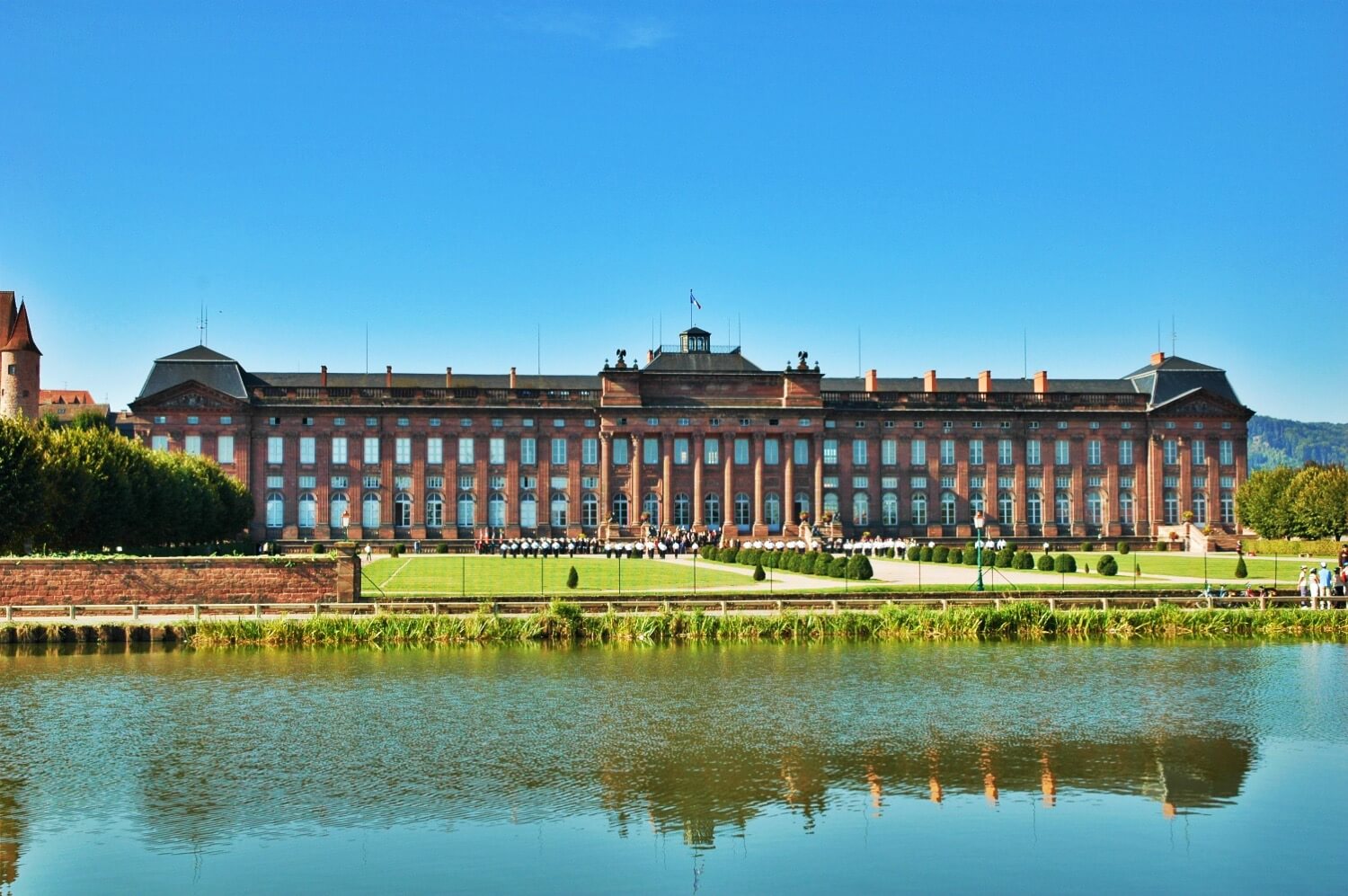
Rohan Castle (French: Château des Rohan, German: Rohan-Schloss), also known as Château Neuf (New Castle), is an eighteenth-century neoclassical palace in the city of Saverne in Alsace, France
Le château des Rohan est un ancien château épiscopal construit à la fin du xviiie siècle par l'architecte Nicolas Salins de Montfort
Previous names
Rohan Castle, Château de Saverne
Description
Rohan Castle (French: Château des Rohan, German: Rohan-Schloss), also known as Château Neuf (New Castle), is an eighteenth-century neoclassical palace in the city of Saverne in Alsace, France. It was one of the residences of Archbishops of Strasbourg, rulers of the Prince-Bishopric of Strasbourg, which was an ecclesiastical principality of the Holy Roman Empire from the 13th century until 1803. A series of members of the House of Rohan held the see in the 18th century. The 140 metre wide façade of red vosges sandstone is considered to be one of the most impressive examples of its kind.
The building was erected between 1780 and 1790 by the architect Nicolas Salins de Montfort on the site of the previous building, which had been built in 1670 and burned down in 1779. This previous building had in turn replaced the small Château Vieux (Old Castle) of 1417, which is still preserved today. That building saw two of the three marriages of Charles, Prince de Soubise; firstly in 1741 to Anne Therese of Savoy and secondly to Anne Victoire of Hesse-Rotenburg in 1745.
The architect of the new castle had been commissioned by the Strasbourg Prince-Bishop Louis René Édouard de Rohan-Guéméné, who also resided in the magnificent Rohan Palace in the city where he held office, as well as in the less stately Rohan Castle of Mutzig. In order to furnish the castle, Louis René assembled a vast collection of costly Qing porcelain and lacquerware. The surviving pieces of this collection are prominently displayed in the apartments of the Strasbourg palace.
By the time of the outbreak of the French Revolution, only the outside was completed. When cleric rule was abolished, the building lost both its owner and its function.
The gradual decline of the building was stopped under Napoleon III, who had it renovated and extended in the direction of the city. Already in 1853, the park was irrevocably cut and destroyed by the Marne-Rhine Canal. Since 1858, the castle houses a city museum (history, decorative arts, a large archaeological department), which was joined by the art and ethnographic collection of the politician Louise Weiss in the 20th century. Previously, the castle had served at times as a home for officers' widows and, after the Franco-Prussian War, as a barracks. Today, one of its wings is used as a youth hostel, and another houses the Espace Rohan, Saverne's 500 seat theatre and concert hall.
The castle is listed as a Monument historique since 1933 by the French Ministry of Culture.
Le château des Rohan est un ancien château épiscopal construit à la fin du xviiie siècle par l'architecte Nicolas Salins de Montfort. Il se trouve au centre de la ville de Saverne, Bas-Rhin et abrite les musées municipaux. Il fait l’objet de multiples classements au titre des monuments historiques : en février 1933, en novembre 1934 et en novembre 1995.
Architecture
L'architecture est du style néoclassique de la fin du xviiie siècle construit par l'architecte Salins de Montfort.
Décoration
La décoration intérieure ne fut jamais achevée car les travaux furent interrompus en 1790 par la Révolution française.
Histoire
Le château était d'abord un château médiéval qui fut transformé en résidence par Robert de Cotte au xviiie siècle, résidence détruite par un incendie en 1779. Alors, le propriétaire du château le cardinal Louis René Édouard de Rohan décida la construction d'un palais plus somptueux que l'ancien. Mais le cardinal de Rohan ne put pas profiter de ce palais, étant entrainé dans l'affaire du collier qui le contraignit à terminer sa vie en exil.
L'architecte Nicolas-Alexandre Salins ne put terminer le palais lorsque éclata la Révolution française. Délaissé jusqu'au Second Empire, le château dut sa conservation à Napoléon III, qui le fit achever pour y loger les veuves des hauts fonctionnaires décédés dans l'exercice de leur fonction.
En 1871 le château fut transformé en caserne allemande, puis française en 1918. En 1952, l'édifice devient une institution municipale culturelle.
Le parc du Château
Dessiné par Robert de Cotte lors de l'aménagement de 1723, les jardins comprenaient un dispositif de deux vastes terrasses descendant vers le parterre de broderie, lui-même se prolongeant par le grand bassin agrémenté d'une gerbe, première pièce d'eau du canal. Statues et vases ornaient ces différents espaces. De part et d'autre se trouvaient le potager, les bosquets, le boulingrin et le jardin agreste.
Le canal, tracé en ligne droite vers l'est, s'étirait à perte de vue sur une longueur totale de quatre kilomètres. La grande pièce d'eau qui l'introduisait mesurait cent trente mètres en largeur sur deux cent vingt mètres en longueur. Le canal à proprement parler avait soixante mètres de large. Il était interrompu au bout de deux kilomètres et demi par un grand bassin circulaire de deux-cent-soixante mètres de diamètre.
De nos jours
Actuellement, le château des Rohan abrite toute une série d'institutions municipales :
Le musée d'art et d'histoire.
Après ceux de Strasbourg et de Colmar le plus ancien musée municipal d’Alsace. Il accueille de riches collections archéologiques et historiques ainsi que la donation Louise Weiss.
L'Espace Rohan - Relais Culturel de Saverne, qui accueille toute l'année un programme varié dans sa salle en gradins de 500 places.
L'école primaire du centre.
Une auberge de jeunesse.
Le poste de police municipale.
Le Club Vosgien.
Une série de salons et de salles dédiés à des réunions et des conférences.
Useful information
Parking GRATUIT (à proximité, côté jardin)
Adulte: 3,30 €
Tarif réduit: 2,75 €
Enfant (jusqu'à 16 ans): gratuit
contact@tourisme-saverne.fr
-
External links
Nearby castles
Oberhof (château)
Bas-Rhin
0.1km
castle, chateau
Château de Hohbarr
Bas-Rhin
2.6km
castle, chateau
Château de La Petite-Pierre
Bas-Rhin
13.3km
castle, chateau
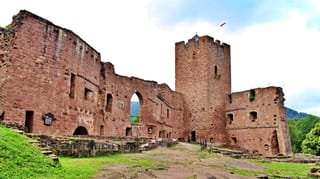
Château de Wangenbourg
Bas-Rhin
14.0km
castle, chateau
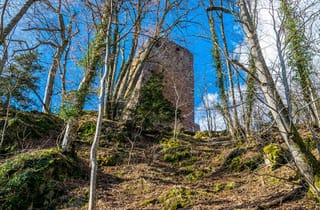
Château du Nideck
Bas-Rhin
19.0km
castle, chateau
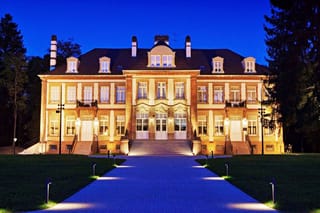
Château Teutsch
Bas-Rhin
20.6km
castle, chateau
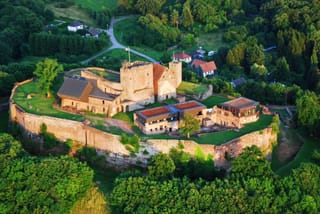
Château de Lichtenberg
Bas-Rhin
21.9km
castle, chateau