Château de La Petite-Pierre
Bas-Rhin Grand Est France
castle, chateau
Château de La Petite-Pierre
Bas-Rhin Grand Est France
castle, chateau
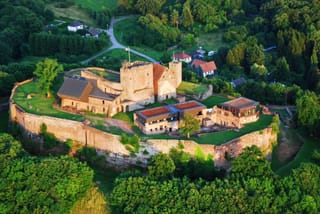
The Château de la Petite-Pierre, Burg Lützelstein is a castle in the commune of La Petite-Pierre in the Bas-Rhin département of France, in Alsace
Le château de La Petite-Pierre, également appelé château de Lützelstein (Burg Lützelstein en allemand), se situe dans la commune française de La Petite-Pierre, dans le département du Bas-Rhin
Previous names
Château de La Petite-Pierre, Château de La Petite-Pierre
Description
The Château de la Petite-Pierre, Burg Lützelstein is a castle in the commune of La Petite-Pierre in the Bas-Rhin département of France, in Alsace. All the names of the place are related to "small stone", and come from Old Franconian Lítzelstäin, with the French name as a translation.
It is the headquarters of the Parc naturel régional des Vosges du Nord. It has been listed as monument historique by the French Ministry of Culture since April 1922.
History
Originally there was a stronghold in the place, built by the family of Hugues IV of Nordgau (fr), Count of Egisheim.
Built at the end of the 12th century, the Château de la Petite-Pierre is recorded from 1212. Count Hugo, either the son or grandson of the powerful Count of Blieskastel (fr), is held as the constructor. The fief was recognised as the "County of Lützelstein", within the German Holy Roman Empire, approximately at the same time.
The counts have used the title Graf von Lützelstein, later also Comte de Petite-Pierre, meaning basically the same, also Comte de Lunéville (in Lorraine), which might be due to a confusion of transferral of power at some point.
A probable, incomplete, order of the early counts of Lützelstein, as precise documentation is not at hand:
Hugo I of Blieskastel (d.a. 1220), Count of Lützelstein or Lunéville (or both), second son of Folmar I (d.a. 1179), Count of Blieskastel with Clementia of Metz. His brother Folmar II, Count of Blieskastel was married to Jutta, daughter of Simon I, Count of Saarbrücken. Hugo married Kunigunde, daughter of Konrad, Count of Kyrburg and Mathilde of Bar, and had Hugo II.
Hugo II of Blieskastel, Count of Lützelstein (1208? - a. 1246). Married Judith (Joathe) of Lorraine, daughter of Philippe, son of Frederick I, Duke of Lorraine ("Ferry").
Hugo III, Count of Lützelstein (Perhaps also Lunéville) (d.a. 1280/99), married Elisabeth (d.a. 1271), daughter of Simon III, Count of Saarbrücken. Probably also Elisabeth of Vinstingen, a grandniece of Simon.
In 1223, due to a conflict with the Bishop of Strasbourg, the counts of Parva Petra were forced to yield it as a fief to the bishop as an episcopal stronghold, under the bishop's reign.
In 1403, Friedrich of Lutzelstein died as the last was the last male heir of the castle. His uncle Bourcard/Burkhard II of Lutzelstein, Bishop of Strasbourg (in office 1393 - 1394), was one of the claimants, as well as Friedrich's sister, married to Johann of Leiningen. Burkhard (of Friedrich?) divided the property letting Palatine count Robert III, Holy Roman Emperor a fourth and the rest to his daughters. Sons of Burkhard and of the Leiningen family ruled for some time in Lützelstein. However the Palatine count Frederick I (1425 - 1476) seized it all in 1452/62 as the new holders died without legitimate heirs. In 1566, it became the residence of George John I, Count Palatine of Veldenz, who carried out major works. The French Army occupied the castle in 1677; in 1681 the county was joined with in France. Vauban was charged with improving the fortifications. In 1870 that the fortifications were removed.
Since 1977, the building has housed the administrative services of the Parc naturel régional (Natural Regional Park) of Vosges du Nord. In the multi-media exhibition there, a room is specifically devoted to the history of the castle with, in particular, a superb model of Staedtel, the fortified old town, according to plans of 1771, and an impressive sight of the castle's ancient cistern.
The fortified town,with the Saint-Louis chapel, the 15th-century church choir and the bastion tower protecting the cisterns, is closely linked to the castle.
Architecture
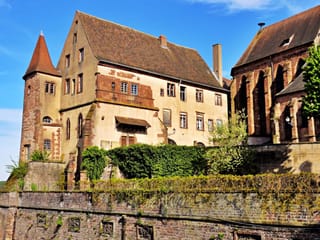
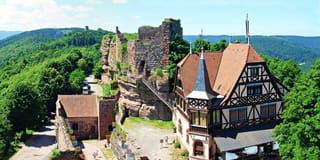
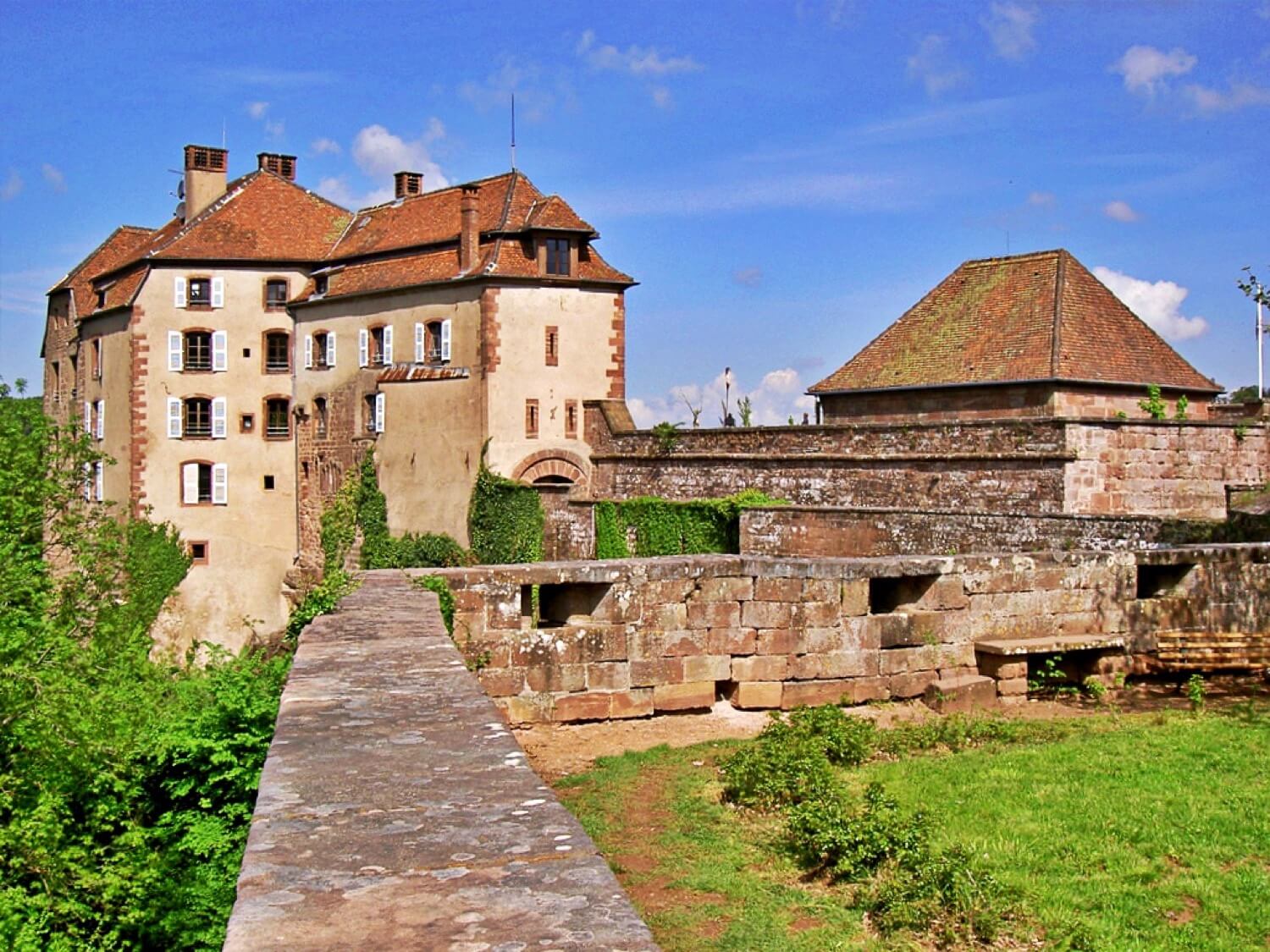
The castle is located at the end of a crest, separated from the old town by an artificial ditch dating from the beginning of the 13th century. The pentagonal keep was destroyed in the 19th century. The residence has been greatly altered but in its cellar the filtering cistern dates from the 14th century. On the southern façade are Romanesque windows. The well with Renaissance decoration, the main door with pilasters and the staircase turret date from the 16th century.
The polygonal construction exhibits Gothic ornamentation, in particular hooked capitals.
Le château de La Petite-Pierre, également appelé château de Lützelstein (Burg Lützelstein en allemand), se situe dans la commune française de La Petite-Pierre, dans le département du Bas-Rhin. Il est le siège du Parc naturel régional des Vosges du Nord.
Il fait l’objet d’un classement au titre des monuments historiques depuis avril 1922.
Histoire
Un premier site défensif est établi par les comtes d'Eguisheim-Dabo, qui le donnent en fief à une famille noble nommée Parva Petra (« petite pierre »), laquelle lui laisse son nom. Le fief est érigé en comté de La Petite Pierre dès la fin du xiie siècle, au profit d'un cadet de la puissante famille de Blieskastel ; le château est mentionné pour la première fois en 1212.
À la suite d'un conflit avec l'évêque de Strasbourg, les comtes doivent lui céder leur comté, lequel leur est concédé en retour sous forme de fief dès 1223.
En 1403, Bourcard de Lutzelstein, évêque de Strasbourg et dernier héritier mâle du château, cède le quart de la Petite-Pierre au comte palatin Robert III devenu empereur germanique, qui lui accorde de transmettre ces biens par voie d'héritage par les femmes. Mais en 1452, le comte palatin Frédéric Ier s'empare de la totalité du château.
Le comté est transmis à une branche cadette de la Maison palatine, et le château devient en 1566 la résidence de Jerri-Hans, comte palatin de Veldenz, qui y fait faire de grands travaux de modernisation.
Le 24 octobre 1648, par les traités de Westphalie et de Münster qui mettent fin à la guerre de Trente Ans, les terres et seigneuries des Habsbourg, en Alsace, passent aux mains du Roi de France.
L'armée royale occupe le château en 1677, et en 1681 Vauban est chargé de restructurer les fortifications, encore en grande partie visibles aujourd'hui, alors que les autres châteaux-forts alsaciens étaient voués à l'abandon, l'arasement sinon à la destruction, à l'exception des châteaux de Lichtenberg et du Landskron.
Depuis 1977, le bâtiment abrite les services administratifs du parc naturel régional des Vosges du Nord. Dans l'exposition multimédia L'aventure des Vosges du Nord aménagée sur 700 m², une salle est spécifiquement consacrée à l'histoire du château de la Petite-Pierre, avec notamment une superbe maquette du Staedtel, la vieille ville fortifiée, d'après des plans de 1771, et une vue impressionnante de la citerne du château.
La ville fortifiée, avec la chapelle Saint-Louis, le chœur de l'église du xve siècle et la tour-bastion protégeant les citernes, sont étroitement liés au château.
Architecture
Le château est situé sur l'extrémité d'une crête, séparé de la vieille ville par un fossé artificiel, dateraient du début du xiiie siècle. Le donjon pentagonal a été détruit au xixe siècle Le logis a été très remanié mais dans sa cave la citerne à filtration daterait du xive siècle et sur sa façade sud des fenêtres romanes. Le puits à décor Renaissance, la porte d'entrée à pilastres et la tourelle d'escalier dateraient du xvie siècle
Une construction polygonale présente des ornementations gothiques en particulier des chapiteaux à crochets.
Useful information
Parking GRATUIT (parking à l'entrée de la vieille ville, parking bus)
Gratuit
Gratuit
Gratuit
L'ENTRÉE GRATUITE
WC GRATUIT
contact@parc-vosges-nord.fr
-
External links
Nearby castles