Château de Saint-Ulrich
Haut-Rhin Grand Est France
castle, chateau
Château de Saint-Ulrich
Haut-Rhin Grand Est France
castle, chateau
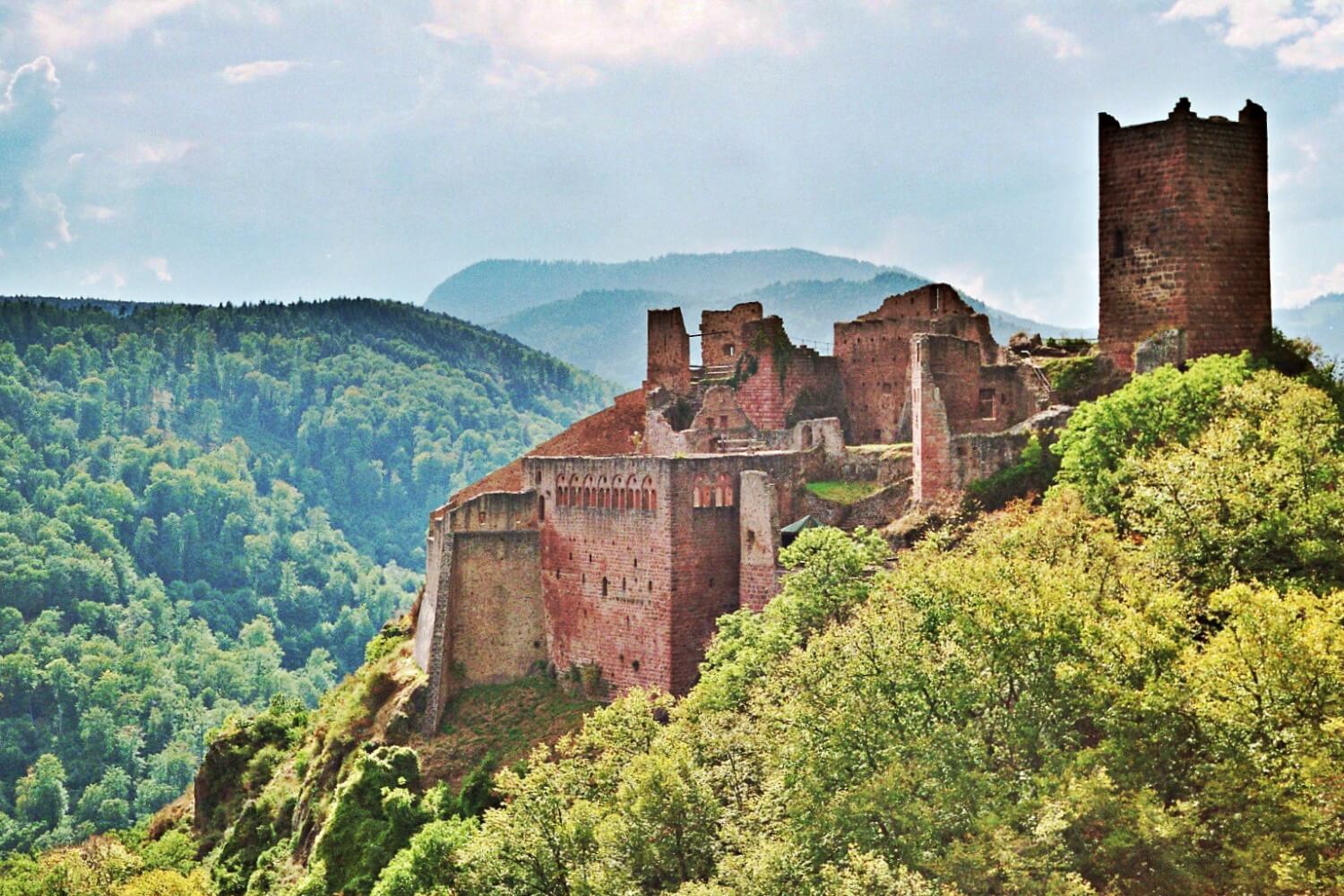
The Château de Saint-Ulrich (also known as the Château de Grand-Ribeaupierre) is one of three castles (with the Girsberg and the Haut-Ribeaupierre) which overlooks the commune of Ribeauvillé in the Haut-Rhin département of France
Le château de Grand-Ribeaupierre (ou Rappolstein), connu sous le nom du château de Saint-Ulrich, est l’un des trois châteaux (avec le Girsberg et le Haut-Ribeaupierre) qui dominent la commune de Ribeauvillé, dans le Haut-Rhin
Previous names
Château de Saint-Ulrich, Château de Saint-Ulrich
Description
The Château de Saint-Ulrich (also known as the Château de Grand-Ribeaupierre) is one of three castles (with the Girsberg and the Haut-Ribeaupierre) which overlooks the commune of Ribeauvillé in the Haut-Rhin département of France. It is situated at an altitude of 528 m.
The present name of the site is from the chapel dedicated to Saint Ulrich of Augsburg which is found in the castle. Medieval texts never gave the present name - the castle had the name of the Rappolstein dynasty (or Ribeaupierre in the French style).
History
From the 11th to the 16th centuries, the castle was the principal residence of the powerful lords of Ribeaupierre. There must have been another castle on the same site which belonged in 1114 to the Bishop of Basle. It was occupied militarily by Henry V, Holy Roman Emperor, who used it as a strongpoint in his war against the Eguisheims. It was then returned to the Bishop of Basle who restored it to the Ribeaupierres. Anselme II de Ribeaupierre, who chased the other members of the family from the castle, successfully survived two sieges, in 1287 by Rudolph I of Germany and, in 1293, his successor Adolf. A celebrated crimal, Dame Cunégonde d'Hungersheim, was incarcerated in the keep and tried to escape with the aid of a guard.
The castle is a very fine example of the military architecture of Alsace in the Middle Ages, including a keep erected in the 12th century and a residence with chimney of the 12th century. In the 13th century, the salle des chevaliers (knights' hall) was decorated with nine beautiful windows in the Romanesque style which can still be seen. In the same period (1435), the chapel dedicated to Saint Ulrich, Bishop of Augsburg, was built.
The Ribeaupierre family left this castle in the 16th century for a Renaissance-style mansion (the present school in Ribeauvillé). The castle was dismantled during the Thirty Years' War.
The castle today
The visible remains date from several epochs:
12th century : Square keep and the corps de logis
13th century : Salle des chevaliers, and the residential tower
14th century : Barbican and outer enceinte
15th century: Chapel (Saint-Ulrich)
The Château de Saint-Ulrich has been listed since 1841 as a monument historique by the French Ministry of Culture.
Le château de Grand-Ribeaupierre (ou Rappolstein), connu sous le nom du château de Saint-Ulrich, est l’un des trois châteaux (avec le Girsberg et le Haut-Ribeaupierre) qui dominent la commune de Ribeauvillé, dans le Haut-Rhin. Il est situé à 528 m d'altitude. Il fait l’objet d’un classement au titre des monuments historiques depuis octobre 1841 et février 1930.
Histoire
Le nom du site est dû à la chapelle dédiée à ce saint qui se trouve dans le château. Les textes médiévaux, quant à eux, ne font nullement usage du nom Saint Ulrich : le château portait le nom de la lignée des Rappolstein (ou Ribeaupierre, dans la forme francisée).
Il fut du xie siècle au xvie siècle la principale résidence des puissants sires de Ribeaupierre. Il devait sans doute exister un autre château sur le même emplacement qui appartenait en 1114 à l'évêque de Bâle. Il est occupé militairement par Henri V du Saint-Empire qui s'en sert comme point d'appui dans sa guerre contre les Eguisheim. Il est rendu ensuite à l'évêque de Bâle qui le restitue aux Ribeaupierre. Anselme II de Ribeaupierre qui chassa les autres membres de sa famille du château,y soutint victorieusement deux sièges en 1287 contre Rodolphe IV de Habsbourg, roi d'Allemagne et en 1293 contre le roi Adolphe son successeur.
Une criminelle célèbre, la dame Cunégonde d'Hungerstein (de son nom de jeune fille Billing de Willsperg) fut enfermée au xve siècle pendant près de vingt ans dans le donjon et tenta de s'en échapper avec la complicité du guetteur. Elle était accusée d'avoir étranglée en 1487 Guillaume de Hungerstein, son mari, vassal des Ribeaupierre, établi à Guebwiller.
C'est un château d'une très belle architecture militaire du Moyen Age en Alsace qui comprenait un donjon érigé au xiie siècle et un logis avec cheminée du xiie siècle. Au xiiie siècle la salle des chevaliers fut décorée de neuf belles fenêtres de style roman que l'on peut encore apercevoir. À la même époque, vers 1435, fut érigée la chapelle consacrée à Saint-Ulrich évêque d'Augsbourg. La famille des Ribeaupierre, quitta ce château au xvie siècle pour un château de style Renaissance (l'actuel lycée de Ribeauvillé). Par la suite, le château fut démantelé durant la Guerre de Trente Ans.
Architecture : les vestiges actuels
Les vestiges actuellement visibles datent de plusieurs époques : le donjon carré et le corps de logis sont datés du xiie siècle, la salle des chevaliers, et la grande tour d'habitation du xiiie siècle alors que la barbacane d'entrée et l'enceinte extérieure sont du xive siècle
La chapelle Saint-Ulrich est datée du xve siècle.
Useful information
Parking GRATUIT (près du terrain de sport, derrière le lycée - rue de Lutzelbach)
Gratuit
Gratuit
Gratuit
L'ENTRÉE GRATUITE
info@ribeauville-riquewihr.com
-
External links
Nearby castles
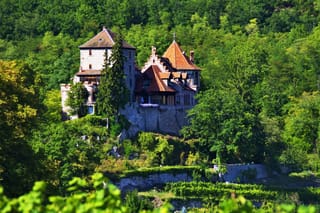
Château de Reichenberg
Haut-Rhin
2.7km
castle, chateau
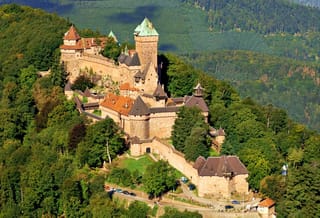
Château du Haut-Kœnigsbourg
Bas-Rhin
5.9km
castle, chateau
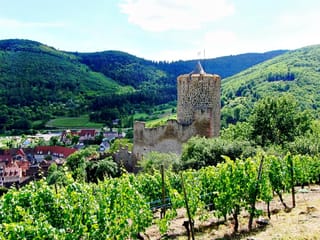
Château de Kaysersberg
Haut-Rhin
7.6km
castle, chateau
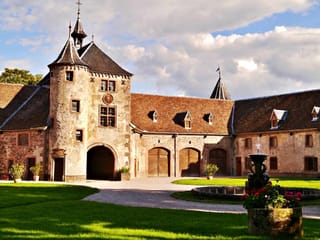
Château de Thanvillé
Bas-Rhin
13.7km
castle, chateau
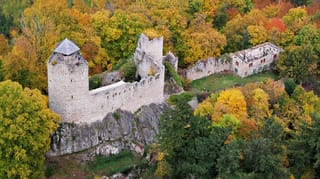
Château du Bernstein
Bas-Rhin
15.0km
castle, chateau
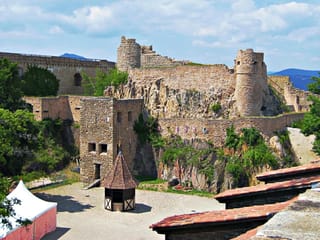
Château du Hohlandsbourg
Haut-Rhin
16.1km
castle, chateau
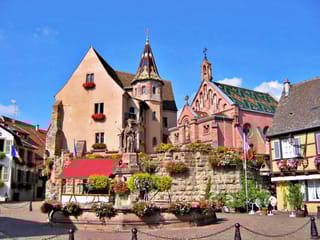
Château de Saint-Léon-Pfalz
Haut-Rhin
17.7km
castle, chateau