Château de Peyrepertuse
Aude Occitanie France
castle, chateau
Château de Peyrepertuse
Aude Occitanie France
castle, chateau
Peyrepertuse is a ruined fortress and one of the Cathar castles of the Languedoc located in the French Pyrénées in the commune of Duilhac-sous-Peyrepertuse, in the Aude département
Le site a été occupé depuis la période gallo-romaine (Ier s
Previous names
Château de Peyrepertuse, Château de Peyrepertuse
Description
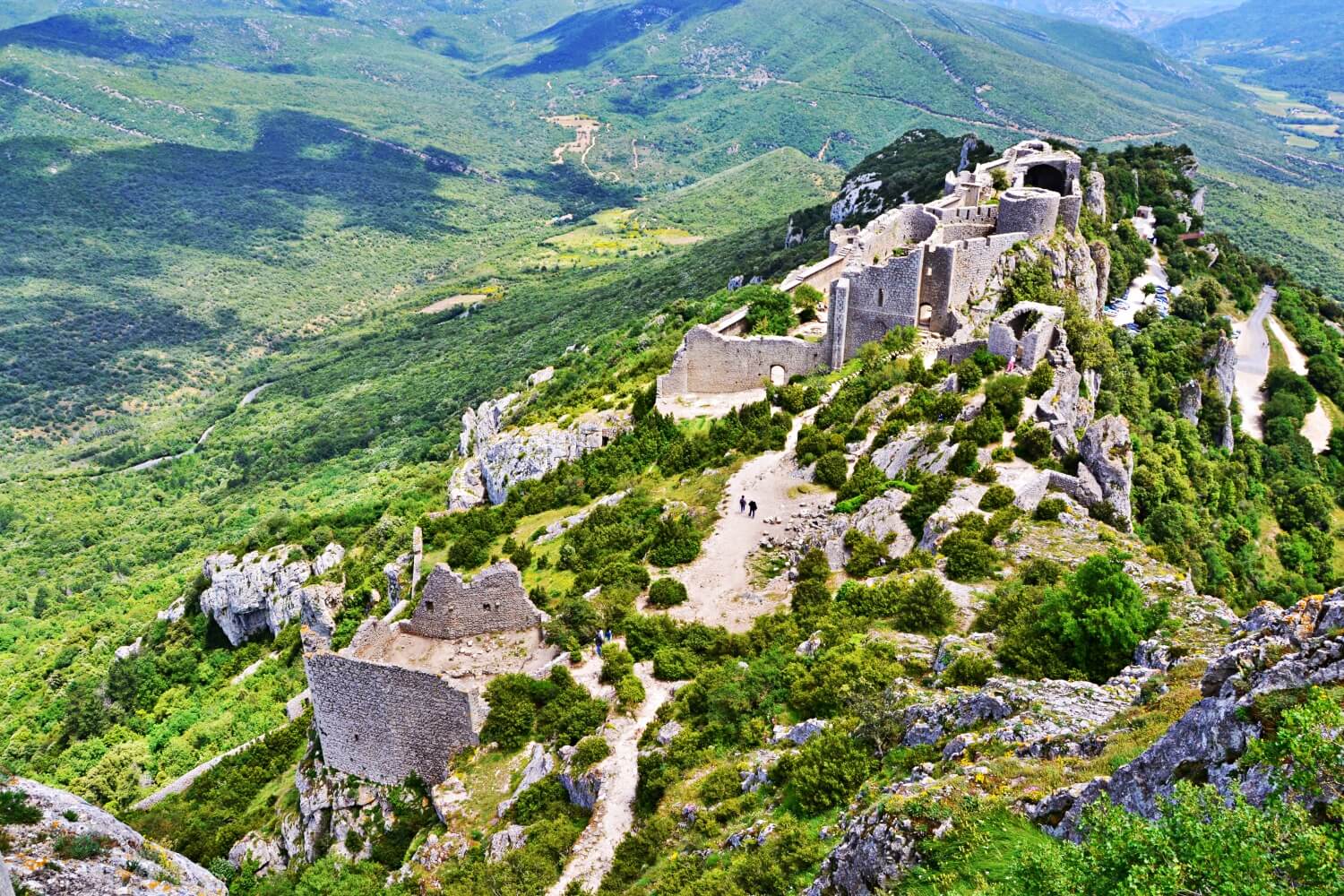
Peyrepertuse is a ruined fortress and one of the Cathar castles of the Languedoc located in the French Pyrénées in the commune of Duilhac-sous-Peyrepertuse, in the Aude département.
It was associated with the Counts of Barcelona, later kings of Aragon.
The name Peyrepetuse is derived from Pèirapertusa, Occitan, meaning Pierced Rock.
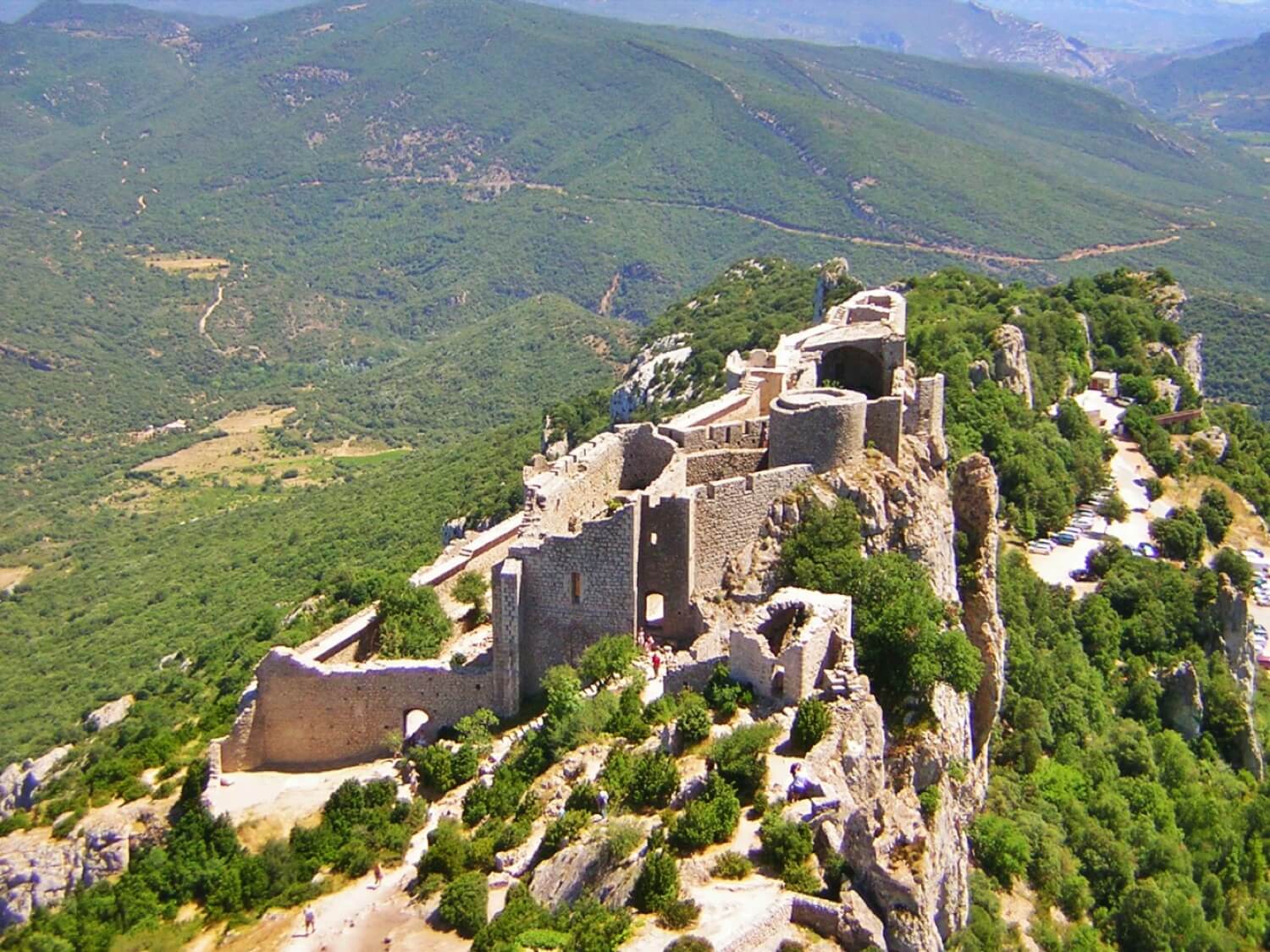
The lower part of the castle was built on a strategic location by the kings of Aragon in the 11th Century and the higher part by the French King Louis IX later on, after the area was annexed to France. The two castles are linked together by a staircase. The castle lost importance as a strategic castle when the border between France and Spain was moved in 1659, causing the castle to be abandoned.
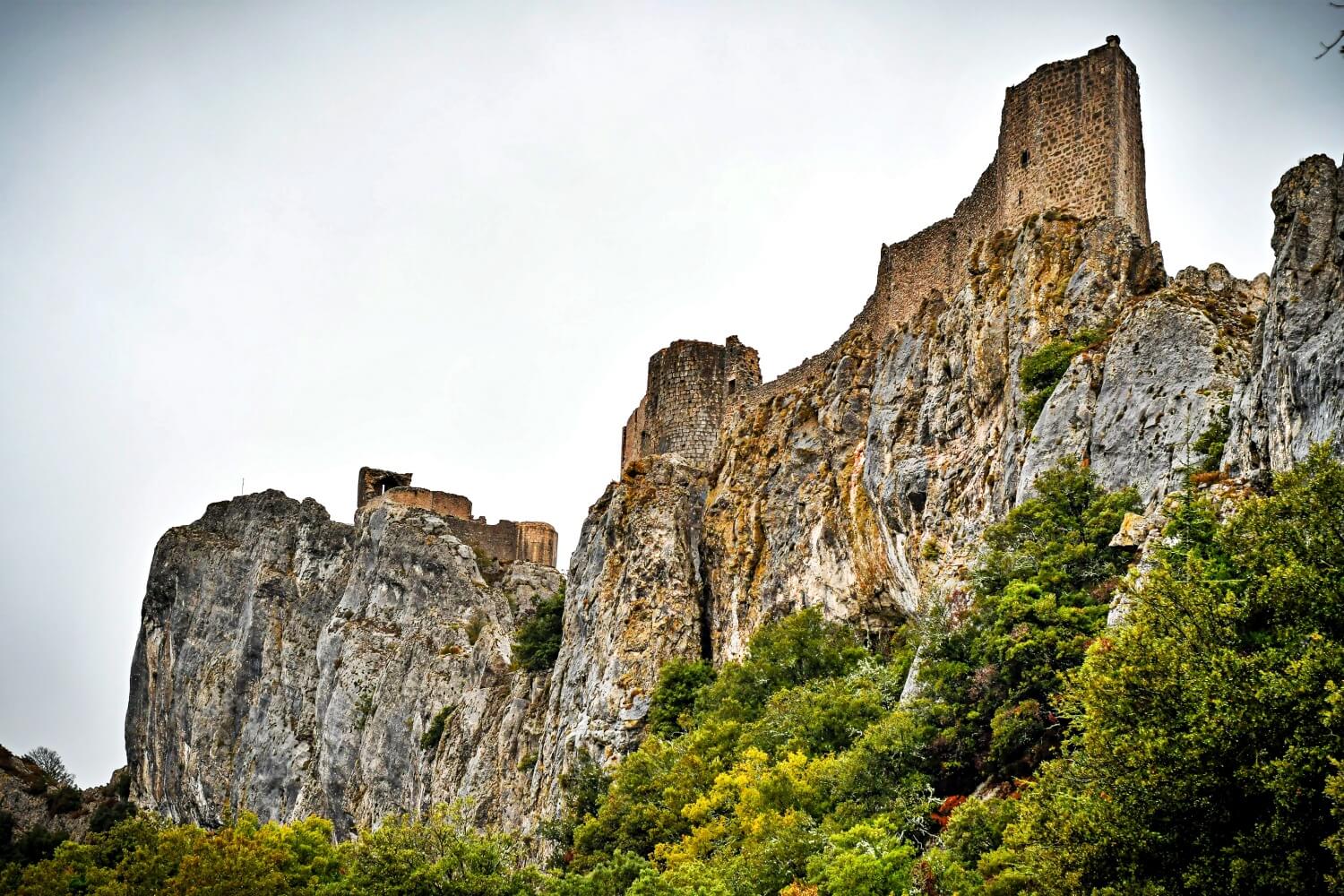
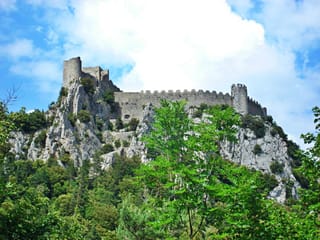
The castle ruins are impressive, set high on a defensive crag. From the approach road it is difficult to see where the rock stops and the castle starts.
The castle was built in the 11th century on a site dominating the Corbières and the sea. The main part, resembles the prow of a ship, running along the top of an 800m (2,600 ft) high crag. It houses the church of Sainte-Marie and the governor's residence.
It was never subjected to attack during the Crusade against the Cathars. Nevertheless, it was surrendered to the French Crusaders 22nd of May 1217, reclaimed again as the balance of power changed. Guilhem de Peyrepertuse, was excommunicated in 1224 because of his refusal to submit to the Catholic Crusaders. He surrendered after the siege of Carcassonne (the Viscount of Carcassonne, Guilhem's suzerain, having failed to retake Carcassonne from the French invaders in 1240). Peyrepertuse became a French possession the same year.
In 1258, the Treaty of Corbeil defined the border between France and Aragon for four centuries : Peyrepertuse became a royal French fortress at the southern border of the French kingdom. At the end of the 13th century, it was a powerful stronghold with strong defences. During the winter of 1367-1368, Peyrepertuse was the refuge of Henri de Trastamare, claimant to the crown of Castille.
Le site a été occupé depuis la période gallo-romaine (Ier s. avant J.-C au Ier s. après J.-C.)
En 842, Peyrepertuse est mentionné une première fois dans les textes.
Dès le début du XIe siècle le castrum Peyrepertuse est sous la tutelle de Narbonne puis de Barcelone.
Un premier château féodal comprenant un ouvrage défensif et une église date du XIIe siècle.
Après la Croisade des Barons, suivie par la croisade royale en 1226, le château de Peyrepertuse deviendra Forteresse Royale en 1258 lors du Traité de Corbeil.
La construction de l'enceinte basse en forme de triangle date du milieu du XIIIe siècle. En 1242 Louis IX ordonne la réalisation d’un escalier taillé dans le roc.
La fin de la fortification de l’enceinte médiane et les réaménagements du donjon San Jordi sont effectués aux XVIe et XVIIe siècles.
Depuis sa construction, la forteresse a la fonction d'assurer le contrôle du territoire qui était hérétique et dissident par rapport au roi de France, et de faire face au roi d'Aragon, qui est une puissance ennemie.
En 1659 après le traité des Pyrénées qui déterminera la frontière entre l'Espagne et la France, Peyrepertuse perd son intérêt stratégique. Une petite garnison occupera la forteresse jusqu'à la Révolution.
Useful information
Parking GRATUIT (à 100 mètres de l'espace d'accueil/billetterie)
Adulte: 7 €
Adulte tarif réduit: 6 €
Enfant (de 6 à 12 ans): 4 €
Enfant (de 6 à 12 ans) tarif réduit: 3 €
Enfant (moins de 6 ans): gratuit
Groupe adulte (dès 20 personnes): 5 €
Groupe forfait visite commentée: 55 €
WC GRATUIT
info@peyrepertuse.com
-
External links
Nearby castles
Château de Quéribus
Pyrénées-Orientales
6.6km
castle, chateau
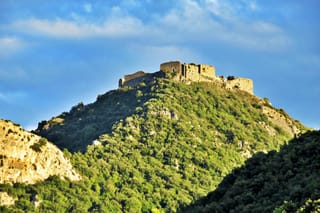
Château de Termes
Aude
14.6km
castle, chateau
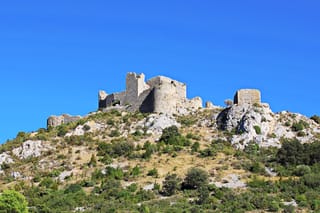
Château d'Aguilar
Aude
15.8km
castle, chateau
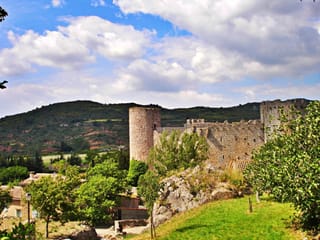
Château de Villerouge-Termenès
Aude
16.2km
castle, chateau
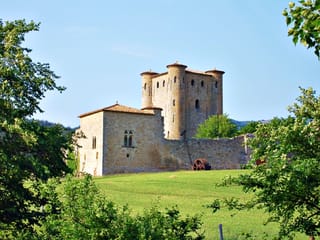
Château d’Arques
Aude
17.9km
castle, chateau
Château de Puilaurens
Aude
22.2km
castle, chateau