Château de Ladhuie
Lot-et-Garonne Nouvelle-Aquitaine France
castle, chateau
Château de Ladhuie
Lot-et-Garonne Nouvelle-Aquitaine France
castle, chateau
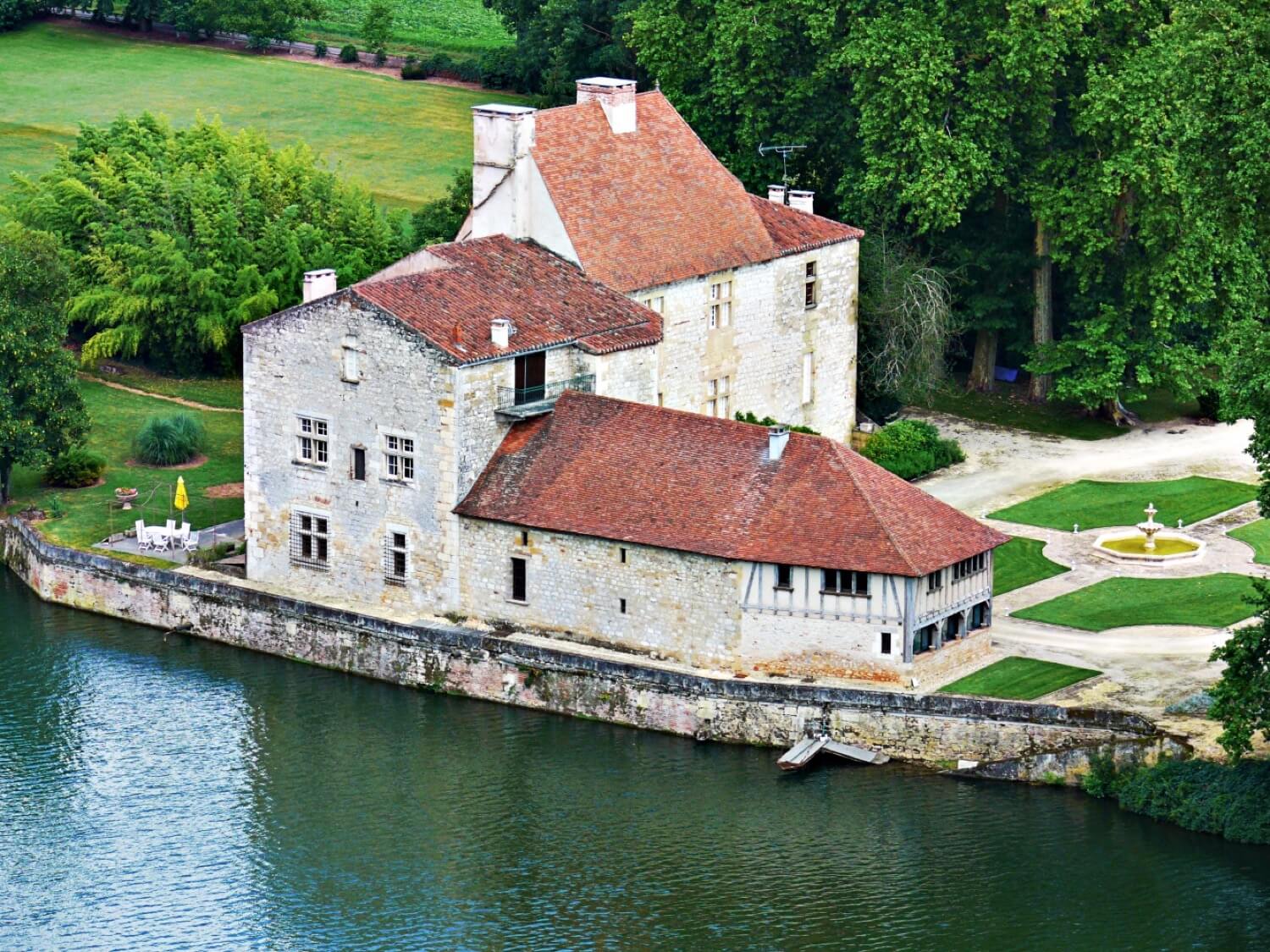
The castle of Ladhuie was built on the banks of the Lot, on the territory of the commune of Montayral, in the department of Lot-et-Garonne
Le château de Ladhuie a été construit sur les berges du Lot, sur le territoire de la commune de Montayral, dans le département de Lot-et-Garonne
Previous names
Château de Ladhuie, Château de Ladhuie
Description
The castle of Ladhuie was built on the banks of the Lot, on the territory of the commune of Montayral, in the department of Lot-et-Garonne.When Edward I took possession of the Agenais, in 1279, after the treaty of Amiens, he was about 1289 to make navigable the Lot to facilitate the transport of goods from Quercy to Bordeaux. He built eleven dams on the Lot at the end of the 13th century in the bailiwick of Penne, on a course of 22 kilometers. He instructed his constable in Bordeaux, of Angolive, to put a sum of 10,000 livres at the disposal of Master Andre to carry out the undertaking. Construction has been entrusted to various contractors. This is how the Lustrac take charge of the construction of a dam. This work begun in 1291 will be carried out quickly at a cost which has not exceeded 4,000 pounds. They were arrested in 1294 when Philip the Fair seized the Agenais and returned it to the King of England in 1303.But in 1311, at the request of the King of England, an inquiry was made into the barrages of Guillaume Cazes, the judge of Agen. To seize tolls, the local lords built fortified buildings nearby. The Tower of Orgueil rests on one of these dams. The castle was then built to control the dam and levy rights of way. During the Hundred Years' War, in 1424, the Tower of Pride, also known as Ladhuie or Laduguie, was taken by Lancelot de la Barthe of the English party. It is taken up by Naudonnet de Lustrac who fights for the King of France. According to Gilles Séraphin, the Ladhuie or Laduguie tower was replaced at the end of the fifteenth century by a manor, perhaps for Armand de Laduguie mentioned between 1502 and 1506. Armand de Laduguie was married to Jeanne de Lustrac, daughter of Anthony I of Lustrac. A second building was erected against the old building at the end of the sixteenth-seventeenth centuries, probably for the Lagoutte family. In 1695, notarial documents mention Jacques de La Goutte, Lord of Buscon, living in his castle of La Duguie, brother of François de La Goutte, lord of Lapoujade in Saint-Vite. The house was enlarged during the first half of the seventeenth century. The castle was seized at the beginning of the Revolution as well as the emigrant Brous Cézerac. He is sold on 24 Thermidor Year II to Jean Maydieu for 160,000 livres. The castle was registered as a historic monument on June 20, 1950.
http://www.frenchchateau.net/chateaux-of-aquitaine/chateau-de-ladhuie.html
Le château de Ladhuie a été construit sur les berges du Lot, sur le territoire de la commune de Montayral, dans le département de Lot-et-Garonne.
Histoire
Quand Édouard Ier reprend possession de l'Agenais, en 1279, après le traité d'Amiens, il va entreprendre, vers 1289, de rendre navigable le Lot pour faciliter le transport des marchandises du Quercy vers Bordeaux. Il fait construire onze barrages sur le Lot à la fin du xiiie siècle dans le bailliage de Penne, sur un parcours de 22 kilomètres. Il a chargé son connétable à Bordeaux, d'Angolive, de mettre une somme de 10 000 livres à disposition de maître André pour mener à bien l'entreprise. La construction a été confié à différents entrepreneurs. C'est ainsi qu'on voit les Lustrac se charger de la construction d'un barrage. Ces travaux commencés en 1291 vont être réalisés rapidement pour un coût qui n'a pas dépassé 4 000 livres. Ils vont être arrêtés en 1294 quand Philippe le Bel saisi l'Agenais pour ne le rendre au roi d'Angleterre qu'en 1303.
Mais en 1311, à la demande du roi d'Angleterre une enquête est faite sur les barrages Guillaume Cazes, juge d'Agen. Pour accaparer les droits de péage, les seigneurs des environs ont fait construire à proximité des édifices fortifiés.
La tour d'Orgueil s'appuie sur un de ces barrages. Le château a alors été construit pour contrôler le barrage et prélever des droits de passage.
Pendant la guerre de Cent Ans, en 1424, la tour d'Orgueil appelée aussi de Ladhuie ou de Laduguie, est prise par Lancelot de la Barthe du parti anglais. Elle est reprise par Naudonnet de Lustrac qui combat pour le roi de France.
D'après Gilles Séraphin, la tour de Ladhuie ou Laduguie est remplacée à la fin du xve siècle par un manoir, peut-être pour Armand de Laduguie mentionné entre 1502 et 1506. Armand de Laduguie a été marié à Jeanne de Lustrac, fille d'Antoine Ier de Lustrac.
Un second corps de logis est édifié contre l'ancienne construction à la limite des xvie-xviie siècles, probablement pour la famille de Lagoutte. En 1695, les documents notariés citent Jacques de La Goutte, seigneur du Buscon, habitant son château de La Duguie, frère de François de La Goutte, seigneur de Lapoujade à Saint-Vite.
Le logis est agrandi pendant la première moitié du xviie siècle.
Le château est saisi au début de la Révolution comme bien de l'émigré Brous Cézerac. Il est vendu le 24 thermidor An II à Jean Maydieu pour 160 000 livres.
Le château a été inscrit monument historique le 20 juin 1950.
Nearby castles
Château de Bonaguil
Lot-et-Garonne
5.7km
castle, chateau
Château de Gavaudun
Lot-et-Garonne
9.8km
castle, chateau
Château de Chambert
Lot
13.6km
castle, chateau
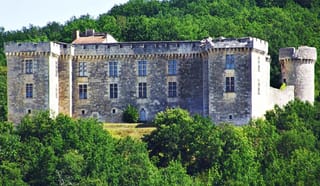
Château de La Coste
Lot
14.8km
castle, chateau
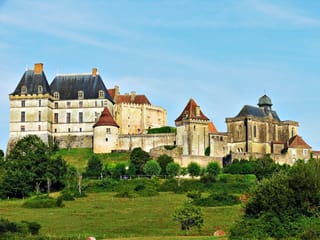
Château de Biron
Dordogne
17.1km
castle, chateau
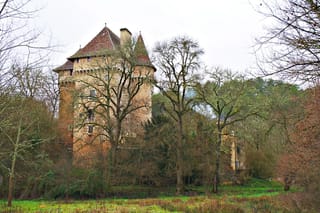
Château de Cousserans
Lot
19.5km
castle, chateau