Château de Coussac-Bonneval
Haute-Vienne Nouvelle-Aquitaine France
castle, chateau
Château de Coussac-Bonneval
Haute-Vienne Nouvelle-Aquitaine France
castle, chateau
Château de Bonneval
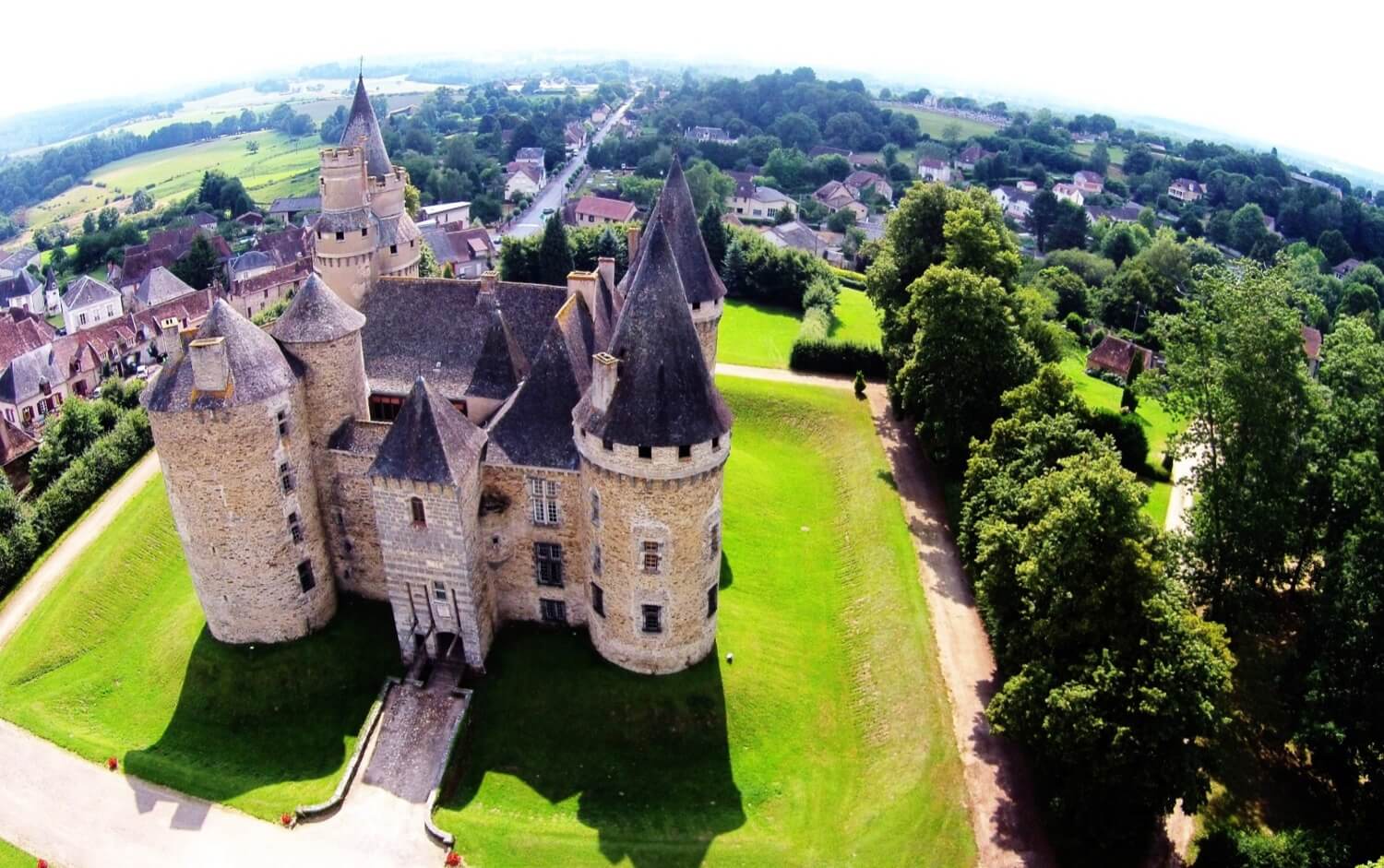
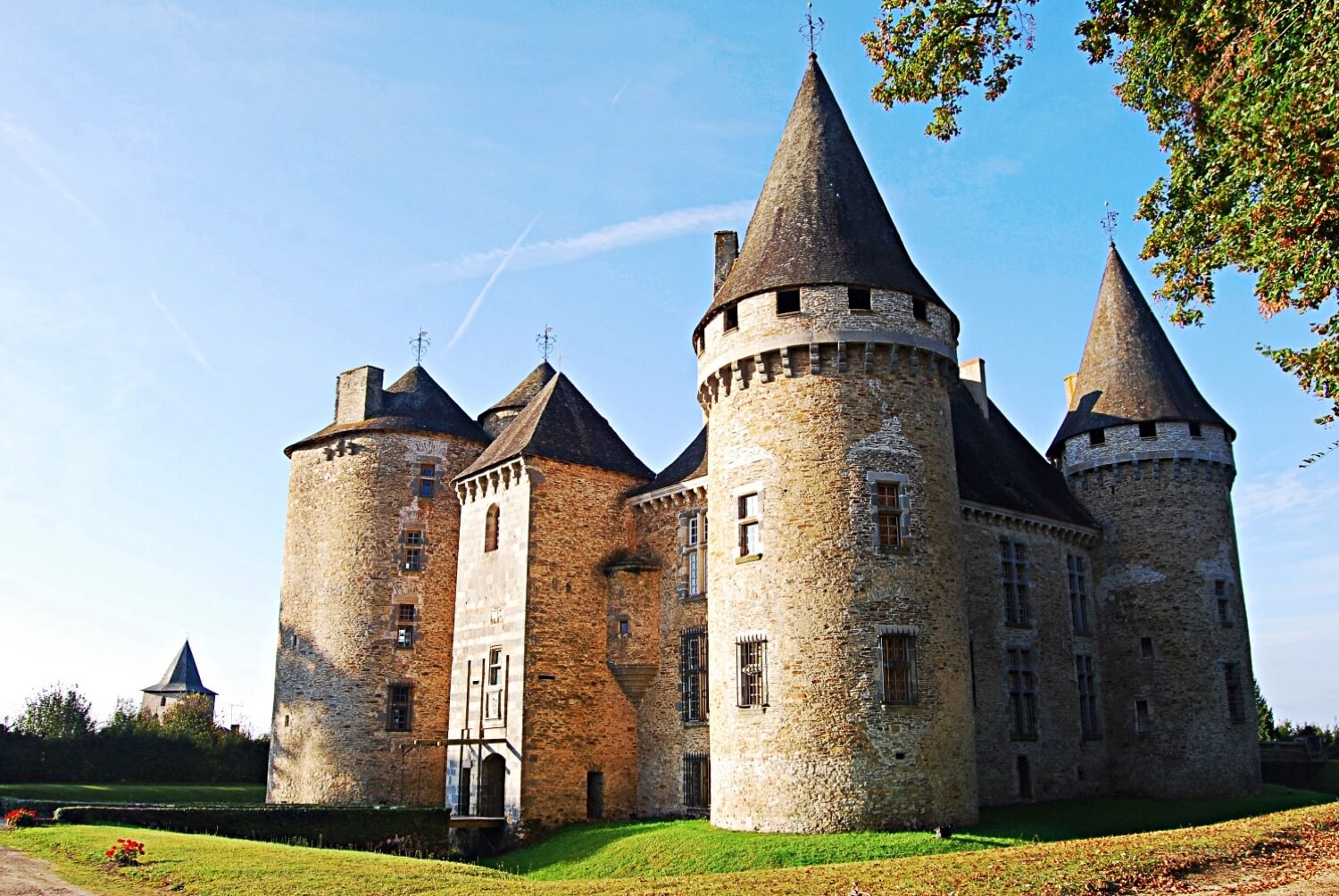
The château sits on a slightly elevated position in the centre of the village, providing commanding views in all directions
Le château de Bonneval est un château datant de la fin xiiie ou début xive siècle, situé à Coussac-Bonneval dans la Haute-Vienne
Previous names
Château de Coussac-Bonneval, Château de Coussac-Bonneval
Description
Château de Bonneval
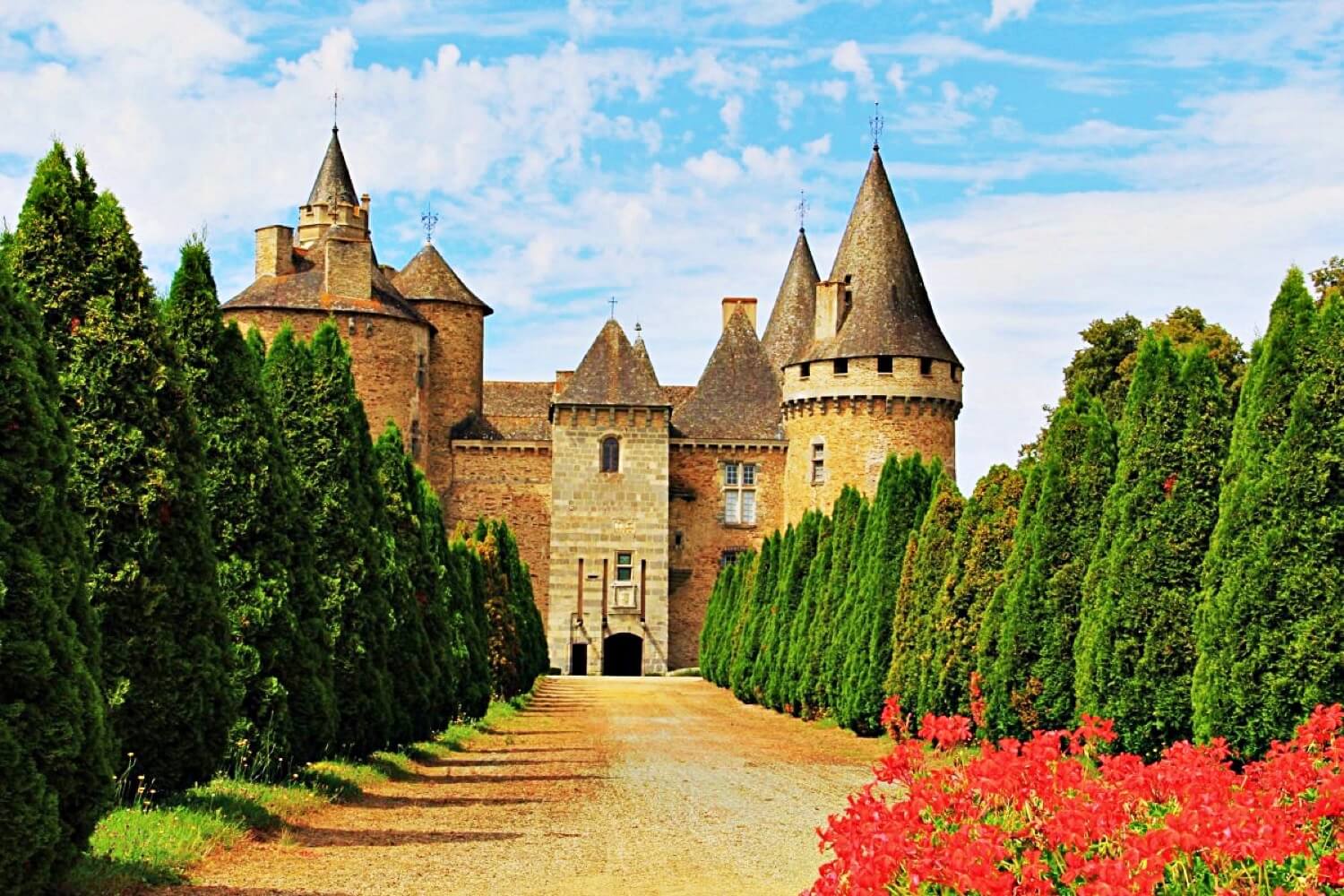
The château sits on a slightly elevated position in the centre of the village, providing commanding views in all directions. Although it has been a stately home since the late 18th century, previously, as a military establishment, it formed part of a strategically important defensive line of fortresses, protecting access to Aquitaine. And what are now pleasant country vistas would have been, at that time, lines of defensive observation and even fire.
The ground immediately surrounding the château is primarily laid to lawn, edged with lavender and fir trees as well as stands of oak, chestnut and lime trees. These gardens hide some intriguing old buildings, including a small family chapel. Beyond these are the farm fields, home to the estate’s herd of the famously red, Limousin cattle.
Family Chapel
It is believed that the first château was built by a knight ancestor of the Bonneval family in 930 AD, on a site which had been a Gallo-Roman villa. This link with the earlier Roman occupation of Gaul is evinced by the famous abbreviation S.P.Q.R (Senatus, Populous, Que Romanus) being included in not only, the engraving of the Bonneval family crest above the Main Entrance of the château, dating from the 16th century; but also, on the tomb of Bernard de Bonneval, in Limoges Cathedral; who was bishop of Limoges from 1390 until his death in 1403.
This earlier 10th century holdfast was extensively rebuilt in 1350 as an impeccable example of the quadrilateral castle form, combining curtail walls with four massive round towers, each oriented to the four cardinal points of the compass; encircled by moats.
The château has changed a lot over time, and as a result, provides examples of different architectures and styles from a wide range of historic periods. Each generation of Bonneval has made changes and improvements, a process which continues to this day. The present organisation of the château is primarily due to the major rebuild and renovation projects undertaken by the Bonneval residents of the day, during the 12th, 14th and 18th centuries.
http://www.chateaudebonneval.com
Le château de Bonneval est un château datant de la fin xiiie ou début xive siècle, situé à Coussac-Bonneval dans la Haute-Vienne.
Il est relativement célèbre pour appartenir à la même famille depuis sa construction, et avoir appartenu à Claude-Alexandre de Bonneval (1675-1747) qui devint pacha après sa conversion à l'islam et son passage au service de l'Empire Ottoman.
Histoire
Une forteresse existait depuis au moins 930, attestée par une pierre portant cette date et incrustée dans la maçonnerie de la tour d'entrée.
Le château dans son état actuel date du xive siècle, probablement construit par Jean Ier, seigneur de Bonneval.
Il a subi des remaniements aux xiiie et xixe siècles, dont la façade sud-ouest entre les deux tours d'angle qui date de 1780.
Le château subit une restauration en 1771-72 sous la direction de l'architecte Broussaud, puis une autre en 1900, dans la cour Renaissance.
Useful information
Le parking GRATUIT
Adulte: 10 € (visite guidée)
Etudiant: 8 € (carte obligatoire, visite guidée)
Enfant (moins de 5 ans): gratuit (visite guidée
Enfant (de de 5 à 12 ans ): 5 € (visite guidée)
Groupe adultes: 7 € (visite guidée)
Famille (2 adultes + 2 à 4 enfants): 28 €
info@chateaudebonneval.com
-
External links
Nearby castles