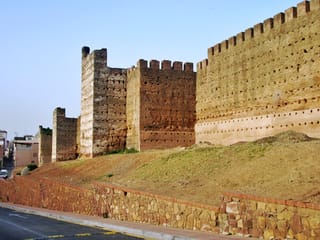
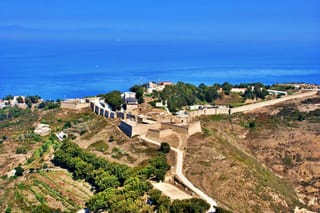
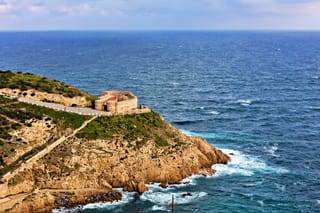
Royal Walls of Ceuta
Ceuta Ceuta Spain
castle, chateau
Murallas Reales de Ceuta
Ceuta Ceuta Spain
castle, chateau
The Royal Walls of Ceuta (Spanish: Murallas Reales de Ceuta) are a line of fortification in Ceuta, an autonomous Spanish city in north Africa
Las Murallas Reales de Ceuta son un Conjunto Monumental de la Ciudad autónoma de Ceuta, que data del año 962 en su parte más antigua y la más moderna del siglo XVIII
Previous names
Royal Walls of Ceuta, Murallas Reales de Ceuta
Description
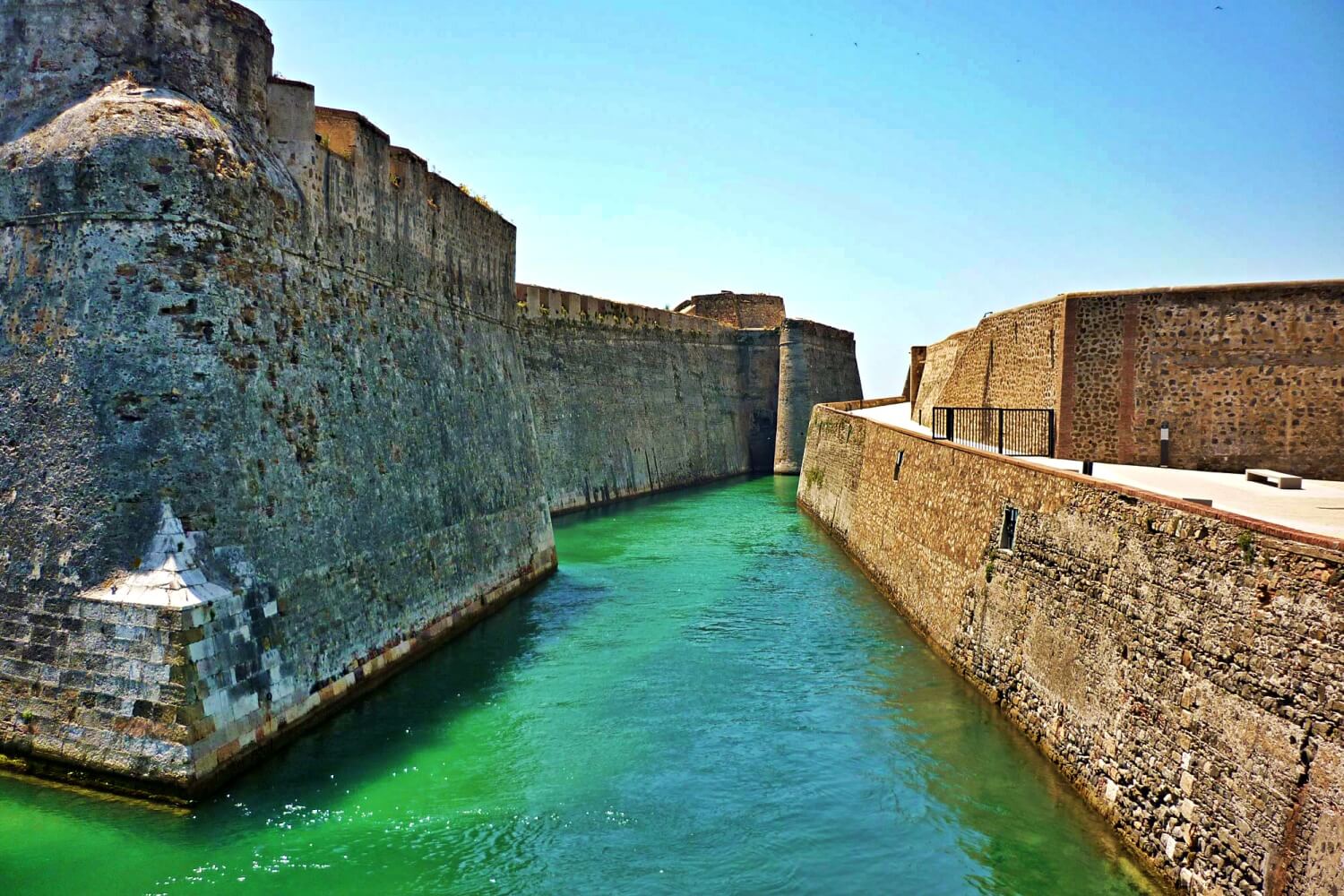
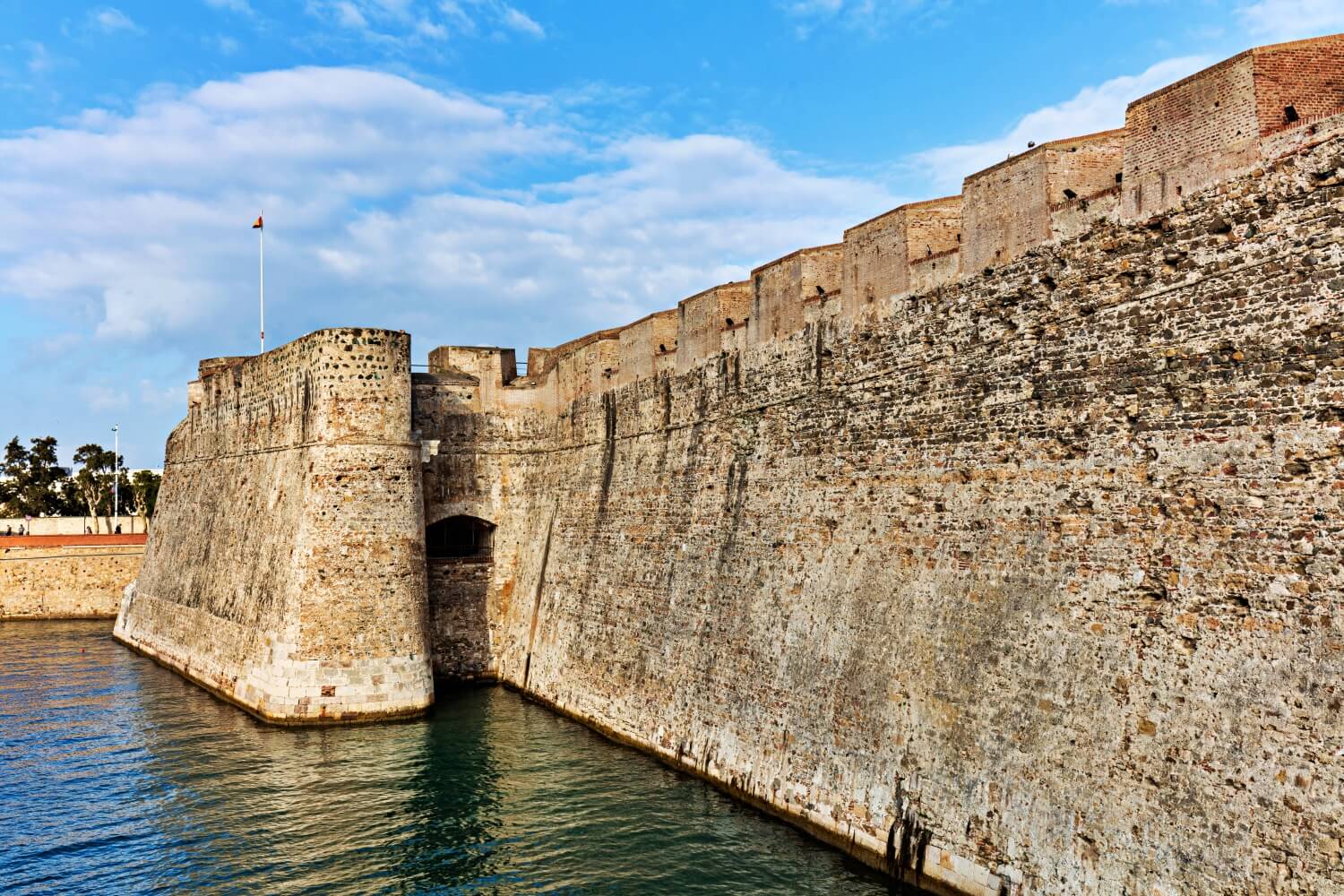
The Royal Walls of Ceuta (Spanish: Murallas Reales de Ceuta) are a line of fortification in Ceuta, an autonomous Spanish city in north Africa. The walls date to 962 in its oldest part and the most modern parts to the 18th century. They remain largely intact, with the exception of some outworks, and are listed as a Spanish Property of Cultural Interest.
History
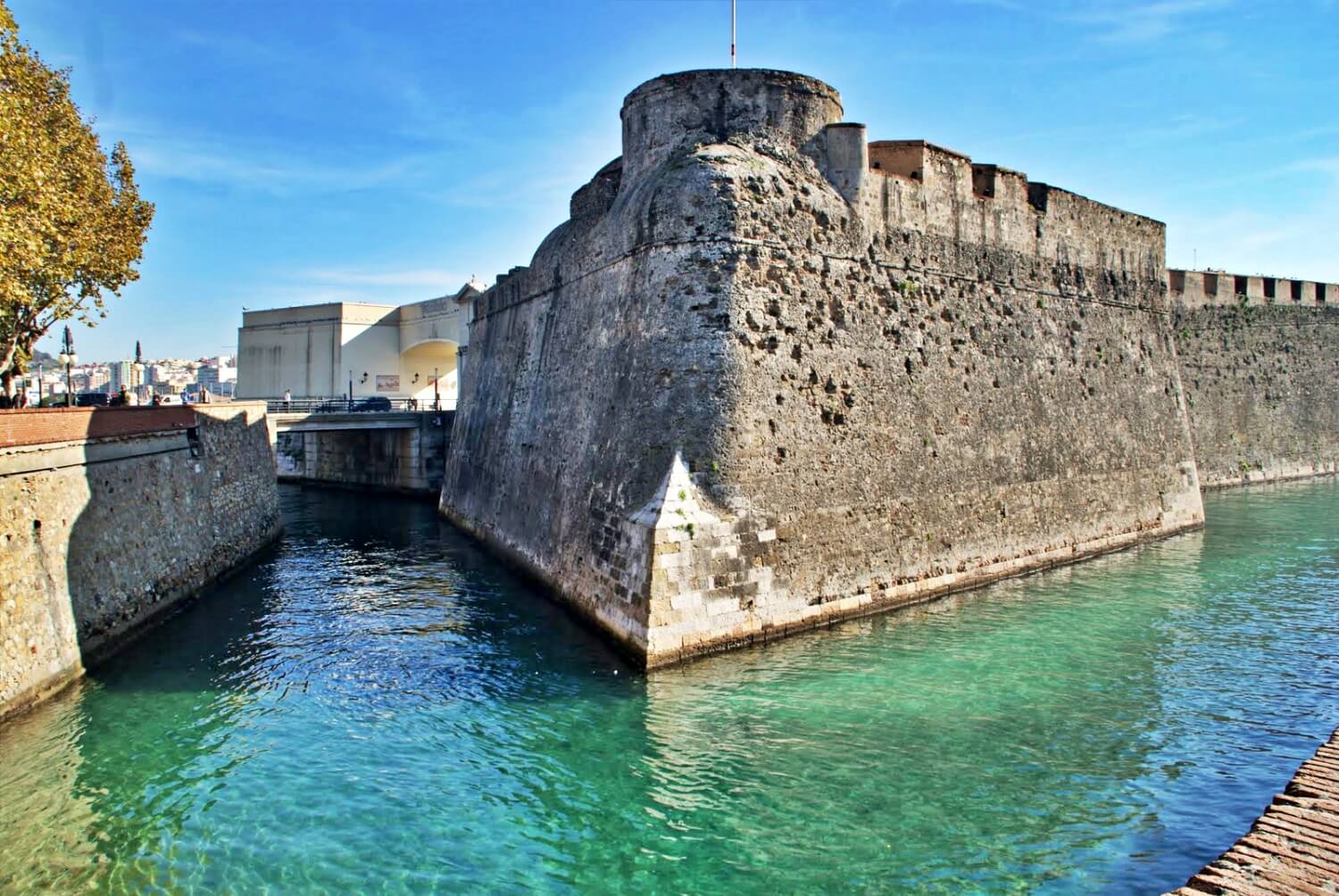
Ceuta had been a naval base since Carthaginian and Roman times, and had some form of fortification since at least the 5th century. The city was captured by the Portuguese during the Conquest of Ceuta in 1415, who began to strengthen the defences in the 1540s by building the Royal Walls including bastions, a navigable moat and a drawbridge. Some of these bastions are still standing, like the bastions of Coraza Alta, Bandera and Mallorquines.
n 1669, Ceuta became part of the Kingdom of Spain following the dissolution of the Iberian Union. The walls at the southern end of the city were severely damaged in a storm in 1674, but were quickly repaired. Some outworks were subsequently added to reinforce the Royal Walls.
The Royal Walls played a significant role in the Sieges of Ceuta, which began in 1694. Whenever there was an interval in the fighting, the Spanish added more outworks. The siege was broken in 1720 after the arrival of a relief force, and the outworks were completely rebuilt at this stage. Ceuta was besieged again in 1721, but by now the fortifications were much stronger and the last Moorish attempt to take the city ended in 1734.
Further modifications to the fortifications were made in the 1730s. Another Moorish siege occurred between 1790 and 1791, but the attack was repelled. During the Napoleonic Wars, the city was garrisoned by British troops allied with Spain. The walls were eventually decommissioned when they became obsolete in the 19th century.
1998 25-peseta coin featuring the Royal Walls
Parts of the walls, especially the outworks, were demolished to make way for urban development. However, the Royal Walls, their ditch, and the first line of outworks remain intact, and have been restored in recent years. On 3 July 1985 they were declared a Spanish heritage site. The walls were one of 100 candidates for the 12 Treasures of Spain in 2007 and the only one of those in Ceuta. Parts of the walls are open to the public.
Layout
The Royal Walls are a land front running across the isthmus separating Ceuta from the rest of North Africa. The walls consist of two large bastions at each end of the wall, which are called Baluarte de la Coraza and Baluarte de la Bandera, and a smaller bastion at the north flank. They are protected by a ditch filled with seawater. Batteries were also built on breakwaters at either side of the walls.
The walls were surrounded by a number of outworks, consisting of hornworks, ravelins and counterguards. Today, the first line of outworks remains intact, but other parts were demolished over the years.
The east end of Ceuta was also fortified with two small bastions.
Las Murallas Reales de Ceuta son un Conjunto Monumental de la Ciudad autónoma de Ceuta, que data del año 962 en su parte más antigua y la más moderna del siglo XVIII.
Descripción
El conjunto se construyó para defender el istmo que separa la península de Almina, donde se asentaba la antigua ciudad, del continente africano.
Se divide en varias líneas defensivas, la primera esta compuesta por el Baluarte de los Mallorquines, con la Puerta del Campo, el Baluarte de La Bandera, la Muralla Real, propiamente, el Baluarte de la Coraza Alta, el Espigón de La Ribera y el Foso Real , navegable para pequeñas embarcaciones, lo que acorta el camino de la bahía norte a la bahía sur de la ciudad, ya que de no existir este paso se debería rodear la península de Almina y que divide al conjunto monumental y a Ceuta en dos partes, unidas por tres puentes que lo cruzan, dos en el extremo norte y uno en el extremo sur del canal.
La segunda línea es el Hornabeque del Frente de la Valenciana, esta compuesta por el Semibaluarte de San Pedro, el Frente de La Valenciana y el Semibaluarte de Santa Ana, situándose delante la Plaza de Armas.
La tercera línea está formado por la desaparecida Contraguardia de Santiago, el Revellín del Ángulo de San Pablo, el Revellín de San Ignacio y la Contraguardia de San Francisco Javier.
Una cuarta línea, hoy desaparecida, estaba formada por las lunetas de San Luis, la Reina y San Felipe, dando al Foso de San Felipe, hoy bajo la Avenida de San Juan de Dios.
Dentro de sus muros, se encuentran elementos arquitectónicos tan importantes, como la llamada Puerta Califal del siglo X.
Useful information
La visita gratuita
La visita gratuita
turismo@ceuta.si
- De martes a sábado: de 11:00 a 14:00 horas y de 17:00 a 21:00 horas.
- Festivos: de 11:00 a 14:00 horas.
-
External links
Nearby castles